
An OBD2 scanner displays a P0420 code, so the catalytic converter must be bad. It shows P0301, so cylinder one must need a new spark plug. The scanner reports no codes, so the entire car must be healthy.
All three conclusions can be wrong.
A diagnostic trouble code identifies a system, circuit, or operating condition in which the vehicle’s computer detected a problem. It does not necessarily identify the component that caused it. The scanner is reporting evidence collected by the car—not performing a complete mechanical diagnosis.
Understanding what an OBD2 Scanner Cannot Do helps prevent unnecessary parts replacement, false reassurance, and repeated code clearing that never addresses the real fault.
Quick Answer
An OBD2 scanner can retrieve information that a vehicle’s control modules have monitored and chosen to report. It cannot see every mechanical problem, determine the root cause of a code with certainty, physically repair a component, or perform functions that the scanner and vehicle do not support.
The exact limits depend on the tool. A basic code reader and a professional bidirectional scanner may connect through the same diagnostic port, but their capabilities are very different.
First, Know What Type of Scanner You Have
Generic OBD-II provides standardized access primarily to emissions-related diagnostic information. Enhanced tools may use manufacturer-specific communication to reach additional systems.
| Tool level | Typical capabilities | Typical limitations |
|---|---|---|
| Basic code reader | Generic engine codes, readiness status, and limited data | Usually lacks full module access and advanced functions |
| Enhanced scanner | Supported ABS, airbag, transmission, and body-system access | Coverage varies by vehicle |
| Bidirectional scanner | Supported active tests, relearns, and service functions | Not every function works on every model |
| OEM/programming equipment | Coding, software updates, and secured procedures | May require special hardware, subscriptions, or authorization |
This distinction matters. Saying that no OBD2 scanner can access an ABS module would be inaccurate because some enhanced tools can. The correct statement is that a basic generic reader usually cannot access it unless the scanner specifically supports that vehicle and system.
The Visibility Boundary: What an OBD2 Scanner Cannot Do When the Car Cannot See the Problem
A scanner can only retrieve information available from the vehicle’s electronic modules. If the car does not monitor a condition—or the condition has not affected a monitored signal—the scanner may have nothing to report.
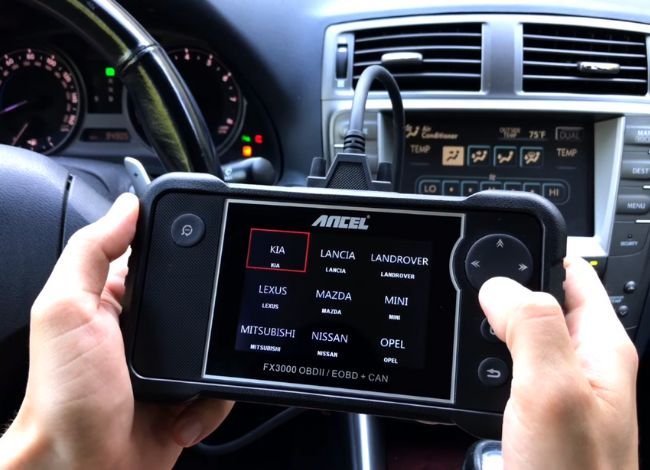
1. It Cannot Identify the Exact Failed Part From a Code Alone
A DTC is a diagnostic starting point, not a parts-replacement instruction.
P0420 means the computer detected catalyst-system efficiency below its expected threshold. A worn catalytic converter is one possibility, but exhaust leaks, misfires, fuel-control problems, or sensor-related issues can influence the same monitor.
P0301 identifies a detected misfire in cylinder one. It does not prove that the spark plug failed. The cause could involve an ignition coil, injector, wiring, compression, an air leak, or another mechanical condition.
The code tells you where diagnosis should begin. Additional data and testing must determine why the code was set.
2. It Cannot Directly Detect Every Mechanical Problem
Many physical problems have no dedicated electronic sensor. A scanner normally cannot directly measure warped brake rotors, tire tread depth, wheel alignment, internal engine wear, or actual cylinder compression.
A mechanical problem may eventually affect monitored data. Low compression, for example, can contribute to a misfire code. The scanner can report the misfire, but it cannot directly inspect the piston rings, valves, or cylinder sealing that may have caused it.
Physical inspection and appropriate mechanical or electrical tests remain necessary.
3. It Cannot Prove the Entire Vehicle Is Healthy
“No codes found” means the scanner did not retrieve reportable codes from the modules it accessed. It does not mean every component in the vehicle passed a complete inspection.
A fault may be intermittent, too new to meet code-setting criteria, located in an unsupported module, or entirely mechanical. Someone may also have recently cleared the codes, leaving readiness monitors incomplete.
When evaluating a car, check current, pending, and permanent codes, readiness status, warning-light operation, symptoms, service history, and physical condition. A clean scan is useful evidence, but it is not a complete health certificate.
4. It Cannot Reliably Predict Every Future Failure
Some live data or Mode 6 results may reveal a value approaching a programmed limit. That can provide an early clue, but it does not guarantee when—or whether—a component will fail.
Parts such as belts, bearings, batteries, starters, and mechanical pumps may deteriorate without producing a useful DTC. Operating conditions can also change sensor values from one trip to another.
This is another central limit of what an OBD2 Scanner Cannot Do: it reports the electronic evidence available now or from previous monitored events. It cannot replace preventive maintenance, physical inspection, or informed diagnostic judgment.
The Access Boundary: What an OBD2 Scanner Cannot Do Without the Right Coverage
The diagnostic connector may provide a physical pathway to several electronic modules, but that does not give every scanner automatic access to all of them.
Access depends on the tool’s software, supported communication protocols, manufacturer coverage, subscription status, and the vehicle’s security requirements.
5. A Basic Scanner Cannot Read Every Module
A generic code reader is designed mainly for standardized emissions-related powertrain information. It may successfully retrieve a check engine light code while finding nothing from the ABS, airbag, body control, climate control, or electronic parking brake modules.
This does not mean those modules contain no faults. The scanner may simply lack access.
To investigate a specific warning light, the tool must support the associated module on that exact year, make, and model. A scanner advertised as “full system” should still have its vehicle coverage checked before purchase or diagnosis.
6. It Cannot Retrieve Every Manufacturer-Specific Code or Data Item
Generic DTCs and data parameters are standardized, but manufacturers can provide additional information through enhanced diagnostic protocols.
A basic scanner may retrieve a generic P-code while missing OEM-specific codes, detailed subcodes, enhanced data, or manufacturer test results that provide important context. Even professional scanners can differ in how completely they translate and display this information.
An incomplete or vague code description should not be treated as the full diagnosis. Vehicle-specific service information may be necessary to understand the fault criteria, test procedure, and possible causes.
7. It Cannot Communicate With Every Vehicle Automatically
A “no communication” message does not automatically mean the engine computer has failed. Communication can be prevented by an unsupported vehicle or protocol, outdated scanner software, low system voltage, a damaged diagnostic connector, wiring problems, or a blown fuse that supplies power to the port.
Some newer vehicles also use secured gateways that restrict enhanced functions unless the tool and user have appropriate authorization.
Compatibility should be verified before drawing conclusions. A scanner that works fully on one vehicle may offer only generic information—or fail to communicate with a particular module—on another.
The Authority Boundary: What an OBD2 Scanner Cannot Do Even After Reading the Data
Reading information, commanding a component, and physically correcting a fault are three separate capabilities. A scanner may perform the first function without having authority or hardware for the other two.
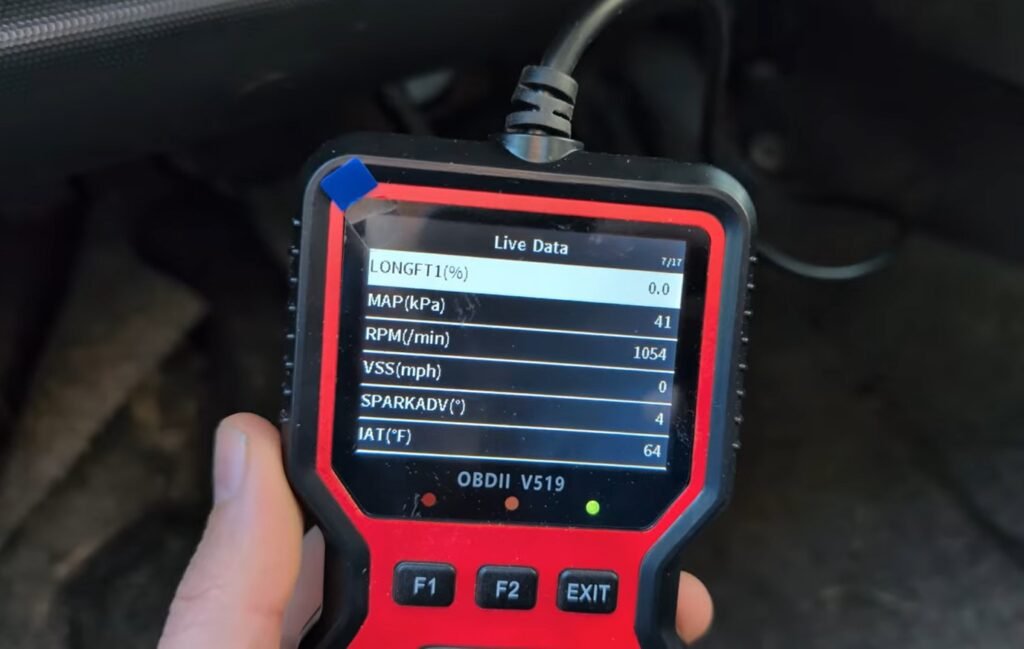
8. It Cannot Physically Repair the Vehicle
A scanner cannot repair a vacuum leak, restore a damaged wire, replace a worn bearing, clean a blocked passage, or correct low compression. It can only provide electronic evidence that helps direct the investigation.
Clearing a DTC removes certain diagnostic records and may turn off a warning light temporarily. It does not tell the cracked hose to seal itself or make a failed sensor work again. If the fault remains, the computer will usually detect it again.
9. It Cannot Manually Erase a True Permanent Code
A regular stored code can often be erased with a compatible scanner. A permanent DTC is different.
According to the California Bureau of Automotive Repair, permanent codes cannot be removed by clearing DTCs with a scan tool or disconnecting the battery. The vehicle’s OBD system must verify that the previously identified problem is no longer present.
The original fault must be repaired, and the responsible monitor must complete a passing test. A scanner can display that progress, but it cannot force the permanent record to disappear.
10. It Cannot Instantly Set Readiness Monitors to “Ready”
Readiness monitors indicate whether the OBD system has completed its emissions-related self-tests. Clearing diagnostic information usually resets several of them to “not ready.”
A scanner can display readiness status, but it cannot legitimately change an incomplete monitor to complete without the vehicle performing the necessary test. The monitor must encounter its manufacturer-defined enable conditions and finish its evaluation.
This is why clearing codes immediately before an emissions inspection can create another problem, even if the check engine light stays off.
11. A Basic Scanner Cannot Perform Every Active Test or Relearn
Bidirectional tools can command certain supported components, such as a cooling fan, valve, pump, or solenoid. Some can also perform battery registration, steering-angle calibration, throttle relearn, brake service mode, or other service procedures.
These are not guaranteed OBD2 functions. They depend on the scanner, vehicle, module, and software coverage. A menu option on the tool does not prove that the same function is available for every car.
Active tests and relearns should be performed according to manufacturer procedures, especially when braking, steering, restraint, or other safety-related systems are involved.
12. Most Scanners Cannot Perform Every Coding or Programming Task
Module coding, software flashing, key programming, immobilizer procedures, and control-module replacement setup may require OEM software, a compatible interface, paid access, stable power support, and security authorization.
Some professional tools provide selected coding or programming functions, but no universal scanner performs every procedure on every vehicle. An interrupted or incorrect programming process can also leave a module unable to operate correctly.
These access and authority boundaries explain another major part of what an OBD2 Scanner Cannot Do. The diagnostic port is an entry point, but the tool can retrieve or change only the information and functions that both the vehicle and scanner are designed—and authorized—to support.
What an OBD2 Scanner Can Do Well
Knowing what an OBD2 Scanner Cannot Do does not make the tool less valuable. It helps you use the information correctly.
A compatible scanner can retrieve current, pending, confirmed, and permanent trouble codes. Depending on its capabilities, it may also display freeze-frame information, readiness status, live data, Mode 6 test results, and codes from additional modules.
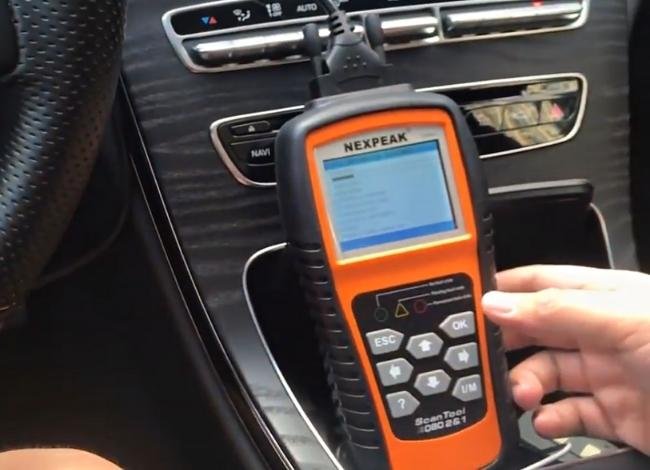
This information can narrow the diagnostic search, reveal the conditions present when a fault was detected, and help determine whether a problem returned after repair. It can also help a vehicle owner have a more informed conversation with a repair shop.
The scanner is most useful as an evidence collector—not an automatic mechanic.
Three Examples: A Code Is Not a Final Diagnosis
P0301: Cylinder 1 Misfire Detected
P0301 identifies a misfire in cylinder one. Possible causes include a spark plug, ignition coil, injector, wiring fault, air leak, or low compression.
The scanner may provide misfire data and freeze-frame information, but additional testing is required to identify the cause.
P0420: Catalyst System Efficiency Below Threshold
P0420 shows that the catalyst monitor did not see the expected efficiency. A deteriorated catalytic converter is possible, but misfires, incorrect fuel control, exhaust leaks, or sensor-related issues can influence the result.
Replacing the converter based only on the code can become an expensive mistake.
P0171: System Too Lean
P0171 means the computer has detected an excessively lean condition on bank one. The cause may involve unmetered air, low fuel delivery, an inaccurate airflow reading, or an exhaust leak affecting sensor information.
The code describes the condition. It does not identify which possible cause is responsible.
The Correct Scanner-to-Repair Workflow
Use the scanner as part of a complete evidence chain:
Scan → Save information → Confirm tool coverage → Interpret code status → Review data → Test possible causes → Repair the confirmed fault → Rescan and verify
Record the DTCs, freeze-frame data, and readiness status before clearing anything. Determine whether the scanner accessed the relevant module and whether the code is current, pending, stored, or permanent.
Use vehicle-specific diagnostic information to test likely causes. After the repair, check whether the code returns and whether the responsible monitor completes successfully. A warning light that remains off for only a short period does not prove that verification is complete.
Common OBD2 Scanner Myths
“My scanner tells me exactly what to replace” is false because a DTC identifies a detected fault condition, not necessarily its root cause.
“No codes means the car is healthy” is also unreliable. Mechanical, intermittent, unsupported, or recently cleared problems may produce a clean scan.
“Clearing the light fixes the problem” confuses erasing information with correcting the fault. If the problem remains, the code normally returns.
“An expensive scanner diagnoses automatically” is another misconception. Better tools provide more access and evidence, but the user must still interpret that evidence correctly.
When Professional Diagnosis Is Needed
Arrange qualified assistance when the scanner cannot access the required module, the same code returns after repair, several modules have communication faults, or programming and calibration are required.
Stop driving when it is safe and seek assistance if the check engine light flashes or the vehicle develops severe misfiring, overheating, stalling, major power loss, or braking or steering problems. Airbag, brake, and steering warnings should also be treated seriously because a basic engine-code scan may not access the affected system.
Frequently Asked Questions
Can an OBD2 scanner detect every car problem?
No. It can report only the information monitored by the vehicle and accessible to that scanner.
Can it tell me exactly which sensor is bad?
Not with certainty. A sensor-related code can also result from wiring, power, ground, leaks, another component, or abnormal operating conditions.
Why does a mechanic find more codes than my scanner?
The shop’s tool may have enhanced manufacturer coverage and access to ABS, SRS, body, transmission, or other modules that a generic reader cannot reach.
Can a scanner detect low compression?
Not directly. It may show a related misfire or abnormal data, but mechanical testing is needed to confirm cylinder sealing.
Why did the warning light return after I cleared it?
The vehicle detected the fault again because its underlying cause remained or returned.
Does “no codes found” make a used car safe to buy?
No. Codes may have been cleared, monitors may be incomplete, and many physical problems do not create DTCs. A complete pre-purchase inspection is still important.
Can a professional scanner replace a mechanic?
No. It can provide deeper access, active tests, and better data, but inspection, measurement, diagnosis, and physical repair still require appropriate knowledge and equipment.
Conclusion
The real limits of what an OBD2 Scanner Cannot Do fall into three boundaries. It cannot see conditions the vehicle does not monitor, access systems the tool does not support, or physically repair a fault simply because it can read or clear a code.
Use the scanner to gather evidence, narrow the search, and verify repairs. Combine its results with vehicle-specific information, physical inspection, and appropriate testing before replacing parts or approving expensive work.