
Last Updated on July 14, 2025
If your vehicle’s onboard diagnostic system has thrown a P2159 code, don’t ignore it. This trouble code usually points to a vehicle speed sensor (VSS) issue or faults in the fuel injector supply voltage circuit, specifically Fuel Injector Group “F”. Most commonly seen in vehicles like Hyundai Sonata, Kia Optima, Ford, Jeep, Mazda, Lexus, and other fuel-injected cars, the P2159 can affect vehicle performance, fuel efficiency, and long-term engine health.
In this comprehensive guide, we’ll break down everything you need to know about the P2159 trouble code, including:
- What the code actually means
- Common symptoms to watch for
- Why it’s happening
- Which components are affected
- Whether it’s safe to drive
- How to diagnose and fix it
Let’s begin with the basics.
What Does the P2159 Code Mean?
The P2159 code is a generic powertrain code triggered when the Engine Control Module (ECM) or Powertrain Control Module (PCM) detects an abnormality in the Vehicle Speed Sensor (VSS) B signal or the Fuel Injector Group F Supply Voltage Circuit.
It typically translates to:
“Vehicle Speed Sensor B Range/Performance”
or
“Fuel Injector Group F Supply Voltage Circuit Range/Performance.”
Depending on your make and model, the exact description may differ slightly, but the underlying issue typically lies in speed signal discrepancies or voltage issues affecting fuel injectors.
Quick Overview of the P2159 Code
| Attribute | Details |
|---|---|
| Meaning | Issues with Vehicle Speed Sensor B or Fuel Injector Group F Supply Voltage |
| Mostly Seen On | Hyundai Sonata, Kia Optima, Ford, Jeep, Mazda, Lexus |
| Symptoms | Check engine light, faulty speedometer/tachometer, poor fuel efficiency, rough idle |
| Likely Causes | Faulty VSS, failed injector, broken wires, PCM issues |
| Affected Parts | PCM, ECM, fuel injectors, connectors, wiring |
| Seriousness | Medium – may affect drivability and long-term performance |
| DIY Repairable? | ❌ Not recommended without professional tools |
| Repair Time Estimate | Over 1 hour, depending on damage |
| Related Trouble Codes | P2158, P2160, P2161, P2162 |
Where Is the Sensor for P2159 Located?
If your diagnostic tool reads a P2159 code, the likely culprits are:
- Vehicle Speed Sensor (VSS): Usually found on the transmission, brake rotor, or near the wheel hub assembly, depending on the make and model.
- Fuel Injector Group F: This is tied to a specific fuel circuit; it may be located along the engine manifold or cylinder bank, monitored by the ECM/PCM.
The sensor works closely with:
- ABS system
- Speed control module
- Fuel injector driver circuits
If any sensor wiring is frayed, corroded, or loosely connected, it can cause false readings and trip the P2159 DTC (Diagnostic Trouble Code).
Related Article: Trouble Code P0611 Fix: Issue with the Car Fuel Injector
Symptoms of the P2159 Code
You may notice one or more of the following symptoms if your vehicle has a P2159 error code:

- ✅ Check Engine Light (CEL) – Most common indicator.
- ✅ Erratic or faulty speedometer readings.
- ✅ Malfunctioning tachometer or odometer.
- ✅ Reduced fuel efficiency.
- ✅ Rough idling or engine misfire.
- ✅ ABS warning light on.
- ✅ Loss of engine power or poor acceleration.
- ✅ Transmission shift timing issues.
These symptoms not only affect drivability but can also damage other critical components over time if left unresolved.
P2159 Code Causes: Why This Error Appears
Understanding what causes the P2159 code is crucial for accurate diagnosis and repair. This Diagnostic Trouble Code can stem from two main systems in your vehicle:
- The Vehicle Speed Sensor (VSS) system, and
- The Fuel Injector Group “F” supply voltage circuit.
Let’s explore the most common culprits behind this trouble code.
Primary Causes of the P2159 Code
1. Faulty Vehicle Speed Sensor (VSS B)
The Vehicle Speed Sensor (typically labeled Sensor B) monitors your car’s wheel or driveshaft rotation speed and sends this data to the PCM. If the VSS sends out incorrect, erratic, or no signals, the PCM registers this and sets the P2159 code.
2. Wiring Issues or Harness Damage
If the wiring to the speed sensor or fuel injectors is open, shorted, or frayed, it can disrupt voltage flow and data signals, triggering this code.
- Open circuit: Voltage can’t travel to the sensor or injector.
- Shorted circuit: Voltage is rerouted incorrectly, often leading to fuse blowouts or sensor malfunction.
- Corroded connectors: Moisture or rust in terminals can block signal transfer.
3. Failed Fuel Injector (Group F)
The Fuel Injector Group “F” is part of a set of injectors delivering fuel to your engine. If one of these injectors fails to open or close properly or loses voltage supply, your car’s performance drops, and the P2159 code may appear.
4. Faulty Fuel Injector Driver Circuit
Each injector has an electrical driver circuit managed by the PCM. If the driver circuit malfunctions, voltage cannot properly control the injectors, resulting in misfiring, loss of fuel control, and error codes like P2159.
5. Bad PCM (Powertrain Control Module)
The PCM is your car’s brain. If it fails to interpret the sensor data properly or sends faulty voltage to the injectors, you’ll see multiple DTCs including P2159. This is less common but still a possibility—especially if other codes related to fuel or sensors are also present.
6. Inappropriate or Mismatched Wheels or Tires
Incorrectly sized wheels or tires can confuse the VSS signals, especially in vehicles that rely on wheel speed to manage ABS and traction systems. Mismatched tire sizes can lead to uneven speed readings and trigger P2159.
Less Common but Possible Triggers
- Damaged ABS ring (reluctor ring)
- Failed speedometer cluster or dashboard instrument failure
- Improper installation of the sensor
- Software issues in the vehicle’s ECM or PCM
Real-World Example:
Vehicle: 2017 Kia Optima
Issue: Dashboard speedometer behaving erratically, check engine light ON.
Diagnosis: Corroded harness near the front right wheel caused intermittent loss of signal to VSS. Replacing the sensor and cleaning up the wiring cleared the P2159 code.
Components Commonly Affected by P2159
Here’s a breakdown of the specific car parts that may be impacted:
| Component | How It’s Affected |
|---|---|
| Vehicle Speed Sensor (VSS B) | Sends incorrect speed data or fails |
| Fuel Injectors (Group F) | Lose voltage or stop operating |
| Fuel Injector Driver Circuit | Can’t control injector timing |
| PCM/ECM | Fails to process sensor data or send correct voltage |
| Wiring Harness & Connectors | Disrupts signal or power to VSS/fuel system |
P2159 Code Symptoms & How Serious Is It?
Knowing the symptoms of the P2159 code can help you detect the issue early—before it turns into a major and expensive repair. Let’s look at what your vehicle might experience if this trouble code is triggered.
What Are the Symptoms of the P2159 Code?
When the P2159 code appears, it may be accompanied by one or more of the following signs, depending on whether the issue lies with the Vehicle Speed Sensor or the Fuel Injector Group “F” circuit:
1. Check Engine Light (CEL)
The most common and immediate indicator is the check engine light turning on. It signals the PCM has detected a fault.
2. Inaccurate or Faulty Speedometer
Your vehicle’s speedometer may display incorrect speed readings—or it may stop functioning altogether.
3. Malfunctioning Tachometer or Odometer
Since the speed signal is essential for accurate RPM and distance tracking, your tachometer or odometer might fail or display erratic behavior.
4. Reduced Fuel Efficiency
If the fuel injector system is affected, fuel may not be delivered efficiently. You’ll notice more frequent fill-ups and decreased MPG.
5. Rough Idle or Engine Stalling
Fuel injectors that are not functioning properly can cause unsteady idling, vibrations, or even engine stalls.
6. Poor Acceleration or Hesitation
The engine may hesitate or struggle when accelerating, especially from a stop.
7. ABS Light On
Since the vehicle speed sensor also shares data with the ABS system, a faulty VSS may trigger the ABS warning light.
8. Transmission Shift Problems
Your automatic transmission depends on speed data. With VSS failure, you may experience hard shifting, delayed gear changes, or stuck in gear situations.
Related Article: P228F code: How to fix the fuel pressure regulator?
How Serious Is the P2159 Trouble Code?
Severity Level: Medium
While the P2159 code may not cause immediate catastrophic damage, it is not safe to ignore. Here’s why:
| Consequence | Impact |
|---|---|
| Faulty speed reading | May result in speeding tickets or unsafe driving |
| Decreased engine performance | Rough idling, misfires, or stalling |
| Transmission damage | Hard or incorrect shifting over time can wear out gears |
| Poor fuel efficiency | Increased costs over time |
| Sensor data loss | Affects ABS, traction, and ECU-controlled systems |
If you continue driving without resolving the P2159 code, it may lead to larger problems like ECM/PCM failure, fuel injector burnout, or complete loss of control over critical driving functions.
Should You Drive with the P2159 Code?
✔️ Short-term: You may be able to drive short distances if no severe symptoms (like stalling or jerking) occur.
❌ Long-term: Not recommended. Unreliable speed data and misfires can damage the transmission, engine, or safety systems like ABS.
Diagnosing & Fixing the P2159 Code
Fixing the P2159 code starts with an accurate diagnosis. Since this code can be caused by either vehicle speed sensor issues or fuel injector voltage circuit problems, you need a systematic approach to determine the root cause.
How to Diagnose the P2159 Code
To diagnose the issue properly, follow these steps using an OBD-II scanner and a digital multimeter:
Step 1: Scan for Trouble Codes
- Plug an OBD-II scanner into the diagnostic port (usually located under the dashboard).
- Note the P2159 code and check if other related codes are present—like P2158, P2160, P2161, or P2162. These may give further insight into the specific component involved.
Step 2: Inspect Wiring and Connectors
Visually inspect the wiring harness and connectors for:
- Corrosion
- Frayed wires
- Loose pins
- Water intrusion
Pay special attention to wires leading to:
- Vehicle Speed Sensor B
- Fuel Injector Group F
- PCM (Powertrain Control Module)
Step 3: Test the Fuel Injector Group “F” Voltage
- Use a digital multimeter to check the voltage at the fuel injector Group F supply circuit.
- Compare readings to manufacturer specifications.
- Check for excessive resistance, shorts, or open circuits.
Step 4: Test the Speed Sensor
- Unplug the VSS and test resistance across the terminals using your multimeter.
- Spin the wheel or driveshaft to check for voltage fluctuation—this verifies the sensor is generating signals.
Step 5: PCM Testing (if needed)
- If all else checks out, consider the PCM may be failing to interpret or send data properly.
- This test should be done by a certified technician, as replacing the PCM often requires reprogramming.
Common Fixes for the P2159 Code
| Fix | When to Apply |
|---|---|
| Replace the Vehicle Speed Sensor (VSS B) | If it shows incorrect voltage or fails resistance testing |
| Repair or Replace Wiring Harness | If wiring is shorted, corroded, or damaged |
| Replace Failed Fuel Injector(s) | If Group F injectors fail voltage tests or misfire |
| Fix or Replace Fuel Injector Driver Circuit | If PCM is not sending voltage to the injectors |
| Clean or Replace Connectors | If corrosion or loose connection is detected |
| Replace the PCM | If the module fails diagnostics or sends erratic signals |
Tools You’ll Need
- OBD-II Scanner
- Digital Multimeter
- Fuel Injector Tester (for deeper inspection)
- Wiring diagram for your specific vehicle
- Basic hand tools for removing sensors and connectors
Time Required for Repair
- Quick fixes (cleaning connectors or replacing VSS): 1–2 hours
- Fuel injector or PCM replacement: 2–4+ hours (may require reprogramming)
Understanding Related Parts & Final Thoughts on the P2159 Code
Now that you understand the symptoms, causes, and solutions for the P2159 Code, let’s explore the critical components tied to this code—and why fixing it early matters.
Components Related to the P2159 Code
1. Vehicle Speed Sensor (VSS B)
- Typically mounted near the transmission output shaft or wheel hub.
- Measures vehicle speed and sends the data to the PCM for gear shifting, ABS, and fuel mapping.
- A faulty VSS B can lead to incorrect readings or loss of speed data.

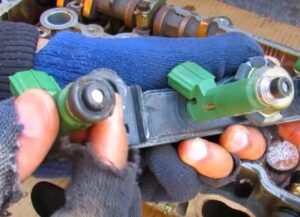
2. Fuel Injector Group F
- A subset of your fuel injector system, responsible for delivering fuel to one or more cylinders.
- Controlled by the PCM via a voltage supply circuit.
- If one injector fails, it affects both engine performance and emissions.
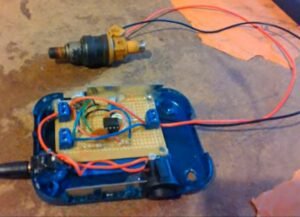
3. Fuel Injector Driver Circuit
- Located within the PCM, this circuit sends voltage to open/close the injectors.
- A failed driver can result in no injector pulse, engine misfires, or complete stalling.
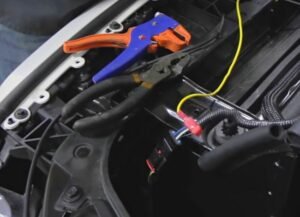
4. Wiring & Electrical Connectors
- Responsible for carrying signals and voltage between the VSS, fuel injectors, and PCM.
- Damaged, shorted, or corroded wires can mimic sensor failure and cause false P2159 readings.
5. Powertrain Control Module (PCM)
- The PCM processes all input data from sensors and sends out voltage to the injectors.
- If the PCM malfunctions, it may cause multiple DTCs (including P2159) and may require replacement.

Role of the Vehicle Speed Sensor (VSS)
The Vehicle Speed Sensor plays a key role in modern vehicle operation by:
- Sending speed data to the speedometer and odometer
- Helping the transmission select the correct gear
- Communicating with the ABS and traction control systems
- Assisting the PCM in optimizing fuel injection and timing
Without accurate VSS data, several systems—including the fuel injection system—can misbehave, leading to poor performance and reduced safety.
Frequently Asked Questions (FAQs) About the P2159 Code
🔹 What does the P2159 Code mean?
P2159 refers to a malfunction in either the Vehicle Speed Sensor B circuit or the Fuel Injector Group F voltage supply circuit, often resulting in poor engine and transmission performance.
🔹 Is it safe to drive with the P2159 code?
Not recommended long-term. Short trips might be safe, but prolonged driving with this code can harm the transmission, engine, and fuel system.
🔹 Can I fix the P2159 code myself?
If you’re skilled with multimeter diagnostics and OBD-II tools, you might handle minor repairs (like cleaning connectors). For injector or PCM issues, a professional mechanic is recommended.
🔹 How much does it cost to fix the P2159 code?
- VSS replacement: $100–$250
- Fuel injector replacement (each): $150–$300
- PCM replacement & programming: $500–$1000+
- Labor costs: $75–$150/hour depending on the garage
🔹 What cars most commonly show the P2159 code?
It is most frequently reported in:
- Hyundai Sonata
- Kia Optima
- Ford and GM models
- Mazda and Lexus vehicles
Final Thoughts on the P2159 Code
The P2159 code may not seem serious at first, but it affects key systems that keep your car running safely and efficiently. Ignoring it can lead to:
- Poor fuel mileage
- Engine misfires
- ABS/traction system failure
- Gear shifting problems
A professional diagnostic and prompt repair can help you avoid expensive damage and ensure your vehicle operates at peak performance.