
Last Updated on October 8, 2026
If your OBD2 scanner shows the P0299 code, your engine isn’t producing the boost pressure its computer expects. You might notice sluggish acceleration, reduced engine power, or a Check Engine Light.
The first thing many drivers worry about is a failed turbocharger. But P0299 doesn’t automatically mean you need a new turbo.
Sometimes the problem is as simple as a loose intercooler hose. Other times, it may involve a faulty wastegate, boost pressure sensor, or a worn turbocharger.
This guide explains what the P0299 code means, its symptoms, common causes, and how to diagnose the problem before paying for expensive repairs.
What Does the P0299 Code Mean?
The P0299 code stands for Turbocharger/Supercharger “A” Underboost Condition.
It means the engine computer has detected lower boost pressure than expected under certain operating conditions.
Turbochargers and superchargers increase the amount of air entering the engine. This allows the engine to produce more power from a relatively small displacement.
When the engine computer requests a certain amount of boost but the system cannot achieve it, the computer may store P0299.
The vehicle may also turn on the Check Engine Light or limit engine performance, depending on the fault and manufacturer.
However, the code identifies an underboost condition, not the exact component responsible.
How Does a Turbocharger or Supercharger Work?
Both turbochargers and superchargers compress incoming air to increase engine performance, but they work differently.
- Turbocharger: Uses energy from the exhaust gases to spin a turbine connected to an air compressor.
- Supercharger: Uses mechanical power from the engine, often through a belt, to drive the compressor.
When these systems work correctly, the engine receives the expected amount of compressed air.
If boost pressure falls below the computer’s expected value, the engine may lose power and acceleration.
That doesn’t always mean the turbo or supercharger itself has failed. A leaking hose or faulty control component can produce the same result.
Common Causes of the P0299 Code
Several problems can trigger a P0299 underboost code. The most likely cause depends on the vehicle, engine design, and symptoms.
1. Boost Pressure Leaks
One of the first things worth checking is the piping between the turbocharger, intercooler, and intake manifold.
A cracked hose, loose clamp, or leaking intercooler can allow compressed air to escape before it reaches the engine.
Even a small leak may become noticeable under acceleration when the system is pressurized.
2. Faulty Wastegate or Actuator
On many turbocharged engines, a wastegate helps regulate turbocharger boost.
If the wastegate stays open when it should close, some exhaust gas bypasses the turbine, limiting the boost the turbo can produce.
The problem may involve the wastegate mechanism, actuator, control solenoid, or associated wiring and hoses.
3. Faulty Boost Pressure Sensor
The engine computer uses pressure sensor information to monitor boost.
If the sensor reports an incorrect value, the computer may detect what appears to be an underboost condition.
Sensor wiring, poor connections, and contamination can also affect readings.
4. Worn or Damaged Turbocharger
A damaged turbocharger can fail to produce the required boost pressure.
Possible problems include compressor damage, excessive shaft wear, or other internal mechanical faults.
However, replacing the turbocharger should come after checking for leaks, restrictions, and control problems.
5. Restricted Air Intake
A severely restricted air filter or damaged intake duct can limit airflow into the turbocharger.
This may reduce the system’s ability to produce the expected boost under load.
6. Variable Geometry Turbo Problems
Some turbocharged engines, particularly diesels, use variable geometry turbochargers.
If the vanes stick or the actuator doesn’t move correctly, the turbo may fail to produce the requested boost.
These systems require vehicle-specific testing and procedures.
7. Other Engine or Control Problems
Depending on the vehicle, additional causes may include:
- Vacuum leaks affecting turbo control.
- A leaking diverter or bypass valve.
- Exhaust leaks before the turbocharger.
- Problems involving EGR operation on certain engines.
- Incorrect or outdated engine calibration.
Low oil pressure can also damage an oil-lubricated turbocharger. However, an oil pressure problem should be diagnosed separately rather than assumed to be the cause of P0299.
Common Symptoms of a P0299 Trouble Code
The symptoms depend on how much boost the engine is losing and how the vehicle responds.
Common signs include:
- Check Engine Light: The engine computer has detected an underboost condition.
- Reduced Power: Acceleration feels weaker than normal.
- Limp Mode: Some vehicles restrict engine output to protect the powertrain.
- Slow Acceleration: The engine struggles more when climbing hills or accelerating.
- Hissing or Whistling: A boost leak may produce an unusual sound under load.
- Unusual Turbo Noise: Grinding, screeching, or rattling may indicate mechanical trouble.
- Black Exhaust Smoke: Some diesel engines may produce additional smoke when airflow is insufficient.
- Reduced Fuel Economy: Fuel consumption may increase depending on the cause and driving conditions.
Not every vehicle will show all these symptoms.
Some drivers notice only a Check Engine Light, particularly when the underboost condition occurs under specific driving conditions.
How to Diagnose the P0299 Code
Before replacing the turbocharger, try to determine why the engine isn’t producing the expected boost.
Step 1: Read All Stored Codes
Connect a compatible OBD2 scanner and retrieve stored and pending trouble codes.
Look for related faults involving boost pressure, airflow sensors, turbo control, or fuel management.
Save the codes and available freeze-frame data before clearing anything.
Step 2: Inspect the Boost Hoses and Connections
With the engine off and cool, inspect accessible intake and intercooler piping.
Look for:
- Loose hose clamps.
- Split or disconnected hoses.
- Damaged intercooler connections.
- Oil residue around leaking boost connections.
- Collapsed or restricted intake ducts.
A loose connection can sometimes explain a major loss of boost without any internal turbocharger damage.
Step 3: Check the Air Filter and Intake
Inspect the engine air filter for excessive dirt or restriction.
Also check whether the intake ducting is damaged, obstructed, or incorrectly installed.
A restricted intake can affect boost performance.
Step 4: Compare Requested and Actual Boost
If your scanner supports the necessary manufacturer-specific data, compare requested boost pressure with actual boost pressure.
Under appropriate operating conditions, a significant difference may help confirm the problem.
Be careful when interpreting the numbers. Some scanners display absolute pressure, which includes atmospheric pressure, rather than boost pressure alone.
Use the correct specifications for your vehicle.
If you’re unfamiliar with scanner readings, our guide on how to read OBD2 live data explains how to interpret sensor information and compare readings during diagnosis.
Step 5: Test for Charge-Air Leaks
A controlled pressure or smoke test can help locate leaks that aren’t visible during a normal inspection.
Use the manufacturer’s specified test pressure and proper equipment. Excessive pressure can damage the intake system.
If you don’t have the equipment, a repair shop can perform this test.
Step 6: Test the Wastegate or Turbo Actuator
Depending on the engine, a technician may check actuator movement, vacuum supply, electrical control, or variable turbo vane operation.
Some advanced scanners can perform supported actuator tests.
These functions are not available on every basic code reader. Our bidirectional scan tool comparison explains which types of diagnostic tools offer active testing and why vehicle compatibility matters.
Don’t adjust actuator rods or turbo control settings without the correct service procedure.
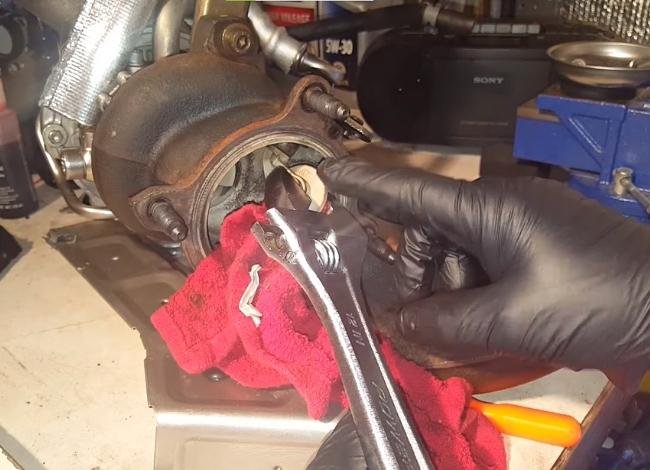
Step 7: Inspect the Turbocharger if Necessary
If the hoses, sensors, and controls check out, the turbocharger itself may need inspection.
Abnormal shaft movement, damaged compressor blades, oil leakage, or unusual mechanical noise may help identify internal problems.
Turbocharger inspection should follow the manufacturer’s procedure, especially when disassembly is required.
Common P0299 Diagnostic Mistakes
These mistakes can turn a relatively simple problem into an expensive repair.
- Replacing the turbo immediately: A boost leak or actuator fault may be responsible instead.
- Ignoring related codes: Other codes may explain why boost is low.
- Skipping a leak test: Some charge-air leaks appear only when the system is pressurized.
- Replacing the boost sensor without testing: Wiring or another engine condition may cause inaccurate readings.
- Adjusting the wastegate without specifications: Incorrect adjustments can create additional boost-control problems.
- Clearing codes too early: You may erase useful freeze-frame information.
The goal is to identify the actual fault before replacing components.
How to Fix Trouble Code P0299
The correct repair depends on what the diagnostic tests reveal.
Possible repairs include:
- Repairing or replacing cracked boost hoses and loose connections.
- Repairing an intercooler or charge-air leak.
- Replacing a severely restricted air filter.
- Repairing faulty boost pressure sensor wiring or replacing a confirmed defective sensor.
- Repairing a wastegate actuator or boost control solenoid.
- Repairing variable geometry turbo components when applicable.
- Replacing a turbocharger or supercharger after confirming mechanical failure.
- Correcting a verified engine software or calibration problem using approved procedures.
After the repair, check for leaks, verify boost operation, and rescan the vehicle.
Clearing the code alone won’t fix an underboost problem.
Is It Safe to Drive With the P0299 Code?
Whether you can continue driving with the P0299 code depends on the symptoms and severity of the problem.
If the Check Engine Light is steady and the vehicle still runs normally, limited gentle driving to a nearby repair facility may be possible.
However, avoid hard acceleration, towing, and heavy engine loads until the cause is known.
If the engine enters limp mode, remember that reduced power can make merging or passing traffic more difficult.
Stop driving and arrange a tow if you notice severe power loss, grinding turbo noises, heavy smoke, overheating, an oil pressure warning, or other serious symptoms.
A failing turbocharger can create additional engine problems, so don’t assume reduced-power mode makes continued driving harmless.
How Much Does It Cost to Fix the P0299 Code?
Repair costs vary considerably because P0299 can be caused by anything from a loose hose to a failed turbocharger.
The following are broad U.S. estimates for parts and typical repairs, not guaranteed quotes.
| Possible Repair | Approximate U.S. Cost |
|---|---|
| Air filter replacement | $20–$100+ |
| Boost hose or connection repair | $75–$350+ |
| Boost pressure sensor replacement | $100–$350+ |
| Wastegate actuator or boost control repair | $150–$900+ |
| Intercooler repair or replacement | $250–$1,000+ |
| Turbocharger replacement | $1,000–$4,000+ |
Labor rates, vehicle design, and access to the components can make repairs more expensive.
A proper diagnostic inspection may also involve an additional charge.
Before approving a turbocharger replacement, ask the mechanic what tests confirmed the turbo itself is faulty.
Can P0299 Return After Repair?
Yes. The code can return if the original problem wasn’t completely corrected or if another related fault remains.
For example, replacing a boost sensor won’t solve a leaking intercooler hose.
Likewise, replacing a turbocharger won’t necessarily fix incorrect actuator control or damaged sensor wiring.
After repairs, the vehicle should be checked under the operating conditions that originally triggered the fault.
That may require reviewing live data during an appropriate road test or using a manufacturer-approved diagnostic procedure.
It’s also important to save your diagnostic information before clearing codes. Our guide on recovering accidentally erased OBD2 codes explains why previously cleared information may no longer be available.
How to Help Prevent P0299 Problems
Not every underboost problem is preventable, but routine maintenance can reduce some common risks.
- Follow the recommended engine oil and filter service intervals.
- Use the correct engine oil specification.
- Replace restricted engine air filters.
- Inspect intake and intercooler hoses when servicing the vehicle.
- Address unusual turbo noises or sudden power loss promptly.
- Repair oil leaks and lubrication problems before they damage the turbocharger.
Maintenance won’t guarantee that P0299 never appears, but it can help prevent avoidable component damage.
Frequently Asked Questions About P0299
1. What should I do if P0299 appears while driving?
Reduce engine load and pay attention to how the car behaves. If the engine loses substantial power, makes unusual noises, or shows other serious warnings, pull over safely and arrange assistance.
2. What is turbo underboost?
Underboost means the engine isn’t receiving the boost pressure expected by its control system under certain conditions.
3. Can I clear the P0299 code myself?
Yes, a compatible OBD2 scanner can usually clear a stored P0299 code. But if the underlying problem remains, the code may return. Save the diagnostic information before clearing it.
4. Does P0299 always mean a bad turbocharger?
No. A leaking boost hose, faulty actuator, intake restriction, or inaccurate boost sensor reading can also trigger the code.
5. Can bad fuel cause P0299?
Bad fuel isn’t a typical direct cause of P0299. However, engine performance problems may affect boost control on some vehicles. Check for other fault codes and symptoms before blaming fuel quality.
6. Can hot or cold weather trigger P0299?
Temperature and air density affect engine operating conditions, but a properly functioning system should compensate within its design limits. Weather alone doesn’t prove the cause of an underboost fault.
7. Does P0299 affect fuel economy?
It can. Poor engine performance or reduced efficiency may increase fuel consumption, although the effect varies with the fault and driving conditions.
Final Thoughts: Don’t Replace the Turbo Before Checking the Cause
The P0299 code tells you that the engine isn’t receiving the boost pressure it expects. But it doesn’t tell you exactly why.
A failed turbocharger is one possibility, but boost leaks, wastegate problems, sensor faults, and intake restrictions can produce the same code.
Start by reading the stored codes, checking the boost hoses, and comparing actual and requested boost when the necessary data is available.
If the basic checks don’t identify the problem, have the system tested by a qualified technician before approving major repairs.
Finding the real cause first can save money, prevent unnecessary parts replacement, and help get your vehicle running properly again.