
You connect a scanner because the transmission is shifting harshly. The Check Engine Light is on, but the scan result may vary widely depending on the tool.
One scanner might retrieve a specific transmission-related P-code. Another may display only P0700. A third may report no codes even though a transmission warning is visible on the dashboard.
So, Can an OBD2 Scanner Read Transmission Codes? Yes, many scanners can read at least some of them. However, complete access depends on where the code is stored, whether it is standardized or manufacturer-specific, and whether the scanner can communicate directly with the Transmission Control Module.
To understand those differences, it helps to view scanner capability as an access ladder. Each level reaches deeper into the vehicle’s transmission information.
Why the Same OBD2 Port Can Produce Different Results
The 16-pin OBD2 connector is an access point, not a guarantee that every scanner can communicate with every control module.
Generic OBD2 was primarily standardized for emissions-related diagnostics. Because some transmission faults can affect emissions, certain transmission-related codes may be available through this generic layer. Other faults remain inside the manufacturer-specific transmission system.
Vehicle design also matters. Some vehicles combine engine and transmission control inside one Powertrain Control Module. Others use a separate Transmission Control Module, commonly called the TCM. A scanner that checks only generic emissions information may receive data from the powertrain system without performing a complete direct scan of the TCM.
Software creates another limitation. Two scanners may use identical connectors but contain different vehicle databases, communication commands, and module coverage.
The Transmission Code Access Ladder
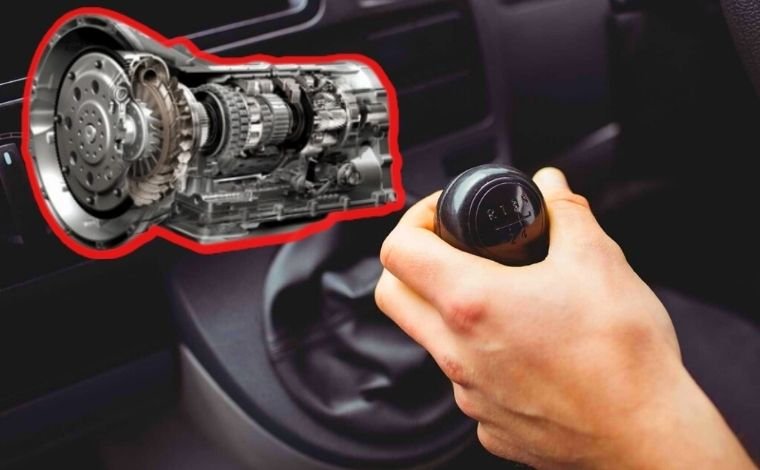
Level 1: The Scanner Checks Only the Generic OBD2 Layer
A basic reader usually begins with information related to the Check Engine Light and emissions system. Depending on the vehicle and tool, it may retrieve stored, pending, and permanent codes, along with readiness status and limited freeze-frame data.
This level is useful when the transmission fault has caused an emissions-related P-code to be reported through generic OBD2. However, it may not reveal every code stored in a separate TCM.
What “No Codes” May Actually Mean
A basic scanner displaying “no codes” does not necessarily prove that the transmission has no problem. It may mean only that the scanner found no accessible codes through the generic emissions mode.
The vehicle could still have:
- A manufacturer-specific code stored in the TCM
- A non-emissions-related transmission fault
- A module communication problem
- A mechanical or hydraulic issue that has not met the conditions required to set a code
This explains why a transmission warning light can remain on even when a low-cost reader reports no results.
Level 2: The Scanner Retrieves a Generic Transmission P-Code
The best way to answer Can an OBD2 Scanner Read Transmission Codes is to look at what the scanner actually retrieves. A basic or mid-level tool may find standardized transmission-related powertrain codes when the vehicle makes them available through generic OBD2.
Common examples include:
| Code | General Definition | What the Code Does Not Prove |
|---|---|---|
| P0715 | Input/turbine speed-sensor “A” circuit | That the speed sensor itself has failed |
| P0720 | Output speed-sensor circuit | That the transmission needs replacement |
| P0730 | Incorrect gear ratio | That internal wear is the only possible cause |
| P0740 | Torque-converter clutch circuit | That the torque converter is definitely defective |
| P0750 | Shift-solenoid “A” circuit | That replacing the solenoid will correct the problem |
The Code Names a Fault Area, Not a Repair
A circuit code may be triggered by a sensor or solenoid, but it can also involve wiring, connectors, power supply, ground, or controller operation.
An incorrect-ratio code can have electrical, hydraulic, or mechanical causes. A torque-converter clutch code may involve the control circuit, fluid pressure, valve-body operation, or an internal component. Therefore, even a specific-looking code should be treated as evidence rather than a replacement instruction.
The first two access levels can provide valuable information, but they may still leave one important question unanswered: what if the scanner retrieves only P0700 while the detailed transmission fault remains stored inside the TCM?
Level 3: The Scanner Finds P0700—but Not the Actual Fault
One of the most confusing answers to Can an OBD2 Scanner Read Transmission Codes is a scan that displays only P0700.
P0700 generally means the transmission controller has detected a fault and requested that the engine controller turn on the Malfunction Indicator Light. It alerts the generic OBD2 system that a transmission-related problem exists, but it usually does not identify that problem by itself.
Think of P0700 as a notification from the TCM. The detailed code may still be stored inside the transmission module.
Why a Basic Reader Stops at P0700
A generic reader may communicate with the engine or powertrain controller well enough to retrieve the request for warning-light illumination. However, it may lack the manufacturer-specific software needed to enter the TCM and retrieve the underlying fault.
The hidden code could relate to a speed sensor, shift-solenoid circuit, pressure-control system, torque-converter clutch, gear-ratio error, or another monitored condition. Without direct TCM access, P0700 provides too little information to support a repair decision.
Clearing P0700 does not correct the original fault. If the TCM detects the problem again, it can request warning-light illumination again. Codes and available freeze-frame information should therefore be recorded before anything is erased.
Level 4: An Enhanced Scanner Communicates Directly With the TCM
An enhanced scanner moves beyond the generic emissions layer. After the correct make, model, year, engine, and drivetrain are selected, it uses vehicle-specific software to communicate with the supported transmission controller.
Depending on coverage, the scanner may provide:
- Manufacturer-specific TCM codes and subcodes
- Code status, such as current or history
- Transmission-related freeze-frame information
- Input and output speed-sensor readings
- Commanded and actual gear information
- Transmission-fluid temperature
- Torque-converter clutch or solenoid data
This additional information can explain why P0700 was stored. It may also reveal transmission faults that never produced a generic Check Engine code.
Why Transmission Type Matters
A conventional automatic, continuously variable transmission, dual-clutch transmission, and hybrid transaxle do not necessarily use the same modules, data parameters, or diagnostic procedures.
A scanner that supports the transmission in one vehicle may offer limited access to another model from the same manufacturer. Even if it can retrieve TCM codes, it may not display CVT pressure data, clutch temperatures, adaptation values, or hybrid drive information.
Coverage should always be verified for the exact vehicle and transmission—not only the vehicle brand.
Quick Capability Check
| Diagnostic Capability | Basic Generic Reader | Enhanced Transmission Scanner |
|---|---|---|
| Generic transmission-related P-codes | Often available | Normally available |
| P0700 | Often available | Available when reported |
| Direct TCM scan | Usually unavailable | Vehicle-dependent |
| Manufacturer-specific transmission codes | Limited or unavailable | Vehicle-dependent |
| Transmission live data | Limited or unavailable | Often available with coverage |
| CVT, DCT, or hybrid-specific data | Usually unavailable | Depends on exact drivetrain support |
| Active tests or relearn functions | Unavailable | Only when specifically listed |
“Transmission Support” Can Mean Several Different Things
Product descriptions sometimes use broad terms such as “transmission diagnostics” or “all-system scan.” Those labels require closer inspection.
A scanner might read generic P07xx codes but not communicate directly with the TCM. Another might retrieve OEM codes but provide no transmission live data. A more advanced tool may add live data yet still lack active tests, adaptation resets, or relearn procedures.
These capabilities are separate:
Code access retrieves stored fault information.
Live data displays available operating values.
Active tests command supported components or functions.
Service functions perform specific resets, calibrations, or relearns.
Having one capability does not guarantee the others. Some features may also require an OEM software package, paid subscription, or current update.
More Data Still Does Not Identify the Failed Part
An enhanced scanner can show the code that caused P0700 and provide useful supporting data. It cannot automatically determine whether the root cause is a sensor, wiring fault, connector problem, low voltage, hydraulic condition, software issue, or internal transmission wear.
The code must be compared with symptoms and proper diagnostic testing. For example, a speed-sensor circuit code does not prove that the sensor itself is defective, while an incorrect-ratio code does not automatically mean the transmission requires rebuilding.
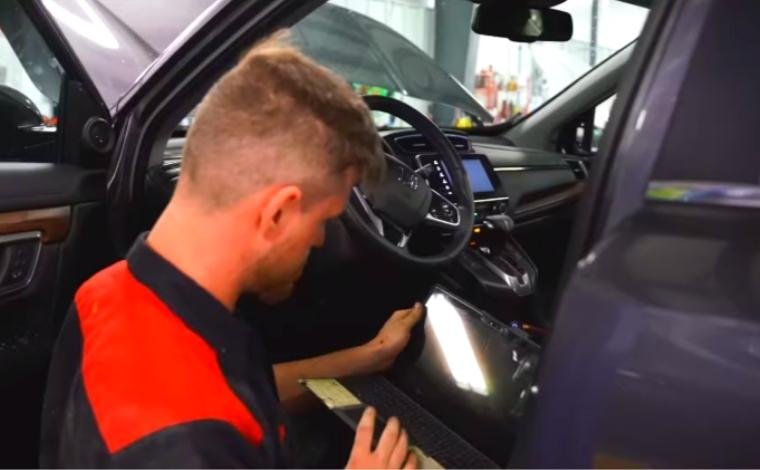
The practical answer to Can an OBD2 Scanner Read Transmission Codes is therefore based on depth. Generic access may reveal the warning. Direct TCM access is often required to retrieve the detailed evidence behind it.
When an Enhanced Scanner Becomes Necessary
If you are asking Can an OBD2 Scanner Read Transmission Codes, the practical next step is to match the scanner’s coverage to the problem.
A basic reader may be sufficient when the Check Engine Light is on and it retrieves a specific generic transmission P-code. An enhanced scanner becomes more useful when the result stops at P0700, a transmission warning appears without a generic code, or module-specific data is needed.
Direct TCM access is also important when the vehicle enters limp mode, uses a CVT or dual-clutch transmission, or requires manufacturer-specific code definitions.
Six Coverage Details to Check Before Buying a Scanner
A dependable answer to Can an OBD2 Scanner Read Transmission Codes must be tied to the exact vehicle—not only the words “OBD2 compatible.”
1. Exact Vehicle Compatibility
Confirm the make, model, year, engine, and drivetrain. General OBD2 compatibility may refer only to standardized emissions functions.
2. Direct TCM Access
The coverage information should specifically list the transmission or TCM. Reading P0700 from the engine controller is not the same as scanning the TCM directly.
3. Manufacturer-Specific Codes
Verify whether the tool retrieves OEM transmission codes rather than only generic P-codes.
4. Transmission Live Data
If live data is required, check for supported parameters such as input speed, output speed, commanded gear, fluid temperature, or torque-converter clutch status. Availability varies by vehicle.
5. Active Tests and Relearn Functions
Code reading does not guarantee solenoid commands, adaptation resets, CVT relearns, or other service functions. Each capability should be listed separately.
6. Updates and Additional Costs
Enhanced coverage may require an app add-on, manufacturer package, subscription, or current software update.
A Transmission Code Does Not Mean You Need a New Transmission
Transmission codes identify conditions detected by a controller. They do not automatically determine the repair.
A speed-sensor circuit code could involve the sensor, wiring, connector, power supply, or controller. A shift-solenoid code may point toward an electrical fault, hydraulic issue, or valve-body problem. An incorrect-ratio code can result from inaccurate sensor data, pressure loss, fluid-related trouble, or internal wear.

Even P0700 does not mean that the transmission has failed. It simply indicates that the TCM reported a problem serious enough to request warning-light illumination.
Replacing expensive parts based only on a code definition can waste money and leave the original fault unresolved.
What to Do After Retrieving a Transmission Code
First, record every code and its status before clearing anything. Save available freeze-frame information and note which warning lights appeared.
If the scanner shows only P0700 or cannot access the TCM, arrange a scan with a compatible enhanced tool. The detailed transmission code may provide the direction that the generic report lacks.
Next, compare the code with the vehicle’s actual symptoms. Useful observations include whether the problem occurs when the vehicle is cold or warm, whether engagement is delayed, and whether shifting has become harsh or inconsistent. Avoid intentionally recreating severe slipping or unsafe behavior merely to collect more data.
Finally, use vehicle-specific service information and appropriate testing before approving a component replacement or transmission repair.
When Driving May Make the Problem Worse
Stop driving safely and arrange professional assistance if the transmission is slipping severely, loses Drive or Reverse, becomes stuck in one gear, produces a strong burning odor, or cannot transfer power reliably.
A minor warning with normal operation may still allow the vehicle to reach a nearby repair facility, but diagnosis should not be delayed. Continued driving with severe slipping can create additional heat and damage.
Clearing the code to remove a warning light does not make the transmission safe or repair the fault.
Frequently Asked Questions
Can Every Basic OBD2 Scanner Read P0700?
Many can, because P0700 is a generic powertrain code. However, tool and vehicle compatibility still matter.
Why Does My Scanner Show P0700 but Nothing Else?
The reader may be seeing the TCM’s request through the engine controller without communicating directly with the TCM. An enhanced scan may be needed to retrieve the detailed fault.
Can a Bluetooth Adapter Read TCM Codes?
Yes, if the adapter, app, and enhanced software support the vehicle’s transmission module and communication network. Bluetooth connectivity alone does not determine coverage.
Can a Scanner Display Transmission-Fluid Temperature?
Some scanners can, but only when the vehicle provides that parameter and the tool has access to it. Generic apps may not display it on every model.
Will Clearing a Transmission Code End Limp Mode?
It may temporarily remove a warning or reset a strategy, but limp mode can return when the fault is detected again. The underlying cause must be diagnosed.
Final Answer
The answer to Can an OBD2 Scanner Read Transmission Codes is yes—but only within the scanner’s access level. A basic reader may retrieve generic transmission P-codes or P0700, while a compatible enhanced scanner can communicate directly with the TCM and provide OEM codes or additional data.
Check exact vehicle and module coverage before buying a scanner, and treat every code as diagnostic evidence rather than proof that a particular part—or the entire transmission—must be replaced.