TPMS Light ON? 6 Common Causes You Should Check First
Last Updated on November 22, 2026
You’re halfway to work when a yellow horseshoe-shaped light with an exclamation mark appears on your dashboard. You glance at your tires later, and none looks flat. So why is the warning there?
A TPMS light ON warning usually means one or more tires have lost pressure. It can also appear because of a damaged tire pressure sensor, a dead sensor battery, or a monitoring system that isn’t communicating properly.
The good news is that not every TPMS warning means an expensive repair. Sometimes, adjusting the tire pressure is all it takes. Other times, the warning is telling you about a slow leak or an electronic problem that needs attention.
Here are six common causes worth checking before paying for new sensors or attempting a reset.
What Does It Mean When the TPMS Light Comes On?
TPMS stands for Tire Pressure Monitoring System. Its job is to warn you when tire pressure drops significantly below the recommended level.
Most modern US vehicles display a yellow symbol resembling a tire cross-section with an exclamation mark inside.
There are two main types of TPMS:
Direct TPMS: Uses electronic pressure sensors mounted inside the wheels to measure tire pressure and send information to the vehicle.
Indirect TPMS: Uses wheel-speed information, typically from the ABS system, to detect changes consistent with tire underinflation. Some systems also analyze tire vibration characteristics.
A direct system may show individual tire pressures on the dashboard, while an indirect system generally identifies a pressure-loss condition without directly measuring PSI.
Neither system replaces regular manual pressure checks. A tire can be underinflated before the warning threshold is reached.
TPMS Light ON: 6 Common Causes You Should Check First
The easiest way to approach a TPMS warning is to start with the tires themselves. If their condition and pressure check out, move on to the monitoring system.
1. One or More Tires Have Low Air Pressure
Low tire pressure is the most common reason for a steady TPMS warning light.
Tires naturally lose some air over time. Even without a puncture, pressure can gradually decrease until one tire falls below the system’s warning threshold.
The tire may still look perfectly normal.
Modern radial tires can be significantly underinflated without appearing visibly flat, which makes relying on appearance risky.
What should you check?
Park somewhere safe and measure the pressure in all four tires with a reliable gauge. For the most useful reading, check them cold—before driving or after they’ve been parked for at least three hours.
Compare your readings with the tire pressure label inside the driver’s door opening or the specifications in your owner’s manual.
For example, if the placard recommends 35 PSI and a tire measures 27 PSI, it needs attention even if it looks properly inflated.
Don’t use the maximum pressure printed on the tire sidewall as your inflation target. That number isn’t necessarily what your vehicle manufacturer recommends.
If a tire has lost substantial pressure, inspect it for damage before assuming it simply needs air.
2. Cold Weather Has Lowered Your Tire Pressure
Does your tire pressure light appear on chilly mornings but disappear later in the day?
That pattern often points to pressure changes caused by temperature.
As outside temperatures fall, the air inside your tires becomes cooler, and measured pressure decreases. A common rule of thumb is approximately 1 PSI for every 10°F temperature change, although the exact change varies.
Imagine your tires were already a little below their recommended pressure. Overnight temperatures drop sharply, pushing one tire below the TPMS warning threshold.
The light comes on when you start the car. After driving, the tires warm up, pressure increases, and the light may turn off.
That doesn’t mean the original pressure was correct.
The fix: Check each tire when cold and inflate it to the vehicle’s recommended cold PSI.
Don’t bleed air from warm tires simply because their pressure reads higher than the cold specification. You’ll risk underinflating them after they cool down.
3. A Slow Tire Leak or Puncture Keeps Triggering the Warning
You fill the tires, the TPMS warning disappears, and everything seems fine.
Three days later, the light returns.
That recurring pattern is a strong reason to suspect a slow leak.
A small nail or screw embedded in the tread may allow air to escape gradually. Leaks can also develop around valve stems, tire beads, or damaged wheels.
Sometimes the tire holds pressure well enough for short trips but loses several PSI over a few days.
Check the pressure of each tire and record the readings. Recheck when the tires are cold under similar conditions.
If one tire consistently loses more pressure than the others, have it inspected.
Avoid pulling an embedded nail or screw out yourself. Removing it could cause rapid air loss.
A professional may be able to repair a puncture located in an appropriate tread area, provided the tire meets applicable repair guidelines. Sidewall damage, internal damage from driving underinflated, and certain other punctures can make replacement necessary.
Repeatedly adding air without locating the leak isn’t a dependable long-term solution.
4. A TPMS Sensor Battery Is Dead or the Sensor Is Damaged
If all four tires have the correct pressure but your TPMS light flashes when starting the vehicle, the problem may be electronic.
Direct TPMS sensors contain transmitters powered by small internal batteries. These batteries have a limited lifespan, often around 5–10 years depending on operating conditions and sensor design.
Once a battery becomes too weak, the sensor may stop transmitting reliably.
The vehicle then loses information from that wheel and may display a TPMS malfunction warning.
Other potential causes include physical damage during tire service, corroded valve assemblies, or sensor electronics that have failed.
Most original sealed TPMS sensors don’t allow simple battery replacement. The complete sensor is usually replaced.
However, don’t buy a sensor based only on the dashboard light.
A TPMS-capable diagnostic tool can often activate compatible sensors and check their transmitted information, helping identify which sensor isn’t responding.
Also, vehicles with indirect TPMS do not use individual battery-powered pressure sensors in their wheels. Their failures require a different diagnostic approach.
5. New Tires, Tire Rotation, or Wheel Replacement Has Disrupted TPMS
Think back to when the light first appeared.
Did you recently install new tires, rotate the wheels, or switch to a different wheel set?
If so, the tire service may be related.
With direct TPMS, the vehicle must recognize the sensors fitted to its wheels. Replacing a sensor or installing a second set of wheels can require a registration or relearn procedure.
Some aftermarket wheels may have incompatible sensors or no sensors at all.
Damage during tire mounting is another possibility.
Tire rotation, however, doesn’t automatically require a TPMS relearn on every vehicle. Some systems recognize wheel position changes automatically, while others require a procedure to update sensor positions.
If you recently installed a temporary spare, check whether your vehicle monitors that wheel. Some systems may display warnings when a monitored wheel is removed or when a spare lacks a compatible sensor.
The correct procedure depends on the vehicle’s make, model, year, and TPMS design.
Before replacing hardware, ask the tire shop whether the sensors were checked and whether any required relearn was completed.
6. TPMS Calibration, Receiver, or Communication Problems
Sometimes the tires are fine, the sensors are functional, and the warning still won’t disappear.
The issue may involve the TPMS control system rather than an individual tire.
For example, an indirect TPMS system may require initialization after tire pressure adjustment or certain tire services. If calibration hasn’t been completed correctly, the system may continue using an outdated reference.
Direct TPMS systems can experience receiver faults, wiring problems, or incorrect sensor registration.
Radio interference can occasionally affect sensor communication on some vehicles, although it shouldn’t be assumed to be the cause of a persistent warning.
An incorrectly programmed replacement sensor can produce a similar problem.
At this point, repeatedly pressing a TPMS reset button isn’t the answer. The next step is to identify which part of the monitoring system isn’t functioning correctly.
Solid vs. Flashing TPMS Light: How to Tell What’s Wrong
Before you buy parts, observe exactly how the warning behaves.
The pattern can point you toward the right first check.
Warning Behavior
What It May Mean
What to Check
Light stays solid
One or more tires significantly underinflated
Cold tire pressure
Light comes on during cold mornings
Pressure near warning threshold
Recommended cold PSI
Light flashes for 60–90 seconds, then stays on
TPMS malfunction
Sensor and system diagnostics
Light returns after adding air
Slow leak, incomplete correction, or unresolved fault
Tire pressure and leaks
Light appears after wheel replacement
Sensor compatibility or registration problem
Sensor IDs and relearn
For US vehicles subject to the applicable TPMS requirements, a malfunction warning commonly flashes for 60–90 seconds before remaining illuminated.
The flashing sequence may repeat at each subsequent startup until the malfunction is corrected.
A system malfunction and low tire pressure can exist at the same time. That’s why you should still check the tires even when the warning suggests an electronic fault.
How to Turn Off the TPMS Light the Right Way
A TPMS light isn’t something you should simply erase from the dashboard. It should go out because the underlying problem has been corrected.
Here’s a practical sequence that works as a starting point for most vehicles.
Step 1: Measure Tire Pressure When Cold
Use a quality tire pressure gauge rather than relying only on the vehicle’s dashboard readings.
Check all road tires and the spare if your vehicle monitors it.
Compare the readings against the tire placard. Front and rear tires may have different recommended pressures.
Step 2: Adjust Pressure to the Correct PSI
Inflate underinflated tires to the manufacturer-recommended cold pressure.
Check the readings again with your gauge and reinstall the valve caps.
Some TPMS systems update their status after a short drive. Others require a specific procedure.
Step 3: Look for a Recurring Leak
If one tire loses pressure again, don’t keep resetting the warning.
Have the tire, valve stem, and wheel inspected for air loss.
A tire that has been driven while severely underinflated may also need an internal inspection before being returned to service.
Step 4: Follow the Correct TPMS Reset or Relearn Procedure
Consult the owner’s manual rather than using a generic internet reset sequence.
Some vehicles automatically recognize the corrected tire pressures. Others require a dashboard-menu selection, a TPMS button, or a specific sensor relearn procedure.
For an indirect system, calibration is normally performed after the tires have been adjusted correctly.
Never initialize an indirect TPMS system while the tires are improperly inflated. You could teach the system to accept an incorrect baseline.
Step 5: Diagnose a Persistent Warning
If pressure and tire condition are correct but the warning remains, electronic testing is appropriate.
A compatible tool can help check sensor communication, stored faults, and sensor registration.
If the system requires a replacement sensor, confirm compatibility before installation.
Can an OBD2 Scanner Diagnose or Reset a TPMS Light?
This is where many drivers waste money on the wrong tool.
An inexpensive OBD2 reader that clears Check Engine Light codes may not be able to access TPMS information at all.
Standard OBD2 diagnostics primarily cover emissions-related systems. TPMS diagnosis generally requires additional vehicle-specific access or specialized equipment.
If you’re comparing OBD2 scanners, look beyond general claims such as “reads and clears codes.” Check whether the tool specifically supports TPMS functions for your vehicle.
Which Diagnostic Tool Do You Need?
Tool Type
What It Can Do
Manual tire pressure gauge
Measures actual tire PSI
Basic OBD2 code reader
Reads supported engine/emissions codes; usually no TPMS diagnosis
Advanced scanner with TPMS functions
May access TPMS faults or perform supported service procedures
Dedicated TPMS activation tool
Can communicate with compatible in-wheel sensors
TPMS programming/relearn tool
May program supported replacement sensors and perform registration procedures
For example, the Autel MaxiCOM MK808TS review covers a diagnostic tool designed with dedicated TPMS capabilities, including sensor activation and supported programming functions.
The exact capabilities still depend on the software, sensor type, and vehicle.
A scanner offering a menu labeled “TPMS Reset” doesn’t necessarily support wireless sensor activation or replacement sensor programming.
TPMS Reset vs. Relearn vs. Programming
These three terms are frequently used as though they mean the same thing. They don’t.
Reset or calibration establishes or updates the system’s reference conditions, particularly on indirect TPMS systems.
Relearn allows the vehicle to recognize the appropriate sensor IDs or wheel positions where required.
Programming configures a compatible programmable replacement sensor to communicate with the vehicle.
For a closer look at how advanced scanners differ, our Autel MK808, MK808BT, and MK808TS comparison discusses the distinctions between basic diagnostic features and more extensive TPMS services.
If you’re new to vehicle diagnostics, understanding what an OBD2 scanner can actually access is useful before purchasing a tool.
And if a TPMS service requires connecting a scanner to the vehicle, the guide to locating the OBD2 port explains where to find the diagnostic connector.
Why Is the TPMS Light Still On After Filling All Four Tires?
You’ve added air, double-checked the dashboard, and the tire pressure warning is still there.
Before scheduling sensor replacement, consider a few possibilities.
First, were the tires cold when you checked them? Hot tire pressures can be several PSI higher than cold readings, and that difference may hide underinflation.
Second, are you using the correct target? The pressure shown on the tire sidewall isn’t necessarily the vehicle’s recommended PSI.
Third, is the pressure dropping again? A small puncture can cause repeated warnings even after a successful inflation.
If those checks are normal, look at the vehicle’s TPMS update requirements. Some systems need driving time to recognize the correction, while others need calibration or relearning.
A monitored spare tire can also be overlooked.
Finally, if the light flashes before staying solid, investigate an electronic malfunction rather than repeatedly adjusting already-correct tire pressures.
Advanced diagnostic scanners can sometimes retrieve TPMS module information, much as other systems provide diagnostic data. Our explanation of reading live data from OBD2 scanners covers the broader diagnostic concept, although TPMS sensor data requires compatible enhanced equipment.
Is It Safe to Drive With the TPMS Light On?
It depends on why the light is illuminated.
If a tire is visibly flat, severely underinflated, damaged, or losing air rapidly, don’t continue driving. Underinflated tires generate additional heat, reduce handling performance, and can fail without much warning.
If the warning appears while driving, find a safe location to stop and inspect the tires.
When all tires have been checked with an accurate gauge and their pressures are correct, a TPMS malfunction may not require immediate towing. However, you should arrange diagnosis promptly.
Until the system works correctly, you can’t depend on it to warn you about future pressure loss.
Don’t confuse a TPMS malfunction with a harmless warning light. The electronics may be faulty, but your tires still need to be checked regularly.
How Much Does It Cost to Fix a TPMS Warning Light?
The cost depends entirely on what’s causing the warning.
Adding air may cost nothing, while replacing an electronic sensor can be considerably more expensive.
Here are typical repair considerations for US drivers:
Problem
Estimated Cost
Low tire pressure
Often free or inexpensive
Repairable tire puncture
Depends on the tire and shop
TPMS sensor replacement
Approximately $50–$250 for many single-sensor jobs
TPMS relearn
Approximately $49–$71
Receiver or wiring problems
Requires diagnosis before an estimate
AutoZone describes a broad $50–$250 range for single-sensor replacement, while RepairPal’s September 2026 national estimate is $240–$299. Actual charges depend on the vehicle, parts, labor, and whether other services are needed.
A separate TPMS relearn may not always be charged when included with sensor replacement or tire service.
Replacing all four sensors simply because one warning appeared is rarely a sensible first move. Test the tires and identify the failed component before approving the repair.
How to Keep the TPMS Warning Light From Coming Back
The simplest prevention is consistent tire pressure maintenance.
Check tire pressure at least once a month and before long trips. Measure when the tires are cold, especially during seasonal temperature changes.
Inspect the tires for cuts, embedded objects, and uneven wear. If a tire repeatedly needs air, have it checked rather than treating the air pump as a permanent repair.
Whenever you replace wheels or TPMS sensors, confirm that the replacement components are compatible with your vehicle.
And after tire service, follow any required calibration or relearn procedure.
These habits won’t prevent every electronic failure, but they’ll reduce avoidable pressure-related warnings and help keep your tires in better condition.
Frequently Asked Questions
Why Is My TPMS Light On When My Tires Look Fine?
Tires can be significantly underinflated without looking flat. Use a pressure gauge to check the actual PSI. If all tires meet the recommended cold pressure, investigate sensor communication, calibration, or other TPMS faults.
Will the TPMS Light Go Off by Itself?
Sometimes. Many direct TPMS systems automatically clear a low-pressure warning after the tires are correctly inflated and the system updates. Other vehicles require a reset or calibration procedure. A malfunction warning generally remains until the underlying fault is corrected.
Why Is My TPMS Light Blinking Instead of Staying Solid?
On many US vehicles, a TPMS light that flashes for approximately 60–90 seconds before staying illuminated indicates a monitoring system malfunction. Possible causes include a failed sensor, communication problem, or incomplete sensor registration.
Does a TPMS Light Mean I Need New Tires?
Not necessarily. A pressure warning alone doesn’t tell you whether the tires need replacement. They may simply need inflation or a puncture repair. Replacement depends on tire damage, tread condition, age, and repairability.
Can a Dead TPMS Battery Be Replaced?
Most original direct TPMS sensors have sealed batteries that aren’t designed for separate replacement. When the battery fails, the sensor assembly is normally replaced and any required registration or relearn is completed.
Can a Regular OBD2 Scanner Reset the TPMS Light?
Most basic OBD2 code readers cannot. A scanner must specifically support the necessary TPMS function for your vehicle. Some advanced diagnostic scanners offer TPMS servicing, while dedicated TPMS tools provide sensor activation, programming, or relearn capabilities depending on the model.
Final Thoughts
A TPMS light ON warning is usually a reason to check your tires, not immediately replace an expensive sensor.
Start with cold tire pressure, look for slow leaks, and consider whether recent tire or wheel service could explain the warning. If the light flashes or remains illuminated despite correct tire pressures, the monitoring system may need specialized diagnosis.
The goal isn’t simply to make the dashboard light disappear. It’s to confirm that your tires are properly inflated and that the system can warn you when something genuinely goes wrong.

 Compare your readings with the tire pressure label inside the driver’s door opening or the specifications in your owner’s manual.
For example, if the placard recommends 35 PSI and a tire measures 27 PSI, it needs attention even if it looks properly inflated.
Don’t use the maximum pressure printed on the tire sidewall as your inflation target. That number isn’t necessarily what your vehicle manufacturer recommends.
If a tire has lost substantial pressure, inspect it for damage before assuming it simply needs air.
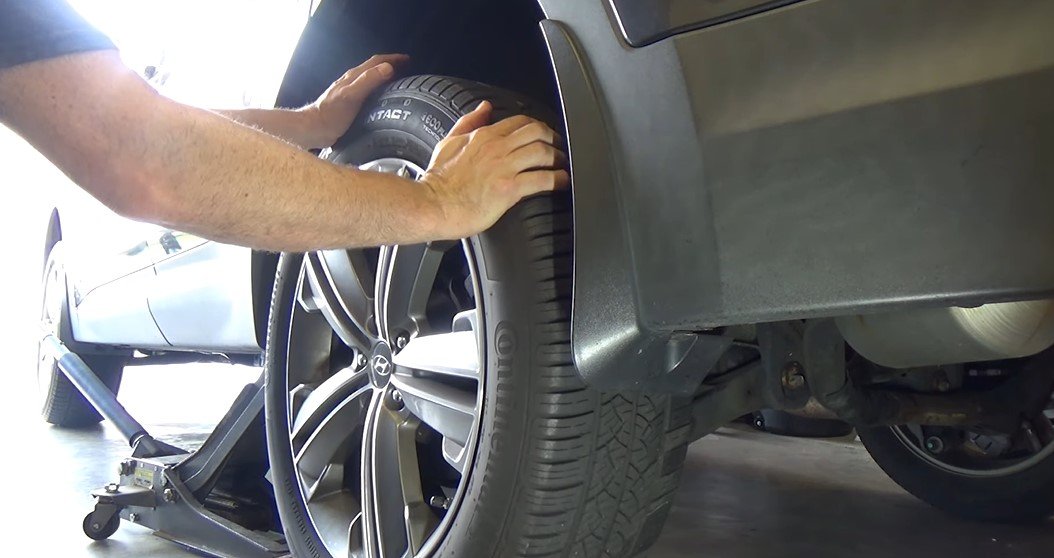 The fix: Check each tire when cold and inflate it to the vehicle’s recommended cold PSI.
Don’t bleed air from warm tires simply because their pressure reads higher than the cold specification. You’ll risk underinflating them after they cool down.
 However, don’t buy a sensor based only on the dashboard light.
A TPMS-capable diagnostic tool can often activate compatible sensors and check their transmitted information, helping identify which sensor isn’t responding.
Also, vehicles with indirect TPMS do not use individual battery-powered pressure sensors in their wheels. Their failures require a different diagnostic approach.
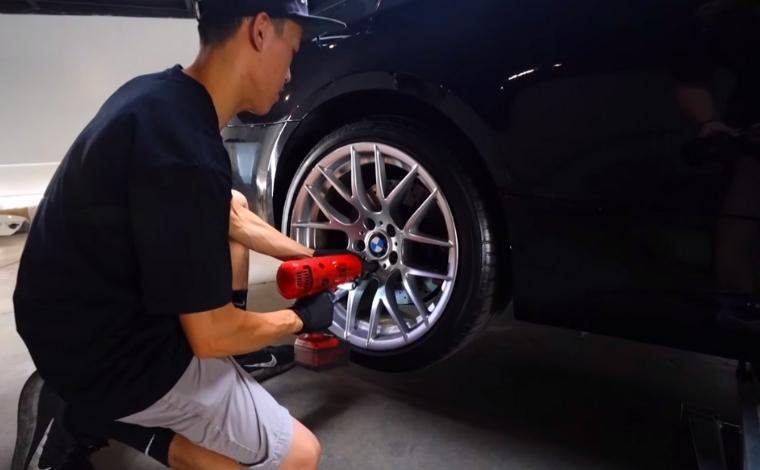 Tire rotation, however, doesn’t automatically require a TPMS relearn on every vehicle. Some systems recognize wheel position changes automatically, while others require a procedure to update sensor positions.
If you recently installed a temporary spare, check whether your vehicle monitors that wheel. Some systems may display warnings when a monitored wheel is removed or when a spare lacks a compatible sensor.
The correct procedure depends on the vehicle’s make, model, year, and TPMS design.
Before replacing hardware, ask the tire shop whether the sensors were checked and whether any required relearn was completed.
Leave a Reply