
The ABS light is one of those dashboard warnings many drivers ignore because the car still starts, runs, and stops almost normally.
That is exactly why it gets overlooked.
When the ABS Light ON? warning shows up, it usually means the anti-lock braking system has found a problem and may have turned itself off. Your regular brakes may still work, but the safety system that helps prevent wheel lockup during hard braking may not be ready when you need it.
That matters most during panic stops, rain, snow, gravel, or any situation where one wheel can lose grip before the others.
The important part is this: the ABS light does not automatically mean the ABS module is bad. In many cases, the real problem is much simpler, such as a wheel speed sensor, damaged wiring, low brake fluid, a bad fuse, or a tone ring issue near one wheel.
Before replacing expensive parts, the smartest first move is to scan the ABS system, compare live wheel speed data, and inspect the most common failure points.
ABS Light ON? Start Here Before Buying Parts
If the ABS warning light stays on after startup, do not start by guessing parts. Start with three quick questions:
- Is the red brake warning light also on?
- Does the brake pedal feel soft, low, or different?
- Can your scanner read ABS codes, or only engine codes?
That third question matters more than many drivers realize.
A basic OBD2 scanner may read check engine light codes, but it may not communicate with the ABS module. So you can plug in a cheap code reader, see “no codes found,” and still have ABS codes stored in the vehicle.
For this problem, you need an ABS-capable scanner or full-system scan tool. The right scanner can read ABS trouble codes, show which wheel or circuit is affected, and display live data from wheel speed sensors.
That live data often saves money.
For example, if three wheels show 12 mph while one wheel shows 0 mph, the problem is probably at that wheel. It could be the sensor, wiring, connector, tone ring, or wheel hub encoder. But at least now you know where to inspect instead of replacing random parts.
What the ABS Light Actually Means
ABS stands for anti-lock braking system.
Its job is to help prevent the wheels from locking during hard braking. When a wheel locks, it slides instead of rolling. Once that happens, steering control drops fast, especially on wet or loose roads.
The ABS system watches wheel speed sensor signals from each wheel. If it sees one wheel slowing too quickly during braking, it can rapidly adjust brake pressure to help that wheel keep turning.
But if the system cannot trust one of its inputs, it may disable ABS and turn the warning light on.
That is why the ABS light is not just a “brake pad” warning. It is usually an electronic or hydraulic system warning.
The car is basically saying:
“I can still brake normally, but my anti-lock function may not work correctly.”
That is also why the problem should not be ignored for months.
ABS Light vs Brake Light vs Traction Control Light
These lights can appear together, but they do not always mean the same thing.
| Dashboard Light | What It Usually Means | How Serious Is It? |
|---|---|---|
| ABS light | Anti-lock braking system fault | Important, diagnose soon |
| Red brake light | Parking brake, low brake fluid, hydraulic brake issue | More urgent |
| Traction control light | Traction/stability system issue or activation | Often related to ABS sensor data |
| ABS + traction light | Shared sensor/data problem possible | Common with wheel speed sensor faults |
| ABS + red brake light | Possible brake system safety issue | Stop and inspect immediately |
If only the ABS light is on, normal braking may still work, but ABS may be disabled.
If the red brake warning light is also on, treat it more seriously. Check the brake fluid level. Make sure the parking brake is fully released. If the pedal feels soft, low, spongy, or the car does not brake normally, do not keep driving.
1. Bad Wheel Speed Sensor
A bad wheel speed sensor is one of the most common reasons the ABS light comes on.
Each wheel speed sensor measures how fast that wheel is turning. The ABS module compares all four wheel speeds. If one sensor sends no signal, an incorrect signal, or an unstable signal, the ABS module may turn the warning light on.
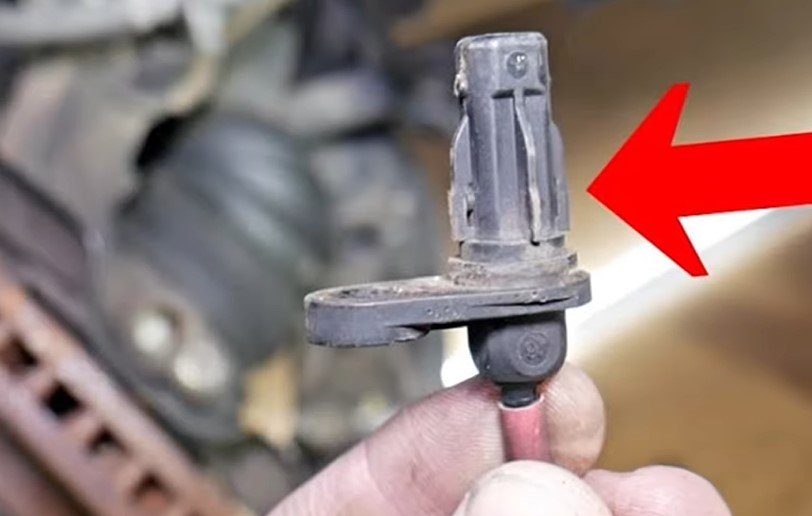
A failing wheel speed sensor may cause:
- ABS light on
- Traction control light on
- Stability control light on
- ABS activating at low speed
- Cruise control not working on some vehicles
- Speedometer issues on some models
- ABS code for one specific wheel
The sensor itself lives in a rough place. It deals with heat, water, road salt, brake dust, vibration, and dirt. Over time, the sensor can fail internally or become covered in debris.
But here is the part many people miss: an ABS code pointing to a wheel speed sensor circuit does not always mean the sensor itself is bad.
It means the system sees a problem in that circuit.
That circuit can include the sensor, wiring, connector, tone ring, magnetic encoder, or the ABS module side of the circuit.
So if your ABS Light ON? problem comes with a wheel speed sensor code, use the code as a direction, not as a final diagnosis.
2. Damaged Wheel Speed Sensor Wiring or Connector
This is where many wrong repairs happen.
Someone scans the car, sees a wheel speed sensor code, replaces the sensor, clears the light, and the ABS light comes right back.
Why?
Because the damaged part may be the wiring, not the sensor.
Wheel speed sensor wiring runs near the wheel, suspension, and brake area. That wire moves every time the suspension travels or the steering turns. It can rub against metal, crack inside the insulation, get pulled during brake work, or corrode at the connector.

Wiring problems are especially likely when:
- The ABS light comes and goes
- The light appears after hitting bumps
- The light turns on when steering one direction
- The code returns after sensor replacement
- The connector looks green, wet, broken, or loose
- The wire has been rubbing against the tire or suspension
A good diagnostic step is to inspect the harness at the affected wheel. Look for cuts, rubbing, stretched wires, corrosion, broken clips, or a connector that is not fully seated.
If you have an ABS scanner with live data, watch the wheel speed reading while gently moving the harness. If the signal drops out, jumps, or disappears, the wiring may be the real problem.
3. Dirty, Cracked, or Damaged Tone Ring
The wheel speed sensor needs something to read.
On many vehicles, that part is called a tone ring or reluctor ring. It may have teeth around an axle, hub, or bearing area. As the wheel turns, the sensor reads the pattern and sends a wheel speed signal to the ABS module.
If the tone ring is cracked, rusty, bent, missing teeth, or packed with debris, the signal can become uneven.
That can trigger the ABS light.
A tone ring problem may also cause false ABS activation. This is when the brake pedal pulses or the ABS seems to activate at low speed even though the road is dry and you are not braking hard.
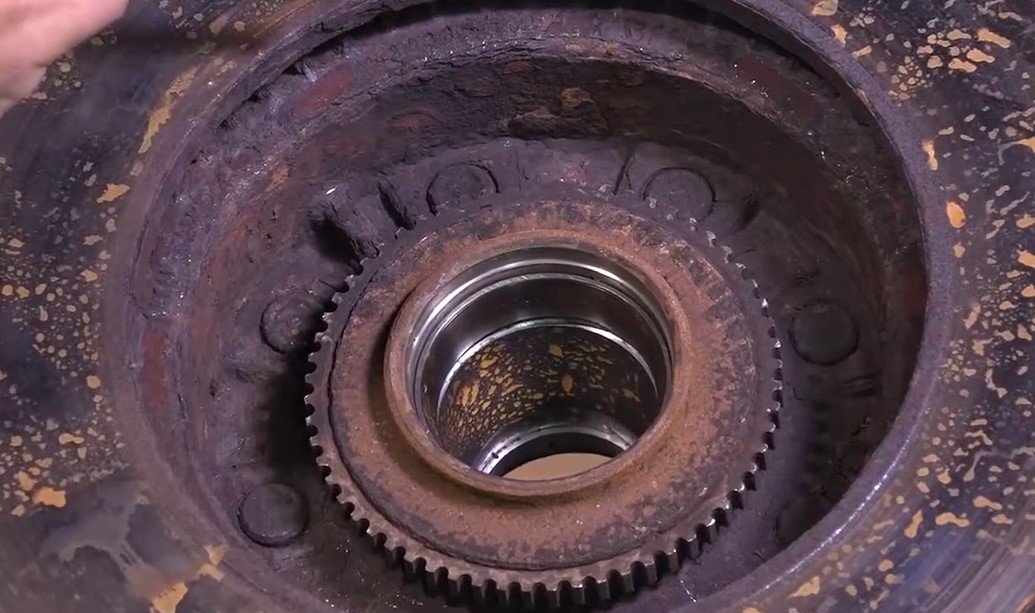
That happens because the ABS module thinks one wheel is locking up, even when it is not.
Tone ring problems are common on older vehicles or cars driven in areas with rust, road salt, mud, or heavy debris.
Signs that point toward a tone ring issue include:
- ABS light after driving a short distance
- Pedal pulsation at low speed
- Wheel speed signal drops once per wheel rotation
- Visible cracked or rusty ring
- Problem started after axle, hub, or brake work
Do not replace the ABS module for this type of issue until the tone ring and sensor area have been inspected.
4. Bad Wheel Bearing or Hub Encoder
Some newer vehicles do not use an obvious toothed tone ring. Instead, the wheel speed signal may come from a magnetic encoder built into the wheel bearing or hub assembly.
This can make diagnosis more confusing.
If the bearing has play, the sensor gap can change as the wheel turns. If the magnetic encoder is damaged, installed incorrectly, contaminated, or cracked, the sensor may read the wrong speed.

A bad wheel bearing or hub encoder can cause:
- ABS light on
- Humming or growling noise from one wheel
- Wheel play
- Traction control light
- One wheel speed reading different from the others
- ABS light after hub replacement
This is why live data is so helpful. If one wheel reading drops out or behaves differently, and that same wheel has bearing noise or play, the hub may be the issue.
But again, do not jump straight to replacement. A hub assembly can cost much more than a sensor or connector repair. Confirm the problem before spending the money.
5. Low Brake Fluid or Brake Hydraulic Problem
Low brake fluid can also trigger brake-related warning lights, including ABS-related warnings on some vehicles.
Brake fluid is part of the hydraulic braking system. If the level is low, the system may not have the pressure or safety margin it expects.
This is one of the first things you should check because it is simple and important.
Open the hood and look at the brake fluid reservoir. The level should be between the minimum and maximum marks.
If it is low, do not just top it off and forget about it.
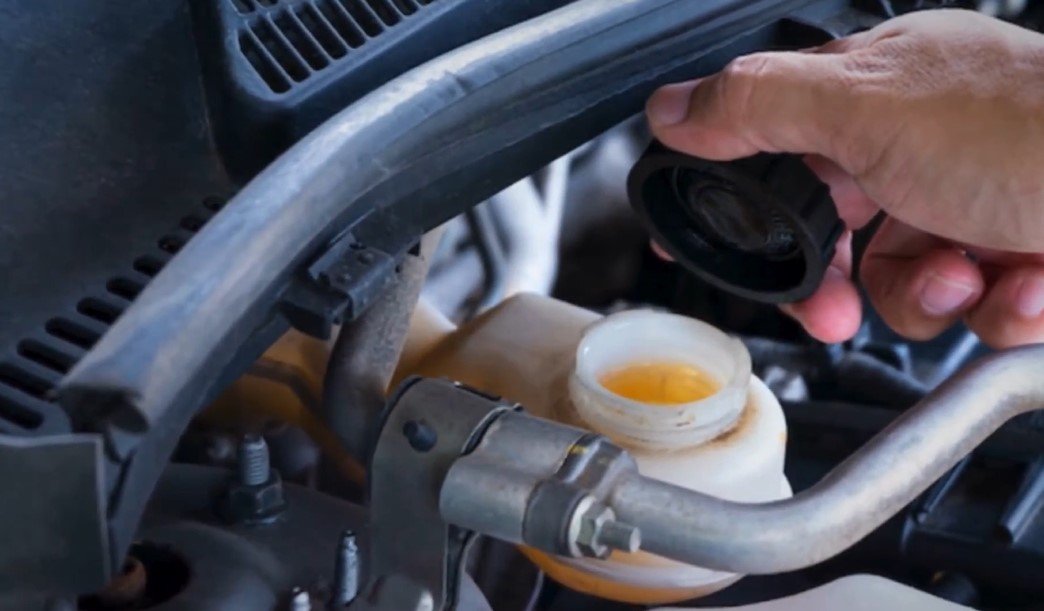
Brake fluid usually gets low for one of three reasons:
- Brake pads are worn and caliper pistons have moved outward
- There is a leak in the brake system
- The fluid was not filled correctly after service
A leak is the serious one.
If the red brake light is on, the fluid is low, or the brake pedal feels soft, stop driving until the brake system is inspected. That is no longer just an ABS concern. That can become a basic braking safety problem.
For an ABS Light ON? situation, checking brake fluid is one of the easiest first steps, but it must be treated carefully.
6. Blown ABS Fuse, Relay, or Power Supply Problem
ABS is an electronic system. It needs power, ground, fuses, relays, sensors, and communication with other modules.
If the ABS fuse blows or the module loses power, the system may shut down and turn on the warning light.
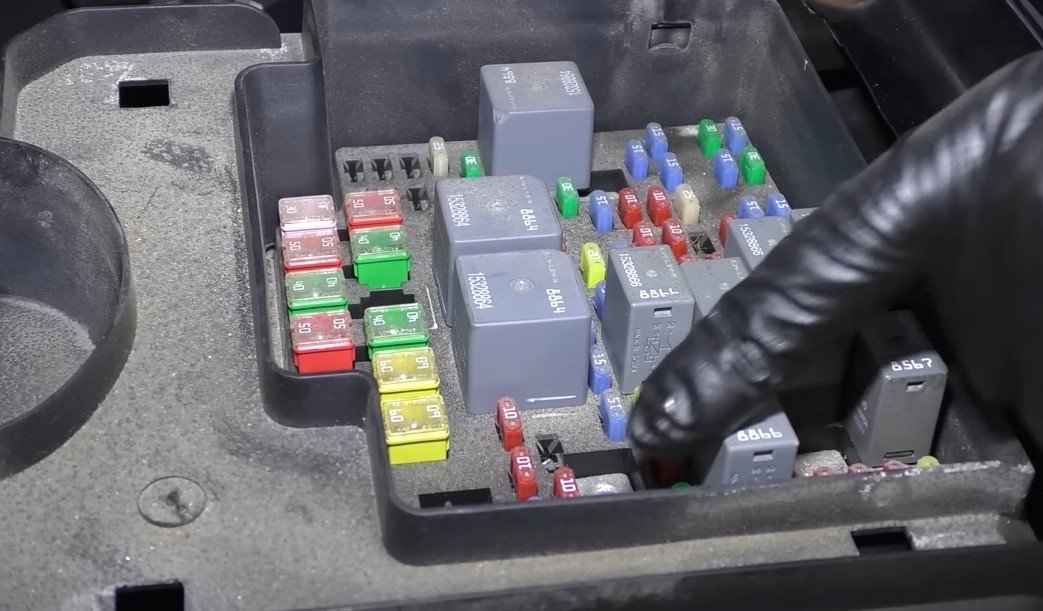
This can happen because of:
- Blown ABS fuse
- Faulty relay
- Weak battery
- Charging system problem
- Corroded ground connection
- Water intrusion
- Shorted wire
- Module power supply issue
If several warning lights come on at once, do not ignore the battery and charging system. Low voltage can confuse multiple modules and create warning lights that look unrelated.
A quick scan may show communication codes or low voltage history codes. A simple fuse check may also reveal the problem, but if the fuse blows again after replacement, there is likely a short that needs proper electrical diagnosis.
Do not keep replacing fuses without finding the reason.
7. Faulty ABS Module or ABS Pump Motor
A bad ABS module or pump motor is possible, but it should not be the first guess.
The ABS module receives wheel speed signals and controls the system. The pump motor helps control brake pressure when ABS activates. If either one fails, the ABS light can stay on.

Possible signs include:
- ABS module communication code
- Pump motor circuit code
- ABS light that will not clear
- Multiple wheel speed sensor codes at once
- ABS pump running when it should not
- No communication with ABS module
- Internal module fault code
This is where an advanced scanner becomes important.
If the scanner cannot communicate with the ABS module, the issue could be the module itself, but it could also be power, ground, fuse, wiring, or network communication.
That is why module replacement should come late in the diagnosis, not first.
ABS modules are expensive. Some vehicles also require programming or calibration after replacement. Replacing one without proof can become a costly mistake.
8. Steering Angle Sensor, Yaw Sensor, or Calibration Issue
Modern ABS is tied closely to traction control and stability control.
That means the ABS module may also use data from the steering angle sensor, yaw sensor, brake pressure sensor, and other stability-control inputs.
If one of those readings is wrong, missing, or not calibrated, you may see the ABS light, traction control light, or stability control warning together.

This can happen after:
- Wheel alignment
- Battery disconnect
- Steering rack work
- Suspension repair
- Clock spring replacement
- Steering angle sensor replacement
- Accident repair
- Module reset
A steering angle sensor tells the vehicle which way the steering wheel is turned. If the car thinks the steering wheel is turned when it is actually straight, stability control may not trust the data.
Some vehicles need a steering angle calibration with a scan tool after certain repairs.
This is one reason the ABS Light ON? warning should not be treated as only a brake part problem. Sometimes the issue is a calibration or stability-control input problem.
ABS Codes You May See
ABS codes are often chassis codes, and many start with the letter “C.”
Common wheel speed sensor circuit examples may include:
| Code Example | Possible Area |
|---|---|
| C0035 | Left front wheel speed sensor circuit |
| C0040 | Right front wheel speed sensor circuit |
| C0045 | Left rear wheel speed sensor circuit |
| C0050 | Right rear wheel speed sensor circuit |
| C0110 | ABS pump motor circuit on some vehicles |
| U-codes | Communication issue between modules |
Exact definitions can vary by manufacturer, so always check the code for your specific vehicle.
Also remember: a code points to a circuit or system, not always one failed part.
If the scanner says “right front wheel speed sensor circuit,” the problem could be the sensor, connector, wire, tone ring, encoder, hub, or module input.
That is why the next step should be live data and inspection, not instant part replacement.
Why Your OBD2 Scanner May Say “No Codes”
This is a common confusion.
A cheap OBD2 scanner may be designed mainly for engine and emissions codes. It may read check engine light codes, but not ABS, SRS, transmission, body, or chassis modules.
So if your ABS light is on and your scanner says no codes, that does not prove the car has no codes.
It may only mean the scanner cannot access the ABS module.
For ABS diagnosis, look for a scanner that clearly supports:
- ABS code read and erase
- ABS live data
- All-system scan
- Wheel speed sensor data
- ABS module communication
- Freeze frame or fault detail
- Steering angle sensor data if supported
- Brake pressure or pump motor data if supported
For a site like Best OBD2 Scanners, this is an important point: not every scanner that says “OBD2” is enough for ABS problems.
If your main goal is diagnosing an ABS light, choose a scanner with ABS coverage for your vehicle make and model.
How To Diagnose ABS Light With Live Data
The best diagnostic path is simple: scan first, inspect second, replace last.
Here is a clean order:
- Scan the ABS module.
- Write down current, pending, and history codes.
- Do not clear the codes yet.
- Open live data for all four wheel speed sensors.
- Drive slowly in a safe area or spin the wheels safely if the vehicle is raised.
- Compare all four wheel speed readings.
- Find the wheel that reads zero, drops out, spikes, or does not match.
- Inspect that corner first.
- Check the sensor, connector, wiring, tone ring, hub, and bearing.
- Repair the confirmed problem.
- Clear the codes.
- Road test and confirm the light stays off.
The live data pattern is often the clue.
If one wheel reads zero while the others read normally, look at that wheel circuit.
If the signal drops when steering or hitting bumps, suspect wiring.
If the signal drops once per wheel rotation, suspect tone ring or encoder damage.
If several sensors fail at once, look beyond one sensor. Think about module power, ground, fuse, communication, or shared wiring.
Physical Checks You Can Do First
Before buying parts, do these basic checks:
- Make sure the parking brake is fully released
- Check brake fluid level
- Look for brake fluid leaks near wheels and under the car
- Check the ABS fuse
- Check battery voltage if multiple warning lights are on
- Inspect wheel speed sensor wiring near each wheel
- Look for unplugged or damaged connectors
- Think about recent brake, hub, axle, tire, alignment, or suspension work
That last one matters.
If the ABS light came on right after a brake job, bearing replacement, axle replacement, or suspension repair, inspect the area that was touched. A sensor may be unplugged, installed with the wrong gap, damaged, or routed incorrectly.
Can You Drive With the ABS Light On?
If only the ABS light is on and the brake pedal feels normal, the car may still have regular braking. But ABS may not work during a hard stop.
That means you should drive carefully, leave more following distance, and avoid aggressive braking until the issue is fixed.
Be extra careful in:
- Rain
- Snow
- Ice
- Gravel
- Heavy traffic
- Mountain roads
- Emergency braking situations
Do not drive if:
- The red brake light is also on
- Brake fluid is low
- The pedal feels soft or sinks
- The car pulls badly while braking
- You hear grinding
- Braking distance feels longer
- The vehicle does not stop normally
In those cases, the problem may involve the main braking system, not just ABS.
Common Mistakes That Waste Money
Many ABS repairs become expensive because the diagnosis starts too late.
Avoid these mistakes:
- Replacing a wheel speed sensor just because the code mentions it
- Clearing the ABS light before saving the code
- Using an engine-only scanner and assuming there are no ABS codes
- Replacing the ABS module before checking power, ground, and live data
- Ignoring damaged wiring near the wheel
- Forgetting to check brake fluid
- Missing a cracked tone ring
- Ignoring wheel bearing play
- Installing a new hub with the encoder facing the wrong way
- Assuming traction control and ABS lights are separate problems
The best approach is not complicated. Find the code, watch the data, inspect the corner, then replace only what fails the test.
What Usually Costs Less and What Usually Costs More
| Problem | Difficulty | Typical Direction |
|---|---|---|
| Low brake fluid | Easy to check | Find why it is low |
| Blown fuse | Easy to check | If it blows again, diagnose short |
| Dirty sensor tip | Easy to moderate | Clean and retest |
| Wheel speed sensor | Moderate | Confirm with code and data |
| Wiring/connector | Moderate | Inspect and test before replacing sensor |
| Tone ring issue | Moderate to hard | May require axle/hub work |
| Hub encoder/bearing | Moderate to hard | Confirm with live data and bearing check |
| ABS module/pump | Hard | Diagnose last, often expensive |
| Steering angle calibration | Scanner required | Common after steering/alignment work |
This is why guessing is risky. A simple sensor or wiring problem can look like a major ABS failure if you do not check it in the right order.
FAQ About ABS Light ON?
Will the ABS light turn off by itself?
Sometimes, if the fault was temporary. But if the problem is still present, the light will usually return after startup or after the car begins moving. Do not rely on the light turning off by itself. Scan the ABS module and check stored history codes.
Can low tire pressure cause the ABS light?
Low tire pressure itself usually triggers TPMS, not ABS. But if one tire is much smaller in rolling diameter because of pressure, size mismatch, or a spare tire, the wheel speed readings can become different. That may confuse ABS or traction control on some vehicles.
Can a bad wheel bearing cause the ABS light?
Yes. A bad wheel bearing can affect the wheel speed sensor signal, especially if the encoder is built into the hub or if bearing play changes the sensor gap. If the ABS light comes with humming noise or wheel play, inspect the hub carefully.
Can I reset the ABS light without a scanner?
Some faults may clear after repair and driving, but most ABS lights need a scanner to erase codes. More importantly, resetting without diagnosis can erase useful information. Always read and save the codes first.
Why did the ABS light come on after replacing brakes?
A sensor connector may have been unplugged, wiring may have been pulled, a sensor may have been damaged, or debris may be affecting the sensor/tone ring area. If the warning appeared right after brake work, inspect the wheels that were serviced.
Why are the ABS and traction control lights on together?
ABS and traction control often use the same wheel speed sensor data. If one wheel speed sensor signal fails, both systems may be disabled, so both lights can appear at the same time.
What scanner do I need for ABS codes?
You need a scanner that specifically supports ABS for your vehicle. A basic check-engine-light scanner may not be enough. Look for ABS code reading, ABS code clearing, live wheel speed data, and all-system scan support.
Final Takeaway
When the ABS Light ON? warning appears, do not panic, but do not ignore it either.
The car may still brake normally in everyday driving, but the anti-lock function may not help during a hard stop or slippery road situation. That is the part that matters.
Start with simple safety checks: brake fluid, red brake light, pedal feel, fuses, and visible wiring damage. Then use an ABS-capable scanner to read the actual ABS codes and compare live wheel speed data.
Most ABS light problems are not solved by guessing.
They are solved by finding which signal the ABS module no longer trusts.
Once you know that, the repair becomes much clearer: sensor, wiring, connector, tone ring, hub encoder, fluid issue, power supply, calibration, or module.
If your ABS Light ON? issue is diagnosed in that order, you have a much better chance of fixing the real problem the first time without replacing expensive parts you did not need.