
You stop at a gas station, fill your tires to the recommended pressure, and start driving. But the yellow tire pressure warning light is still glowing on your dashboard. Did you miss something, or is your tire pressure sensor failing?Not necessarily. Sometimes the system needs time to recognize the corrected pressure. Other times, a slow leak, inaccurate pressure reading, or faulty TPMS sensor is responsible.
Understanding the common tire pressure light on reasons can help you find the problem without replacing parts unnecessarily. Below, we’ll cover six likely causes, practical fixes, and how to tell whether you need a tire pressure gauge, a TPMS reset, or a diagnostic scanner.
Quick Answer: If your tire pressure light stays on after adding air, first check every tire with an accurate gauge when the tires are cold. Inflate them according to the driver’s door-jamb sticker, not the maximum PSI printed on the tire. If the light remains on, the problem may involve a slow leak, a required TPMS calibration, a dead sensor battery, or a communication fault.
Why Is My Tire Pressure Light Still On After Adding Air?
Your vehicle’s Tire Pressure Monitoring System (TPMS) is designed to warn you when tire pressure falls significantly below the recommended level. However, not every TPMS measures pressure in the same way.
There are two main types:
- Direct TPMS: Uses electronic sensors inside the wheels to measure tire pressure and transmit readings to the vehicle.
- Indirect TPMS: Uses wheel-speed information, usually from the ABS system, to detect changes that may indicate underinflation.
Direct systems typically update their readings after receiving new sensor data. Some indirect systems require recalibration after tire inflation, replacement, or rotation.
This explains why adding air doesn’t always immediately clear the warning. The next step depends on how the light behaves.
| What You Notice | What to Check First |
|---|---|
| Light stays solid after inflation | Cold tire pressure and required reset procedure |
| Light comes back the next morning | Temperature changes or a slow leak |
| Light flashes before staying on | TPMS sensor or system malfunction |
| Light appeared after tire service | Sensor installation, calibration, or relearn |
6 Tire Pressure Light ON Reasons and How to Fix Them
Most persistent TPMS warnings fall into six categories. Start with the simple pressure-related problems before assuming an electronic component has failed.
1. One or More Tires Still Have Incorrect Pressure
One of the most overlooked tire pressure light on reasons is that the tires were filled, but not to the correct pressure.
For example, your vehicle might require 35 PSI in the front tires and 33 PSI in the rear. If you inflate everything to 32 PSI, one or more tires may still be below the recommended level.
Another common mistake is using the pressure printed on the tire sidewall. That number indicates the tire’s maximum rated cold inflation pressure, not necessarily the correct pressure for your vehicle.
The recommended pressures are normally listed on a sticker inside the driver’s door opening.

Other possibilities include:
- An inaccurate gas-station air gauge.
- Checking pressure immediately after driving.
- Forgetting a monitored full-size spare tire.
- Assuming all four tires require identical pressures.
How to fix it: Use a reliable tire pressure gauge when the tires are cold, ideally before driving or after the vehicle has been parked for at least three hours. Adjust every tire to the vehicle manufacturer’s specified cold pressure.
2. Cold Weather Is Lowering Your Tire Pressure
Have you noticed the tire pressure warning appearing on chilly mornings but disappearing later in the day?
As the temperature drops, the air inside your tires contracts and pressure decreases. As a general rule, tire pressure changes by roughly 1 PSI for every 10°F change in temperature.
Suppose your tire pressure was already slightly below its recommended level. A cold night could lower it enough to trigger the TPMS warning.
After driving, the tires warm up and pressure rises. The light may turn off temporarily, even though the original cold pressure was still too low.
This is particularly common during fall and winter.
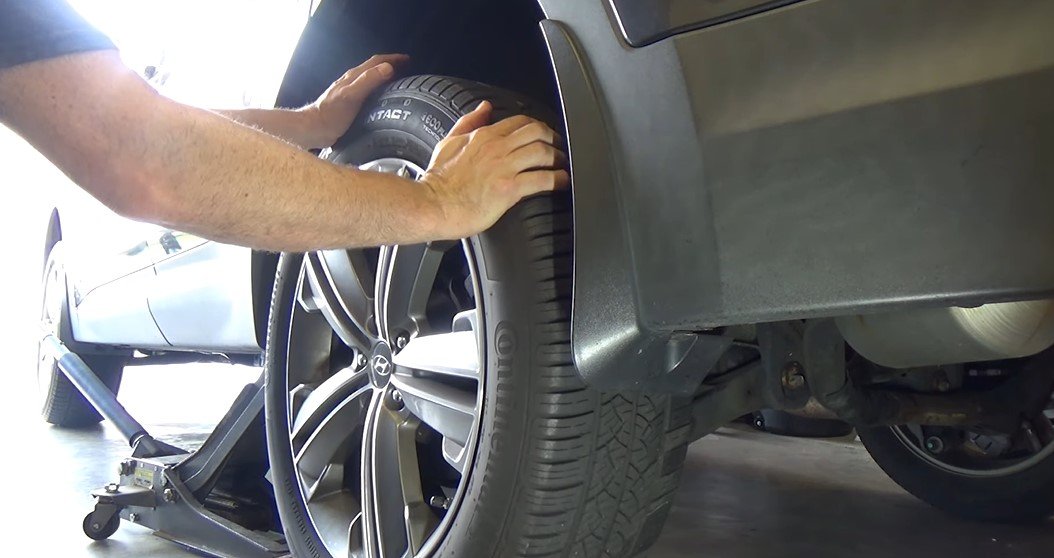
How to fix it: Check and adjust pressure while the tires are cold. Don’t wait for warmer weather to make the warning disappear. Avoid releasing air from warm tires simply because the reading is higher than the cold-pressure specification.
3. A Slow Tire Leak Is Causing Pressure to Drop Again
A tire can look perfectly normal and still lose a small amount of air every day.
Slow leaks often develop around small punctures, valve stems, or the area where the tire seals against the wheel.
Common sources include:
- A nail or screw embedded in the tread.
- A leaking valve core or damaged valve stem.
- Corrosion or debris around the wheel bead.
- A cracked or damaged wheel.
- Damage from a pothole or road debris.
Imagine filling a tire to 35 PSI in the evening. By the next morning, it has dropped to 29 PSI. Adding air again may switch the light off temporarily, but it doesn’t solve the leak.
Sometimes a small leak is easier to detect by applying soapy water to the suspected area and watching for continuous bubbles. However, this test may not locate every leak.
How to fix it: Record the cold tire pressure and check it again the following day under similar temperature conditions. If one tire repeatedly loses pressure, have it inspected and professionally repaired. Sidewall damage or certain puncture locations may require tire replacement.
4. The TPMS Needs a Reset or Relearn Procedure
Correcting tire pressure does not always mean the vehicle immediately knows the problem has been fixed.
Some vehicles automatically update the warning after receiving new sensor readings during driving. Others require a TPMS calibration or relearn procedure.
For example, certain Honda vehicles use indirect TPMS and require calibration after adjusting tire pressure. Many direct TPMS systems, on the other hand, simply need to receive updated readings.
It’s important to understand three different terms:
- TPMS reset or calibration: Establishes or updates the system’s pressure reference on vehicles that require it.
- Sensor relearn: Allows the vehicle to recognize sensor identities or wheel positions, when required.
- Sensor programming: Configures a compatible programmable replacement sensor.
These procedures are not interchangeable. A dashboard reset cannot repair a dead sensor, and installing a new sensor doesn’t guarantee the vehicle will recognize it automatically.
How to fix it: Consult your owner’s manual for the correct TPMS procedure. Adjust tire pressure before performing any calibration. If the vehicle requires a relearn after sensor replacement, use the specified procedure or have a tire shop complete it.
5. A TPMS Sensor Battery Is Weak or Dead
Most direct TPMS sensors contain small sealed batteries. These batteries commonly last around five to ten years, although actual life varies.
When a battery fails, the sensor may stop transmitting pressure readings. The vehicle can then display a TPMS malfunction warning even when every tire is correctly inflated.

Possible symptoms include:
- The TPMS light flashes and then remains illuminated.
- One tire no longer displays a pressure reading.
- A TPMS warning appears intermittently.
- The warning remains despite proper tire inflation.
On most direct TPMS sensors, the battery isn’t intended to be replaced separately. The sensor assembly must be replaced when its sealed battery fails.
However, a flashing warning doesn’t prove the battery is dead. Communication faults, incompatible sensors, and other problems can produce similar symptoms.
How to fix it: Ask a tire shop to test sensor communication using a compatible TPMS activation or diagnostic tool. Replace only sensors confirmed to be faulty, unless there is a practical reason to replace additional aging sensors during tire service.
6. A TPMS Sensor or System Component Is Malfunctioning
If tire pressures are correct and sensor batteries are working, the warning may be caused by another TPMS system problem.
This can happen after tire installation, wheel replacement, or sensor programming.
Potential causes include:
- A sensor damaged during tire mounting.
- An incompatible aftermarket sensor.
- A replacement sensor that hasn’t been registered correctly.
- A faulty receiver or TPMS control module.
- Damaged wiring in a related system.
- Intermittent radio-frequency interference.
For example, an aftermarket wheel may have a sensor installed, but if it uses the wrong frequency or protocol, your vehicle may not receive its readings.
On indirect TPMS vehicles, incorrect tire sizes, uneven tire wear, or faults affecting wheel-speed data may also interfere with proper monitoring.
How to fix it: Have the system diagnosed with equipment compatible with your vehicle. Check sensor data, fault codes, and relearn requirements before replacing the receiver or control module.
Solid vs. Flashing Tire Pressure Light: What’s the Difference?
The way the warning light behaves is one of the most useful clues.
A solid tire pressure light generally indicates that one or more tires may be underinflated. A light that flashes for approximately 60–90 seconds and then stays on usually indicates a TPMS malfunction on vehicles using the combined warning indicator.
According to the National Highway Traffic Safety Administration (NHTSA), drivers should check tire pressure promptly when the warning appears.
| Warning Pattern | Possible Meaning | Next Action |
|---|---|---|
| Solid yellow light | Low tire pressure | Check all tires with a gauge |
| Flashes, then remains solid | TPMS system malfunction | Check pressure and diagnose the system |
| On during cold mornings | Temperature-related pressure drop | Adjust cold tire pressure |
| Returns after adding air | Leak, incorrect PSI, or calibration issue | Recheck pressure and system procedure |
| Pressure display shows dashes | Missing or unavailable sensor data | Test sensor communication |
Remember that a malfunctioning TPMS may not provide a reliable warning if a tire subsequently loses pressure.
How to Fix a Tire Pressure Light That Won’t Turn Off
Before spending money on sensors or diagnostic equipment, work through these checks in order.
STEP 1 Find the Correct Tire Pressure
Open the driver’s door and look for the tire information label. Note the recommended front and rear cold pressures. Don’t use the maximum PSI on the tire sidewall as your target.
STEP 2 Measure Every Tire When Cold
Use a digital or accurate mechanical tire pressure gauge. Check all four road tires and the spare if your vehicle monitors it. Inflate or release air as needed to match the placard.
STEP 3 Look for Tire Damage or Leaks
Inspect the tread, sidewalls, and valve stems. If one tire loses pressure repeatedly, arrange a leak inspection rather than continually adding air.
STEP 4 Follow the Correct TPMS Update Procedure
Some vehicles clear the warning automatically after driving. Others require dashboard calibration. Follow your vehicle’s owner’s manual instead of assuming every car uses the same reset button or driving time.
STEP 5 Check for Sensor Problems
If the light flashes before remaining on, or a tire’s pressure reading is unavailable, have the sensors checked using appropriate TPMS equipment.
STEP 6 Get Professional Diagnosis if Necessary
If the warning persists with correct tire pressures, a shop can investigate sensor faults, programming, communication issues, and system-specific trouble codes.
Important: Don’t repeatedly reset the TPMS just to turn off the light. Always verify tire pressure first. Resetting an indirect system with incorrectly inflated tires can establish an inaccurate reference.
Why Is the Tire Pressure Light On After New Tires or Tire Rotation?
If your TPMS warning appeared immediately after tire service, the timing is worth investigating.
During tire replacement, a sensor can be damaged accidentally. A new wheel may also contain an incompatible sensor or no sensor at all.
Other vehicles require a wheel-position relearn after tire rotation. Some indirect systems need recalibration because the tire characteristics have changed.
Before approving sensor replacement, check that:
- All tires are inflated to the correct pressures.
- The replacement tires meet the vehicle’s specifications.
- Every required sensor is installed and compatible.
- Any required relearn or calibration has been completed.
If the light was off before tire service and appeared immediately afterward, returning to the original tire shop is a sensible first step.
Can an OBD2 Scanner Diagnose a Tire Pressure Light?
Yes, but only if the diagnostic tool supports the required system and functions on your specific vehicle.
What a Basic OBD2 Scanner Can and Cannot Do
Most inexpensive OBD2 code readers are designed primarily for engine and emissions-related diagnostics.
They can read standard powertrain trouble codes, but generally cannot communicate with a dedicated TPMS control module or activate individual tire sensors.
As a result, a basic scanner may report no trouble codes even when the tire pressure warning is flashing.
What a TPMS-Capable Scanner Can Check
Depending on the tool and vehicle, advanced diagnostic equipment may provide:
- TPMS control-module fault codes.
- Available individual tire pressure data.
- Sensor identification numbers.
- Sensor registration or relearn functions.
- Communication fault information.
However, reading TPMS codes and activating a sensor are different functions. Some advanced OBD2 scanners can access TPMS module information but still require a separate sensor activation tool.
When Do You Need a Dedicated TPMS Tool?
A dedicated TPMS tool is useful when testing sensor transmissions, identifying failed sensors, or programming compatible universal replacements.
Before purchasing a scanner, confirm support for your vehicle’s make, model, year, and exact TPMS function. A product advertised as having a “TPMS reset” feature may not support sensor activation or programming.
For drivers who only need to correct low tire pressure, a reliable pressure gauge is more useful than an expensive scan tool.
How Much Does It Cost to Fix a Tire Pressure Light?
The repair cost depends on whether you’re dealing with low tire pressure, a leak, or an electronic failure.
| Repair or Service | Approximate U.S. Cost |
|---|---|
| Checking or adding air | Free–$10 |
| Repairable tire puncture | $20–$50 |
| TPMS diagnostic inspection | $30–$120 |
| TPMS sensor replacement | $90–$300+ per repair, depending on vehicle and service |
| TPMS relearn or registration | Free with service or approximately $20–$100 separately |
| Receiver or module repair | Varies considerably; diagnosis required |
These are general planning estimates, not fixed shop prices. Labor rates, parts, vehicle design, and whether tire removal is required affect the final bill.
For comparison, RepairPal’s September 2026 estimate puts average TPMS sensor replacement at approximately $240–$299 for its defined repair estimate.
Don’t replace all four sensors simply because one is faulty. Ask the shop which components failed and whether additional replacement makes financial sense based on their age.
Is It Safe to Drive With the Tire Pressure Light On?
That depends on the actual condition of the tires.
If a tire is visibly flat, severely damaged, or rapidly losing pressure, stop in a safe location. Continuing to drive can damage the tire and wheel or increase the risk of losing control.
Underinflated tires generate excess heat and can affect steering, braking, and tire durability.
If you have confirmed that every tire is correctly inflated and in good condition, but the light remains on because of a diagnosed TPMS malfunction, the vehicle may still be mechanically drivable. However, you cannot rely on the monitoring system to warn you about future pressure loss.
Until the problem is repaired, check tire pressure manually and arrange appropriate service.
Safety reminder: A tire can be dangerously underinflated without looking flat. Never judge pressure by appearance alone, and don’t continue driving on a tire that shows a bulge, exposed cords, or other serious damage.
How to Prevent the Tire Pressure Light From Coming Back
Not every TPMS problem can be prevented, especially when aging sensors eventually fail. Still, a few habits help reduce avoidable warnings:
- Check tire pressure at least once a month when cold.
- Inspect tires before long highway trips.
- Adjust pressure when seasonal temperatures change.
- Have recurring leaks repaired promptly.
- Ask about TPMS compatibility when buying new wheels or sensors.
- Complete the required calibration after tire service.
Regular pressure checks also improve your chances of finding a tire problem before the warning light appears.
Frequently Asked Questions
1. Why is my tire pressure light on when all tires are properly inflated?
The system may not have updated its readings, or it may require calibration. A failed sensor, missing sensor data, or electronic fault is another possibility. Confirm cold tire pressure first, then check the vehicle-specific TPMS procedure.
2. How long does it take for the tire pressure light to go off after filling tires?
Some vehicles turn off the light shortly after receiving corrected pressure readings. Others require a drive cycle or manual calibration. There is no universal reset time, so follow your owner’s manual if the light remains on.
3. Can I reset my tire pressure light without a scanner?
Often, yes. Many vehicles update automatically after proper inflation, while others provide a dashboard calibration procedure. However, vehicles requiring sensor registration or specialized relearning may need additional equipment.
4. Why is my tire pressure light blinking and then staying on?
A warning that flashes for approximately 60–90 seconds before remaining illuminated generally indicates a TPMS malfunction. Possible causes include a failed sensor, dead sensor battery, or communication problem.
5. Can a bad TPMS sensor cause the tire pressure light to stay on?
Yes. If the sensor stops transmitting valid information, the vehicle may display a persistent warning. A sensor test can help distinguish a failed component from a relearn or communication issue.
6. Will disconnecting the battery reset the TPMS light?
Disconnecting the vehicle battery is not a reliable TPMS repair. The warning may return because the underlying pressure or sensor problem remains. It may also reset unrelated vehicle settings. Use the correct diagnostic or calibration procedure instead.
Final Thoughts
Most tire pressure light on reasons are easier to investigate than they first appear. Incorrect inflation, temperature changes, and slow leaks are worth checking before assuming the TPMS electronics have failed.
If the tires have the correct cold pressure but the warning keeps returning, follow your vehicle’s calibration instructions and watch how the light behaves.
A flashing warning or missing sensor reading deserves further diagnosis. Testing the system before replacing components can save money and help ensure your tire pressure monitoring system works when you need it.