
It starts as a faint humming sound on the highway. At first, you assume it’s the tires or rough pavement. A few weeks later, the noise is louder, especially when you turn. Now you’re wondering whether a wheel bearing is failing.That’s how many bearing problems begin. The early warning signs can be subtle, and they often sound like tire noise. By the time the wheel feels loose or the steering becomes unstable, the problem may already be serious.
Knowing the common bad wheel bearing symptoms can help you recognize trouble earlier, avoid replacing the wrong parts, and understand when your vehicle needs professional attention.
Quick Answer: The most common signs of a bad wheel bearing include humming or growling that increases with vehicle speed, grinding noises, and sounds that change when turning. Advanced failure may cause vibration, wheel looseness, or unstable handling. Some vehicles may also develop ABS-related warnings. A noisy bearing can be failing even when no wheel play is detectable.
What Does a Wheel Bearing Do, and Why Does It Fail?
A wheel bearing allows the wheel and hub to rotate smoothly while carrying the vehicle’s weight. Inside the assembly, precisely manufactured balls or rollers move between hardened metal surfaces.
Most modern cars use sealed wheel bearings or complete hub-and-bearing assemblies. Many older vehicles have serviceable bearings that can be cleaned, lubricated, and adjusted according to manufacturer procedures.
Wheel bearings can fail because of normal wear, water intrusion, corrosion, pothole impacts, or incorrect installation. Improper axle-nut torque can also damage certain bearing designs.
Once internal bearing surfaces become damaged, the bearing may develop a humming or rumbling sound. That noise can appear long before the wheel develops obvious looseness.
9 Bad Wheel Bearing Symptoms You Shouldn’t Ignore
Not every symptom below proves that a wheel bearing is damaged. Some are common early indicators, while others usually appear when wear becomes more severe.
1. Humming or Growling Noise That Gets Louder With Speed
One of the earliest bad wheel bearing symptoms is a continuous humming, droning, or growling sound that becomes louder as the vehicle moves faster.
It might sound like distant road noise or an aggressive tire tread. At 25 mph, you may barely notice it. By 60 mph, the sound can become difficult to ignore.
A useful clue is whether the noise follows vehicle speed rather than engine RPM.
For example, if you reduce speed and the humming becomes quieter, the wheels, tires, or bearings deserve inspection. Engine-related noises typically behave differently.
What to check: Notice whether the sound follows road speed, continues across different pavement surfaces, and changes during ordinary turns. These observations can help a technician distinguish bearing noise from tire noise.
2. Grinding or Rumbling From One Wheel
As bearing damage progresses, a faint hum may turn into a rough rumbling or grinding sound.
This can happen when internal bearing surfaces become badly worn or pitted.
However, grinding near a wheel can also come from worn brake pads, damaged rotors, or other brake hardware.
Pay attention to whether the sound occurs continuously while moving or mainly when pressing the brakes.
If grinding is severe, especially with vibration or unstable handling, don’t continue driving until the vehicle has been inspected.
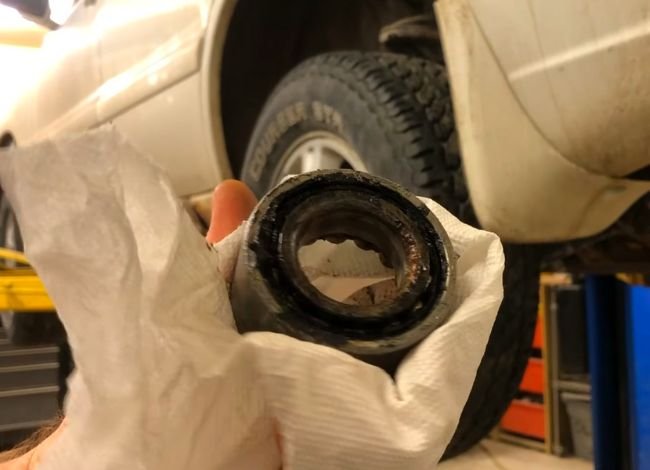
What to check: Have the bearing and brake assembly inspected together. Grinding alone isn’t enough to justify replacing a wheel bearing.
3. Wheel Bearing Noise Changes When Turning
Does the humming become louder when you turn left and quieter when you turn right?
That’s an important clue because turning shifts the load between the left and right wheels.
During a left turn, the right-side wheels generally carry more lateral load. If a right-side bearing is damaged, that additional load may make it noisier.
The opposite can happen during a right turn.
But this isn’t a guaranteed way to identify the faulty bearing. Noise can travel through the chassis, and some bearings behave differently depending on their damage.
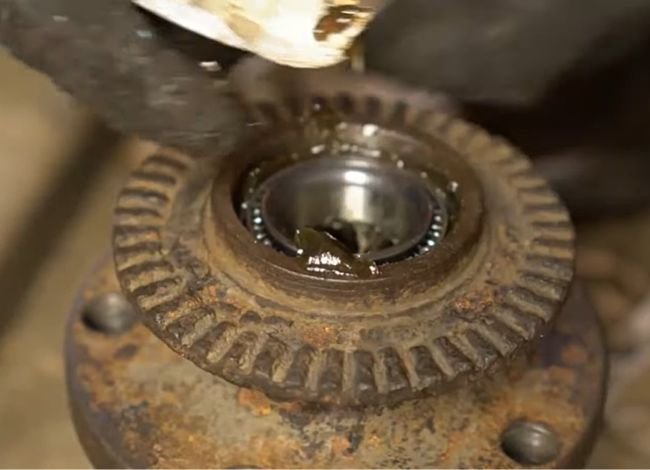
What to check: Pay attention to noise changes during normal, safe turns. Don’t make aggressive steering movements to test the bearing. A technician should confirm the actual source before replacement.
4. Steering Wheel Vibration or Vehicle Shaking
A badly worn wheel bearing may contribute to vibration when internal damage or excessive play affects wheel rotation.
If a front bearing is involved, some movement may be noticeable through the steering wheel. A rear wheel problem may be felt more through the seat or vehicle body.
However, wheel imbalance, damaged tires, and bent rims are often more likely causes of speed-related steering vibration.
If your steering wheel shakes while driving, the cause should be narrowed down using the noise pattern and the condition of the tires, wheels, and suspension.

What to check: Look for vibration accompanied by wheel-speed-related humming, rumbling, or detectable wheel looseness. Vibration without those clues doesn’t automatically indicate a bad bearing.
5. Wheel Looseness, Wobbling, or Unstable Steering
Wheel looseness is one of the more concerning symptoms because it may indicate significant wear.
As a bearing deteriorates, excessive internal clearance can sometimes allow the wheel hub to move more than intended.
You may notice unusual steering movement, wobbling, or difficulty maintaining a stable direction.
However, loose tie rods, worn ball joints, and other suspension problems can create similar symptoms.
A severely loose wheel assembly creates a significant safety risk and should not be ignored.
What to check: Have a qualified technician inspect bearing play, hub condition, ball joints, and steering linkage. If the wheel feels dangerously loose or handling becomes unstable, stop safely and arrange towing.
6. Uneven or Unusual Tire Wear
Advanced bearing looseness can sometimes allow unwanted wheel movement that contributes to irregular tire wear.
You might notice unusual tread patterns or localized wear, especially when other suspension components are also affected.
But uneven tire wear is not a dependable standalone sign of bearing failure.
Incorrect wheel alignment, tire pressure, worn shocks, and suspension problems are more common explanations.
If your tire pressure warning is also illuminated, check the actual tire pressures before assuming the bearing is responsible.
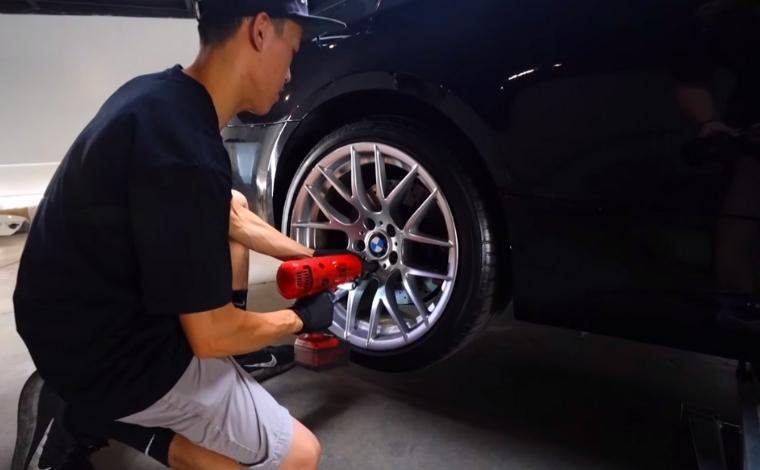
What to check: Inspect tire wear together with bearing noise and wheel play. If the only symptom is uneven tread wear, start with tire, alignment, and suspension checks.
7. ABS or Traction Control Warning Light
Some wheel hub assemblies work closely with the wheel-speed sensing system used by ABS and traction control.
Depending on the design, the bearing or hub may contain a magnetic encoder that the wheel-speed sensor reads.
If the encoder becomes damaged, or if excessive bearing movement disrupts the sensor signal, the ABS module may detect inconsistent wheel-speed information.
This can trigger an ABS or traction-control warning.
However, damaged sensor wiring, a failed sensor, corrosion, or another ABS problem may cause the same warning.
Our TRAC OFF light troubleshooting guide explains why traction-control warnings appear and how wheel-speed information affects the system.
What to check: Read ABS-specific trouble codes and inspect available live wheel-speed data. Don’t replace a wheel bearing simply because the ABS warning light is illuminated.
8. Brake Pulsation or Pulling During Braking
Severe bearing wear can sometimes affect wheel hub stability and allow unwanted movement at the brake rotor.
That movement may contribute to inconsistent braking or vibration.
However, brake rotor thickness variation, sticking calipers, worn suspension parts, and tire problems are more common causes of braking pulsation or pulling.
If the vehicle pulls sharply while braking, the problem deserves prompt inspection regardless of which component is responsible.
What to check: Have the brake rotors, pads, calipers, suspension, and hub inspected. Bearing replacement should be based on confirmed bearing wear, not braking vibration alone.
9. Excessive Heat Near the Wheel Hub
A severely damaged bearing can generate excess friction and heat.
In some cases, you may notice an unusual smell or evidence of overheating around the affected wheel.
But a dragging brake caliper is another important possibility and is often more likely when a wheel becomes excessively hot.
Heat alone cannot identify a failed bearing.
What to check: If you notice smoke, a burning smell, or signs of extreme overheating, stop safely. Allow the area to cool and arrange professional inspection. Never touch a potentially hot wheel, hub, or brake assembly.
How to Tell Which Wheel Bearing Is Bad
Identifying the correct corner can be more difficult than recognizing bearing noise.
A front bearing may transmit noise through the steering system, while rear bearing noise may seem to come from the floor or even the opposite side of the vehicle.
Front vs. Rear Wheel Bearing Symptoms
Front and rear bearings can produce very similar humming, rumbling, and grinding noises.
Front bearing problems may also affect steering feel when substantial play develops. Rear bearing problems may produce cabin noise without obvious steering vibration.
Neither pattern is reliable enough to identify the bearing without further testing.
Does the Noise Get Louder When Turning?
| Driving Observation | Possible Clue |
|---|---|
| Noise louder during a gentle left turn | Right-side bearing may be more heavily loaded |
| Noise louder during a gentle right turn | Left-side bearing may be more heavily loaded |
| Noise unchanged during turns | Bearing failure remains possible; tires may also be responsible |
| Noise changes with pavement type | Tire tread noise deserves closer inspection |
These are clues, not rules. A professional inspection is necessary to confirm the faulty wheel before authorizing replacement.
Bad Wheel Bearing vs. Tire Noise: How Can You Tell?
Tire noise is one of the most common reasons wheel bearings are replaced unnecessarily.
Cupped tires, aggressive tread patterns, and uneven tire wear can produce a humming sound that increases with road speed.
| Observation | Bad Wheel Bearing | Tire Noise |
|---|---|---|
| Humming increases with speed | Common | Also possible |
| Sound changes while turning | Often possible | Sometimes possible |
| Sound changes on different pavement | May change | Often changes |
| Visible uneven tread wear | Not required | May explain the noise |
| Excessive wheel play | Possible with advanced wear | Not normally caused by the tire alone |
Our common car problems guide also explains how tire, suspension, and steering faults can produce similar driving symptoms.
The important point is to inspect the tires before condemning a bearing. If tires are worn unevenly, the noise may continue even after a perfectly good wheel bearing has been replaced.
Can a Wheel Bearing Be Bad Without Any Play?
Yes. A wheel bearing can produce noise without noticeable looseness.
Internal raceway pitting or surface damage may create a humming sound long before wear becomes severe enough to allow obvious movement.
This is especially important with modern sealed bearings.
A technician might find no measurable looseness during a wheel-end inspection, yet further testing could still reveal bearing noise.
Conversely, wheel play may come from ball joints or other components rather than the bearing itself.
Diagnostic reminder: No wheel play doesn’t rule out a bad bearing, and wheel play doesn’t automatically prove the bearing is faulty. Both findings must be interpreted alongside noise, component condition, and the vehicle manufacturer’s specifications.
How to Check for a Bad Wheel Bearing Before Replacing It
Recognizing bad wheel bearing symptoms is useful, but confirming the problem is what prevents unnecessary repairs.
- Identify when the noise occurs. Notice whether it increases with road speed, changes while turning, or appears mainly during braking.
- Inspect tire condition. Look for cupping, irregular wear, visible damage, and incorrect inflation pressure.
- Consider recent repairs or impacts. A pothole impact, wheel replacement, or recent hub service may provide an important clue.
- Check for ABS or traction-control warnings. If a warning is present, a compatible scanner may help identify wheel-speed sensing problems.
- Have the wheel assembly professionally inspected. A technician can check bearing roughness, wheel-end play, suspension joints, and related components using appropriate procedures.
- Confirm the affected corner. When noise location remains unclear, professional chassis-noise testing and further inspection may be needed before replacement.
Don’t attempt aggressive road maneuvers, lift the vehicle without proper equipment, or work around unsupported wheel assemblies.
Can an OBD2 Scanner Diagnose a Bad Wheel Bearing?
A standard OBD2 scanner cannot directly detect damaged bearing surfaces, internal pitting, or mechanical looseness.
However, an advanced scanner with ABS access may help diagnose related wheel-speed sensor problems.
What an ABS-Capable Scanner Can Check
Depending on vehicle compatibility, advanced diagnostic equipment may provide:
- Stored and pending ABS-related trouble codes.
- Individual wheel-speed readings.
- Available wheel-speed sensor fault information.
- Intermittent signal abnormalities.
For example, if one wheel-speed sensor intermittently reports zero while the other wheels show consistent readings, the issue may involve the sensor, wiring, encoder, or hub assembly.
That does not prove the bearing itself has failed.
You can learn about related trouble codes in our OBD2 diagnostic trouble code guide.
For tools with enhanced ABS functions, see the Innova 5610 scanner review and Foxwell NT630 review.
Our Innova 5510 vs. 5610 comparison also explains differences in advanced diagnostic features.
Always verify the exact scanner’s ABS coverage for your vehicle before purchasing it. If the warning points toward the ABS hydraulic or electronic system rather than the bearing, our ABS system repair cost guide covers additional possibilities.
How Much Does It Cost to Replace a Bad Wheel Bearing?
Wheel bearing replacement costs depend on the vehicle, bearing design, labor time, and whether a complete hub assembly is required.
As a broad U.S. planning range for 2026, many wheel bearing repairs cost roughly $250–$800 per wheel, with some complex jobs exceeding that range.
| Repair Type | Approximate U.S. Cost |
|---|---|
| Standard wheel bearing replacement | $250–$600 per wheel |
| Complete hub and bearing assembly | Often $350–$800+ |
| Complex AWD or heavy-duty repair | $400–$1,000+ |
| Diagnostic inspection | Approximately $50–$150 |
| Alignment, if required | Approximately $100–$200 additional |
For another benchmark, RepairPal’s September 2026 estimate places average wheel hub assembly replacement at approximately $512–$652, including parts and labor. The estimate excludes taxes, fees, and vehicle-specific differences.
Do both wheel bearings need replacing? Not automatically. If only one bearing is confirmed defective, replacing the other side is usually unnecessary unless inspection reveals a separate problem.
Ask whether the quote covers one wheel, a pressed-in bearing, or a complete hub assembly.
Can You Drive With a Bad Wheel Bearing?
A noisy wheel bearing doesn’t always fail immediately, but that doesn’t make it safe to ignore.
Bearing damage can progress unpredictably. A faint hum may remain relatively steady for a while, or it may develop into severe grinding, excessive looseness, and unstable wheel movement.
There is no dependable number of miles you can safely drive once a bearing begins failing.
Stop safely and arrange professional assistance if you notice:
- Severe grinding or rumbling.
- Noticeable wheel wobble or looseness.
- Sudden steering instability.
- Unusual wheel movement or strong vibration.
- Smoke or signs of serious overheating.
- A rapidly worsening noise accompanied by handling problems.
If the wheel assembly may be unsafe, have the vehicle towed rather than continuing to drive.
Even a mild new humming noise deserves timely inspection because tire damage and other wheel-end problems can sound similar.
How to Prevent Wheel Bearing Problems
Wheel bearings eventually wear, but proper maintenance and installation can reduce avoidable damage.
- Avoid severe pothole and curb impacts whenever safely possible.
- Investigate damaged hub seals or signs of water intrusion.
- Use replacement parts specified for the vehicle.
- Follow manufacturer axle-nut torque procedures.
- Repair related wheel and suspension damage promptly.
- Investigate new humming noises after wheel or hub service.
Most modern sealed wheel bearings do not need routine greasing. Older serviceable bearings may require lubrication or adjustment according to the manufacturer’s maintenance schedule.
Frequently Asked Questions
1. What is the first sign of a bad wheel bearing?
A faint humming, growling, or droning noise that increases with vehicle speed is one of the most common early signs. The sound may change during turns. However, uneven tire wear can create similar noise, so proper inspection is important.
2. What does a bad wheel bearing sound like at 60 mph?
It may produce a steady hum, roar, or growl that becomes louder as speed increases. Some drivers describe it as loud tire noise. A failing bearing may also change pitch or intensity during ordinary turns.
3. Can a bad wheel bearing make noise but have no play?
Yes. Internal bearing surfaces can become damaged before measurable looseness develops. A bearing may produce noticeable humming or rumbling even when the wheel feels tight during inspection.
4. Does wheel bearing noise get louder when turning?
It often can. Turning transfers load between wheels and may change the sound from a damaged bearing. However, the direction of the turn doesn’t always identify the faulty side, so additional testing is necessary.
5. Can a bad wheel bearing trigger the ABS warning light?
Sometimes. On vehicles with wheel-speed sensing components integrated into or associated with the hub, bearing movement or encoder damage may affect ABS signals. Sensor wiring and other ABS faults can also trigger the warning.
6. How long can you drive with a noisy wheel bearing?
There is no reliable safe mileage limit. Some bearings remain noisy for a period before developing serious damage, while others deteriorate faster. Arrange prompt inspection, and stop driving if grinding, wobbling, or unstable handling develops.
Final Thoughts
The most recognizable bad wheel bearing symptoms are humming, speed-related growling, and noise that changes during turns. More serious cases may involve grinding, vibration, wheel looseness, or related ABS warnings.
But these symptoms don’t always mean the bearing itself is defective. Tires, brakes, and suspension components can create surprisingly similar problems.
Before paying for replacement, have the affected wheel confirmed through proper inspection. Catching the problem early can help prevent further damage and keep your vehicle safe to drive.