
Last Updated on August 9, 2026
You repaired the problem, the car seems to run normally, but the trouble code is still visible on a scanner. Does that mean the repair failed, or does the vehicle simply need more time to verify it?
The answer depends on what you expect to disappear. The check engine light, a pending code, a confirmed code, a permanent code, and an incomplete readiness monitor all follow different rules. This is why estimates for Drive Cycles to Clear a Code range from one trip to several days of driving.
The most common short answer is three qualifying drive cycles—but that number generally refers to the check engine light turning off after the responsible monitor repeatedly passes. It does not mean every type of code will be erased after three trips.
Quick Answer
If the fault has been repaired, the check engine light may turn off after approximately three consecutive qualifying drive cycles in which the responsible monitor runs and no longer detects the problem.
A pending code may disappear after the next successful monitored cycle. A confirmed or history code may remain stored for roughly 40 warm-up cycles, while a permanent code has no universal countdown and cannot be directly erased with a normal scan-tool command.
| What you are waiting for | Typical clearing pattern |
|---|---|
| Pending code | May clear after the next qualifying pass |
| Check engine light | Commonly turns off after 3 qualifying cycles |
| Confirmed or history code | May remain for about 40 warm-up cycles |
| Permanent code | Clears only after the vehicle verifies the repair |
| Readiness status | Requires monitor-specific driving conditions |
These numbers are general OBD-II patterns. Vehicle year, manufacturer programming, code type, and monitor conditions can change the result.
What Counts as a Drive Cycle?
A drive cycle generally begins when the engine starts and ends after the vehicle has operated and the engine is switched off. However, starting the engine three times does not necessarily complete three useful cycles for a specific trouble code.
The onboard computer tests different systems through diagnostic monitors. A cycle counts toward clearing a particular fault only when the responsible monitor gets an opportunity to run. Its required conditions may involve engine temperature, vehicle load, fuel level, speed pattern, ambient temperature, or a period of steady operation.
For example, the misfire monitor operates differently from the EVAP or catalyst monitor. A short trip may allow one monitor to run while another remains incomplete. Therefore, counting trips without checking monitor status can be misleading.
A warm-up cycle is also different from a drive cycle. Under the California OBD-II definition, a warm-up cycle requires coolant temperature to rise by at least 40°F from startup and reach at least 160°F. A short engine start that never reaches those conditions does not count as a full warm-up cycle.
This distinction becomes important when discussing Drive Cycles to Clear a Code, because the check engine light may turn off long before a confirmed code is removed from memory.
Clock 1: The Pending-Code Clock
How Quickly Can a Pending Code Disappear?
A pending diagnostic trouble code means the computer has detected a possible malfunction, but the fault may not yet have met the criteria required to become a confirmed code and illuminate the check engine light.
If the responsible monitor runs again during the next qualifying cycle and does not detect the malfunction, the pending code may be erased at the end of that cycle. This means one successful monitored trip can be enough in some situations.

However, simply driving once does not guarantee that the monitor ran. An EVAP-related pending code, for example, may remain because temperature, fuel level, or other enabling conditions were not suitable for the test.
If the fault is detected again, the pending code may remain or mature into a confirmed code. Code-specific strategies, including certain misfire and emissions-monitoring rules, can also behave differently.
California’s passenger-vehicle OBD-II requirements describe pending-code storage after an initial fault and allow erasure when the next monitored driving cycle completes without detecting the malfunction.
Clock 2: The Check-Engine-Light Clock
Why Three Drive Cycles Is the Common Answer
Once a fault has been repaired, the vehicle computer needs evidence that it is no longer present. For many OBD-II faults, the check engine light is extinguished after three consecutive qualifying drive cycles in which the responsible monitor runs, passes, and finds no other fault that independently requires the light.
The word “qualifying” is essential. Three normal trips may not count if the monitor never receives the conditions needed to test the repaired system.
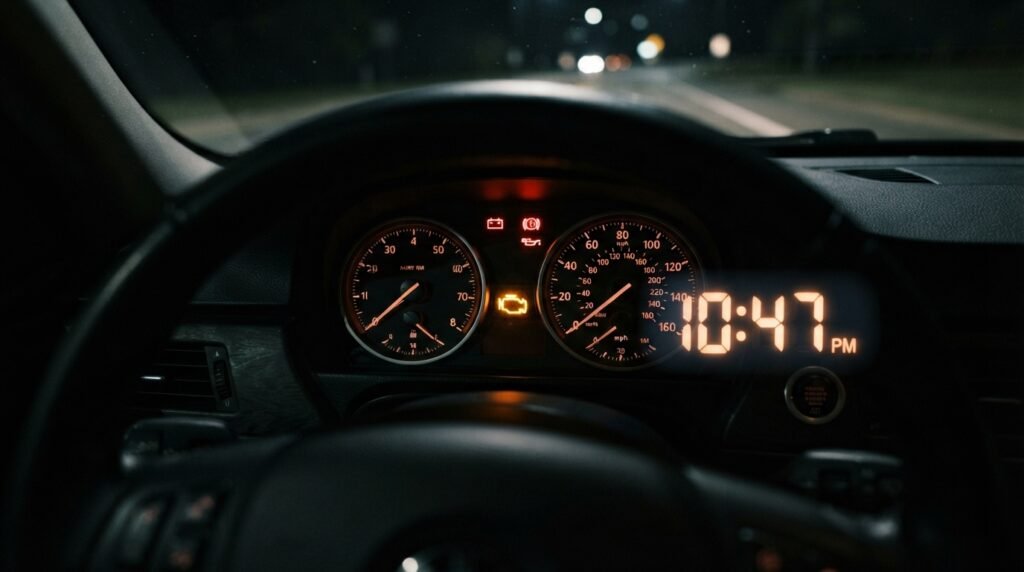
The three-cycle countdown can also restart if the fault returns. Another active trouble code may keep the light illuminated even when the original repair was successful. Some misfire, fuel-system, and EVAP faults may follow additional or manufacturer-specific logic.
Official OBD-II rules use three successful sequential monitored cycles as the common light-extinguishing pattern for passenger vehicles, although exceptions apply.
This explains why three is a useful answer to “How many Drive Cycles to Clear a Code?”—but only when the driver actually means “How long until the check engine light turns off?” The code itself may remain stored after the dashboard light disappears.
Clock 3: The Confirmed or History-Code Clock
Why the Light Can Be Off While the Code Remains
A confirmed code indicates that the OBD system collected enough evidence to classify a malfunction as real rather than merely pending. Depending on the fault strategy, the check engine light may have been illuminated at the same time.
After a successful repair, the light can turn off before that code disappears from memory. The scanner may label the remaining information as confirmed, stored, previous-MIL-on, inactive, or history. Terminology varies among manufacturers and scan tools.
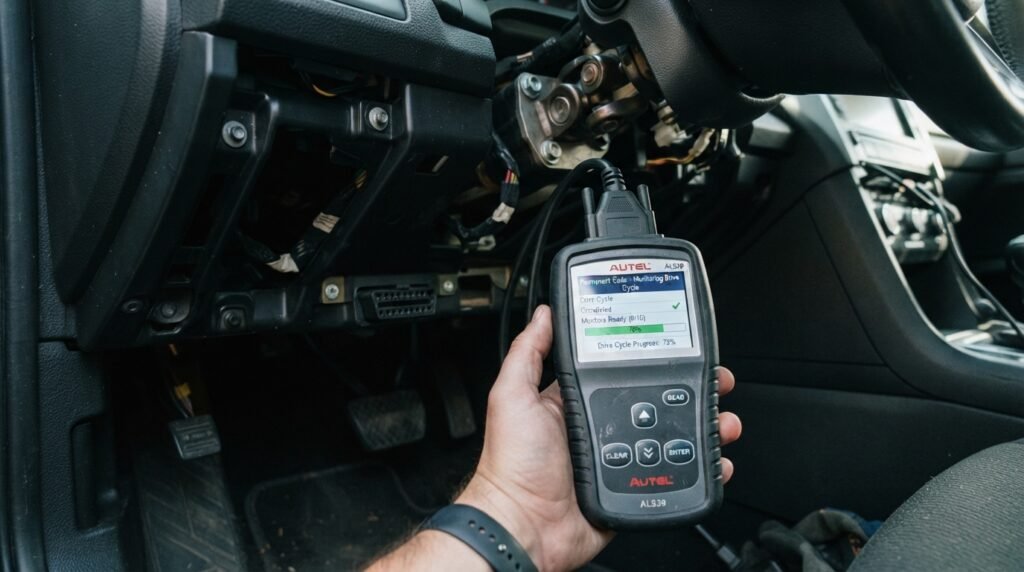
Keeping the code temporarily gives a technician evidence of an earlier problem. It does not automatically mean the fault is still active. Current data, code status, freeze-frame information, and monitor results must be considered together.
Under California OBD-II requirements, a confirmed fault code may remain until the malfunction has not been detected for approximately 40 warm-up cycles. Rules differ somewhat by model year, but 40 warm-ups is the important general benchmark.
Therefore, the number of Drive Cycles to Clear a Code from memory may be much greater than the number required to turn off the dashboard light.
Clock 4: The Permanent-Code Clock
Can a Permanent Code Be Cleared With a Scanner?
A permanent diagnostic trouble code usually corresponds to an emissions-related confirmed fault that commanded the check engine light. It is stored in nonvolatile memory so it cannot be hidden simply by erasing ordinary codes or interrupting vehicle power.
A standard scan-tool erase command cannot directly remove it. Disconnecting the battery will not force it to disappear either. The vehicle’s OBD system must determine that the original malfunction is no longer present.

If ordinary fault information was manually cleared after the repair, the relevant monitor must run again and record a passing result. Some permanent codes may then disappear at the end of that qualifying cycle. Others require additional criteria or remain visible until the operating conditions needed by the monitor are encountered.
This is why permanent codes have no reliable universal countdown. The answer depends less on distance and more on whether the correct monitor has completed and passed.
Why a Permanent Code May Stay for Several Days
The repair may be successful even though the permanent code remains temporarily. The responsible monitor may not have run because the necessary temperature, fuel level, load, or driving conditions were not available.
However, a permanent code can also remain because the fault is still present or has returned intermittently. A passing monitor result—not elapsed time alone—is what confirms the difference.
Readiness Monitors Use a Separate Countdown
Readiness status is often confused with code clearing. It tells an emissions inspector or technician whether the supported OBD monitors have completed their self-tests since codes were erased or power was interrupted.
Clearing ordinary codes normally resets many readiness monitors to “Not Ready.” This means the check engine light can be off while the vehicle is still unprepared for an emissions inspection.
Continuous monitors, such as misfire and fuel-system monitoring, operate frequently while the engine runs. Non-continuous monitors—including catalyst, oxygen-sensor, EVAP, and EGR-related tests—wait for specific enabling conditions.
Some vehicles complete readiness after one or two suitable cycles. Others may need two to five repetitions of a vehicle-specific procedure or several days of normal driving. Ohio E-Check notes that mixed everyday driving may set the monitors in a few days, while a generic procedure may need to be repeated two to five times.
Why Mileage Alone Cannot Answer the Question
Advice such as “drive 50 to 100 miles” is only a rough estimate. Distance does not prove that a particular monitor ran.
A vehicle could travel many highway miles while an EVAP monitor remains incomplete because its enabling conditions were never met. Another vehicle might complete several monitors during shorter trips containing the required conditions.
The reliable approach is to check monitor and code status rather than relying only on the odometer.
Seven Reasons the Code Has Not Cleared
1. The Original Fault Still Exists
If the repair did not correct the root cause, the monitor will fail again and the countdown may restart.
2. The Responsible Monitor Has Not Run
The car may have been driven, but the system connected to that code has not yet performed its test.
3. The Drive Cycle Did Not Meet Its Enable Conditions
Temperature, fuel level, load, speed, or other required conditions may have been outside the necessary range.
4. The Fault Is Intermittent
A damaged wire, loose connection, or inconsistent component can pass once and fail during a later cycle.
5. Another Code Is Keeping the Light On
The original fault may be repaired while a second emissions-related problem independently commands the check engine light.
6. Clearing Codes Restarted Readiness
Using an erase command can remove ordinary code information while changing supported monitors to “Not Ready.”
7. The Remaining Code Is Permanent
A permanent DTC must be cleared by the vehicle’s own verification process, not by repeating an erase command.
Understanding these differences prevents unnecessary parts replacement and explains why Drive Cycles to Clear a Code cannot be reduced to one fixed mileage or trip count. Part 3 covers what to do after a repair, how to verify the result safely, emissions-test timing, and the most common questions drivers ask.
What Should You Do After the Repair?
Begin by confirming that the original cause—not merely the symptom—was repaired. If possible, keep a record of the initial code and freeze-frame data because they show the conditions present when the fault was detected.
After the repair, check the scanner for four separate items: pending codes, confirmed or history codes, permanent codes, and readiness-monitor status. Do not judge the repair solely by whether the dashboard light is off.
If a manufacturer-specific drive cycle is required, follow the correct service information and complete it only under safe, legal driving conditions. A qualified technician can perform the procedure when it requires precise monitoring or unusual operating conditions.
Do not attempt a drive cycle when the check engine light is flashing or the vehicle has severe shaking, overheating, low oil pressure, repeated stalling, or major power loss. Those conditions require diagnosis rather than additional driving.
Should You Disconnect the Battery?
Disconnecting the battery is not a reliable shortcut. It may erase useful diagnostic information and reset readiness monitors, while a permanent DTC normally remains stored.
Even when the dashboard light temporarily disappears, an unrepaired fault will return after the responsible monitor runs again. Clearing evidence is not the same as repairing the vehicle.
What If an Emissions Test Is Coming Soon?
A check engine light that is off does not automatically mean the vehicle is ready for inspection. The supported emissions monitors must complete their tests, and inspection rules for incomplete monitors vary by state and model year.
Before visiting the inspection station, have the readiness status checked. Waiting for monitor confirmation is more reliable than assuming a certain mileage will be enough.
Frequently Asked Questions
Can a trouble code clear itself?
Yes. If the fault no longer occurs and the responsible monitor completes enough successful tests, the OBD system may turn off the light and later erase eligible code information.
Is three drive cycles always enough?
No. Three qualifying cycles commonly extinguish the check engine light, but they may not erase history or permanent codes or complete every readiness monitor.
Can a scanner erase a permanent code?
No. A permanent DTC must be cleared by the OBD system after it verifies that the related malfunction is no longer present.
Why did the light go off but the code remain?
The computer may have enough passing evidence to turn off the warning but may retain the code as diagnostic history until its erasure criteria are satisfied.
How many miles equal one drive cycle?
There is no universal mileage. A qualifying cycle depends on whether the relevant monitor runs under the required conditions.
Final Answer
For drivers asking how many Drive Cycles to Clear a Code, the practical answer is:
A pending code may clear after the next qualifying pass. The check engine light commonly turns off after three successful qualifying cycles. A confirmed or history code may remain for roughly 40 warm-up cycles. A permanent code has no fixed countdown and disappears only after the vehicle verifies the repair. Readiness monitors follow a separate, vehicle-specific process.
Count successful monitor runs—not just trips or miles. If the code returns, remains current, or the monitor repeatedly refuses to complete, the vehicle needs further diagnosis rather than more driving.