
Your car may start normally. It may drive normally. The engine may feel fine. But if the airbag warning light is on, that does not mean everything is okay.
The airbag warning light is part of the SRS system, or Supplemental Restraint System. This system includes airbags, crash sensors, seat belt pretensioners, seat belt buckle sensors, passenger occupancy sensors, wiring, and the SRS control module. When something in that system does not pass the self-check, the warning light stays on.
The important part is this: Airbag Warning Light Is ON does not usually affect how the car drives. It affects what may happen in a crash. Depending on the fault, one or more airbags may not deploy correctly, or a seat belt pretensioner may not work when you need it.
This is not a light to ignore, and it is not a light to blindly reset. The right first step is to scan the SRS module, read the exact code, and understand whether the fault is current, stored, intermittent, or related to low voltage, wiring, sensors, or crash data.
Airbag Warning Light Is ON: Quick Meaning and First Checks
When the Airbag Warning Light Is ON, the car is telling you that the SRS module has detected a fault. The fault may be simple, such as a low-voltage code after a weak battery. It may also be serious, such as a seat belt pretensioner fault, crash sensor problem, clock spring failure, or stored crash data after an accident.
Quick first checks:
| What You Notice | What It May Point To |
|---|---|
| Light stays on after startup | Active or stored SRS fault |
| Light came on after moving the seat | Under-seat connector or wiring issue |
| Horn/steering buttons stopped working too | Possible clock spring problem |
| Light came on after weak battery/jump start | Low voltage or history code |
| Passenger airbag light acts strange | Occupancy sensor or passenger seat issue |
| Car was in an accident | Crash data, deployed component, or sensor fault |
| Water got inside the cabin | Corroded connector or wet SRS module |
The airbag light normally turns on briefly when you start the car, then turns off after the system self-test. If it stays on, flashes repeatedly, or comes back after clearing, there is a fault that needs diagnosis.
Why This Warning Light Matters
Airbags are designed to work with seat belts, not replace them. In a crash, the SRS system decides whether to deploy airbags and tighten seat belt pretensioners based on sensor input, crash severity, seat occupancy, buckle status, and module logic.
If the Airbag Warning Light Is ON, the system may disable part of that protection. On some vehicles, one airbag circuit may be disabled. On others, the system may disable multiple parts of the restraint system to prevent accidental deployment or unsafe operation.
That means your car may still drive, but the safety system may not be ready.
This is why clearing the light without fixing the cause is a bad idea. If the code returns immediately, the problem is still there. If the code stays gone after a repair, that is different. The goal is not to make the dashboard look clean. The goal is to make the SRS system work correctly.
Safety Warning Before You Touch Anything
Airbag systems are not like regular lights, speakers, or sensors. They include explosive inflators and monitored circuits. A careless test can cause damage or injury.
Do not do these things:
- Do not probe airbag connectors with a test light.
- Do not unplug yellow SRS connectors while the system is powered.
- Do not remove the steering wheel airbag without the correct procedure.
- Do not install random resistors to “trick” the system.
- Do not use cheap reset tools to hide a real SRS fault.
- Do not ignore the light on a car with accident history.
Many SRS connectors are yellow, but not every yellow connector should be touched. If you are not trained or do not have service information for your vehicle, keep diagnosis limited to safe checks and scanner data.
1. Low Battery Voltage Or Recent Jump Start
One of the less dramatic reasons the airbag warning light comes on is low voltage. A weak battery, dead battery, recent jump start, alternator issue, or disconnected battery can trigger SRS codes.
The SRS module needs stable voltage to run its self-check. If voltage drops too low during startup, the module may store a low-voltage or communication-related code. Sometimes the light appears after a battery replacement or after the car has been sitting for a long time.
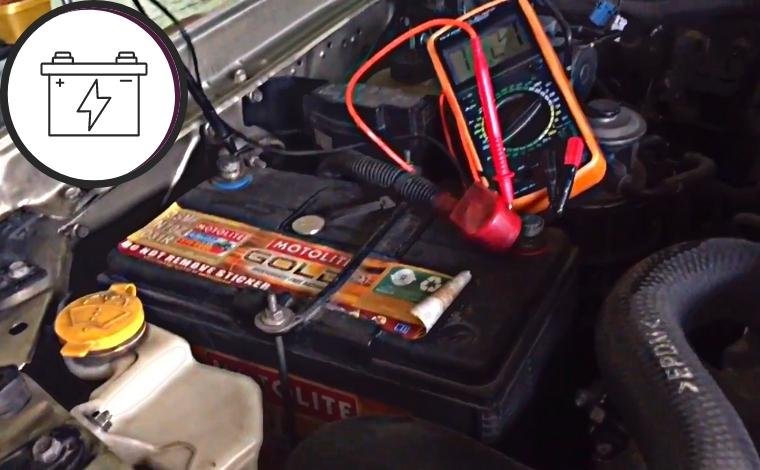
Clues:
- Battery recently died
- Car needed a jump start
- Multiple warning lights appeared at once
- Airbag light came on after battery service
- Scanner shows low voltage or history code
What to do first:
- Test battery health
- Check alternator charging voltage
- Scan the SRS module
- See if the code is current or history
- Clear only after voltage issue is corrected
If the code is only a history low-voltage code and the system passes self-test after the battery problem is fixed, the light may stay off after clearing. But if the airbag light returns, keep diagnosing.
2. Loose Or Damaged Wiring Under The Seat
Under-seat wiring is one of the most common real-world causes of an airbag or SRS warning light. Many vehicles have seat belt buckle wiring, seat occupancy sensor wiring, side airbag wiring, and pretensioner wiring under the seats.

The problem can happen after:
- Moving the seat forward or backward
- Vacuuming under the seat
- Removing the seat
- Spilling liquid inside the cabin
- Interior repair work
- Someone kicking or pulling wiring accidentally
When the Airbag Warning Light Is ON after moving a seat, an under-seat connector becomes a strong suspect. The issue may be a loose connector, corroded pin, damaged wire, high resistance, or intermittent open circuit.
Scanner clues:
- Driver seat belt pretensioner circuit
- Passenger seat occupancy sensor code
- Side airbag circuit resistance code
- Seat buckle switch fault
- Intermittent connector code
Do not just unplug and plug SRS connectors randomly with the battery connected. A proper inspection usually involves disconnecting the battery, waiting the recommended time, then checking the connector safely according to service procedure.
3. Bad Seat Belt Buckle Sensor
The seat belt buckle is not only a latch. On many modern vehicles, it also communicates with the SRS system. The module may need to know whether the driver or passenger is buckled before deciding how the restraint system should respond.
A bad buckle switch or buckle wiring can trigger the airbag warning light.
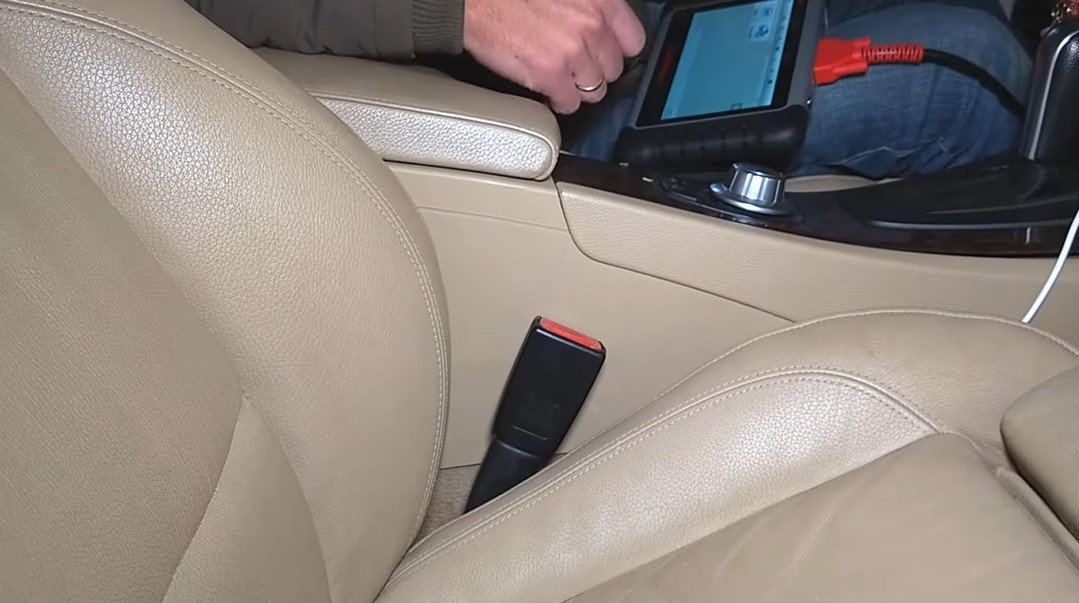
Common clues:
- Seat belt warning behaves strangely
- Seat belt light stays on even when buckled
- Chime works randomly
- Airbag light appears with buckle-related SRS code
- Code points to driver or passenger buckle switch
Sometimes dirt, spilled drink, or wear inside the buckle causes the switch to report the wrong status. In other cases, the buckle wiring or pretensioner assembly may be the real issue.
A scanner with SRS live data can help. It may show “buckled” or “unbuckled” status as you latch and unlatch the belt. If the live data does not change correctly, the buckle sensor or circuit needs closer inspection.
4. Faulty Passenger Occupancy Sensor
The passenger seat has to do more than hold a passenger. In many vehicles, it also helps the SRS system decide whether the passenger airbag should be active, disabled, or adjusted.
A passenger occupancy sensor fault can turn on the airbag warning light or cause the passenger airbag ON/OFF indicator to behave oddly.
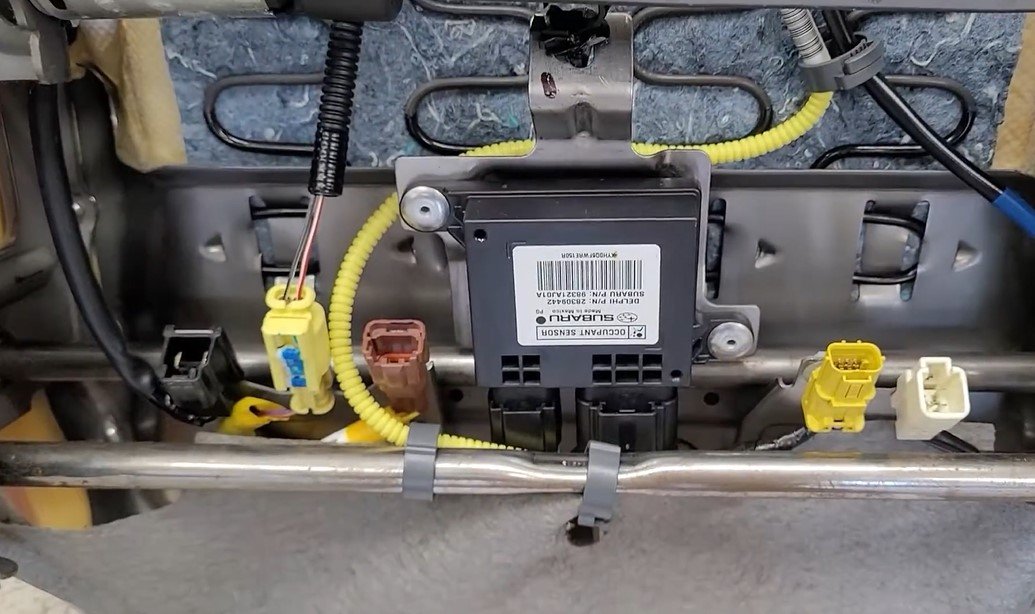
Common triggers:
- Heavy object on passenger seat
- Liquid spill on seat
- Seat cushion damage
- Wiring issue under passenger seat
- Seat replacement
- Occupancy sensor calibration problem
- Previous repair without proper calibration
If the Airbag Warning Light Is ON and the passenger airbag light also acts unusual, scan the SRS module and look for occupancy classification codes.
Possible scanner clues:
- Passenger occupant classification fault
- Calibration not performed
- Seat weight sensor fault
- Passenger airbag disabled
- Communication fault with occupant sensor module
This is not a good area for guessing. Some vehicles require recalibration after replacing seat components. Installing used seats or seat modules can also create compatibility or calibration problems.
5. Damaged Clock Spring
The clock spring is a rotating electrical connection behind the steering wheel. It allows the steering wheel to turn while keeping electrical connection to the driver airbag, horn, steering wheel controls, and sometimes other systems.
When the clock spring wears out or breaks, the driver airbag circuit may open, and the SRS warning light can come on.
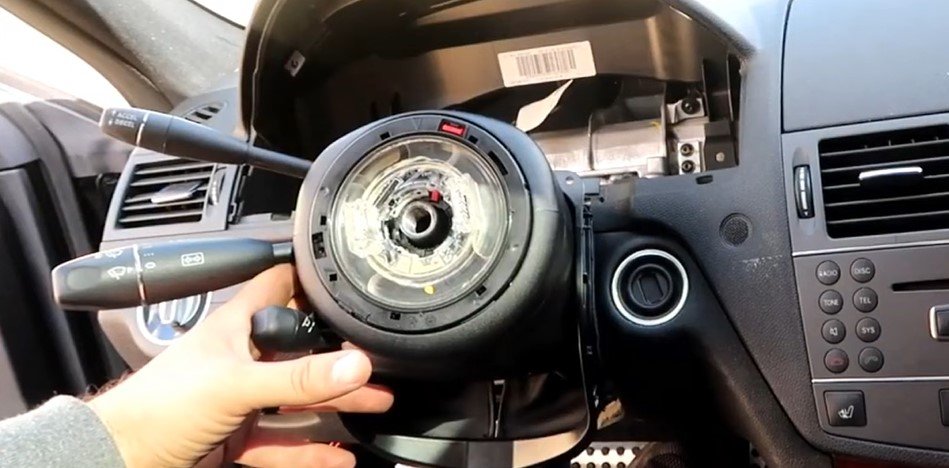
Common clues:
- Airbag light on
- Horn stopped working
- Steering wheel buttons stopped working
- Cruise control buttons do not work
- Noise behind steering wheel
- Problem changes when turning the wheel
A clock spring issue is a strong suspect when the airbag light appears together with steering wheel electrical problems. The scanner may show a driver airbag circuit resistance code or driver airbag open circuit code.
This repair can involve removing the airbag and steering wheel. It also may require proper centering of the new clock spring. If installed incorrectly, the new clock spring can break when the steering wheel is turned fully.
6. Faulty Crash Or Impact Sensor
Crash sensors help the SRS module understand impact direction and severity. Some sensors are in the front of the vehicle, some may be on the sides, and some systems include sensors built into the control module.
A crash sensor problem can trigger the airbag warning light even if there has not been a major accident.
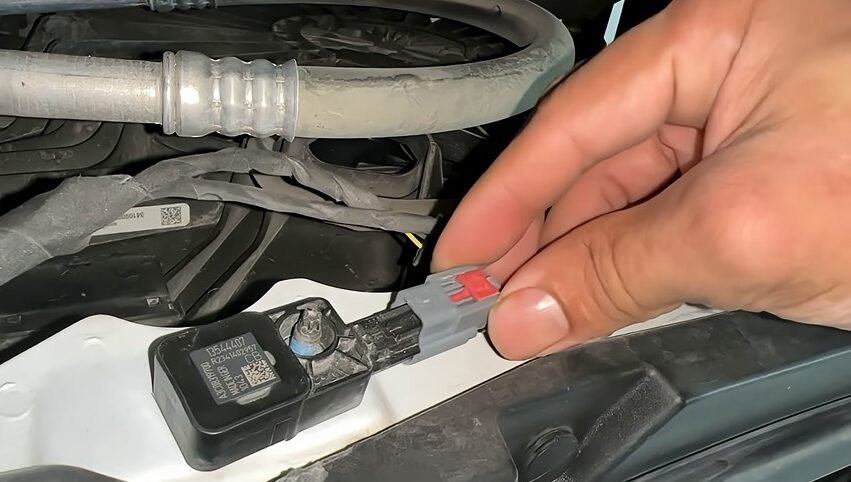
Possible causes:
- Minor front-end impact
- Bumper repair
- Corrosion near sensor
- Damaged sensor wiring
- Water intrusion
- Connector damage
- Previous crash repair
Scanner clues:
- Front impact sensor fault
- Side impact sensor fault
- Sensor communication fault
- Sensor circuit high/low resistance
- Crash sensor not initialized
If the car was recently in a collision, even a small one, do not assume the airbag light is just a reset issue. A crash sensor, wiring harness, pretensioner, or module may need proper inspection.
7. Seat Belt Pretensioner Problem
Seat belt pretensioners are part of the SRS system. In a crash, they can tighten the seat belt quickly to help hold the occupant in position before or during airbag deployment.
A pretensioner fault is safety-critical. The system may detect high resistance, low resistance, open circuit, short circuit, or a deployed pretensioner.
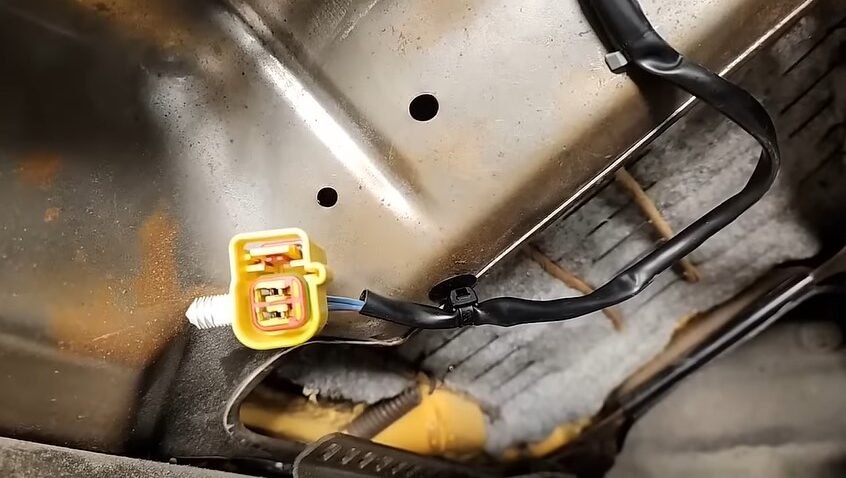
Clues:
- SRS code mentions driver or passenger pretensioner
- Car has accident history
- Seat belt does not retract normally
- Seat belt buckle assembly was replaced
- Wiring under seat was disturbed
If the Airbag Warning Light Is ON because of a pretensioner code, do not treat it as a minor nuisance. A failed pretensioner may not work properly in a crash. A deployed pretensioner usually needs replacement, not just a reset.
8. SRS Module Fault, Water Damage, Or Stored Crash Data
The SRS module is the brain of the airbag system. It monitors circuits, stores codes, receives sensor input, and decides what happens in a crash.
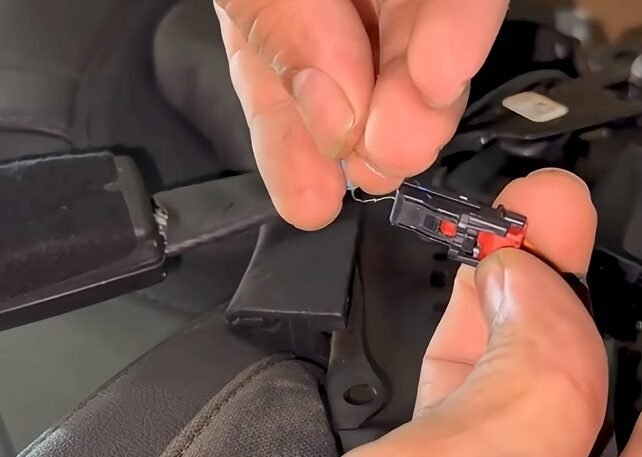
An SRS module can trigger the light because of:
- Internal module fault
- Stored crash data
- Water damage
- Corrosion
- Previous accident
- Incorrect module replacement
- Programming or VIN mismatch
- Communication failure
Water damage is especially important. In some vehicles, the SRS module is mounted low in the cabin. If the car had flood damage, wet carpet, heater core leaks, or sunroof drain leaks, the module or connectors may corrode.
Stored crash data is another issue. After an accident, some modules store crash events that cannot be cleared with a basic scanner. Depending on the vehicle, the module may need replacement, programming, or professional reset service.
SRS Codes Related To Airbag Warning Light
SRS codes are often body codes, sometimes starting with B, but the exact code format depends on the vehicle. Unlike engine codes such as P0300, airbag codes are more manufacturer-specific.
Common SRS code categories include:
| Code Category | What It Usually Means |
|---|---|
| Driver airbag circuit | Steering wheel airbag, clock spring, wiring |
| Passenger airbag circuit | Passenger airbag module or wiring |
| Pretensioner circuit | Seat belt pretensioner resistance fault |
| Buckle switch code | Seat belt latch status problem |
| Occupancy sensor code | Passenger seat classification issue |
| Crash sensor code | Front/side impact sensor fault |
| Low voltage code | Battery or charging system issue |
| Module communication code | SRS module or network problem |
| Crash data stored | Accident event stored in module |
The code description matters. “High resistance,” “low resistance,” “open circuit,” and “short to ground” do not mean the same thing. A good scanner helps, but vehicle service information is still important.
Why A Regular OBD2 Scanner May Not Read Airbag Codes
This is a major point many drivers miss. A basic OBD2 scanner is usually designed for engine and emissions-related codes. It may read check engine light codes, but it may not communicate with the SRS module.
So if your Airbag Warning Light Is ON and your basic scanner says “no codes,” that does not mean there is no problem. It may only mean your scanner cannot read the airbag system.
For airbag diagnosis, look for a scanner that supports:
- SRS/airbag module scan
- Full-system scan
- Body control module access
- Current and history SRS codes
- Code clearing after repair
- Live data for buckle/occupancy status
- Vehicle-specific systems
A full-system scanner is usually better than a basic code reader because it can scan engine, ABS, SRS, transmission, body modules, and other systems depending on the vehicle.
What To Check First With A Scanner
When diagnosing an airbag warning light, do not clear codes immediately. Read them first and write them down.
Check these:
Current Codes
Current codes mean the fault is active right now. If you clear the code and it returns immediately, the issue is still present.
History Codes
History codes mean the fault happened before, but may not be active now. Low voltage, unplugged connectors, or previous repair work can leave history codes.
Which Circuit Is Affected
A good code should tell you whether the issue is driver side, passenger side, front crash sensor, seat belt pretensioner, buckle switch, occupancy sensor, or module communication.
Live Data
Some scanners show live SRS data. You may be able to see seat belt buckle status, passenger seat occupancy status, or module voltage.
Code Return Behavior
After the actual problem is repaired, clearing the code should make the light stay off. If the code returns instantly, the repair is not done.
What Not To Do When The Airbag Light Is On
A lot of bad advice exists around airbag lights. Some of it can make the car more dangerous.
Avoid:
- Clearing the code just to sell the car
- Installing bypass resistors
- Ignoring accident history
- Replacing the SRS module without checking wiring
- Buying random used airbag parts
- Using non-matching seat components
- Ignoring water damage
- Driving long-term with the light on
If the Airbag Warning Light Is ON, the safest path is to find the stored SRS code, confirm the circuit, repair the cause, then clear the code and verify it does not return.
Can You Drive With The Airbag Warning Light On?
Technically, the car may still drive. The engine, brakes, steering, and transmission may feel normal. But that does not make the problem harmless.
If the airbag light is on, the SRS system may not protect you correctly in a crash. An airbag may not deploy. A pretensioner may not tighten. A passenger detection system may not classify the seat correctly.
Short drive to a repair shop? Usually understandable.
Ignoring it for months? Not smart.
Be more urgent if:
- The car was recently in an accident
- The light came on after water damage
- The horn and steering controls also failed
- The passenger airbag indicator is wrong
- The scanner shows current pretensioner or airbag circuit codes
- The vehicle has open airbag recalls
Also check for recalls by VIN, especially on older vehicles. Airbag recalls are safety-related and should not be delayed.
Repair Difficulty Guide
| Cause | Difficulty | First Action |
|---|---|---|
| Low voltage/history code | Low | Test battery and charging system |
| Under-seat connector | Medium | Inspect connector and wiring safely |
| Buckle sensor | Medium | Check live buckle status and circuit code |
| Occupancy sensor | High | Scan, calibrate, or replace if needed |
| Clock spring | Medium-High | Confirm driver airbag circuit and steering controls |
| Crash sensor | Medium | Inspect sensor, connector, and impact area |
| Pretensioner | High | Replace safety component if confirmed |
| SRS module/crash data | High | Program, reset, or replace properly |
| Water damage | High | Inspect module, carpet, wiring, connectors |
The cheapest repair is not always the right repair. SRS parts must match the vehicle, and some components require calibration or programming.
Best Type Of Scanner For Airbag Light Diagnosis
For this kind of problem, the best scanner is not the one that only reads check engine codes. You want a scanner that clearly supports SRS or airbag diagnostics for your vehicle.
Good features include:
- SRS code read and clear
- Full-system auto scan
- Current/history code display
- Live data for seat and buckle sensors
- Battery voltage data
- ABS/SRS/body module support
- Vehicle-specific coverage
- Clear code descriptions
- Ability to rescan after repair
If you work on your own vehicles, an SRS-capable scanner can save time. If you only have a basic OBD2 reader and the Airbag Warning Light Is ON, do not assume “no engine codes” means “no airbag codes.”
FAQ About Airbag Warning Light Is ON
What does Airbag Warning Light Is ON mean?
It means the SRS system has detected a fault. The issue may involve an airbag, seat belt pretensioner, crash sensor, occupancy sensor, buckle sensor, wiring, battery voltage, or SRS module.
Will airbags deploy if the airbag light is on?
They may not deploy correctly. Depending on the fault and the vehicle, one part of the system or the whole SRS system may be disabled or limited.
Can low battery cause airbag light?
Yes. Low voltage, a dead battery, recent jump start, or charging system issue can set SRS codes. The system still needs to be scanned to confirm the exact code.
Why did the airbag light come on after moving the seat?
Under-seat SRS connectors and wiring can be disturbed when the seat is moved. Seat belt buckle wiring, side airbag wiring, occupancy sensor wiring, or pretensioner wiring may be involved.
Is it safe to buy a used car with the airbag light on?
Be careful. It could be a simple sensor issue, but it could also mean accident history, missing airbags, stored crash data, water damage, or improper repair. Always scan the SRS module before buying.
Can water damage cause the airbag light?
Yes. Water under the carpet or seats can corrode connectors, wiring, or the SRS module. Water damage should be treated seriously because it can affect safety systems.
Final Thoughts
If the Airbag Warning Light Is ON, do not judge the problem by how the car drives. A car can feel perfectly normal while the SRS system has a serious fault stored.
Start with a proper SRS scan. Read the current and history codes. Check which circuit is affected. Look at live data if your scanner supports it. Then inspect the likely area safely, whether it is under-seat wiring, a buckle sensor, clock spring, crash sensor, pretensioner, occupancy sensor, battery voltage issue, or SRS module fault.
The wrong approach is to clear the light and hope. The right approach is to find the cause, repair it correctly, clear the code, and confirm the light stays off because the system passes its self-test.
Airbag systems are there for the moment you hope never happens. That is exactly why this warning light deserves attention before that moment arrives.