
When the Check Engine Light Is ON, the first job is not to guess the bad part.
The first job is to understand how urgent it is.
A check engine light can come on for something simple, like a loose gas cap. It can also come on because the engine is misfiring, running too rich, running too lean, overheating, or damaging the catalytic converter.
That is why two cars can show the same dashboard warning but need completely different action.
One car may be safe to drive for a short time. Another car may need to be stopped right away.
The light itself does not tell you the exact failed part. It only tells you the vehicle’s onboard diagnostic system has detected a fault. To know what direction to go, you need to notice the symptoms, scan the codes, and read the data behind the warning.
This guide explains why your Check Engine Light Is ON, which problems are common, which codes usually appear, and what you should do first before replacing anything.
Quick Answer: What To Do When The Check Engine Light Is ON
If the Check Engine Light Is ON, first check whether it is steady or flashing. A flashing check engine light is usually more serious and often points to an active misfire that can damage the catalytic converter. If the light is steady and the car runs normally, check the gas cap, look for symptoms, and scan the vehicle for stored and pending OBD2 codes.
Do not clear the code before saving it. Do not replace a sensor just because the code mentions that sensor. The code is the starting point, not the final diagnosis.
Start With A 60-Second Triage
Before opening the hood or plugging in a scanner, take a minute to observe the car.
| What You See Or Feel | What It May Mean |
|---|---|
| Steady check engine light | Fault detected, but not always urgent |
| Flashing check engine light | Possible serious misfire or catalyst-damaging condition |
| Car shaking | Misfire, ignition issue, injector issue, mechanical problem |
| Strong fuel smell | Rich running, fuel leak, injector, EVAP problem |
| Power loss | Limp mode, airflow problem, misfire, fuel issue |
| Temperature gauge rising | Stop and check overheating risk |
| Oil pressure light also on | Stop driving immediately |
| Light came on after refueling | Gas cap, EVAP leak, purge valve issue |
This quick check matters because a scanner may show the code, but your symptoms show the urgency.
A car that runs normally with a steady light is different from a car that shakes badly with a flashing light.
Check Engine Light Is ON: Steady, Flashing, Or Intermittent?
The way the light behaves gives you the first real clue.
Steady Check Engine Light
A steady check engine light usually means the computer has detected a fault that should be diagnosed soon. The car may still drive normally. You may not notice any sound, smell, smoke, or power loss.

But “steady” does not mean “ignore it.”
A steady light can still be caused by a bad oxygen sensor, EVAP leak, thermostat issue, lean code, rich code, MAF sensor problem, or catalytic converter efficiency code. Some of these problems can become more expensive if you drive too long without diagnosing them.
Flashing Check Engine Light
A flashing check engine light is more urgent.
Most of the time, it means the engine is actively misfiring badly enough that unburned fuel may enter the exhaust. That can overheat and damage the catalytic converter.
If the light is flashing and the engine is shaking, losing power, smelling like fuel, or running rough, reduce speed and pull over somewhere safe. In that situation, continuing to drive can turn a small repair into a very expensive one.
Intermittent Check Engine Light
Sometimes the light comes on, then goes away.
That does not always mean the problem fixed itself. Some faults only happen under certain conditions: cold start, highway speed, heavy acceleration, after refueling, or when the engine is fully warm.
For intermittent problems, freeze-frame data is especially helpful because it shows what was happening when the code set.
A Code Is Not A Parts List
This is where many people waste money.
A code can mention an oxygen sensor, but that does not prove the oxygen sensor is bad. A code can mention the catalytic converter, but that does not mean the converter should be replaced first. A lean code can be caused by a vacuum leak, bad MAF reading, weak fuel delivery, exhaust leak, or sensor problem.
Think of an OBD2 code like a direction sign.
It tells you where to look. It does not always tell you what to buy.
If your Check Engine Light Is ON, the right order is:
- Read the code.
- Save freeze-frame data.
- Check pending codes.
- Look at symptoms.
- Use live data if needed.
- Diagnose the system.
- Replace the part only after the evidence matches.
9 Reasons Your Check Engine Light Is ON
1. Loose Gas Cap Or EVAP Leak
A loose gas cap is one of the simplest reasons the Check Engine Light Is ON.
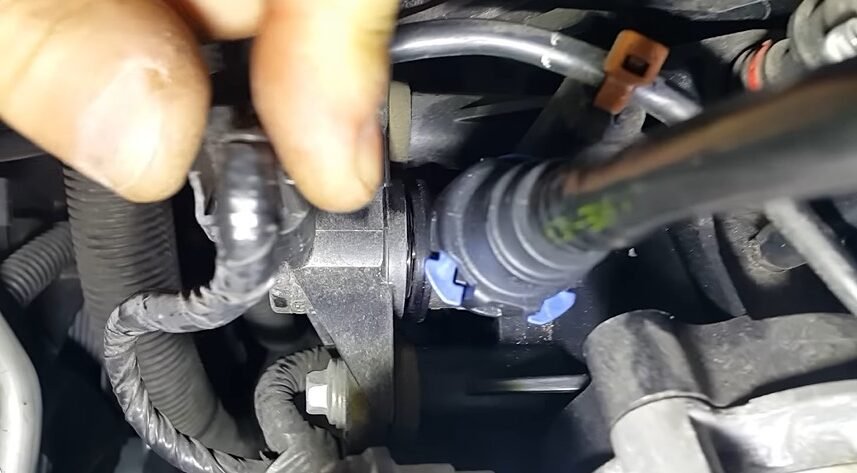
The fuel system is sealed so fuel vapors do not escape into the air. If the gas cap is loose, damaged, missing, or not sealing properly, the EVAP system may detect a leak and turn on the light.
Common codes:
P0440P0442P0455P0456P0457
What to do first:
If the light came on soon after refueling, check the gas cap. Remove it, inspect the seal, and tighten it until it clicks. If your car uses a capless fuel filler, make sure the filler door area is clean and sealing properly.
Do not expect the light to turn off immediately. If the gas cap was the issue, it may take several drive cycles before the system retests and turns the light off.
If the code returns, the leak may be somewhere else in the EVAP system, such as a hose, purge valve, vent valve, charcoal canister, or filler neck.
2. Engine Misfire
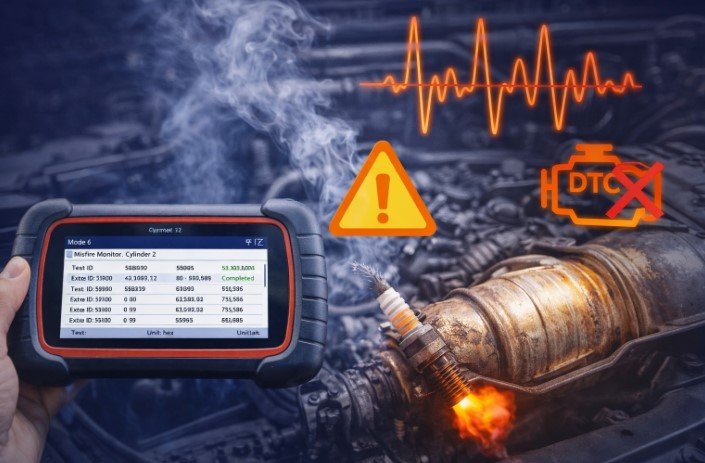
A misfire means one or more cylinders are not burning fuel properly.
This is one of the most important check engine light problems because it can damage the catalytic converter if ignored. Misfires can come from ignition problems, fuel injector issues, vacuum leaks, low compression, or timing problems.
Common codes:
P0300random or multiple misfireP0301cylinder 1 misfireP0302cylinder 2 misfireP0303cylinder 3 misfireP0304cylinder 4 misfireP0305-P0308higher cylinder misfires
What you may notice:
The engine may shake at idle, hesitate, lose power, smell like fuel, or flash the check engine light. Sometimes the misfire only happens under load, such as climbing a hill or accelerating.
What to do first:
Scan the code and identify whether the misfire is random or cylinder-specific. If your scanner supports misfire counters, check which cylinder is counting misfires.
A cylinder-specific misfire does not always mean the spark plug is bad, but spark plugs and ignition coils are common starting points. If you move a coil from one cylinder to another and the misfire follows the coil, the coil is likely the issue.
If the misfire stays on the same cylinder, check injector operation, compression, vacuum leaks, and wiring.
3. Oxygen Sensor Or Air-Fuel Ratio Sensor Problem
The oxygen sensor or air-fuel ratio sensor helps the engine computer adjust the fuel mixture.
If the sensor becomes slow, biased, or loses its heater circuit, the check engine light may turn on. A bad reading can affect fuel economy, emissions, idle quality, and catalytic converter health.

Common codes:
P0130P0131P0132P0133P0135P0150-P0155
What to know:
An O2 sensor code does not always mean the O2 sensor itself is bad. The sensor may be reporting a real rich or lean condition. Wiring problems, exhaust leaks, fuel trim issues, vacuum leaks, and misfires can all affect oxygen sensor readings.
What to do first:
Check the sensor code, but also look at fuel trims and upstream sensor behavior. If fuel trims are far positive or negative, diagnose the mixture problem before replacing the sensor.
If there is an exhaust leak near the upstream sensor, fix that first. An exhaust leak can pull in outside air and confuse the sensor reading.
4. Catalytic Converter Efficiency Problem
Catalytic converter codes often scare people because the repair can be expensive.
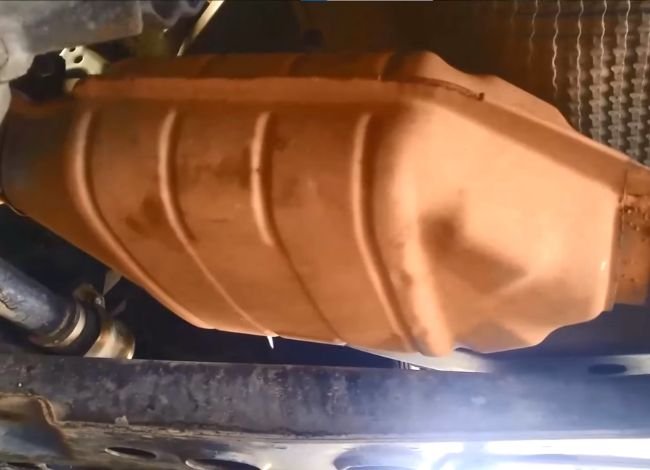
The most common codes are:
P0420P0430
These usually mean the computer believes the catalytic converter is not storing oxygen or cleaning exhaust gases as efficiently as expected.
But here is the important part: the catalytic converter often fails because another problem was ignored.
Common causes behind converter damage include:
- Long-term misfire
- Rich running
- Oil burning
- Coolant entering the exhaust
- Exhaust leaks
- Bad upstream or downstream O2 sensor data
What to do first:
Do not replace the catalytic converter as the first move. Check for misfires, fuel trim problems, rich running, oil consumption, exhaust leaks, and oxygen sensor data.
If the converter code is real and the root cause is still present, a new converter can fail again.
5. MAF Sensor Or Intake Air Problem
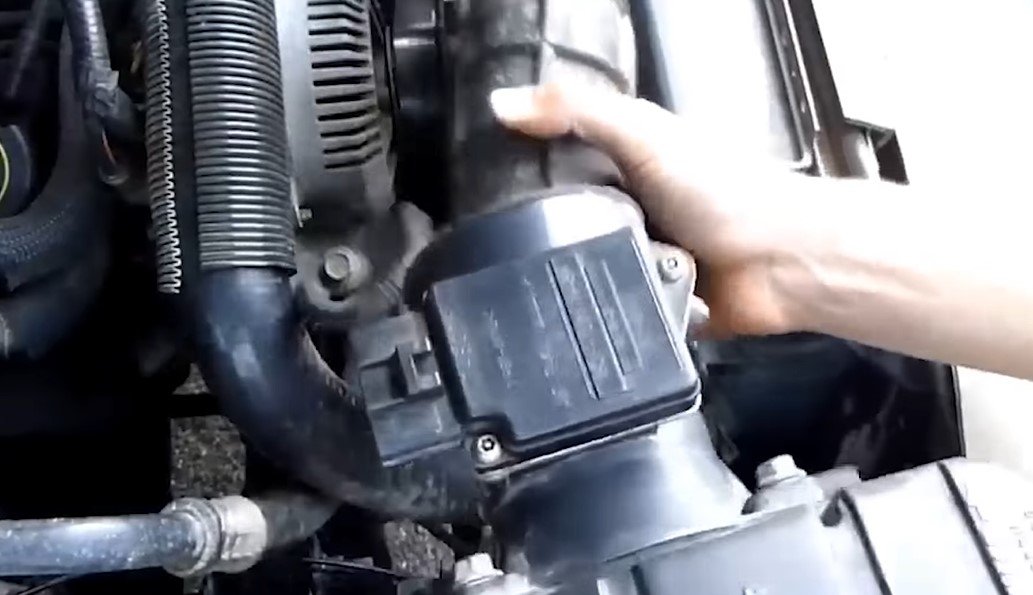
The mass air flow sensor measures how much air enters the engine.
The computer uses this reading to calculate fuel delivery. If the MAF sensor is dirty, unplugged, contaminated, or reading incorrectly, the engine may run poorly and trigger the check engine light.
Common codes:
P0101P0102P0103- Sometimes
P0171orP0174
What you may notice:
- Rough idle
- Stalling
- Hesitation
- Poor fuel economy
- Lack of power
- Lean codes
- Problem after air filter or intake work
What to do first:
Inspect the air intake tube between the air filter box and throttle body. A loose clamp or cracked intake hose can cause airflow problems. Check the MAF connector and wiring. Make sure the air filter box is closed properly.
If the MAF sensor is dirty, clean it only with proper MAF sensor cleaner. Do not use brake cleaner, carb cleaner, or compressed air directly on the sensor.
A good scanner can help by showing MAF readings, engine load, and fuel trims together.
6. Vacuum Leak Or Lean Fuel Trim
A lean code means the engine has too much air or not enough fuel compared with what the computer expects.
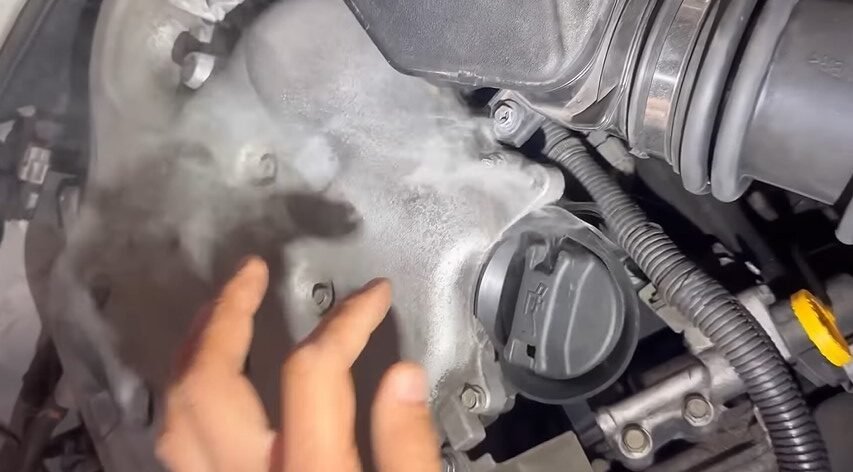
Common lean codes:
P0171P0174
A vacuum leak is a common cause. Extra air enters the engine after the MAF sensor, so the computer does not measure it correctly. The oxygen sensor detects the lean condition, and the computer adds fuel to compensate.
What you may notice:
- Rough idle
- High idle
- Hissing sound
- Hesitation
- Poor acceleration
- Long-term fuel trim positive
- Lean codes on one or both banks
What to do first:
Check fuel trims at idle and at higher RPM. If trims are much worse at idle and improve when RPM increases, a vacuum leak is likely.
Inspect vacuum hoses, PCV hose, intake boot, brake booster hose, and intake manifold gasket area. A smoke test is often the best way to find small leaks.
Do not replace the oxygen sensor just because a lean code appears. The oxygen sensor may be correctly reporting the lean condition.
7. Rich Running Or Fuel Mixture Problem
A rich code means the engine is getting too much fuel or not enough air.
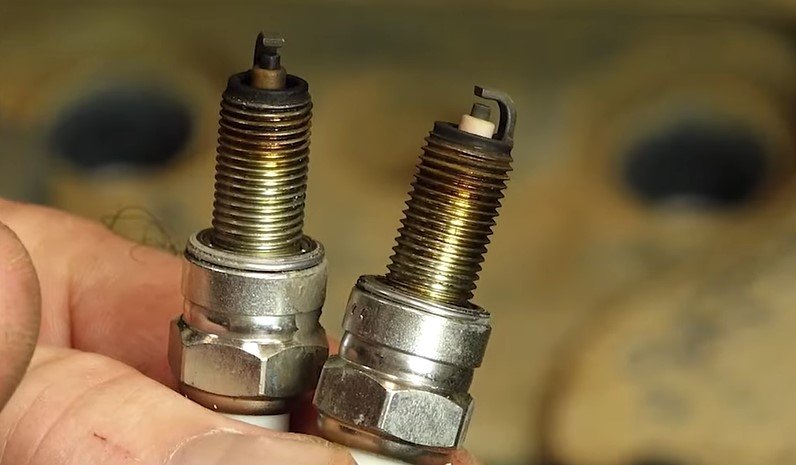
Common rich codes:
P0172P0175P0170P2196P2198
What you may notice:
- Fuel smell
- Black smoke
- Poor fuel economy
- Rough idle
- Fouled spark plugs
- Hard starting
- Negative fuel trims
Common causes:
- Leaking fuel injector
- High fuel pressure
- Bad MAF reading
- Stuck-open purge valve
- Faulty air-fuel sensor data
- Restricted air intake
- Sensor wiring issue
What to do first:
Look at fuel trims. If long-term fuel trim is strongly negative, the computer is trying to remove fuel. That means the engine may be rich, or the computer believes it is rich because of bad data.
Check MAF data, purge valve behavior, fuel pressure, injector leak-down, and O2/A/F sensor readings before buying parts.
If the Check Engine Light Is ON with rich codes, do not ignore it. Extra fuel can damage spark plugs, oxygen sensors, and the catalytic converter over time.
8. Thermostat Or Coolant Temperature Problem
A cold-running engine can trigger the check engine light.
The most common code is:
P0128
This usually means the engine is not reaching expected operating temperature fast enough. A stuck-open thermostat is a common cause. A coolant temperature sensor problem can also create confusing readings.
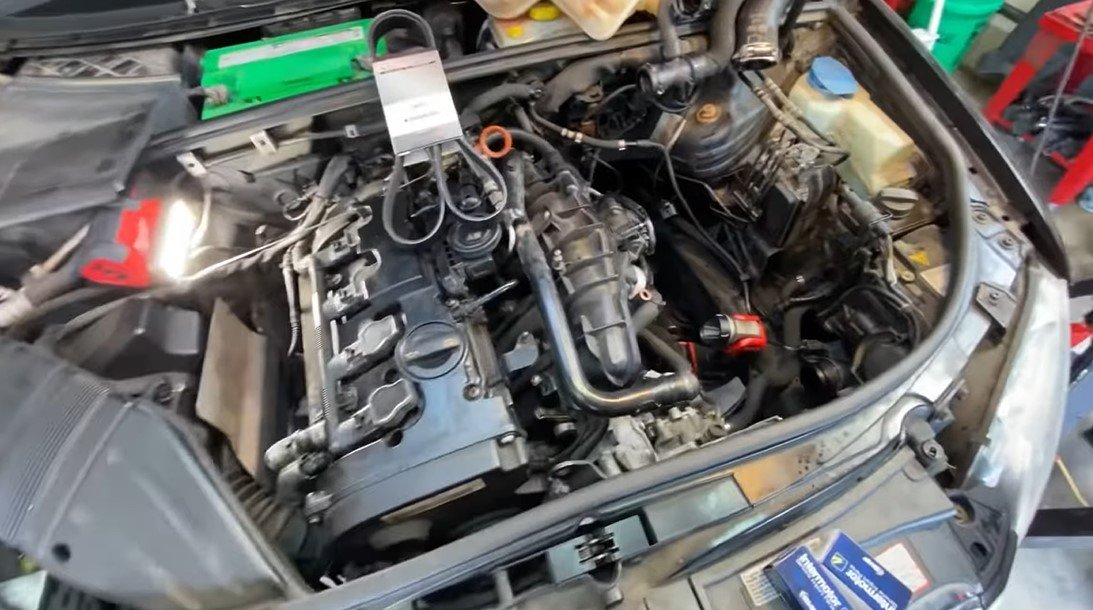
What you may notice:
- Temperature gauge stays low
- Heater feels weak
- Fuel economy gets worse
- Engine takes too long to warm up
- Light comes on in cooler weather
What to do first:
Use a scanner to check live coolant temperature after the engine warms up. If the engine never reaches normal operating temperature, inspect the thermostat, coolant level, temperature sensor, and wiring.
Do not guess based only on the dashboard gauge. Live data gives a clearer picture.
9. EVAP Purge Valve Or Vapor System Problem
The EVAP system stores fuel vapors and sends them into the engine to be burned at the right time.
If the purge valve sticks open, fuel vapor can enter the intake when it should not. This can cause rough idle, hard starting after refueling, rich or lean symptoms, and EVAP-related codes.
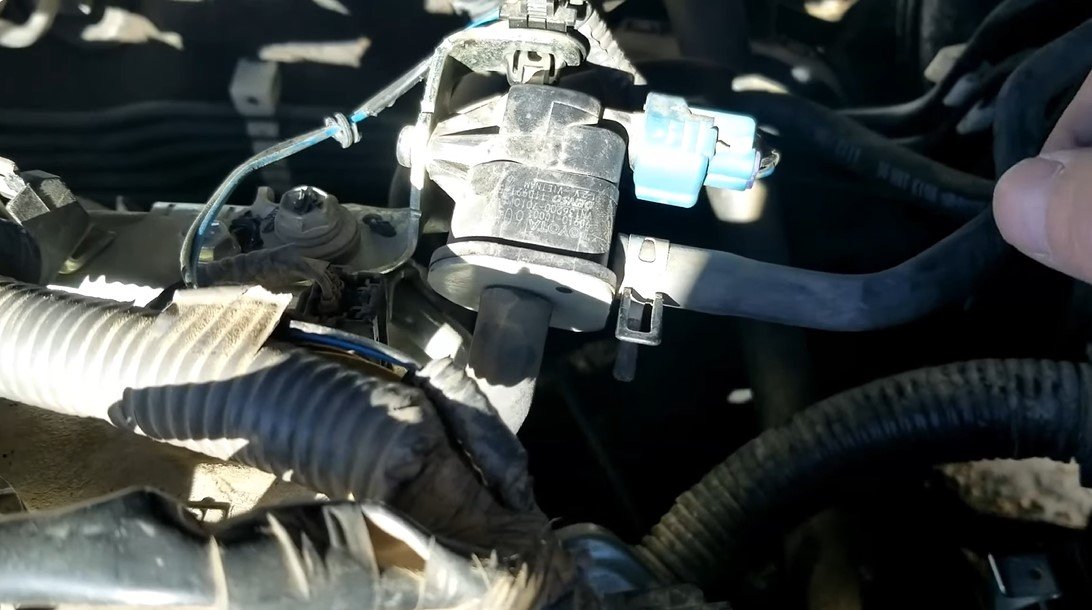
Common codes:
P0441P0440P0455P0456- Sometimes fuel trim codes
What you may notice:
- Hard start after filling gas
- Rough idle after refueling
- Fuel smell
- Light comes on after gas fill-up
- Rich or lean fuel trim behavior
What to do first:
If the problem started after refueling, do not assume the gas cap is the only possible cause. Check EVAP codes, purge valve operation, and whether the valve is stuck open.
Some advanced scanners can show EVAP data or command EVAP tests on supported vehicles. A smoke test may be needed for leak codes.
What An OBD2 Scanner Should Show You
If your Check Engine Light Is ON, a scanner should do more than show one code.
A basic code reader is helpful, but a better scanner gives more context. That context can stop you from replacing the wrong part.
| Scanner Data | Why It Matters |
|---|---|
| Stored codes | Shows the fault that turned the light on |
| Pending codes | Shows early faults that may become confirmed later |
| Permanent codes | May remain until the system passes its own test |
| Freeze-frame data | Shows conditions when the fault happened |
| Live data | Helps confirm what the engine is doing now |
| Fuel trims | Shows rich or lean correction |
| Coolant temperature | Helps find thermostat or sensor issues |
| MAF/MAP data | Helps diagnose airflow and load problems |
| Misfire counters | Helps identify cylinder-specific misfires |
| I/M readiness | Important before emissions inspection |
Freeze-frame data is especially important.
It may show engine RPM, vehicle speed, coolant temperature, engine load, and fuel trim at the moment the code set. That can tell you whether the problem happened at idle, highway speed, cold start, or under load.
Do not clear codes before saving this information.
What Not To Do When The Check Engine Light Is ON
Avoid these mistakes:
- Do not ignore a flashing check engine light.
- Do not clear codes before writing them down.
- Do not replace the part named in the code automatically.
- Do not replace the catalytic converter before checking misfires and fuel trims.
- Do not assume “car runs fine” means the problem is harmless.
- Do not keep driving if the car is shaking badly.
- Do not use only one code as the full diagnosis.
- Do not go for an emissions test right after clearing codes.
Clearing codes can reset readiness monitors. That may make the car fail or be rejected from an emissions inspection until the monitors run again.
Can You Drive With The Check Engine Light On?
It depends on how the car behaves.
Usually Safe For Short Driving If:
- The light is steady
- The car runs normally
- There is no shaking
- There is no overheating
- There is no strong fuel smell
- There is no smoke
- There is no oil pressure warning
- Power feels normal
Even then, scan the car soon. A steady light can still hurt fuel economy, emissions, or catalytic converter life if ignored long enough.
Stop Driving Or Tow If:
- The light is flashing
- The engine shakes badly
- The temperature gauge rises
- Oil pressure light is on
- Strong fuel smell appears
- Smoke comes from the engine or exhaust
- You hear loud knocking
- The car loses major power
- Multiple warning lights come on together
A check engine light is not the same as an oil pressure light or temperature warning. If those lights appear with the check engine light, treat the situation as more serious.
First Diagnostic Order
Use this order if your Check Engine Light Is ON and you want to avoid guessing.
- Check whether the light is steady or flashing.
- Notice how the car is driving.
- Check the gas cap if the light came on after refueling.
- Scan stored codes.
- Scan pending codes.
- Save freeze-frame data.
- Look up the code group, not just the part name.
- Check live data related to the code.
- Diagnose the system.
- Repair the actual cause.
- Clear the code only after saving the data.
- Drive until readiness monitors complete.
This process takes a little longer, but it prevents the most common mistake: replacing a sensor that was only reporting another problem.
FAQ
Why is my check engine light on but the car runs fine?
Your check engine light can be on even if the car runs fine because many emissions and sensor faults do not cause obvious symptoms right away. A loose gas cap, EVAP leak, oxygen sensor issue, thermostat code, or catalytic converter efficiency code may not change how the car feels at first.
What does a flashing check engine light mean?
A flashing check engine light usually means a serious active fault, often a misfire that can damage the catalytic converter. If the engine is shaking, losing power, or smelling like fuel, reduce speed and stop driving as soon as it is safe.
Can I drive with the check engine light on?
You can usually drive a short distance if the light is steady and the car runs normally. But you should scan it soon. If the light is flashing, the engine is shaking, the car is overheating, or the oil pressure light is also on, stop driving.
Will tightening the gas cap turn off the check engine light?
It can, if the loose gas cap was the cause. But the light may not turn off immediately. The car may need several drive cycles before the EVAP system retests itself. If the light stays on, scan for codes.
Should I clear the check engine light after scanning?
Do not clear it before saving the codes and freeze-frame data. Clearing the light without fixing the cause usually only hides the problem temporarily. The light may come back, and readiness monitors may reset.
Can low oil cause a check engine light?
Low oil usually triggers an oil pressure warning or oil level warning, not the check engine light by itself. However, low oil can sometimes contribute to engine performance problems, variable valve timing codes, cam timing codes, or misfire-related issues. If the oil pressure light is on, stop driving.
Final Thoughts
When the Check Engine Light Is ON, the light itself is only the beginning.
It does not tell you which part to replace. It tells you the car has detected something outside the normal range.
The smartest first move is simple: check whether the light is steady or flashing, notice symptoms, scan the codes, save freeze-frame data, and use live data before buying parts.
A loose gas cap may only need a simple fix. A flashing misfire may need immediate attention. A catalytic converter code may actually start with a misfire or fuel trim problem. An oxygen sensor code may point to wiring, exhaust leaks, or mixture problems instead of the sensor itself.
So do not panic, and do not guess.
If your Check Engine Light Is ON, read the code, understand the code group, check the data behind it, and fix the cause instead of chasing the light.