
Last Updated on October 28, 2026
A traction control light can mean two very different things.
If it flashes for a second while you accelerate on a wet road, snow, gravel, or mud, that may be normal. The system noticed wheel slip and stepped in to help.
But if the light stays on, comes back after every restart, or appears with the ABS light, brake light, or check engine light, then it usually means the system is disabled or a fault has been stored.
That is why traction control light on causes can be confusing. The problem may be as simple as the traction control button being turned off, or as involved as a bad wheel speed sensor, damaged tone ring, ABS fault, steering angle sensor issue, mismatched tire, or engine problem.
The key is not to guess. First, read the light correctly.
Traction Control Light On Causes: Flashing vs Solid Light
Before looking at parts, look at how the light behaves.
A flashing traction control light usually means the system is active. The tires slipped, and the car reduced wheel spin by applying brake pressure, cutting engine power, or doing both.
A solid traction control light is different. That usually means the system is turned off, disabled, or unable to work because of a stored fault.
Some vehicles may show:
| Warning | What It Usually Means |
|---|---|
| Flashing skidding car icon | Traction control is working |
| Solid skidding car icon | System fault or disabled system |
| TCS OFF / TRAC OFF | Traction control has been switched off |
| Service Traction Control | A fault needs diagnosis |
| Traction + ABS light | ABS/wheel speed issue likely |
| Traction + check engine light | Engine fault may be disabling traction control |
If your dashboard specifically says TRAC OFF, this guide on the TRAC OFF light can help explain what that warning usually means. But if the traction control light stays on without being intentionally switched off, keep diagnosing.
What to Check First
Start with the simple stuff.
Check the road first. If the light appeared during rain, snow, ice, gravel, mud, or hard acceleration, the system may have been reacting normally.
Then check if traction control was turned off by mistake. Look for a TCS, TRAC, ESC, or skidding-car button near the dash or center console.
Next, check the other warning lights. ABS light, brake light, and check engine light can completely change the diagnosis.
Then check tire pressure and tire size. A low tire or mismatched tire can rotate at a different speed and confuse the system.
If the light stays on after a restart, the next step is scanning the correct module. A basic engine-code scanner may not be enough because many traction control faults are stored in the ABS or stability control module.
1. Slippery Road Conditions
The simplest reason for the light is actual wheel slip.
When you accelerate on a slippery surface, one tire may spin faster than the others. The traction control system compares wheel speeds and reacts when it sees that difference.
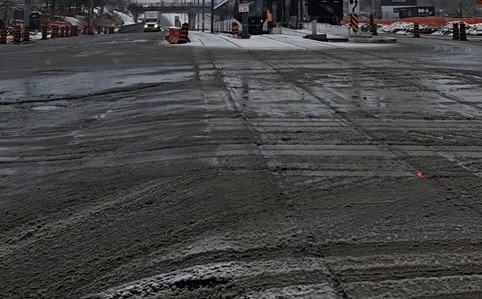
You may feel the engine lose power for a moment. You may also feel a slight pulse or hesitation. That is usually the system trying to regain grip.
This is one of the traction control light on causes that is not really a fault. If the light flashes briefly and disappears, the system is probably doing its job.
But if the light stays on after the road is dry, or it appears during normal driving on clean pavement, look deeper.
2. Traction Control Was Turned Off
Many vehicles let the driver turn traction control or stability control off. This is useful in certain situations, such as getting unstuck from snow or mud, but it can also happen accidentally.
The button may say TCS, TRAC, ESC, or show a car with squiggly lines.
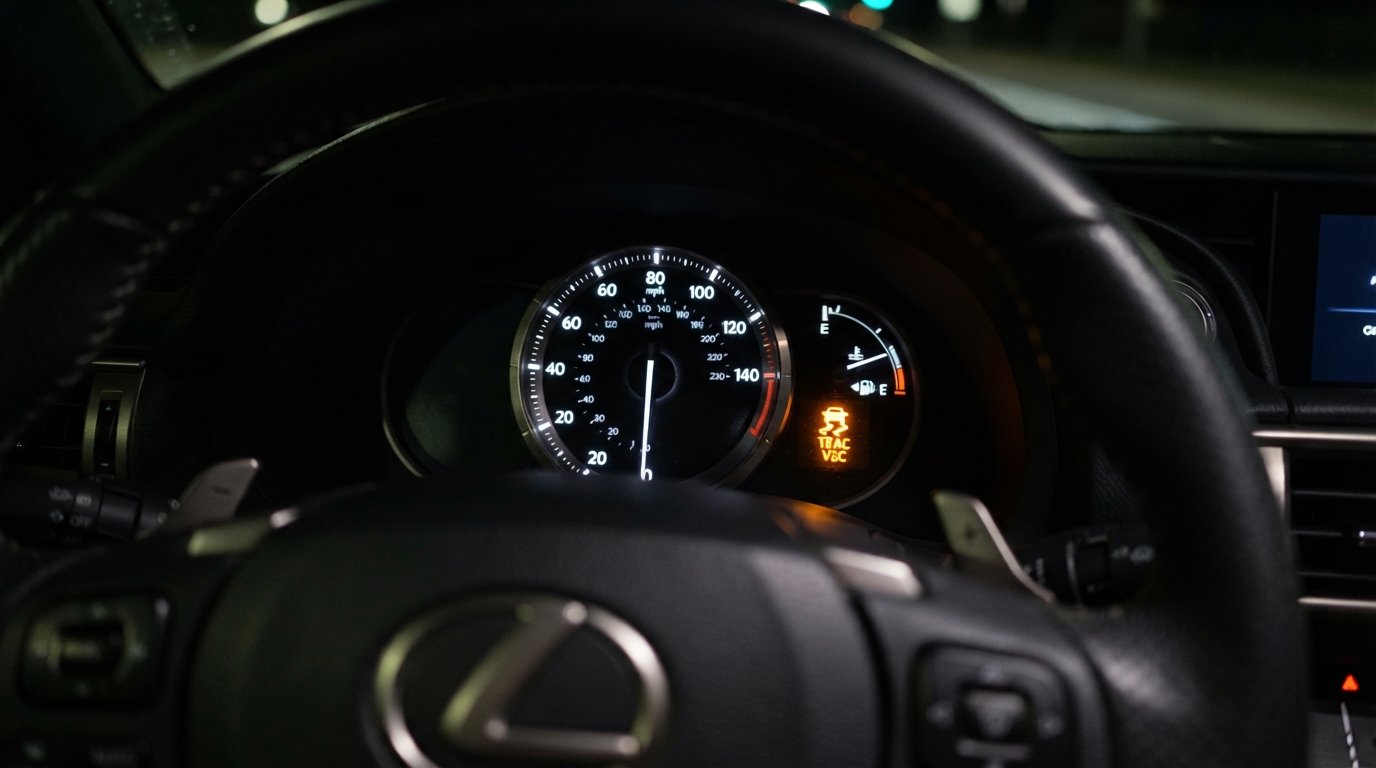
If the system is off, the dash may show “TCS OFF,” “TRAC OFF,” or “ESC OFF.” Pressing the button again may turn the system back on. Some vehicles require holding the button or restarting the car.
Among traction control light on causes, this is the easiest one to check before thinking about sensors or modules.
3. Bad Wheel Speed Sensor
A bad wheel speed sensor is one of the most common reasons the traction control light stays on.
Each wheel speed sensor tells the ABS and traction control system how fast that wheel is turning. If one sensor sends a bad signal, the computer may think a wheel is slipping when it is not.
Or the system may stop trusting the signal completely and disable traction control.
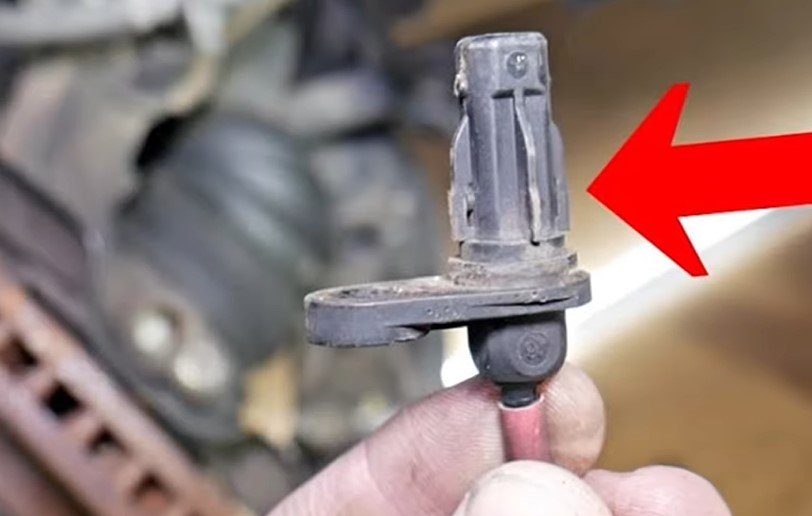
Common signs include a traction control light, ABS light, stability control light, or intermittent warning that comes and goes. In some cases, ABS may not work correctly because ABS and traction control often share wheel speed sensor data.
This is where scanner capability matters. A basic engine scanner may miss the code, so read this guide on whether a basic OBD2 scanner can read ABS codes before assuming there are no stored faults.
4. Damaged Tone Ring or Reluctor Ring
The wheel speed sensor reads from a tone ring, reluctor ring, magnetic encoder, or hub signal wheel. The exact design depends on the vehicle.
If that ring is cracked, rusted, dirty, missing teeth, or damaged, the sensor may send a bad signal even when the sensor itself is fine.
This is where many people get stuck. They replace the wheel speed sensor, clear the code, and the light comes back.
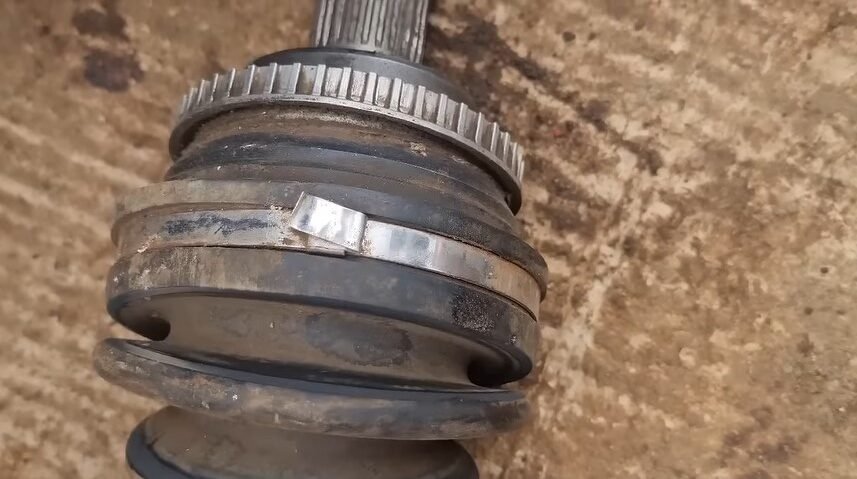
Tone ring problems can happen after axle work, wheel bearing replacement, rust buildup, hub damage, or road debris. Sometimes the issue only shows up at low speed because the signal drops out in a certain range.
This is one of the traction control light on causes that should be checked before blaming the control module.
5. Wiring or Connector Damage
Wheel speed sensor wiring lives in a rough area. It deals with water, heat, salt, mud, vibration, and suspension movement.
A wire can rub through. A connector can corrode. A plug can become loose. A harness can break inside the insulation.
When this happens, the traction control light may not stay on all the time. It may appear after rain, after hitting bumps, after turning the wheel, or during cold weather.
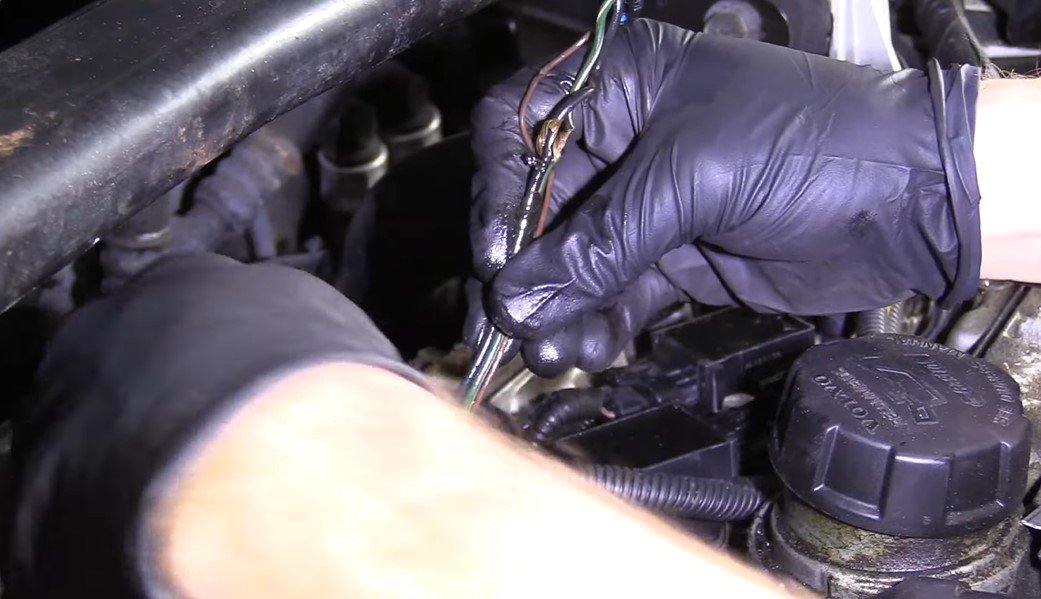
A mechanic may inspect the wiring, wiggle-test the harness, check connector pins, and compare live wheel speed readings while the vehicle moves slowly.
If the code points to a wheel speed sensor circuit, wiring should be checked along with the sensor.
6. Mismatched Tires, Uneven Tread, or Low Tire Pressure
Traction control depends on comparing wheel speeds. If one tire is smaller, larger, underinflated, or much more worn than the others, it may rotate at a different speed.
The computer may read that as slip.
This can happen after replacing only one tire, installing the wrong tire size, mixing tire brands with very different tread depth, or driving with one tire low on air.
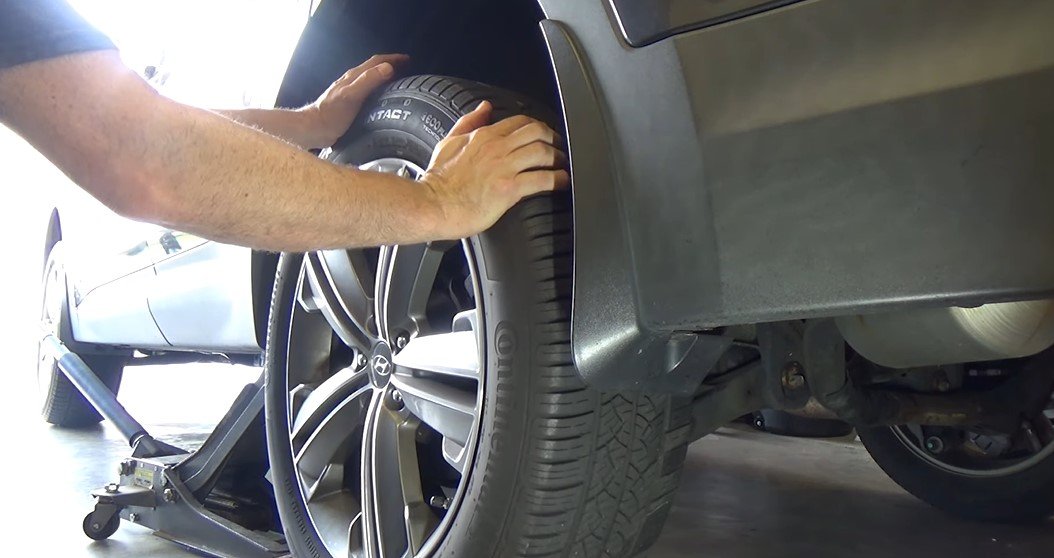
AWD vehicles can be especially sensitive to tire mismatch.
This is one of the most overlooked traction control light on causes because the car may feel normal. But the computer is watching small wheel-speed differences that the driver may never feel.
If tire pressure warnings are also involved, this guide on what TPMS is on a car can help separate a tire-pressure warning from a traction control fault.
7. Steering Angle Sensor Problem
The traction and stability control systems need to know where the driver is trying to point the car.
The steering angle sensor reports the steering wheel position. If that reading is wrong, the vehicle may think the driver’s intended direction does not match the car’s movement.
That can trigger traction control or stability control warnings.

This can happen after wheel alignment, steering repair, suspension repair, clock spring issue, battery disconnect, or steering angle sensor failure.
If the traction control light appeared right after alignment or steering work, calibration may be needed. Some vehicles can relearn the sensor after driving, but many need a scan tool calibration.
8. ABS, Brake, Engine, or Module Issue
Traction control works with other systems. It is not completely separate.
If the ABS module has a fault, traction control may shut off. If the ABS light is on too, the issue may involve wheel speed sensors, tone rings, wiring, ABS pump, or the ABS control module. If the problem turns into a major ABS repair, this ABS system repair cost guide can help with cost expectations.
If the brake warning light is on, take it more seriously. Low brake fluid or a brake system issue can affect ABS operation. That does not mean low brake fluid is always a traction control problem, but brake warnings should be checked quickly.
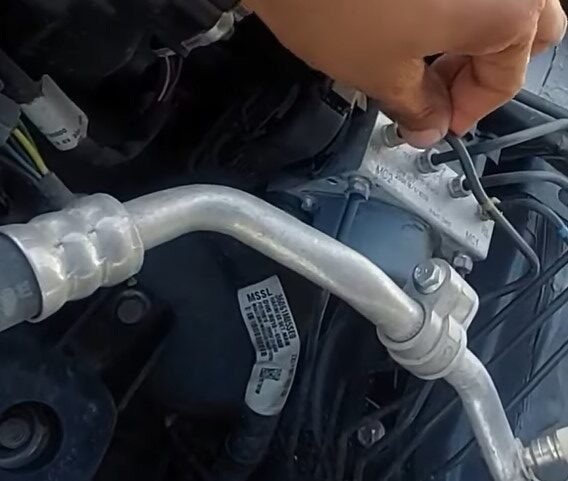
An engine problem can also turn on the traction control light. This happens because traction control may reduce engine power to control wheel spin. If the engine computer has a fault, the vehicle may disable traction control.
If the check engine light is also on, start with this guide on how to check engine light with scanner. Possible engine-related issues include throttle body faults, misfires, MAF sensor problems, transmission faults, reduced power mode, or stored powertrain codes.
Control module or software issues are possible too, but they are less common than sensor, tire, wiring, or calibration problems.
Can You Drive With the Traction Control Light On?
If the light flashes briefly on a slippery road, you can usually keep driving. Just drive gently.
If the light stays on, the vehicle may still drive, but traction control may not help when you need it. Be extra careful in rain, snow, ice, loose gravel, or during sudden acceleration.
If the ABS light is also on, anti-lock braking may not work properly during hard braking. Normal braking may still work, but emergency braking control may be reduced.
If the brake warning light is on, the brake pedal feels wrong, or braking performance changes, stop driving and inspect the brake system.
Why a Basic OBD2 Scanner May Show No Codes
This part is important.
A cheap basic OBD2 scanner often reads only engine and emissions codes. But many traction control light on causes are stored in the ABS, traction control, chassis, or stability control module.
So a scanner can show “no codes” even though the traction control system has a fault.
That is also why it helps to understand what an OBD2 scanner cannot do before relying on one scan result. For this warning, you usually need a scanner that can read ABS and stability control codes.
A better scanner can also show live wheel speed data, steering angle data, and module communication faults. Clearing codes without saving them is a mistake. The stored code may tell you which wheel, sensor, circuit, or module needs attention.
How a Mechanic Diagnoses It
A good diagnosis usually starts with scanning the ABS, traction control, stability control, and engine modules.
Then the mechanic may compare live wheel speed readings while the car moves slowly. If one wheel reads differently from the others, that gives a strong direction.
After that, they may inspect tire pressure, tire size, tread depth, wheel speed sensors, sensor wiring, connectors, tone rings, hub encoders, wheel bearings, steering angle calibration, brake fluid level, and engine codes if the check engine light is also on.
If you are doing the first scan yourself, this guide on how to use OBD2 scanner can help with the basic process. Just remember: traction control diagnosis may need ABS/stability module access, not only engine-code reading.
Mistakes That Waste Money
The biggest mistake is replacing a wheel speed sensor without checking the tone ring or wiring.
Another mistake is using a basic engine scanner and assuming there are no faults.
Drivers also ignore tire size after replacing one tire. That can create wheel speed differences and trigger the system.
Some people keep clearing the light without fixing the cause. If the problem is still there, the light will come back.
And if the traction control light appears with ABS or brake warning lights, do not treat it like a minor dashboard message.
Final Takeaway
Traction control light on causes can be simple, normal, or serious depending on how the light behaves.
A flashing light on a slippery road usually means the system is working. A solid light usually means traction control is turned off, disabled, or faulted.
The most common causes include slippery road conditions, traction control turned off, bad wheel speed sensor, damaged tone ring, wiring issue, mismatched tires, low tire pressure, steering angle sensor problem, ABS fault, brake-related issue, or engine problem.
Start with the easy checks: road condition, TCS button, tire pressure, tire size, and other dashboard lights. If the light stays on, scan the ABS and traction control system with the right tool before replacing parts.