
You’re slowing down for a traffic light when the steering wheel suddenly starts shaking. Or perhaps the brake pedal pulses under your foot every time you stop from highway speed. Either way, something doesn’t feel right.When your car shakes when braking, uneven brake rotors are often the first suspect. But they aren’t the only possibility. Worn suspension parts, sticking calipers, damaged wheels, and even unwanted ABS activation can create similar symptoms.
The useful clues are where you feel the vibration, how fast you’re traveling, and whether it happens only when you press the brakes.
Here are eight possible causes, what to check first, and how to avoid paying for repairs that won’t solve the problem.
Quick Answer: A car that shakes when braking commonly has uneven brake rotor thickness, brake pad problems, or a sticking caliper. However, worn suspension components, steering parts, rear brakes, and ABS faults can also cause vibration. If the steering wheel shakes, start with the front brakes and steering components. If the pedal pulses, check the brake rotors and whether ABS is activating.
Why Does My Car Shake When I Press the Brakes?
When you press the brake pedal, brake pads squeeze against rotating discs called rotors. This friction slows the wheels.
If the braking force changes unevenly as a wheel rotates, you may feel a repeated vibration. Loose steering or suspension parts can make that movement more noticeable.
The location of the shaking offers an early clue.
| Where You Feel It | What to Check First |
|---|---|
| Steering wheel shakes | Front brake rotors, steering linkage, and suspension |
| Brake pedal pulses | Rotor thickness variation or ABS activation |
| Seat or floor vibrates | Rear brakes, tires, and wheel assemblies |
| Shaking at highway speeds | Brake rotors, wheels, and suspension play |
| Rapid pulsing near a complete stop | Possible unwanted ABS activation |
These patterns don’t identify a failed part by themselves. They simply help narrow down the inspection.
8 Reasons Your Car Shakes When Braking
1. Uneven Brake Rotors or Disc Thickness Variation
Brake rotors are probably the most common components blamed when a car shakes during braking.
People often describe the problem as “warped rotors.” In many cases, however, the real issue is disc thickness variation, meaning the rotor has developed slightly thicker and thinner sections.
As those sections pass between the brake pads, braking force changes repeatedly. You may feel that movement through the steering wheel or brake pedal.
Another possible contributor is lateral runout, which means the rotor moves slightly from side to side as it rotates. Excessive runout can eventually produce uneven wear.
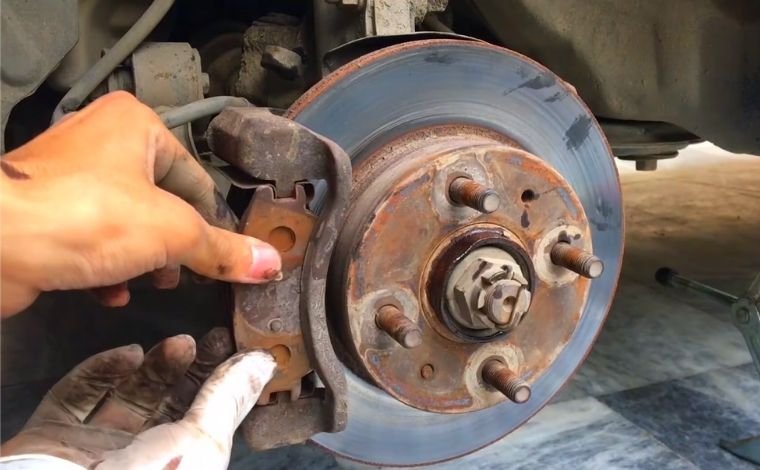
Common signs:
- Steering wheel shaking during moderate braking.
- Rhythmic brake pedal pulsation.
- Vibration becoming more noticeable at higher speeds.
- Shaking that worsens after repeated braking.
What to check: Have a technician measure rotor thickness variation with a micrometer and lateral runout with a dial indicator. If measurements exceed manufacturer specifications, the rotor may need resurfacing or replacement, provided sufficient thickness remains.
Simply installing new rotors without checking the wheel hub or caliper can allow the vibration to return.
2. Worn, Glazed, or Uneven Brake Pads
Brake pads gradually wear down, but they don’t always wear evenly.
A sticking slide pin, damaged pad hardware, or restricted movement inside the caliper can make one pad wear faster than another. Excessive heat can also glaze the friction material, leaving a hard, smooth surface.
Uneven pad contact or friction-material deposits may contribute to brake judder, particularly when the rotor surface is also affected.
Warning signs include squealing, grinding, inconsistent braking, and noticeably different pad thicknesses on the same wheel.
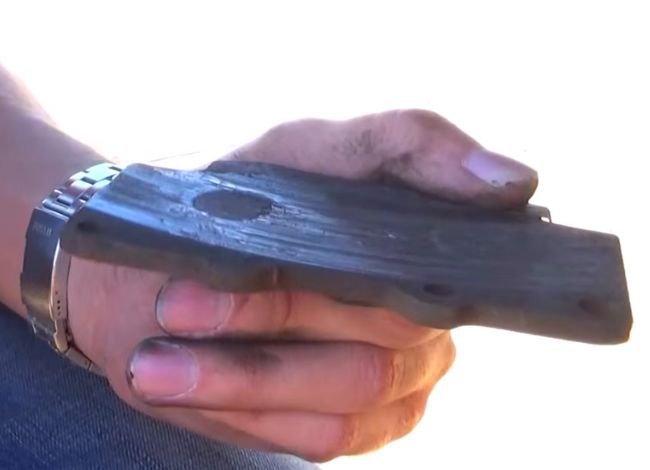
What to check: Inspect the inner and outer pads for uneven wear, cracks, glazing, and contamination. Examine the rotor surface and pad hardware. Replace damaged pads and correct the reason they wore unevenly.
New pads alone won’t fix a rotor that has excessive thickness variation.
3. A Sticking Brake Caliper or Slide Pin
A brake caliper is supposed to apply pressure when you brake and release it when you let go.
If the caliper piston or slide pins stick, the pads may continue rubbing against the rotor. This creates excessive heat and can cause uneven braking.
You might notice:
- The car pulling toward one side while braking.
- A burning smell near a wheel.
- One wheel becoming much hotter than the others.
- Unusual brake pad wear.
- Shaking that gets worse after driving for a while.
A dragging caliper can also damage the rotor, producing a vibration that remains even after the caliper is repaired.
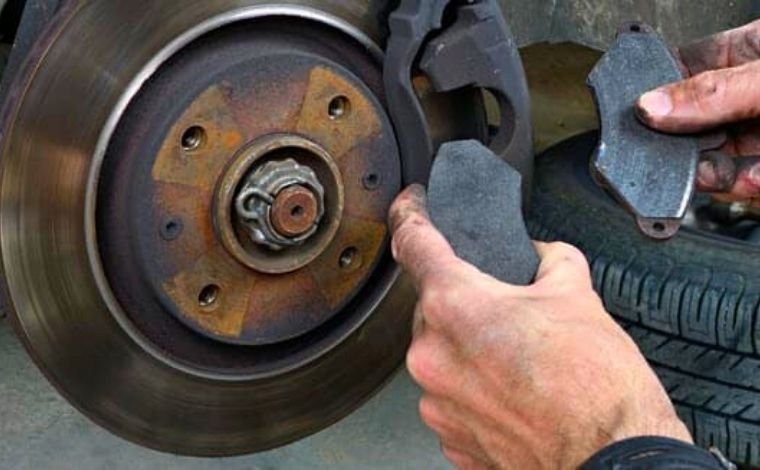
What to check: Have the caliper piston, slide pins, brake hose, and pad movement inspected. The repair may involve servicing the hardware or replacing a defective caliper.
If you notice smoke or a strong burning smell, stop safely and arrange professional assistance. Don’t touch the wheel or brake components because they may be extremely hot.
4. Worn Control Arm Bushings or Ball Joints
Not every braking vibration comes from the brakes themselves.
Control arms connect the wheels to the vehicle’s suspension. Their bushings absorb movement, while ball joints allow controlled steering and suspension motion.
When these components wear out, braking forces can make the wheels shift more than they should.
The result may be steering-wheel wobble, unstable handling, or a clunk when braking over uneven pavement.
Other clues include uneven tire wear and steering that feels loose.
What to check: Ask a technician to inspect control arm bushings, ball joints, and mounting points for excessive movement. Replace confirmed worn components and perform an alignment when necessary.
A severely worn ball joint is a serious safety issue because it can eventually fail.
5. Loose or Worn Tie Rod Ends
Tie rods connect the steering system to the wheels. They help keep the wheels pointed in the direction you choose.
As the joints wear, unwanted movement develops in the steering linkage. The forces generated during braking can make that looseness more apparent.
A worn tie rod may cause shaking along with wandering steering, clunking noises, or uneven front tire wear.
However, if the steering wheel vibrates only during braking and steering otherwise feels tight, the brakes may still be the more likely starting point.
What to check: Inspect inner and outer tie rods for excessive play. If a joint is worn, replace it and check wheel alignment.
6. Damaged Tires, Bent Wheels, or Worn Wheel Bearings
A wheel or tire problem can sometimes feel like a braking problem.
An unbalanced tire generally causes vibration at certain driving speeds, even when you aren’t pressing the brake pedal. Braking may make the shaking more noticeable because vehicle weight shifts forward.
A bent wheel, separated tire belt, or out-of-round tire may also produce vibration.
Wheel bearings are another possibility. Excessive bearing play can affect wheel and rotor alignment, while a failing bearing may create humming or growling noises that change with speed.
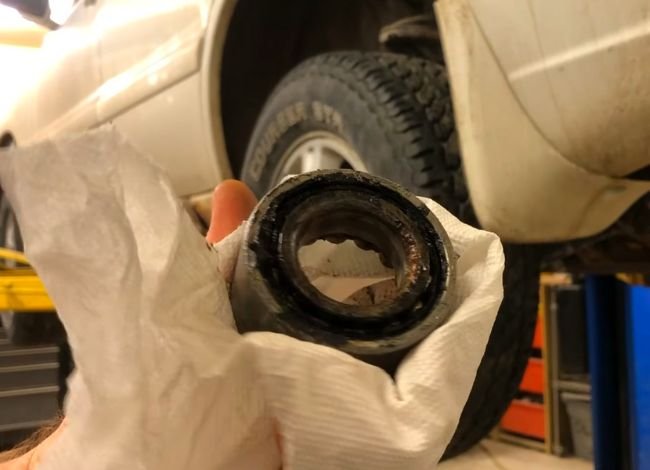
What to check: Inspect tires for bulges or uneven wear, confirm wheel condition, and check wheel bearings for play or roughness. Wheel balancing helps when imbalance is the actual cause, but it won’t correct a damaged tire or loose bearing.
7. Rear Brake Rotor or Drum Problems
Drivers naturally focus on the front brakes because steering-wheel shaking often draws the most attention. But rear brakes can also create vibration.
If your vehicle has rear disc brakes, uneven rotor thickness may cause brake judder. Vehicles with rear drum brakes can develop vibration when drums become out of round or their internal components wear unevenly.
Rear brake problems may be felt through the seat, floor, or entire vehicle rather than primarily through the steering wheel.
The sensation can be particularly noticeable while slowing down from moderate speeds.
What to check: Have the rear rotors or drums, brake shoes or pads, and related hardware inspected. Measure any suspected distortion before replacing components.
8. Unexpected ABS Activation or a Wheel-Speed Sensor Problem
Some drivers describe ABS activation as shaking because the brake pedal pulses rapidly under their foot.
During hard braking on slippery pavement, this can be completely normal. The Anti-lock Braking System rapidly adjusts brake pressure to help prevent wheel lockup.
But ABS shouldn’t repeatedly activate during ordinary gentle stops on dry pavement.
If it does, a wheel-speed sensor, damaged tone ring, wiring problem, or wheel-bearing-related signal issue may be involved.
For example, an incorrect sensor signal could make the ABS module believe a wheel is about to lock even when it isn’t.
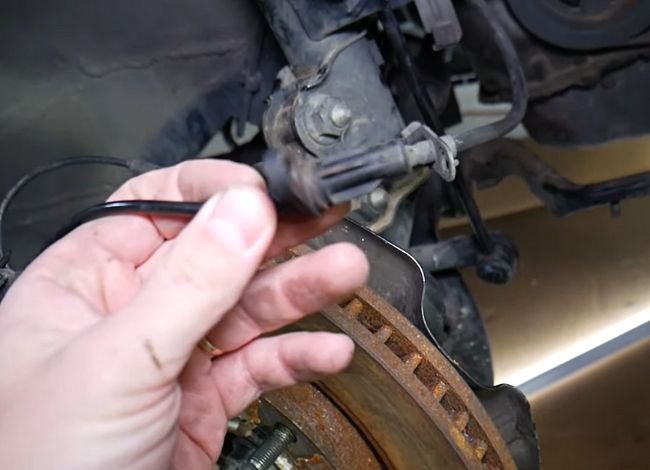
What to check: Use an ABS-capable diagnostic scanner to inspect available fault codes and compare individual wheel-speed readings. A sensor showing an unexpected drop near a stop can be an important clue.
Don’t replace a wheel-speed sensor based only on the pedal pulsation. The sensor signal, wiring, and related mechanical components should be checked first.
What Should You Check First When Your Car Shakes While Braking?
Before buying brake pads or rotors, work through the symptoms in a logical order. The goal is to identify the affected system without unnecessary road testing or disassembly.
Step 1: Identify where the shaking occurs.
Does the steering wheel move left and right? Is the brake pedal pulsing? Or do you feel the vibration through the seat? These clues help determine whether front brakes, rear brakes, steering components, or ABS deserve attention first.
Step 2: Notice whether the vibration happens without braking.
If the car also shakes while cruising, tires, wheels, and wheel bearings become more important possibilities. If vibration occurs only when the brakes are applied, start with the braking system.
Step 3: Check for obvious warning signs.
Look for damaged tires, visible brake problems, fluid leaks, or signs of overheating while the vehicle is safely parked. Don’t touch hot components or attempt to inspect moving parts.
Step 4: Have the brake system measured.
A qualified technician can check rotor thickness variation, runout, pad condition, caliper movement, and hub mounting surfaces.
Step 5: Inspect steering, suspension, and ABS if necessary.
If brake measurements are normal, check for joint or bearing play. If the pedal has rapid ABS-style pulsation, diagnostic scanning may help identify a wheel-speed signal problem.
| Symptoms | Possible Cause | Best Next Check |
|---|---|---|
| Steering wheel shakes only when braking | Front rotor variation or front-end wear | Front brake and suspension inspection |
| Shaking plus burning smell | Dragging brake caliper | Stop safely and arrange brake inspection |
| Vibration even without braking | Tire, wheel, or bearing issue | Wheel and tire inspection |
| Rapid pedal pulsation near a stop | Possible unwanted ABS activation | ABS diagnosis and wheel-speed data |
| Shaking after brake replacement | Runout, mounting, or caliper issue | Measure installed rotor runout |
Why Does My Car Shake When Braking at High Speeds?
If your car shakes when braking at high speeds, such as slowing from 60 mph on the highway, rotor thickness variation is one possible cause.
At higher wheel speeds, uneven braking forces repeat more frequently, sometimes making vibration more noticeable.
Worn control arm bushings or loose steering parts may amplify the shaking.
However, pay attention to whether the vibration starts before you touch the brakes. If it does, the tires or wheels may be responsible.
Don’t repeatedly perform high-speed braking tests to reproduce the problem. A professional inspection is safer, especially if the vibration is strong.
Why Does My Car Shake When Braking at Low Speeds?
When a car shakes when braking at low speeds, the type of movement matters.
A rapid buzzing or pulsing brake pedal just before stopping may indicate unwanted ABS activation, particularly if the road is dry and you’re braking gently.
A slower, rhythmic vibration can come from uneven brake rotors or drums. A sticking caliper may also cause inconsistent braking.
If the whole vehicle shudders only at the final moment of stopping, an engine or transmission-related issue may be contributing instead.
These symptoms require different inspections, so describing the exact sensation to your mechanic is helpful.
Why Does My Car Still Shake After Replacing Brake Pads and Rotors?
You’ve just paid for new pads and rotors, but the steering wheel still shakes when braking. Does that mean the new parts are defective?
Not always.
New rotors can develop excessive installed runout if rust or debris remains between the rotor and wheel hub. Incorrect wheel-fastener tightening or an existing hub problem may also contribute.
Other possibilities include:
- A sticking caliper that wasn’t repaired.
- Worn suspension or steering components.
- A damaged or unbalanced wheel.
- Improper rotor installation.
- Uneven friction deposits associated with braking conditions or pad bedding.
Before replacing the new rotors again, ask the shop to measure runout and inspect the hub and caliper.
Worth knowing: A rotor can appear smooth and still have enough thickness variation to create pedal pulsation. Visual inspection alone cannot confirm that a rotor is within specification.
Can an OBD2 Scanner Diagnose a Car That Shakes When Braking?
An OBD2 scanner can help with certain braking problems, but it can’t identify every mechanical cause of vibration.
What a Basic OBD2 Scanner Cannot Detect
A standard engine-code reader generally cannot tell you whether brake rotors are uneven, calipers are sticking, or suspension joints are worn.
Those problems require physical inspection and, in some cases, precision measurements.
Even if your check engine light is off and your scanner reports no codes, the brakes may still have a mechanical problem.
When an ABS-Capable Scanner Is Helpful
An advanced scanner with compatible ABS functions may help investigate unexpected ABS activation.
Depending on vehicle and scanner support, it may:
- Read stored ABS trouble codes.
- Display individual wheel-speed sensor data.
- Identify intermittent signal irregularities.
- Access supported ABS diagnostic functions.
For example, if one wheel-speed reading suddenly drops while the others remain consistent, that may help narrow the diagnosis.
You can learn more about ABS-related diagnostic codes in our OBD2 trouble code guide.
For equipment comparison, our Foxwell NT510 vs. NT530 vs. NT630 guide discusses scanner features, including ABS-related capabilities. Always confirm exact vehicle and function compatibility before purchasing.
How Much Does It Cost to Fix a Car That Shakes When Braking?
Repair costs vary depending on the vehicle, labor rates, and which components actually need replacement.
For general U.S. planning, the following ranges provide an idea of potential expenses in 2026.
| Repair | Approximate U.S. Cost |
|---|---|
| Brake pad replacement | $335–$394 for a typical axle service estimate |
| Brake rotor replacement | $574–$698 for a typical replacement estimate |
| Brake pads and rotors together | Roughly $500–$1,400 per axle |
| Brake caliper replacement | Approximately $400–$1,000+ per affected caliper |
| Wheel balancing | Approximately $15–$40 per wheel |
| Control arm or tie rod repair | Varies by component, vehicle, and alignment needs |
| Wheel-speed sensor replacement | $234–$310 on average |
These estimates are not guaranteed quotes. Some repairs overlap in labor, while luxury vehicles and performance brake systems can cost considerably more.
Before approving an expensive brake job, ask which measurements or inspection findings confirm the problem.
Is It Safe to Drive If My Car Shakes When Braking?
A mild vibration doesn’t always mean the brakes are about to fail. However, you shouldn’t ignore a new or worsening shaking problem.
Some causes, such as worn suspension joints, dragging brakes, or damaged tires, can become dangerous.
Stop driving and arrange professional assistance if you notice:
- Reduced braking ability or a pedal that sinks unusually far.
- Severe pulling to one side during braking.
- Grinding noises accompanied by poor braking.
- Smoke or a strong burning smell near a wheel.
- Sudden unstable steering or severe vibration.
- Visible tire damage or a loose-feeling wheel.
Safety note: Normal ABS activation during a hard stop on a slippery road can make the pedal pulse rapidly. Maintain firm, steady brake pressure according to your vehicle’s instructions. But repeated ABS-style pulsing during gentle braking on dry pavement should be inspected.
If you are unsure whether the vehicle can stop safely, towing is preferable to attempting another test drive.
How to Prevent Brake Shaking From Coming Back
Some brake vibration develops gradually, while other problems begin after incorrect installation or neglected maintenance.
To reduce the chance of recurring issues:
- Inspect brake pads and rotors during routine servicing.
- Repair sticking calipers before they overheat the rotors.
- Use the manufacturer’s specified wheel-fastener torque.
- Keep rotor-to-hub mounting surfaces clean during brake replacement.
- Inspect suspension and steering parts when unusual tire wear appears.
- Follow the brake manufacturer’s recommended bedding procedure after applicable repairs.
Correct installation and early attention to unusual symptoms can help prevent repeat repairs.
Frequently Asked Questions
1. Why does my car shake when braking but not while driving?
If your car drives smoothly but shakes when braking, uneven rotor thickness is a common possibility. A sticking caliper or worn suspension component can also contribute. The vibration location helps narrow down which parts should be inspected first.
2. Why does my steering wheel shake when braking at 60 mph?
Front brake rotor thickness variation or excessive runout may cause noticeable steering-wheel vibration during highway-speed braking. Worn front suspension or steering components can amplify the movement. Tire problems should also be considered if vibration occurs while cruising.
3. Can bad brake pads cause a car to shake when stopping?
Yes. Damaged, unevenly worn, or contaminated pads can contribute to irregular braking. However, shaking may also involve the rotor surface or caliper, so replacing pads alone isn’t always enough.
4. Can a bad wheel bearing cause vibration when braking?
Yes, especially if the bearing has excessive play that affects wheel or rotor stability. A failing wheel bearing may also produce humming, growling, or vibration during normal driving. A mechanic should check the bearing before recommending replacement.
5. Why does my car still shake after getting new rotors?
The problem may involve excessive rotor runout, rust between the rotor and hub, sticking calipers, incorrect wheel mounting, or worn steering components. Measuring the installed rotor and checking related parts is more useful than immediately replacing the rotors again.
6. Can ABS cause shaking without an ABS warning light?
Yes. Normal ABS activation creates pedal pulsation without indicating a malfunction. In some cases, unwanted ABS activation can occur because of irregular wheel-speed signals without immediately setting a warning light. Live-data diagnosis may help identify the problem.
Final Thoughts
If your car shakes when braking, don’t assume the rotors need replacing before checking the symptoms.
Steering-wheel vibration, brake-pedal pulsation, and body shaking can point toward different problems. Rotor thickness variation is common, but calipers, suspension parts, wheels, rear brakes, and ABS faults deserve consideration.
Start by identifying where and when the shaking occurs. Then have the suspected components inspected and measured. Finding the actual cause is the safest way to restore smooth braking without paying for unnecessary repairs.