
When your car refuses to start, the battery gets blamed first.
That makes sense. A weak battery is one of the most common no-start causes. But what if the lights come on, the radio works, the dashboard wakes up, or the battery was recently tested?
That is when the problem gets more confusing.
If your car won’t start but battery is good, the issue may be somewhere else in the starting system, electrical circuit, fuel system, ignition system, security system, or engine sensor network. A good battery only means stored power is available. It does not prove that power is reaching the starter, or that the engine has fuel, spark, compression, and the right sensor signals to run.
The best way to avoid guessing is to answer one question first:
Does the engine crank?
If it does not crank, you are usually looking at a starter circuit problem. If it cranks but does not start, you are looking at fuel, spark, sensor, immobilizer, or mechanical issues.
That one difference saves a lot of wasted parts.
Car Won’t Start But Battery Is Good: First Separate No-Crank From Crank-No-Start
A no-crank problem means you turn the key or press the start button, but the engine does not turn over. You may hear one click, rapid clicking, or silence. This points toward the starter motor, starter solenoid, battery cables, ground cable, relay, fuse, ignition switch, neutral safety switch, clutch switch, or immobilizer.
A crank-no-start problem is different. The engine turns over normally, but it never fires up. In that case, the starter is probably doing its job. Now you need to think about fuel pressure, spark, crankshaft sensor signal, camshaft sensor signal, timing, compression, or security authorization.
Here is the quick difference:
| What You Notice | Most Likely Area |
|---|---|
| No sound and no crank | Ignition switch, fuse, relay, security system, safety switch |
| One solid click | Starter, solenoid, battery cable, ground |
| Rapid clicking | Weak voltage under load, loose cable, bad connection |
| Cranks normally but will not start | Fuel, spark, sensor, immobilizer, compression |
| Cranks unusually fast | Timing or compression problem |
| Starts then dies | Immobilizer, fuel pressure, sensor, air/fuel issue |
This is why “my car won’t start” is not enough detail. The sound and behavior tell you where to look first.
Why Lights Can Work Even When the Car Will Not Start
One of the biggest traps is thinking the battery must be fine because the headlights, radio, or dash lights work.
Those parts do not need nearly as much current as the starter motor. A dashboard light can work with a weak battery, dirty terminal, loose cable, or poor ground. The starter needs a much stronger current path.
So if your car won’t start but battery is good, do not stop at “the lights come on.” The battery may still fail under load, or the battery may be good while the connection to the starter is bad.
That is why a load test and cable inspection matter more than just looking at the lights. If you are using a scan tool during this process, this guide explains whether an OBD2 scanner can detect a bad battery.
1. Loose or Corroded Battery Terminals
A battery can test good and still fail to start the car if the terminals are loose or corroded.
The starter needs a clean, tight connection. Even a little resistance can cause a click, weak crank, intermittent start, or no response at all. Sometimes the corrosion is obvious. Other times it hides between the battery post and the inside of the terminal clamp.
A clue is when the car starts sometimes and refuses other times. Another clue is when wiggling the battery cable changes the problem.

Check the terminals closely. If the clamp twists by hand, it is too loose. If there is white, blue, or green buildup around the post, clean it properly. Also inspect the cable end. A cable can look acceptable outside but be corroded inside the insulation.
This is one of the cheapest things to check before replacing a starter, fuel pump, ignition switch, or sensor. If the battery itself fails a proper test, this car battery replacement cost guide can help you compare the next step.
2. Bad Ground Cable or Battery Cable
The starter circuit needs both power and ground.
Power goes from the battery to the starter. Then current has to return through the engine block and ground cable. If the ground strap is loose, corroded, broken, or high-resistance, the starter may not work even with a healthy battery.
A bad cable or ground can create strange symptoms. The dash may flicker. The car may click once. The starter may crank slowly. You may get random warning lights. Sometimes everything looks normal until you try to start the engine.
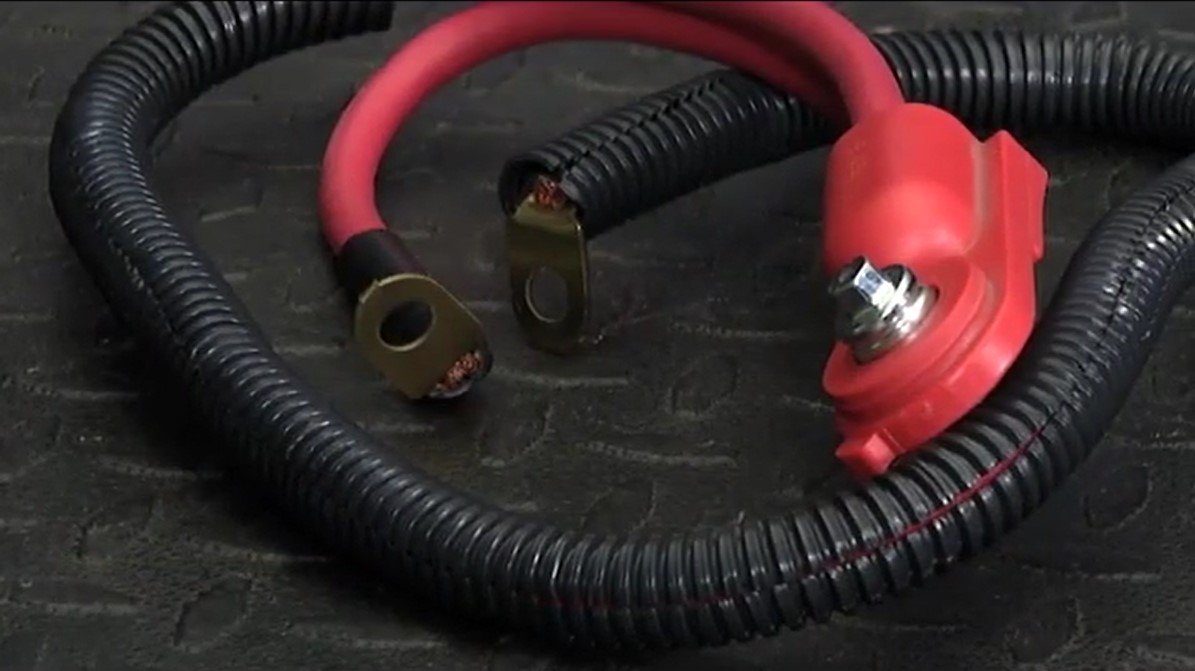
This is where a voltage drop test helps. A normal voltage reading at the battery does not always prove the cable can carry current under load. Voltage drop testing checks how much power is being lost across the cable while the starter circuit is working.
If your car won’t start but battery is good and the problem feels intermittent, do not ignore the ground cable. It is a small part that can create a big headache.
3. Bad Starter Motor or Starter Solenoid
If the battery, terminals, and cables check out, the starter becomes a major suspect in a no-crank problem.
The starter motor turns the engine. The solenoid helps engage the starter and send power to it. If either part fails, the engine may not crank even though the rest of the car has power.
A bad starter often gives one solid click. Sometimes it gives no sound at all. Sometimes it works when the engine is cold but fails when hot. That hot-start problem can happen when internal starter parts wear out and stop working properly after heat soak.
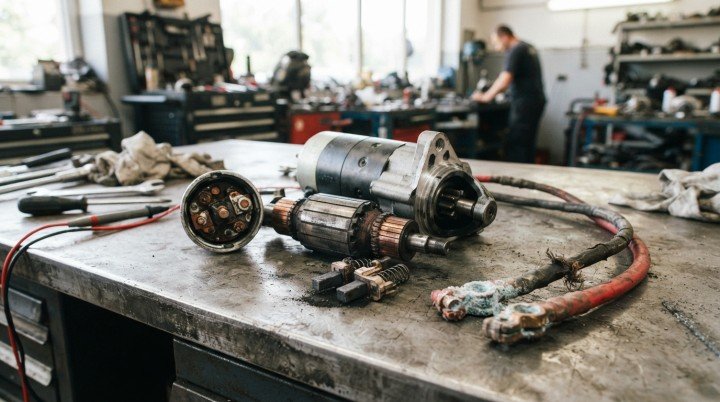
But be careful here. A click does not automatically mean the starter is bad. A poor battery cable, weak ground, bad relay, or poor connection can sound very similar.
Before replacing the starter, confirm that it is receiving proper voltage and ground when you try to start the engine. Otherwise, you may replace a good starter and still have the same no-start problem.
4. Starter Relay, Fuse, or Ignition Switch Problem
Sometimes the starter is fine, but it never gets the command to work.
When you turn the key or press the start button, the request has to pass through several parts. Depending on the vehicle, that may include the ignition switch, starter relay, starter fuse, transmission range switch, clutch switch, brake switch, body control module, or engine control module.
If one part in that chain fails, the car may do nothing.
This often shows up as a no-click, no-crank problem. The dash lights may look normal. The radio may work. But when you try to start the car, nothing happens.

A blown starter fuse or fusible link can stop power from reaching the starter circuit. A worn ignition switch can power accessories but fail to send the start signal. On push-button vehicles, a brake switch or key detection issue may block the start request.
If your car won’t start but battery is good and there is no click at all, this section matters. Do not assume the starter motor is bad until the control circuit is checked. If brake switch codes appear during diagnosis, this P0504 code guide may be relevant.
5. Neutral Safety Switch or Clutch Switch Fault
Automatic vehicles are designed to start only in Park or Neutral. Manual vehicles usually need the clutch pedal fully pressed.
If the neutral safety switch, transmission range sensor, or clutch safety switch fails, the car may think it is not safe to start.
With an automatic, the car may not start in Park but may start in Neutral. Sometimes moving the shifter slightly changes the result. With a manual, a failing clutch switch can block the starter signal even when the clutch is pressed.
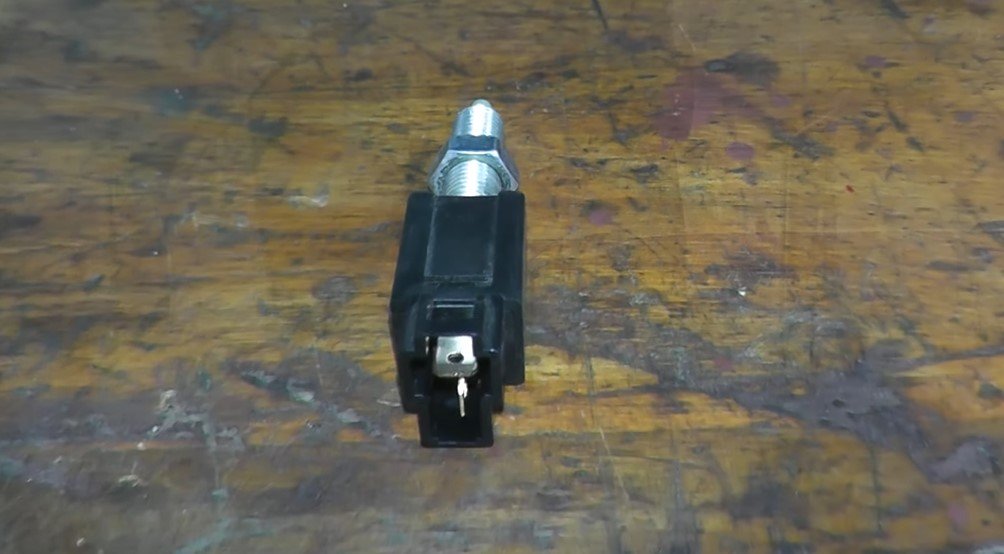
This problem can feel like a dead starter because nothing happens when you turn the key.
A simple check is to make sure the shifter is fully in Park. If safe, try Neutral. For a manual, press the clutch fully to the floor. If that changes the symptom, the safety switch circuit deserves attention.
Do not bypass safety switches casually. They prevent the vehicle from starting in gear. But they should be part of the diagnosis.
6. Immobilizer, Key Fob, or Security System Problem
Modern vehicles can refuse to start if the anti-theft system does not recognize the key.
This can create either a no-crank or crank-no-start condition. Some cars will not crank at all. Some crank and immediately die. Others crank normally but disable fuel or spark.
The biggest clue is the security light. If a key symbol or security light keeps flashing while you try to start the car, pay attention.
A weak key fob battery, damaged key, lost key programming, immobilizer antenna issue, or module communication problem can all cause starting trouble.

Try the spare key if you have one. On push-button cars, hold the fob close to the start button or the emergency key detection spot listed in the owner’s manual.
A basic OBD2 scanner may not read immobilizer codes. You may need a scanner that can access body, security, or immobilizer modules. That is why knowing the difference between a code reader vs scan tool matters on modern no-start problems.
7. Fuel Pump, Fuel Pump Relay, or Low Fuel Pressure
If the engine cranks normally but does not start, move away from the starter system. Now the engine is turning, but it is missing something it needs to run.
Fuel delivery is one of the biggest possibilities.
A weak fuel pump, bad fuel pump relay, blown fuse, wiring fault, clogged fuel filter, or low fuel pressure can cause a crank-no-start. The engine may turn over normally but never catch. It may start for a second and die. You may not hear the fuel pump prime when turning the key on.

Do not replace the fuel pump just because the engine cranks but will not start. The pump may be fine while the relay, fuse, wiring, ground, or immobilizer is stopping it from working.
A fuel pressure test is the better next step. Some vehicles also show fuel pressure data on a scan tool, but many do not. If your scanner supports fuel and sensor data, this guide on how to read live data from OBD-II scanners can help you understand what the tool is showing.
Starting fluid can sometimes help separate fuel from spark, but it should be used carefully. If the engine briefly runs with added fuel, that points toward a fuel delivery issue. It still does not prove the pump itself is bad.
8. Crankshaft or Camshaft Sensor Problem
The engine computer needs to know where the engine is in its rotation. That information comes from sensors like the crankshaft position sensor and camshaft position sensor.
If the crankshaft position sensor fails, the computer may not trigger spark or fuel injection correctly. The engine can crank normally but never start.
Sometimes the car stalls first, then refuses to restart. Sometimes it starts again after cooling down. Sometimes the tachometer does not move while cranking. This separate guide on bad crankshaft position sensor symptoms goes deeper into that pattern.
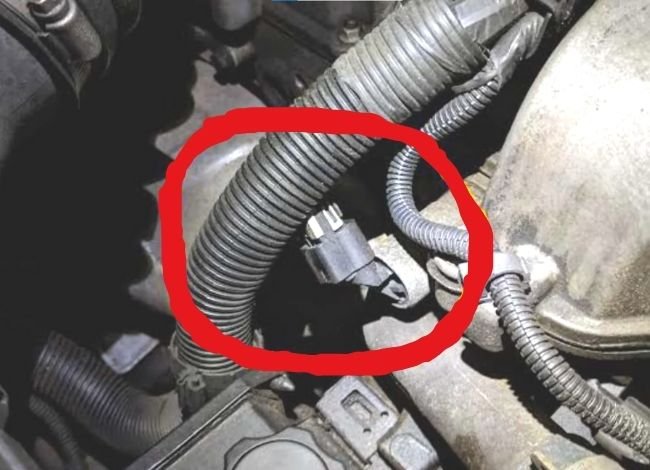
Common related codes include P0335 for crankshaft position sensor issues and camshaft sensor-related codes such as P0341. You can read more about trouble code P0335 and the P0341 code if either appears during diagnosis.
A useful scanner check is live RPM while cranking. If the engine is cranking but the scanner shows no RPM signal, the crankshaft sensor signal becomes suspicious. That still does not mean “replace the sensor immediately,” because wiring and connectors can also cause signal loss.
This is where an OBD2 scanner becomes more useful. For no-crank problems, a basic scanner may not help much. For crank-no-start problems, live data can point you in the right direction.
Bonus: Mechanical Engine Problem
Most no-start problems are electrical, starter-related, fuel-related, sensor-related, or security-related. But mechanical problems can also stop an engine from starting.
A broken timing belt or timing chain issue can make the engine crank unusually fast. Low compression can do the same. A seized engine may not crank at all.
This is less common than a bad connection or starter issue, but it is serious.
Warning signs include a sudden stall before the no-start, unusual cranking speed, loud mechanical noise, overheating, oil loss, or an engine that will not turn by hand.
If the engine sounds very different while cranking, stop. Repeated cranking can make some failures worse.
Can an OBD2 Scanner Help If the Car Won’t Start?
Yes, but it depends on the type of no-start.
If the engine does not crank, a basic OBD2 scanner may show very little useful information. The problem may be in the starter circuit, relay, fuse, ignition switch, neutral safety switch, clutch switch, immobilizer, or body control system.
If the engine cranks but does not start, a scanner becomes more useful. You can check current codes, pending codes, and live data. Useful live data may include RPM while cranking, coolant temperature, throttle position, battery voltage, and sometimes fuel-related data.
If you are not sure how code types work, this guide on pending vs stored vs permanent codes is worth reading before you clear anything. For a broader diagnostic overview, this OBD2 codes list and meaning guide is also useful.
Possible codes include crankshaft sensor codes, camshaft sensor codes, low voltage codes, fuel system codes, and manufacturer-specific immobilizer codes.
But no codes does not mean no problem.
A bad fuel pump, weak starter, poor battery cable, bad relay, blown fuse, mechanical compression issue, or security fault may not show up as a simple generic OBD2 code. This is why a check engine light on but no codes situation can still need real diagnosis.
Use scanner data as a clue, not as the whole diagnosis. This guide explains what an OBD2 scanner cannot do so you do not expect a basic scanner to identify every no-start cause.
Quick Checks Before Calling a Tow Truck
If you are stuck, keep the first checks simple.
Make sure the shifter is fully in Park. Try Neutral if it is safe. Look at the battery terminals. Try a jump-start even if the battery seems good, because a weak battery can still power lights but fail under starter load. Watch the security light. Try the spare key. Listen for a fuel pump prime. If the engine cranks, scan for codes before clearing anything.
Do not crank continuously for a long time. Long cranking can drain the battery and overheat the starter. Use short attempts with pauses.
If you smell burning, see smoke, hear ugly mechanical noise, or the engine cranks unusually fast, stop and get help.
Common Mistakes To Avoid
The first mistake is assuming that working lights prove the battery and starter circuit are good. They do not.
The second mistake is replacing the starter without checking battery cables, grounds, fuses, and relays. A starter needs a strong power and ground path.
Another common mistake is replacing the fuel pump too quickly. A crank-no-start can be caused by a fuel pump, but it can also be caused by a relay, fuse, wiring problem, crank sensor, immobilizer, or no spark.
Do not clear codes before saving them. Freeze frame and live data can give useful context, especially when a no-start happened after stalling or low-voltage symptoms. This freeze frame vs live data guide explains the difference.
If you need to erase codes after the repair, use the proper process. This guide explains how to clear OBD2 codes. Disconnecting the battery just to hide a warning light is not diagnosis, and this article explains whether a check engine light will stay off after disconnecting the battery.
And do not ignore the security light. A key or immobilizer issue can look exactly like a fuel or ignition problem.
FAQ About a Car That Won’t Start Even With a Good Battery
Why won’t my car start but the lights come on?
Lights and radio need much less current than the starter. The battery may still be weak under load, or there may be a bad cable, ground, starter, relay, fuse, or ignition switch issue.
Can a battery be good but still not start the car?
Yes. A car needs more than a good battery. It also needs good connections, a working starter circuit, fuel, spark, timing, compression, and proper security authorization.
How do I know if it is the starter or battery?
A battery test and voltage drop test are the best way. If the battery tests good but you get one click or no crank, check cables, grounds, relay, and starter signal before replacing the starter.
Why does my car crank but not start?
If it cranks normally but will not fire, the starter is likely working. The issue is more likely fuel delivery, spark, crankshaft sensor signal, camshaft sensor signal, compression, timing, or immobilizer authorization.
Can a bad key stop a car from starting?
Yes. If the immobilizer does not recognize the key, the car may not crank, may crank and die, or may crank without starting. A flashing security light is a major clue.
Will a bad alternator cause this?
A bad alternator usually causes the battery to become discharged over time. If the battery is truly fully charged and load-tested good right now, the alternator is not usually the first reason for an immediate no-crank. But if the battery keeps going dead after driving, test the charging system.
Can an OBD2 scanner diagnose a no-start?
Sometimes. It is more useful for crank-no-start problems than no-crank problems. A scanner can show codes and live data like RPM while cranking, but it may not detect every starter, cable, relay, fuse, fuel pressure, or immobilizer issue.
Final Thoughts
If your car won’t start but battery is good, do not jump straight to the starter, fuel pump, or alternator.
Start with what the engine does.
No crank points toward the starter circuit, cables, grounds, relay, fuse, ignition switch, safety switch, or security system. Crank-no-start points toward fuel, spark, sensor input, compression, timing, or immobilizer authorization.
A good battery is only the beginning. The real answer comes from the symptom pattern, basic electrical checks, and scanner data when it applies.
That approach keeps you from replacing good parts and gets you closer to the real reason the car will not start.