
You’re driving through traffic when the engine suddenly goes quiet. The dashboard lights come on, the accelerator stops responding, and the steering feels heavier. You pull over, restart the car, and everything seems normal again.
That’s what makes unexpected stalling so frustrating—and dangerous. The engine may shut off because of a fuel delivery problem, a faulty sensor, or an interruption in electrical power. Sometimes the problem disappears before a mechanic can inspect it.
Understanding car stalls while driving causes starts with knowing exactly when the engine stopped and what happened immediately beforehand.
Here are eight likely causes, what to do first, and how to narrow down the fault without replacing parts blindly.
Quick AnswerCommon reasons a car stalls while driving include low fuel pressure, crankshaft position sensor failure, charging-system problems, ignition faults, dirty throttle bodies, airflow sensor problems, intermittent electrical connections, and certain EGR or transmission faults. A car that stalls and restarts immediately may have an intermittent sensor or electrical problem. Because sudden engine shutdown creates a traffic hazard, repeated or unexplained stalling should be professionally diagnosed before further driving.
What to Do Immediately If Your Car Stalls While Driving
Your first priority is controlling the vehicle, not figuring out which part failed.
- Keep steering. Maintain control and avoid sudden movements.
- Use your hazard lights when appropriate to warn other drivers.
- Brake steadily. Brake assistance may decrease after the engine stops, so the pedal may require more force.
- Move toward a safe shoulder or parking area if conditions allow.
- Stop completely before following the normal restart procedure.
- Don’t keep restarting if you notice smoke, a strong fuel smell, overheating, or serious mechanical noises.
- Call for roadside assistance if the vehicle won’t run reliably or you’re stopped in an unsafe location.
On some vehicles, hydraulic steering assistance may disappear when the engine stops. Electric systems behave differently. The vehicle can generally still be steered and braked, but the effort required may change considerably.
If the car has already stalled at road speed, restarting successfully does not mean it is safe to continue the trip.
Did Your Engine Stall or Just Lose Power?
Drivers often describe several different problems as stalling. The difference matters because each suggests a different diagnostic direction.
| What Happened | What It Usually Means |
|---|---|
| Engine stopped running | A true stall; RPM falls toward zero |
| Engine kept running but wouldn’t accelerate | Possible reduced-power mode |
| RPM increased without matching vehicle speed | Possible transmission slipping |
| Engine stopped at a traffic light and restarted automatically | May be normal automatic start-stop operation |
| Dashboard and electronics reset | Possible electrical supply interruption |
Also, battery and oil-pressure warning lights commonly illuminate after an engine stalls. That doesn’t automatically mean the alternator or oil pump caused it. Warnings that appeared before shutdown are often more diagnostically useful.
8 Car Stalls While Driving Causes You Shouldn’t Ignore
1. Failing Fuel Pump or Low Fuel Pressure
The engine needs enough fuel delivered at the proper pressure to keep running.
If fuel pressure drops, you may notice hesitation, sputtering, or weak acceleration before the engine stalls. The problem can become more noticeable under heavy load.
A worn fuel pump is one possibility, but a faulty pump relay, restricted fuel filter where fitted, damaged wiring, or pressure-control problem can produce similar symptoms.
Even a misleading fuel-gauge reading can leave the engine starved of fuel.

First check: Verify fuel quantity and ask for fuel-pressure testing under relevant operating conditions. Don’t replace the pump based on noise or stalling alone.
2. Faulty Crankshaft or Camshaft Position Sensor
The engine computer relies on crankshaft and camshaft signals to coordinate ignition, fuel injection, and engine timing.
If an essential signal disappears, the engine may shut off suddenly with little warning.
A heat-sensitive crankshaft sensor may work when cold, fail after the engine warms up, and operate again after cooling.
Possible diagnostic codes include P0335 for crankshaft sensor circuit problems and P0340 for camshaft sensor circuit faults.
However, wiring, connectors, signal wheels, and related control problems should be considered before replacing a sensor.

First check: Inspect available engine RPM and synchronization data during a controlled diagnostic test. A missing RPM signal can be useful evidence, but it doesn’t identify the defective component by itself.
3. Alternator or Charging-System Failure
A running engine needs a reliable electrical supply for its computer, ignition system, injectors, and fuel pump.
If the alternator stops charging and battery voltage drops sufficiently, those systems may eventually stop functioning.
You might notice dimming headlights, a battery warning, or multiple electrical errors before the stall.
A slipping accessory belt, damaged ground cable, or loose battery connection can create similar trouble.
The battery itself may simply be discharged because the charging system hasn’t been working correctly.
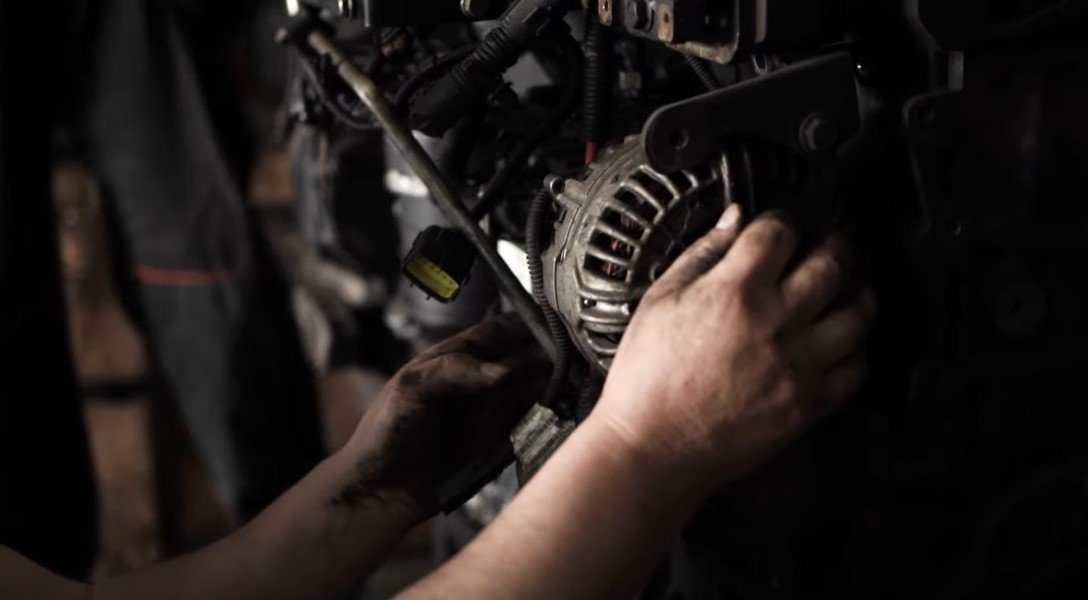
First check: Have the battery, alternator, main grounds, and charging-system connections tested. A battery light that appeared before the stall matters more than one that appeared afterward.
Our common car problems guide also discusses battery and charging-related vehicle complaints.
4. Ignition Coil, Spark Plug, or Ignition Power Failure
An ignition problem may cause shaking, misfiring, hesitation, and loss of power.
If combustion becomes unstable enough, the engine can stall, especially at low RPM.
A single worn spark plug or weak ignition coil often causes misfires rather than immediately shutting off the entire engine.
A sudden loss of shared ignition power or a control-module supply fault may cause a more abrupt shutdown.
Codes such as P0300 and cylinder-specific P0301–P0308 can provide useful clues.
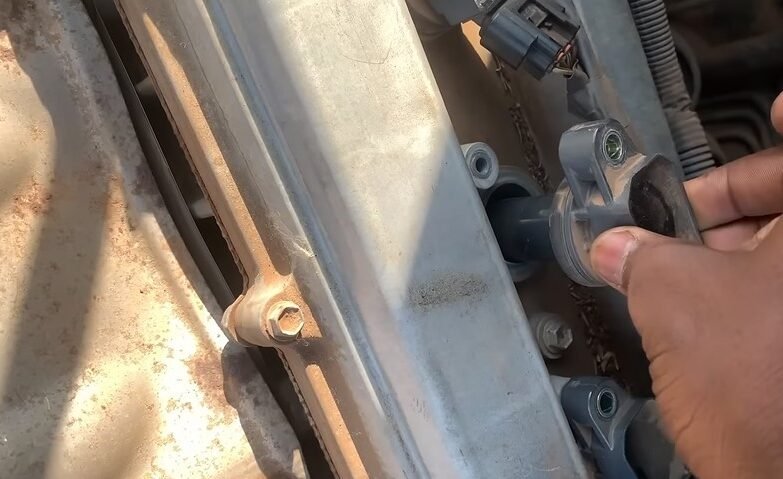
First check: Investigate misfire codes, ignition power supply, and the affected components. Don’t replace every coil simply because the engine stalled.
5. Dirty Throttle Body or Idle-Air Control Fault
If the engine stalls when you slow down, stop at traffic lights, or shift into Drive, idle-air management deserves attention.
Carbon deposits around the throttle plate can interfere with airflow regulation on some engines.
Older vehicles may use a separate idle air control valve, while newer vehicles usually manage idle speed through an electronic throttle body.
A dirty or malfunctioning throttle system may struggle to maintain RPM when the A/C engages or the engine experiences additional load.
However, not every dirty-looking throttle body needs replacing.

First check: Inspect idle behavior, throttle-related codes, and air-intake condition. Cleaning or relearning the throttle may be appropriate only under vehicle-specific procedures.
6. Faulty MAF/MAP Sensor or Vacuum Leak
The engine computer needs accurate information about incoming air to calculate fuel delivery.
A faulty mass airflow (MAF) sensor, manifold absolute pressure (MAP) sensor, or intake air leak can upset the air-fuel mixture.
The car may hesitate, idle roughly, or stall when engine load changes.
Cracked intake boots, disconnected vacuum hoses, and certain PCV system faults can introduce unmetered air.
Codes such as P0101, P0171, or P0174 may appear, depending on the fault.
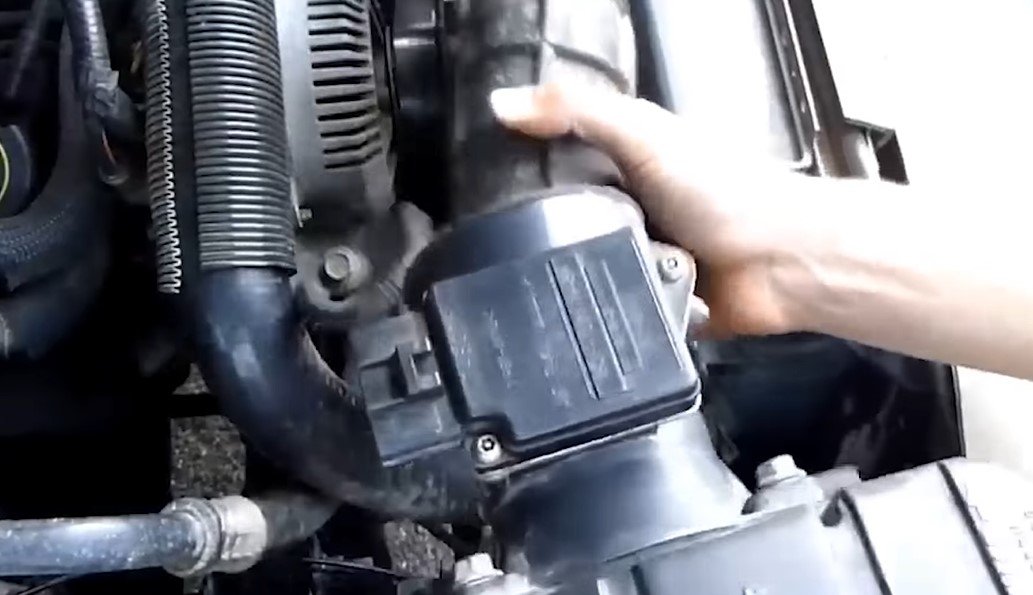
First check: Compare MAF/MAP readings with expected conditions and review fuel trims. Inspect the intake system and use appropriate leak testing rather than guessing at a sensor replacement.
7. Ignition Switch, Main Relay, or Electrical Ground Problem
Some cars shut off so suddenly that there’s no sputtering or gradual loss of power.
An intermittent relay, ignition-switch contact, damaged ground, or loose connector may briefly interrupt power to an essential engine system.
The problem might happen over bumps, during turning, or seemingly at random.
Dashboard electronics may flicker or reset, but not every circuit will necessarily lose power.
A failing engine computer is possible in some cases, though it should not be the first component blamed.
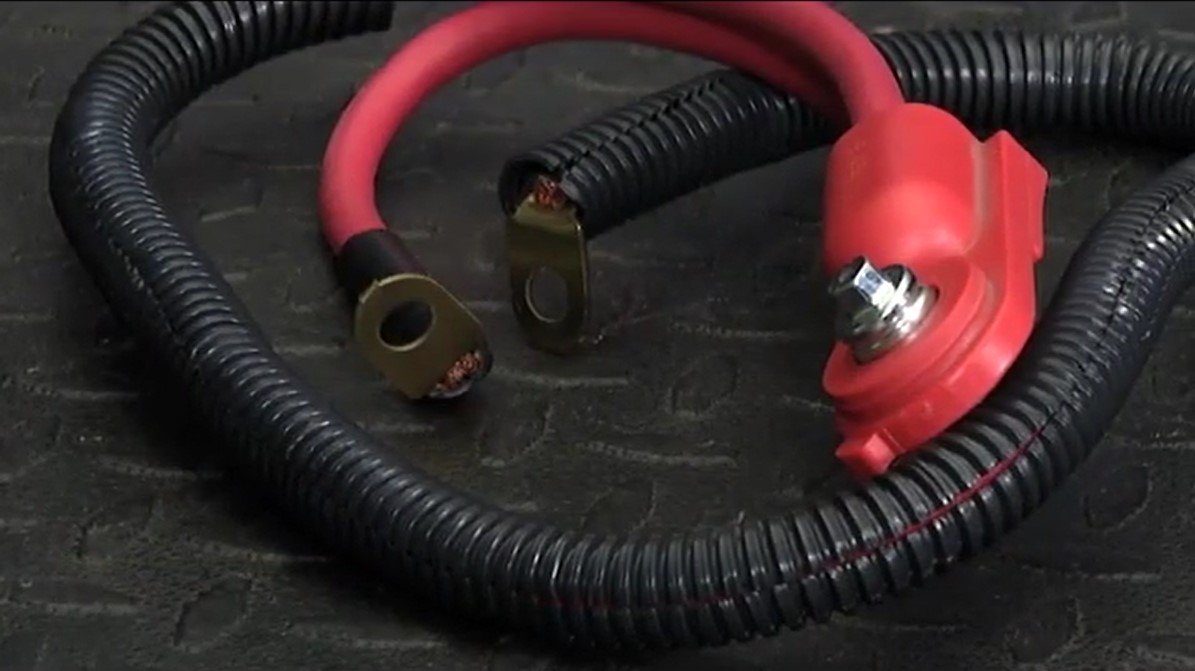
First check: Have the engine-control power supply, grounds, fuses, relays, and connectors tested under the conditions associated with the stall.
8. EGR Valve or Torque Converter Clutch Problem
Some stalling problems happen mainly as an automatic vehicle slows to a stop.
On engines equipped with EGR, a valve that remains open when it shouldn’t may disrupt combustion and idle quality.
Another possibility is a torque converter clutch that doesn’t release properly during deceleration.
When that happens, stopping can feel similar to bringing a manual-transmission car to a halt without disengaging the clutch.
These faults aren’t universal across vehicle designs, and both need specific testing.

First check: Record whether stalling occurs only during braking or immediately before stopping. Ask for relevant EGR and transmission-control diagnostics.
Car Stalling Patterns: What They Tell You
The circumstances surrounding the stall can help narrow the investigation before any parts are replaced.
| Stalling Pattern | Systems Worth Checking First |
|---|---|
| While accelerating | Fuel delivery, ignition, airflow |
| Suddenly at highway speed | Crank signal, electrical power, fuel supply |
| After engine warms up | Heat-sensitive sensor, pump, relay or connector |
| When slowing or braking | Throttle control, EGR, torque converter clutch |
| Over bumps | Power cables, grounds, wiring connections |
| After refueling | EVAP purge valve, fuel quality |
| With dim lights beforehand | Alternator and charging system |
| Starts again immediately | Intermittent electrical, sensor or fuel fault |
These patterns help guide testing. They cannot independently confirm that a particular part has failed.
Why Does My Car Stall and Restart Immediately?
An engine that restarts normally may have an intermittent crankshaft sensor, fuel pump relay, ignition switch, or electrical connection problem.
Sometimes the fault lasts only a second, leaving the vehicle apparently normal afterward.
This doesn’t make it harmless. The same interruption can happen again at highway speed or while turning through an intersection.
Record the speed, engine temperature, warning lights, and whether accessories reset. Those details can help a mechanic reproduce or capture the fault safely.
Why Does My Car Stall When Hot but Restart After Cooling?
Heat can aggravate weak electrical connections, sensor circuits, and certain electronic components.
A crankshaft sensor may stop providing a reliable signal when hot, then begin working after cooling.
A fuel pump or relay can behave similarly.
But this pattern alone doesn’t establish which part is defective.
Testing while the fault is actually present is usually more valuable than replacing suspected components after everything cools down.
Why Does My Car Stall When Slowing Down or Stopping?
When engine RPM drops toward idle, the throttle and engine-control systems must maintain stable combustion despite changing loads.
A throttle-control problem, vacuum leak, or EGR valve fault can make the engine struggle at this point.
On certain automatic transmissions, a torque converter clutch that remains engaged can also stall the engine as the vehicle stops.
Don’t confuse this with normal automatic start-stop operation. If your vehicle intentionally shuts the engine off at a stop and restarts as designed, that isn’t necessarily a malfunction.
Why Does My Car Stall After Getting Gas?
If the car starts poorly or stalls shortly after refueling, a stuck-open EVAP purge valve is one possibility.
A malfunctioning purge valve can allow excessive fuel vapor into the intake at the wrong time, upsetting the mixture.
Contaminated fuel or another fuel-system issue may also be responsible.
Repeated hard starting after filling the tank is a useful clue, but it doesn’t automatically mean the fuel pump needs replacement.
How to Diagnose a Car That Stalls While Driving
Because sudden shutdown is a safety concern, avoid driving specifically to reproduce the problem on public roads.
- Identify the actual event. Did the engine shut off, enter reduced-power mode, or keep revving without moving normally?
- Record the conditions. Note road speed, temperature, fuel level, braking, bumps, and restart behavior.
- Separate warning-light timing. Which warnings appeared before shutdown, and which appeared after?
- Check obvious problems safely. With the engine off, look for loose accessible battery connections or disconnected intake hoses.
- Save diagnostic codes. Retrieve stored, pending, and enhanced codes before clearing them.
- Review available data. Examine RPM, system voltage, fuel trims, coolant temperature, and supported fuel-pressure readings.
- Request targeted testing. Fuel-pressure, ignition, sensor-signal, and electrical-circuit tests should follow the evidence.
Why the timing matters: A sudden RPM signal loss may support further crankshaft sensor investigation. Falling system voltage before shutdown points toward electrical supply. Gradual hesitation under acceleration makes fuel delivery worth examining. None of these observations alone proves a particular component is defective.
Can an OBD2 Scanner Diagnose Why Your Car Stalls?
A scanner can help identify car stalls while driving causes by revealing fault codes and abnormal engine data.
Useful Trouble Codes
| Code | General Meaning |
|---|---|
| P0335 | Crankshaft position sensor circuit |
| P0340 | Camshaft position sensor circuit |
| P0300 | Random/multiple cylinder misfire |
| P0101 | Mass airflow sensor range/performance |
| P0171 / P0174 | Fuel system too lean |
| P0562 | System voltage low |
| P0505 | Idle control system malfunction |
Our complete OBD2 trouble code and diagnostic guide explains code meanings and related troubleshooting.
Live Data That May Help
Useful parameters include engine RPM, control-module voltage, short- and long-term fuel trims, MAF/MAP readings, throttle position, coolant temperature, and fuel pressure when supported.
An advanced scanner may also access manufacturer-specific modules or record data for intermittent-fault analysis.
For an example of enhanced scanner features, see our Innova 5610 review and Innova 5510 vs. 5610 comparison.
What a Scanner Cannot Confirm
A trouble code cannot directly prove a fuel pump has insufficient flow, an intermittent wire is opening, or a relay is defective.
Some faults leave no useful generic code. Physical testing and professional data capture may still be required.
Our OBD2 basics guide explains how vehicle diagnostic systems work.
Can Your Car Stall Without a Check Engine Light?
Yes. Intermittent power interruptions, sensor signal failures, and certain mechanical or electrical faults may occur without immediately triggering a check engine light.
A pending or manufacturer-specific code may still exist.
Remember that dashboard battery and oil warnings appearing after shutdown may simply reflect the stopped engine.
If your basic scanner returns nothing, our check engine light on but no codes guide</a explains why enhanced diagnostics or additional testing may be necessary.
Check for Vehicle-Specific Recalls Before Paying for Repairs
Some vehicles have had recalls involving fuel pumps, wiring, software, or other components that may contribute to engine shutdown.
Before authorizing expensive repairs, check your vehicle identification number (VIN) using the official NHTSA recall lookup.
A problem reported on another vehicle doesn’t prove your car is affected. An open safety recall should be confirmed by VIN and addressed through the authorized manufacturer repair process.
How Much Does It Cost to Fix a Car That Stalls?
There is no single repair price because stalling is a symptom rather than a specific failed component.
As a 2026 U.S. benchmark, RepairPal estimates crankshaft position sensor replacement at approximately $230–$335, including parts and labor.
| Repair Area | Cost Consideration |
|---|---|
| Initial diagnosis | Depends on testing time and shop rate |
| Crankshaft position sensor | National estimate: $230–$335 |
| Fuel pump | Varies substantially by pump design and access |
| Alternator | Depends on vehicle and charging-system design |
| Ignition coil or spark plug | Varies by number of components and engine layout |
| Throttle-body service | Cleaning, diagnosis, or replacement may be required |
| Wiring or electrical ground repair | Highly dependent on fault location |
| Transmission or torque converter repair | May involve substantial diagnostic and labor costs |
Ask for the test results supporting the repair recommendation. Replacing a fuel pump, sensor, or throttle body without confirming the failure can quickly become expensive.
Is It Safe to Drive a Car That Keeps Stalling?
Unpredictable engine shutdown creates a serious traffic risk, especially at highway speeds or in busy intersections.
Steering and brake assistance may be reduced, and the engine might refuse to restart the next time it stalls.
Even if the vehicle starts normally afterward, avoid continued driving until the cause has been diagnosed.
Arrange towing or roadside assistance if:
- The engine has stalled repeatedly at road speed.
- Steering or braking assistance changes unexpectedly.
- Electrical systems repeatedly lose power.
- There’s a strong fuel smell, smoke, or overheating.
- The car cannot restart reliably.
A successful restart is not proof that the underlying problem has disappeared.
How to Prevent Unexpected Engine Stalling
- Follow recommended fuel-system and ignition maintenance.
- Keep battery terminals and engine grounds in good condition.
- Repair misfires, intake leaks, and electrical faults promptly.
- Use manufacturer-specified spark plugs and replacement components.
- Investigate recurring hesitation or idle instability.
- Check vehicle-specific safety recalls.
- Don’t ignore intermittent engine shutdowns.
Not every failure is preventable, but addressing early warning signs can reduce the chance of a breakdown in traffic.
Frequently Asked Questions
1. What is the most common cause of a car stalling while driving?
There isn’t one cause that applies to every vehicle. Fuel delivery, crankshaft sensor signals, ignition faults, and electrical power interruptions are common possibilities. The stalling pattern helps determine which system to investigate first.
2. Why does my car shut off while driving but start right back up?
An intermittent crankshaft sensor, relay, electrical connection, or temporary fuel-pressure problem may cause this behavior. Even if it restarts normally, the vehicle should be inspected before further driving.
3. Can a bad alternator cause a car to stall while driving?
Yes. If the alternator stops charging and battery voltage becomes too low, the engine’s electrical systems may stop working. Charging-system testing is needed to distinguish alternator failure from belt, wiring, and connection problems.
4. Can a crankshaft position sensor cause sudden stalling?
Yes. Loss of the crankshaft signal can interrupt ignition or fuel-injection control on many engines. However, damaged wiring or other signal-related faults can produce similar symptoms.
5. Why does my car stall when I stop at a red light?
Throttle-body problems, idle-control faults, vacuum leaks, EGR problems, or a torque converter clutch that fails to release may be responsible. Normal automatic start-stop operation should also be ruled out.
6. Can a car stall without showing a check engine light?
Yes. Sudden or intermittent failures may not immediately store a generic trouble code. Enhanced scanning, live-data recording, and electrical or fuel-system testing may be required.
Final Thoughts
The most important step in understanding car stalls while driving causes is identifying what happened just before the engine shut off.
Fuel pressure, crankshaft signals, electrical power, ignition, airflow, and idle control can all play a role.
Rather than replacing parts based on guesswork, use the stall pattern, diagnostic codes, and targeted testing to locate the fault. If your car is shutting off unpredictably, treat it as a safety problem—not just an inconvenience.