
Engine overheating is one of those problems that can go from “maybe it’s fine” to “this needs a tow truck” very quickly.
At first, you may only notice the temperature gauge climbing a little higher than normal. Then the coolant warning light comes on. Maybe the heater starts blowing cold air, the AC shuts off, or steam appears from under the hood.
The mistake many drivers make is guessing the part too early.
A hot engine does not always mean the radiator is bad. It does not always mean the thermostat is stuck. And it does not always mean the water pump has failed. Engine overheating symptoms can come from low coolant, trapped air, a bad cooling fan, a weak radiator cap, a clogged radiator, a faulty coolant temperature sensor, or a more serious internal issue like a blown head gasket.
That is why the first goal is not to replace parts.
The first goal is to understand the pattern.
When does it overheat? At idle? On the highway? With the AC on? Right after a coolant repair? Does the OBD2 scanner show high coolant temperature, or does only the dash gauge look wrong?
Those details matter. A good scanner, a cold-engine inspection, and the symptoms around the overheating can help you avoid replacing the wrong parts.
Quick Answer: What Are The Most Common Engine Overheating Symptoms?
The most common engine overheating symptoms are a high temperature gauge, red coolant temperature warning light, steam from the hood, sweet coolant smell, coolant boiling or overflowing, weak cabin heat, engine power loss, AC shutting off, check engine light, coolant loss, and white smoke from the exhaust.
If the gauge is in the red, the warning light is on, or steam is coming from under the hood, stop driving as soon as it is safe. Let the engine cool completely before checking coolant. Never open the radiator cap or coolant reservoir cap while the engine is hot.
What To Do First If The Engine Is Overheating
If the temperature starts rising while you are driving, do not panic, but do not ignore it either.
Turn off the AC. If the gauge is only slightly above normal, you can turn the heater on full hot to pull some heat away from the engine. That is not a repair, but it may help you reach a safe place.
If the gauge keeps climbing, the red warning light comes on, or the car starts losing power, pull over safely and shut the engine off.
Do not pour cold water into a very hot engine. Do not open the coolant cap while the system is hot. Do not keep driving just because the car still moves.
Once the engine cools, check the coolant level, look for leaks, and scan the vehicle before clearing any codes.
Engine Overheating Symptoms You Should Not Ignore
1. The Temperature Gauge Climbs Above Normal
The temperature gauge is usually the first warning.
Most cars sit near the middle of the gauge once fully warm. If the needle moves higher than normal, rises quickly, or heads toward the red zone, the cooling system is not keeping temperature under control.
But here is the part many drivers miss.
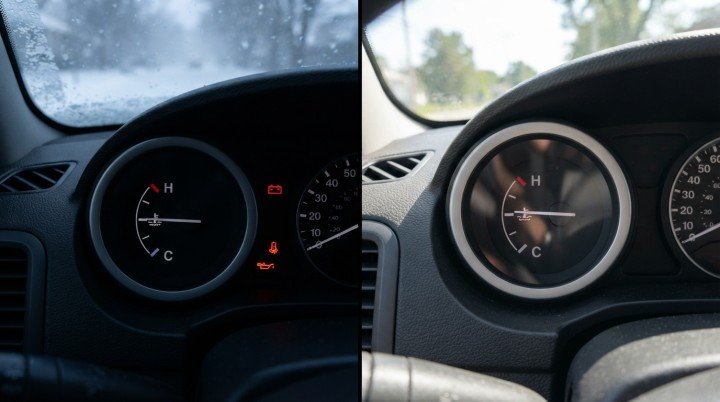
The dash gauge is only one piece of information. If you have an OBD2 scanner, check live Engine Coolant Temperature data. If the scanner shows the engine is truly hot, the overheating is real. If the scanner shows normal coolant temperature while the dash gauge reads hot, you may have a gauge, wiring, or coolant temperature sensor issue.
That comparison can save you from chasing the wrong problem.
2. The Coolant Temperature Warning Light Comes On
A red coolant temperature light is more serious than a slightly high gauge.
Some vehicles show a red thermometer icon. Others display a message like “Engine Overheating,” “Coolant Temperature High,” or “Stop Safely.”
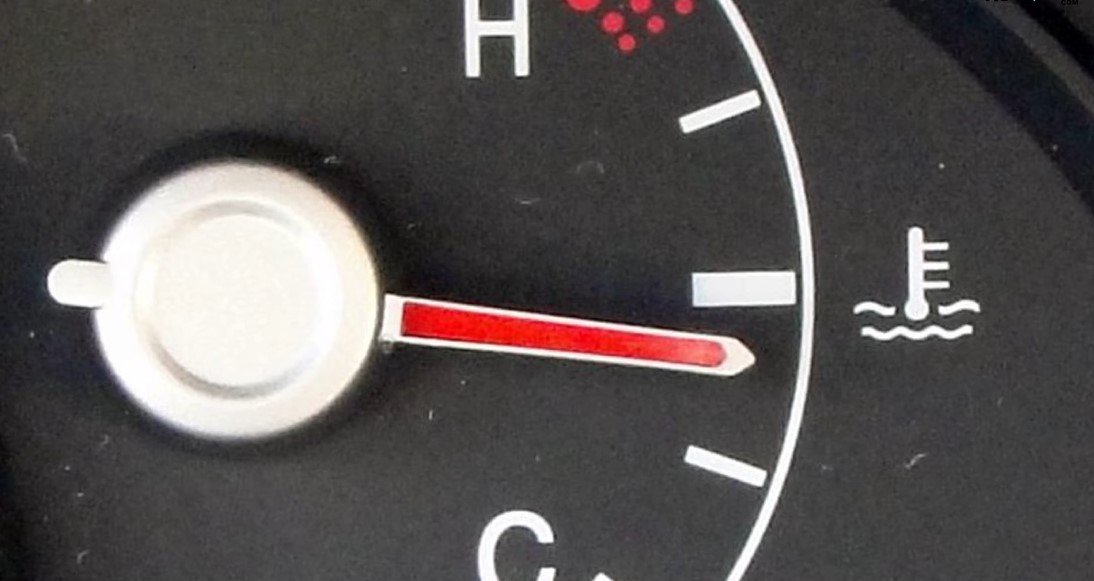
This is one of the engine overheating symptoms you should treat as urgent. The car may still feel normal for a short time, but that does not mean the engine is safe. Severe overheating can damage the head gasket, warp the cylinder head, or cause internal engine damage.
If the light stays on, pull over and let the engine cool.
3. Steam Comes From Under The Hood
Steam usually means hot coolant is escaping or boiling somewhere.
It may come from a leaking hose, radiator cap, coolant reservoir, radiator seam, thermostat housing, water pump area, or another part of the cooling system.

Do not assume the radiator is automatically bad just because you see steam. Steam tells you coolant is too hot or escaping. It does not tell you the exact failed part.
Wait until the engine cools before opening the hood fully or inspecting anything closely.
4. You Smell Sweet Coolant After Driving
Coolant often has a sweet smell.
If you smell it after parking, at a stoplight, or near the front of the vehicle, look for a leak once the engine is cold. Some leaks are small enough that coolant evaporates before it leaves a puddle.
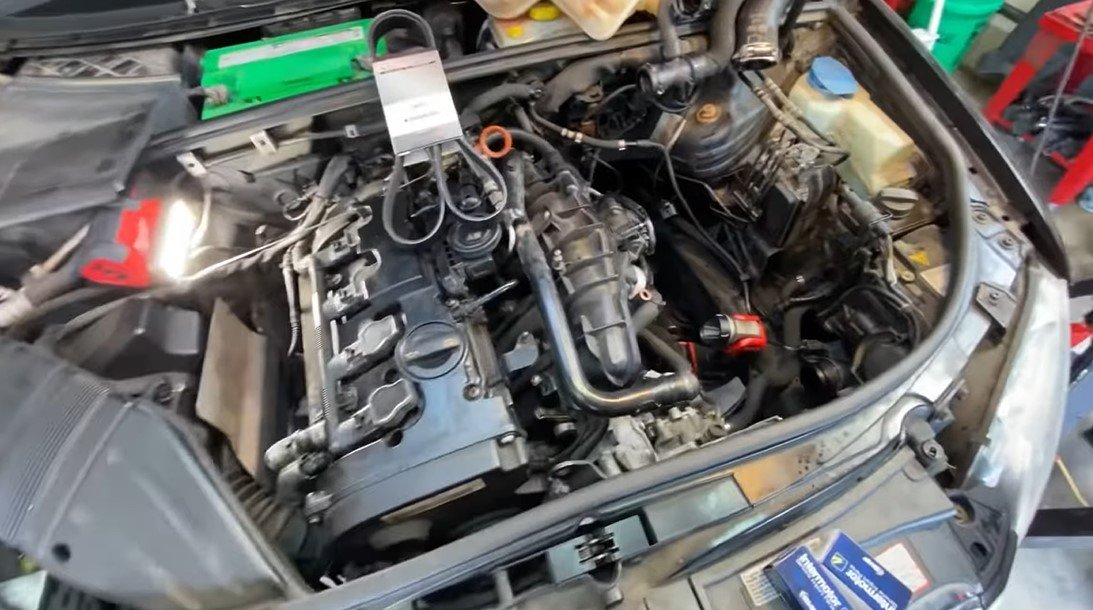
Check around hose ends, the radiator, water pump, thermostat housing, coolant reservoir, and heater hose connections. Dried coolant may look white, green, orange, pink, or crusty depending on the coolant type.
A sweet smell can be one of the early engine overheating symptoms before the gauge ever reaches the red zone.
5. The Heater Blows Cold While The Engine Is Hot
This is a big clue.
If the engine is hot, the heater should usually blow warm air. If the temperature gauge is high but the cabin heater blows cold, coolant may not be circulating properly.
Common causes include low coolant, an air pocket, a failing water pump, or a blockage in the heater core or cooling system.
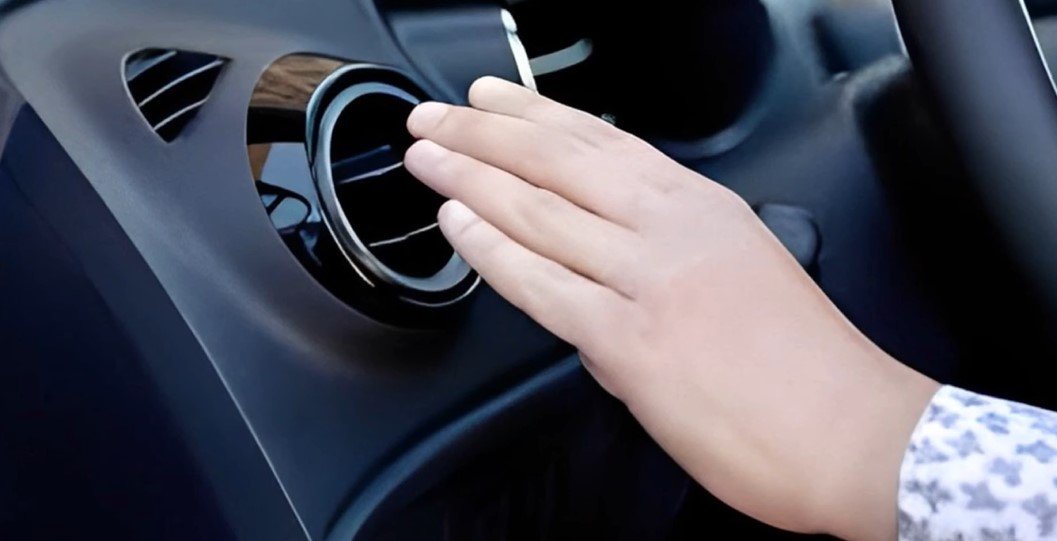
This symptom is especially important if the overheating started after a coolant flush, thermostat replacement, radiator job, hose replacement, or water pump repair. The system may have trapped air.
6. Coolant Boils Or Pushes Into The Overflow Tank
Coolant boiling, bubbling, or overflowing means the system is under stress.
This can happen when the engine is genuinely overheating. It can also happen if the cooling system cannot hold pressure because of a weak cap. In more serious cases, combustion gases from a head gasket leak can push bubbles into the coolant.

If coolant keeps overflowing, do not keep topping it off without finding the reason. The system is either getting too hot, losing pressure, trapping air, or being pressurized by something it should not be.
7. The Engine Loses Power
Many modern cars protect the engine when coolant temperature gets too high.
You may feel weak acceleration, sluggish throttle response, reduced power, or limp mode. This can happen with a check engine light or temperature warning light.

When power drops along with other engine overheating symptoms, the vehicle may be trying to prevent more damage. It is not a sign to “push through.” It is a sign to stop and diagnose.
8. The AC Suddenly Stops Cooling
Some vehicles shut off the air conditioning when the engine gets too hot.
This reduces load on the engine and helps protect the cooling system. If your AC stops cooling at the same time the temperature gauge climbs, the problem may not be the AC system itself.
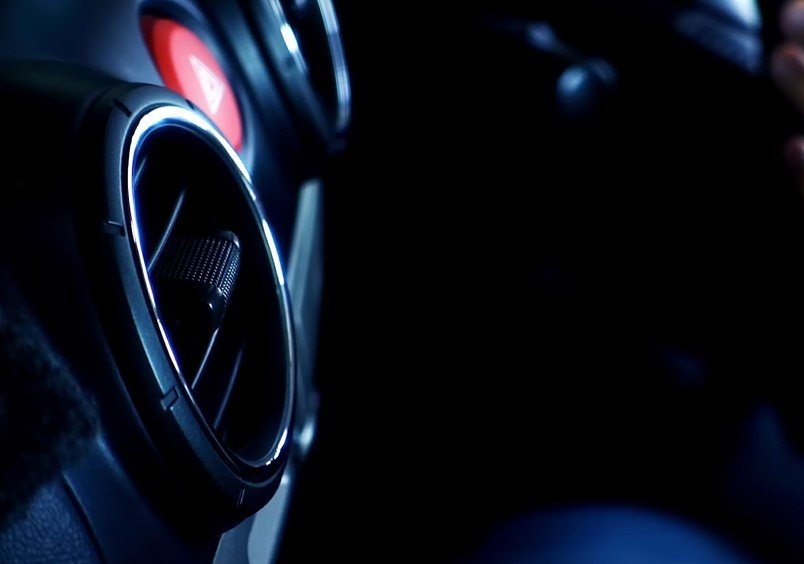
This pattern is common in traffic, during hot weather, or when the cooling fan is not working correctly.
9. The Check Engine Light Comes On
The check engine light may come on during or after an overheating event.
A scanner may show codes related to coolant temperature, thermostat performance, cooling fan control, coolant flow, or engine over-temperature. Do not clear the codes immediately. Read them first and save the freeze-frame data.
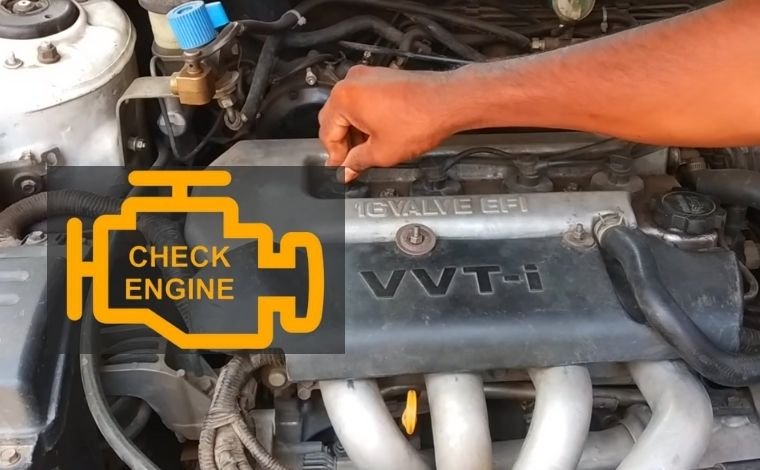
Freeze-frame data can show engine speed, load, vehicle speed, and coolant temperature when the code was stored. That helps you understand whether the car overheated at idle, on the highway, during warm-up, or under load.
10. Coolant Level Keeps Dropping
Coolant loss is one of the most important engine overheating symptoms because low coolant can create several other problems.
The engine may overheat, the heater may blow cold, air pockets may form, and the gauge may swing up and down.
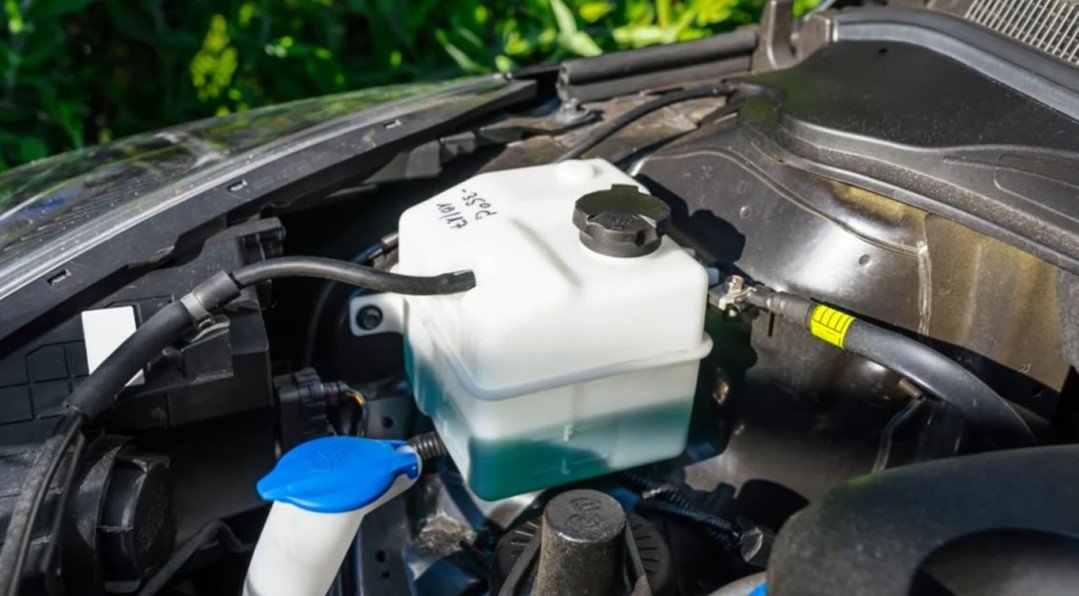
If coolant keeps dropping, there is a leak somewhere. It may be external, like a hose, radiator, cap, reservoir, water pump, or heater core. It may also be internal, such as a head gasket leak.
Coolant does not disappear for no reason.
11. White Smoke Comes From The Exhaust
Thin white vapor on a cold morning can be normal condensation.
But thick white smoke, a sweet exhaust smell, coolant loss with no visible leak, rough startup, bubbles in the reservoir, or milky oil can point toward an internal coolant leak.
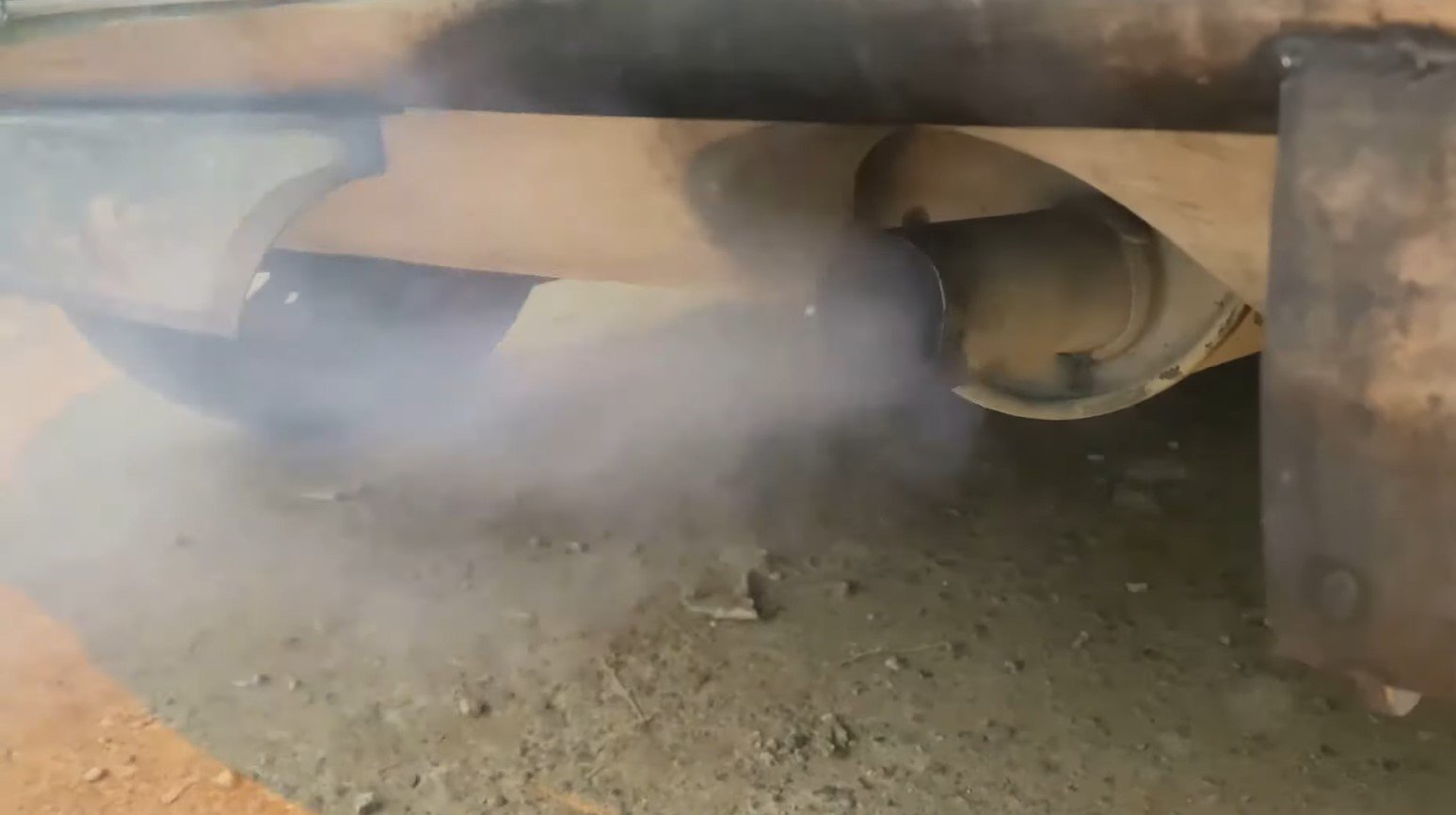
A head gasket problem is not the first thing to assume, but it is one of the most serious possibilities. If the engine overheated badly and now coolant disappears or white smoke appears, stop driving and get proper testing.
11 Common Causes Behind Engine Overheating Symptoms
1. Low Coolant Level
Low coolant is one of the most common causes of overheating.
Coolant carries heat away from the engine and releases it through the radiator. If there is not enough coolant, heat cannot move properly. Air pockets can form, the heater may stop working, and the temperature can rise quickly.
Always check coolant when the engine is cold. If the level is low, fill it with the correct coolant type, but also find out why it got low.
2. External Coolant Leak
A leak can happen at the radiator, hose, water pump, thermostat housing, heater core, coolant reservoir, or cap.
Some leaks leave puddles. Others leave only dried residue. A water pump may leak from the weep hole. A heater core may make the cabin smell sweet or cause damp carpet.
If the engine overheating symptoms come and go, a slow coolant leak may be lowering the level over time.
3. Stuck Thermostat
The thermostat controls coolant flow.
If it sticks closed, coolant may not reach the radiator properly, and the engine can overheat quickly. If it sticks open, the engine may run too cool and trigger a thermostat performance code like P0128.
A stuck closed thermostat often causes a fast temperature rise after startup, sudden gauge movement, weak heat, or overheating that begins before the radiator gets evenly hot.
4. Cooling Fan Not Working
The cooling fan is especially important at idle and low speed.
When the car is moving fast, air naturally passes through the radiator. When the car is sitting in traffic, the fan must pull air through the radiator. If the fan does not turn on, the car may overheat at idle but cool down while driving.
Possible causes include a bad fan motor, blown fuse, bad relay, wiring problem, fan control module issue, or temperature sensor problem.
A scanner that shows fan command data can be very helpful here.
5. Weak Radiator Cap
The radiator cap or coolant reservoir cap helps the system hold pressure.
Pressure raises the boiling point of coolant. If the cap is weak or damaged, coolant can boil too soon, overflow, or fail to return properly from the reservoir.
A cap is a small part, but it can create confusing engine overheating symptoms. Inspect the seal, spring, and area around the cap for dried coolant or corrosion.
Never remove the cap while hot.
6. Clogged Or Restricted Radiator
A radiator can be restricted inside or blocked outside.
Inside, old coolant, corrosion, mineral deposits, or stop-leak products can reduce flow. Outside, dirt, bugs, leaves, bent fins, or debris can block airflow.
A restricted radiator often shows up during highway driving, hill climbing, towing, or hot weather because the engine is producing more heat than the radiator can release.
7. Failing Water Pump
The water pump moves coolant through the engine and radiator.
If the pump leaks, makes noise, has a loose bearing, or has a damaged impeller, coolant circulation can drop. The engine may overheat under load, the heater may perform poorly, or coolant may leak near the front of the engine.
On some vehicles, the water pump is driven by the timing belt. If that type fails, the repair can be more serious.
8. Air Pocket In The Cooling System
Air trapped in the cooling system can stop coolant from circulating correctly.
This often happens after a coolant flush, radiator replacement, thermostat replacement, water pump repair, or hose replacement. If the system was not bled properly, air can remain inside.
Common clues include gurgling sounds, heater blowing cold, sudden temperature spikes, and overheating soon after cooling system service.
9. Bad Coolant Temperature Sensor Or Gauge Issue
Sometimes the engine is not actually overheating.
A faulty coolant temperature sensor, bad wiring, poor connector, or gauge problem can send the wrong signal. The dash may show hot even when the engine temperature is normal.
This is why live scanner data matters. Compare the OBD2 coolant temperature reading with the dash gauge. If they do not match, diagnose the sensor circuit before replacing cooling system parts.
10. Blown Head Gasket
A blown head gasket can cause overheating, but overheating can also cause a head gasket to fail.
Warning signs include repeated overheating, coolant loss with no visible leak, bubbles in the reservoir, white smoke, milky oil, rough startup, misfire codes, or pressure building in the cooling system too quickly.
Do not guess on this one. A pressure test, combustion gas test, leak-down test, and scanner data can help confirm the problem.
11. Belt, Airflow, Oil, Or Load Problem
Not every overheating issue comes from one obvious cooling part.
A slipping belt may affect the water pump on some engines. Low engine oil can add heat stress. A blocked grille can reduce airflow. Heavy towing, steep hills, hot weather, or missing air ducting can push a weak cooling system over the edge.
If the car overheats only under certain conditions, look at the whole situation.
OBD2 Codes Related To Engine Overheating Symptoms
A scanner cannot always tell you the exact failed part, but it can point you in the right direction.
| Code | Meaning | What To Check |
|---|---|---|
| P0217 | Engine coolant over-temperature condition | Real overheating, coolant level, fan, thermostat, radiator, pump |
| P0117 | Engine coolant temperature sensor circuit low | Sensor, wiring, connector, signal issue |
| P0118 | Engine coolant temperature sensor circuit high | Sensor, wiring, connector, signal issue |
| P0128 | Coolant temperature below thermostat regulating temperature | Thermostat stuck open, sensor issue, coolant temperature behavior |
| P0480 | Cooling fan 1 control circuit | Fan motor, relay, fuse, wiring, fan command |
| P0481 | Cooling fan 2 control circuit | Second fan circuit, relay, wiring, module |
| P00B7 | Engine coolant flow low/performance | Low coolant, thermostat, water pump, restriction, air pocket |
Do not treat a code as a direct parts order.
P0480 does not automatically mean the fan motor is bad. P0118 does not automatically mean the engine is overheating. P0128 does not mean the radiator is bad.
Codes are clues. Match them with symptoms, live data, and physical checks.
What To Check With A Scanner First
Before replacing parts, use the scanner this way:
Read all current, pending, and history codes.
Save freeze-frame data.
Check live Engine Coolant Temperature.
Compare scanner temperature with the dash gauge.
Watch how fast temperature rises during warm-up.
See if the cooling fan is being commanded on.
Look for related misfire, lean, or sensor codes.
Recheck codes after the engine cools and restarts.
This scanner process helps separate real overheating from false readings. It also helps you avoid replacing the thermostat when the real issue is a fan circuit, or replacing the radiator when the real issue is low coolant.
Symptom Pattern Table: What The Pattern Usually Means
| Pattern | Most Likely Area To Check First |
|---|---|
| Overheats at idle but cools while driving | Cooling fan, relay, fuse, fan command |
| Overheats on the highway | Radiator restriction, water pump, thermostat, airflow |
| Overheats with AC on | Cooling fan, condenser airflow, radiator airflow |
| Heater blows cold while gauge is hot | Low coolant, air pocket, water pump, circulation issue |
| Overheats after coolant service | Trapped air, low coolant, improper bleeding |
| Gauge says hot but scanner temp is normal | Gauge, coolant temperature sensor, wiring |
| Coolant disappears with no puddle | Head gasket, heater core, internal leak |
| Coolant boils or overflows repeatedly | Weak cap, severe overheating, head gasket, trapped air |
This is the section most generic overheating articles miss. The timing of the overheating often tells you more than the warning light itself.
Cold Engine Checks You Can Do At Home
Only inspect the cooling system when the engine is completely cold.
Start with the coolant reservoir. The level should be between the minimum and maximum marks. If it is low, inspect for leaks before assuming it only needs a top-off.
Look at the coolant condition. Healthy coolant usually looks clean and bright, depending on the color used by the manufacturer. Rusty, muddy, oily, or cloudy coolant can point to neglect, contamination, or internal problems.
Check radiator hoses for cracks, swelling, soft spots, hard spots, or leaks around the clamps. Look at the radiator fins through the grille. Dirt, bugs, leaves, and bent fins can reduce airflow.
Inspect the belt if it is visible. Listen for squealing. Look under the car for puddles. Check around the water pump area for dried coolant. Check the oil cap and dipstick for milky residue.
These checks do not replace professional testing, but they can help you understand the likely direction before spending money.
Can You Drive With Engine Overheating Symptoms?
If the temperature gauge is near red, the warning light is on, steam is coming from the hood, coolant is boiling, or the engine is losing power, do not keep driving.
A short drive with a severely overheated engine can cause expensive damage.
If the gauge rises slightly but returns to normal, you may be able to drive carefully to a safe location nearby. Turn off the AC, avoid hard acceleration, and watch the gauge closely. If it climbs again, stop.
If you are not sure, towing is cheaper than engine damage.
Common Mistakes To Avoid
Do not open the radiator cap while hot.
Do not keep driving with the warning light on.
Do not clear codes before saving freeze-frame data.
Do not replace the thermostat without checking coolant level.
Do not assume every overheating problem is the radiator.
Do not ignore heater behavior.
Do not forget trapped air after coolant work.
Do not keep adding coolant without finding the leak.
Most bad repairs happen because the driver or shop jumps to a part before confirming the pattern.
Best Repair Order: Check Cheap And Common Things First
Start with coolant level.
Then check for visible leaks.
Scan for codes and live coolant temperature.
Compare scanner temperature with the dash gauge.
Check cooling fan operation.
Inspect the radiator cap and hoses.
Consider thermostat behavior.
Bleed air from the system if work was recently done.
Inspect radiator airflow and possible restriction.
Test the water pump.
Check for head gasket signs if the problem continues.
This order keeps the diagnosis practical. It starts with the simple things and moves toward the expensive ones only when the evidence points there.
FAQ About Engine Overheating Symptoms
Q1: What is the first sign of engine overheating?
A1: The first sign is usually a rising temperature gauge or coolant temperature warning light. Some drivers also notice weak AC, a sweet coolant smell, or the heater blowing cold.
Q2: Can low coolant cause engine overheating?
A2: Yes. Low coolant is one of the most common causes of overheating. It can create air pockets, reduce coolant circulation, and stop the heater from working properly.
Q3: Why does my car overheat at idle but not while driving?
A3: That usually points toward a cooling fan problem. At highway speed, air naturally flows through the radiator. At idle, the fan has to do that job.
Q4: Why does my car overheat on the highway?
A4: Highway overheating can point to a clogged radiator, poor coolant flow, weak water pump, stuck thermostat, airflow restriction, or heavy load condition.
Q5: Can a bad coolant temperature sensor cause false overheating?
A5: Yes. A bad sensor, connector, wiring issue, or gauge problem can make the dash show a false overheating warning. Compare dash readings with live OBD2 coolant temperature data.
Q6: What OBD2 code means engine overheating?
A6: P0217 is the main over-temperature code. Other related codes include P0117, P0118, P0128, P0480, P0481, and P00B7.
Final Thoughts
Engine overheating symptoms should always be taken seriously because the damage can happen fast.
But that does not mean you should guess.
Start with the basics: coolant level, leaks, scanner codes, live coolant temperature, dash gauge comparison, and fan operation. Then use the symptom pattern to decide whether the likely problem is low coolant, a leak, fan failure, thermostat issue, radiator restriction, weak cap, water pump problem, trapped air, sensor fault, or head gasket trouble.
The best fix starts with the right diagnosis.
Treat overheating as a cooling system problem, not a single part name. That approach saves money, avoids unnecessary repairs, and gives the engine the best chance of surviving before the problem gets worse.