
A little white vapor from the exhaust can be normal. A thick white cloud is a different story.
That difference matters because many drivers see white smoke and immediately think, “blown head gasket.” Sometimes that is true. But sometimes the cause is simple condensation, a diesel EGR cooler leak, a bad intake gasket, a fuel issue, or oil burning that only looks white from behind the car.
So before you replace anything, look at three clues: when the smoke appears, how long it stays, and what it smells like. Those clues can separate harmless steam from the serious white smoke from exhaust causes that need fast diagnosis.
White Smoke From Exhaust Causes: The Clues Come First
White exhaust smoke is not one single problem. It is a symptom.
If the smoke is thin, light, and disappears after a few minutes on a cold start, it is usually water vapor. That is common in cold or damp weather.
If the smoke is thick, keeps coming after the engine warms up, smells sweet, or comes with coolant loss, it often means coolant is getting where it should not be.
If the smoke smells like raw fuel, the engine may not be burning fuel properly. If it looks white-gray or slightly blue, oil may be entering the intake or combustion chamber.
A quick clue map:
| What You Notice | What It Usually Points Toward |
|---|---|
| Thin smoke only on cold start | Condensation |
| Thick white smoke after warm-up | Coolant entering engine/exhaust |
| Sweet smell | Coolant or antifreeze |
| Coolant level keeps dropping | Internal coolant leak |
| Rough idle or misfire | Coolant leak or injector issue |
| Diesel with white smoke | EGR cooler or unburned fuel |
| Smoke under acceleration | Turbo, injector, or coolant leak |
1. Cold Start Condensation
This is the harmless one.
When your car sits overnight, moisture can collect inside the exhaust system. Once the engine starts, the exhaust heats that moisture and turns it into steam. From behind the car, it looks like white smoke.
Condensation is more noticeable in cold weather, rainy weather, or when the car mostly takes short trips. Short drives may not heat the exhaust long enough to dry it out fully.

The important sign is that the vapor clears quickly. The engine runs normally, coolant level stays the same, and there is no sweet smell.
This is one of the most common white smoke from exhaust causes, but it is not really smoke. It is just water vapor leaving the tailpipe.
2. Blown Head Gasket
A blown head gasket is the cause people fear most.
The head gasket sits between the engine block and cylinder head. Its job is to keep coolant, oil, and combustion pressure separated. If the gasket fails, coolant can leak into the combustion chamber. When the engine burns that coolant, thick white smoke or steam comes out of the exhaust.
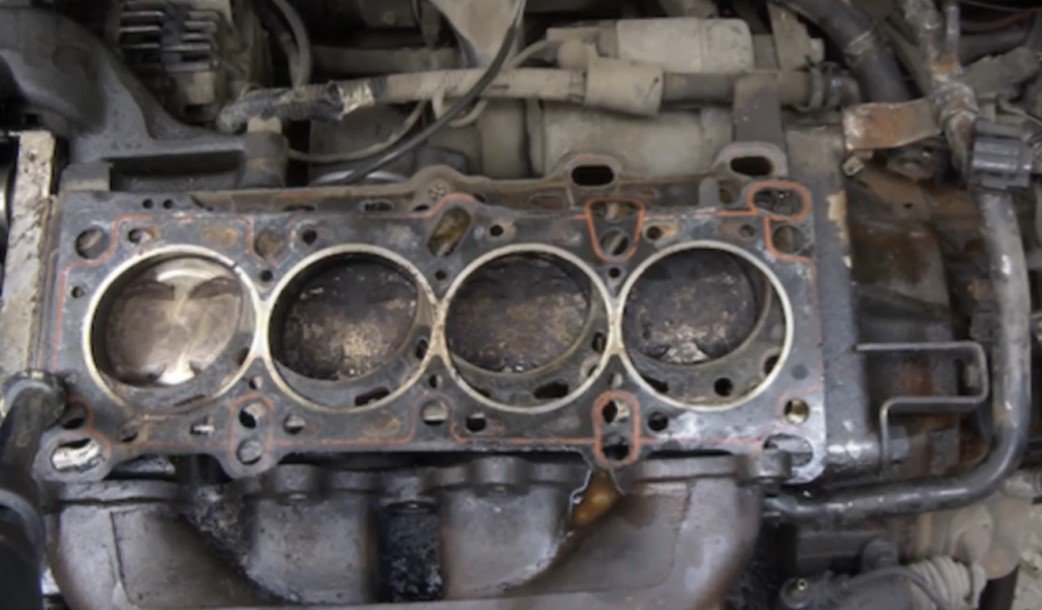
Common signs include:
- Sweet smell from the exhaust
- Coolant level dropping
- Engine overheating
- Rough start or misfire
- Bubbles in the coolant reservoir
- Milky oil in some cases
Milky oil is a warning sign, but its absence does not prove the head gasket is fine. Some head gasket leaks send coolant into a cylinder without mixing coolant into the oil.
This is one of the serious white smoke from exhaust causes because driving too long can overheat the engine, damage the catalytic converter, or turn a repairable engine into a major failure. If the temperature gauge is rising along with the smoke, treat it like an engine overheating risk, not just an exhaust issue.
3. Cracked Cylinder Head or Engine Block
A cracked cylinder head or engine block can create almost the same symptoms as a blown head gasket.
Coolant passages run through the engine block and cylinder head. If a crack forms, coolant may leak into a cylinder or exhaust passage. That coolant turns into steam and leaves through the tailpipe.
This usually happens after severe overheating, freezing coolant, poor cooling system maintenance, or long-term engine stress. It is less common than a head gasket failure, but it can be more expensive.
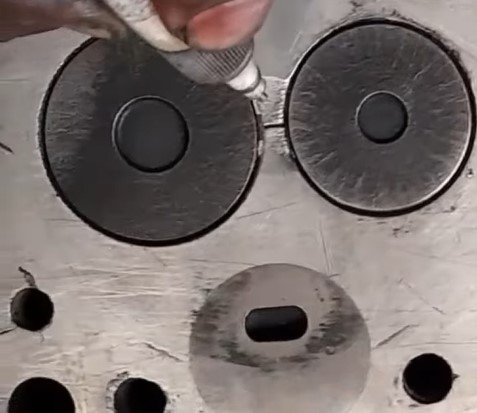
You may notice thick white smoke, overheating, coolant loss with no visible leak, rough running, or pressure building in the cooling system.
A mechanic usually confirms this with a cooling system pressure test, combustion gas test, compression test, or leak-down test. Guessing is risky because the symptoms overlap with several other white smoke from exhaust causes.
4. Leaking Intake Manifold Gasket
A leaking intake manifold gasket is easy to overlook.
On some engines, coolant passes through or near the intake manifold. If the gasket leaks, coolant can enter the intake path and get pulled into the cylinders. Once it burns, white smoke appears from the exhaust.
This can look like a head gasket problem because the symptoms may include coolant loss, sweet-smelling smoke, rough idle, and misfires on startup.
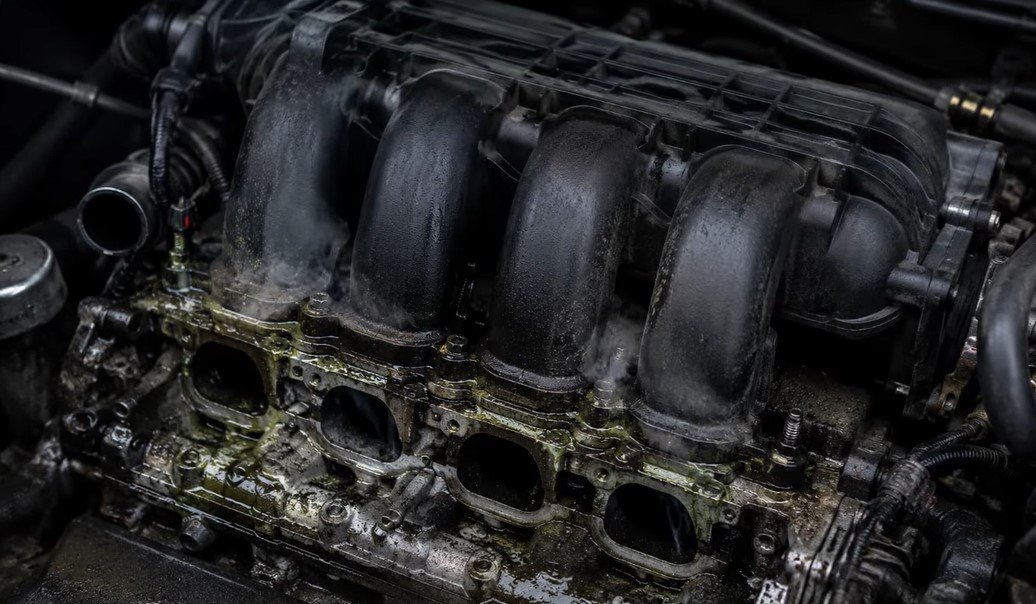
The difference is repair location. If the intake gasket is the actual leak, replacing a head gasket would be unnecessary and much more expensive.
This cause is especially worth considering on engines known for intake gasket leaks, or when the smoke appears after sitting and the engine runs rough for a short time after startup.
5. Bad EGR Cooler on Diesel Engines
Diesel engines have one extra suspect: the EGR cooler.
The EGR cooler uses engine coolant to cool exhaust gases before sending them back into the intake. If the cooler cracks internally, coolant can leak into the exhaust or intake stream. That can create white smoke, coolant loss, rough running, or emissions-related codes.
This problem can mimic a blown head gasket. The vehicle may lose coolant without leaving a puddle because the coolant is going out through the exhaust.

Diesel owners should keep this high on the list of white smoke from exhaust causes, especially if the smoke is thick, the coolant reservoir keeps dropping, and there is no obvious external coolant leak.
A proper diagnosis may include a cooling system pressure test, EGR cooler inspection, and combustion leak test. If combustion gases are not showing in the coolant, the EGR cooler may become more suspicious than the head gasket. If an EGR-related code appears, checking an OBD2 codes list can help you understand what system the computer is pointing toward.
6. Faulty Fuel Injector or Poor Fuel Combustion
Not all white smoke is coolant.
On diesel engines, white or gray-white smoke can happen when fuel does not burn properly. A faulty injector may drip, spray poorly, overfuel, or deliver fuel at the wrong time. Unburned fuel can leave the exhaust as pale smoke.
Gasoline engines can also have injector problems, but a rich fuel mixture usually creates black or dark gray smoke instead of pure white smoke. Still, real-world smoke color is not always perfect, so smell and engine behavior matter.

Fuel-related clues include:
- Raw fuel smell
- Hard starting
- Rough idle
- Misfire codes
- Poor fuel economy
- Smoke that changes with throttle
If the car is also using more gas than usual, the problem may overlap with a car using too much fuel situation. A rich-running engine may also store a P0172 code or, in some cases, a rich-at-idle code like P2188.
This is why “white smoke” should not automatically become a head gasket diagnosis. Poor combustion can look similar from behind the car, especially on diesel vehicles.
7. Turbocharger Seal, PCV, or Oil Vapor Issue
Turbocharged engines can create white-gray smoke when oil or coolant enters the wrong side of the system.
If a turbo seal wears out, oil can leak into the intake or exhaust. Oil smoke is usually blue-gray, but many drivers describe it as white smoke because it looks pale from a distance.
Some water-cooled turbos can also leak coolant internally, although that is less common than oil-related smoke.
A PCV system problem can add to the confusion. If crankcase pressure is not controlled properly, oil vapor may get pulled into the intake and burned. That can create smoke, oil consumption, and rough running.
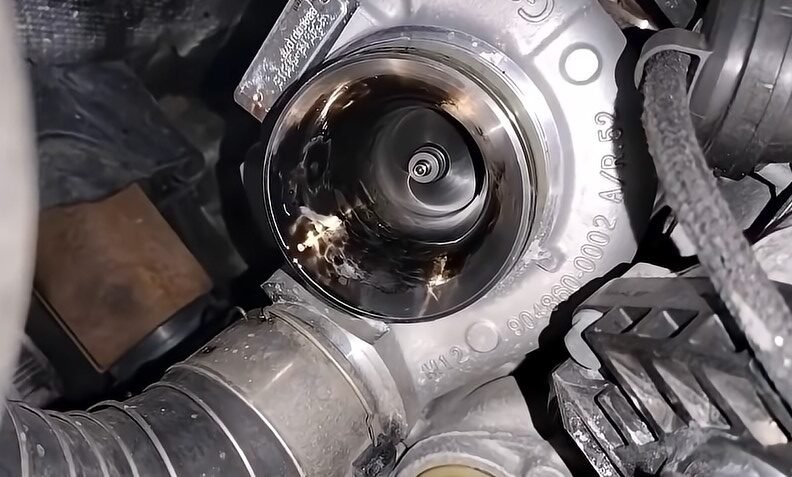
Turbo or PCV-related smoke often shows up after idling, during acceleration, or under load. You may also notice oil loss, reduced power, oily intercooler pipes, or a whining turbo noise. If the vehicle has boost-related symptoms, codes like P0299 or P0234 can help point the diagnosis toward underboost, overboost, or related turbo-control problems.
This belongs on the list of white smoke from exhaust causes because not every pale exhaust cloud is coolant.
When the Smoke Happens Matters
The timing can narrow the cause fast.
White smoke only on cold startup usually points to condensation. But if it is thick, sweet-smelling, and happens every morning with coolant loss, coolant may be seeping into a cylinder while the car sits.
White smoke at idle can point toward coolant entering the engine, a leaking intake gasket, a diesel EGR cooler leak, or a fuel injector problem.
White smoke during acceleration is more concerning. Load and pressure increase when you press the gas, so turbo problems, injector issues, and coolant leaks may become more visible.
White smoke after the engine is fully warm is usually not normal condensation. At that point, the more serious white smoke from exhaust causes move higher on the list.
Can You Keep Driving?
You can usually keep driving if the smoke is light vapor, clears quickly, and the car runs normally. Coolant should stay full, temperature should remain normal, and there should be no warning light or rough idle.
Stop driving if the smoke is thick and constant, the exhaust smells sweet, the temperature gauge rises, or the coolant level keeps dropping. Also be careful if the engine misfires, shakes, loses power, or the oil looks milky.
Coolant inside a cylinder can cause serious damage. In severe cases, the cylinder can fill with liquid and damage internal engine parts. Even smaller leaks can overheat the engine or harm the catalytic converter over time.
How to Confirm the Real Cause
A good diagnosis starts with simple checks.
Check the coolant level when the engine is cold. Look for external leaks. Check the oil cap and dipstick for milky residue. If the check engine light is on, use a scan tool before clearing anything. This guide on how to check the engine light with a scanner is useful because stored codes and freeze-frame details can show what the engine was doing when the fault was recorded.
Then deeper tests may be needed:
- Cooling system pressure test
- Combustion gas/block test
- Compression test
- Leak-down test
- Spark plug inspection
- Injector test
- EGR cooler test on diesel engines
- Turbo and PCV inspection
OBD2 data can help, but it cannot prove everything. For example, scan data may show misfires, coolant temperature, oxygen sensor behavior, or fuel trims, but it will not visually confirm a cracked head gasket by itself. That is why it helps to understand what an OBD2 scanner cannot do before relying on codes alone.
For fuel or combustion clues, live data can be useful. Fuel trims, O2 sensor activity, coolant temperature, and misfire data can all help separate a fuel problem from an internal coolant leak. If you are using a scanner, learning how to read live data from OBD-II scanners and how to read freeze frame data can make the diagnosis much more accurate.
Final Takeaway
White smoke from the exhaust does not always mean disaster. Thin vapor that disappears quickly is usually normal condensation.
But thick white smoke that continues after warm-up is different. If it smells sweet, comes with coolant loss, causes rough running, or appears during acceleration, the problem needs attention.
The smartest approach is to read the clues first, then test. That is how you separate harmless steam from the serious white smoke from exhaust causes that can damage the engine if ignored.