
Your car’s heater suddenly starts blowing cold air, even though you’ve been driving for several minutes. The temperature gauge looks normal, so you keep going. Later, you open the hood and discover the coolant reservoir is nearly empty.
This is how a cooling-system problem can go unnoticed. Low coolant doesn’t always cause immediate overheating. Sometimes the warning signs are a sweet smell, fluctuating temperature, or fluid level that keeps dropping.
Recognizing low coolant symptoms early can help prevent expensive engine damage. But knowing the symptoms is only part of the solution. You also need to understand why the coolant is disappearing.
Here are ten warning signs, what they might mean, and how to check your cooling system safely.
Quick AnswerCommon signs of low coolant include a reservoir below the minimum mark, an engine temperature warning, weak cabin heat, temperature fluctuations, a sweet coolant smell, and visible leaks. Severe coolant loss can lead to overheating and steam under the hood. Always check the coolant level when the engine is completely cold, and investigate repeated fluid loss rather than continually topping it off.
What Happens When Your Car Runs Low on Coolant?
Engine coolant absorbs heat and carries it through the cooling system. The radiator releases much of that heat, while the heater core uses some to warm the cabin.
When coolant becomes too low, air can enter parts of the system and interfere with circulation. The engine may develop hot spots, cabin heating can become inconsistent, and overheating may follow.
Coolant expands as it heats and contracts as it cools. That’s why the level changes between hot and cold conditions.
However, a healthy sealed cooling system should not need frequent coolant additions.
Also, low coolant level and poor coolant condition are different problems. Topping off the reservoir won’t necessarily correct contaminated coolant, an incorrect mixture, or depleted corrosion protection.
10 Low Coolant Symptoms You Shouldn’t Ignore
Some low coolant symptoms are visible before starting the engine. Others become noticeable while driving. Start with the early signs rather than waiting for an overheating warning.
1. Coolant Reservoir Is Below the MIN Mark
The simplest sign is a coolant reservoir level below the manufacturer’s specified cold minimum.
Most vehicles have a translucent reservoir with MIN and MAX markings. Some instead use COLD and HOT indicators.
If the level is below the correct cold mark, the system may need coolant. But if the reservoir is completely empty, there may be more serious coolant loss than the bottle alone reveals.
Some vehicles have nonpressurized overflow bottles, while others use pressurized expansion tanks. The correct checking procedure depends on the design.
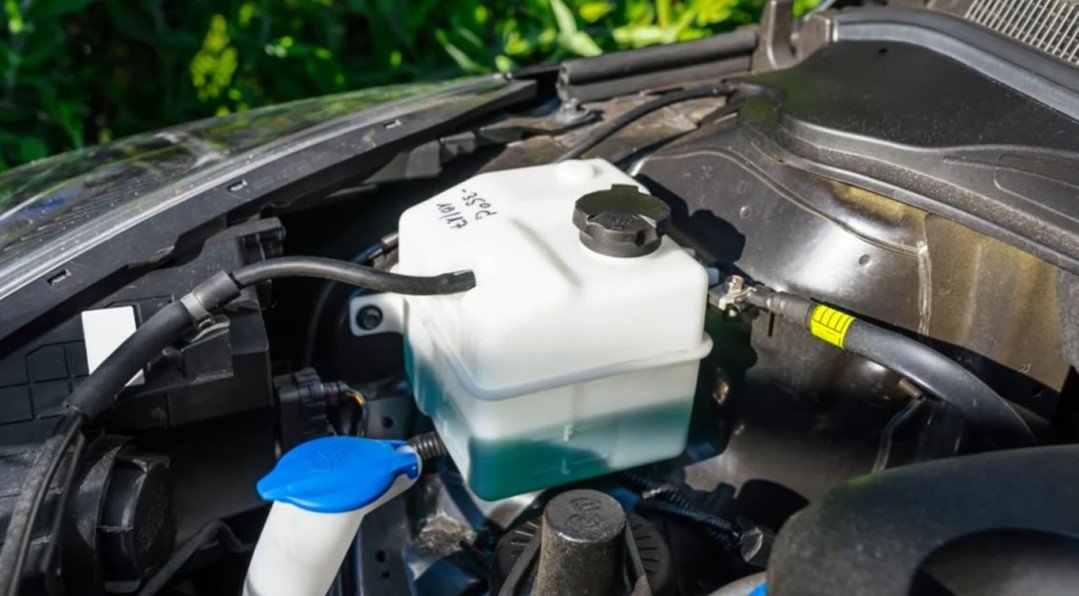
What to check: Park on level ground and inspect the reservoir when the engine is completely cold. Follow the owner’s manual rather than guessing from the bottle’s appearance.
2. Engine Temperature Gauge Rises Above Normal
When coolant becomes insufficient, the engine may struggle to release heat effectively.
The temperature gauge might climb above its usual position, or an overheating warning may appear.
However, overheating doesn’t always mean coolant is low. A sticking thermostat, faulty water pump, blocked radiator, or cooling fan problem may produce similar symptoms.
If you notice other engine problems alongside rising temperature, our common car problems guide covers several related warning signs.
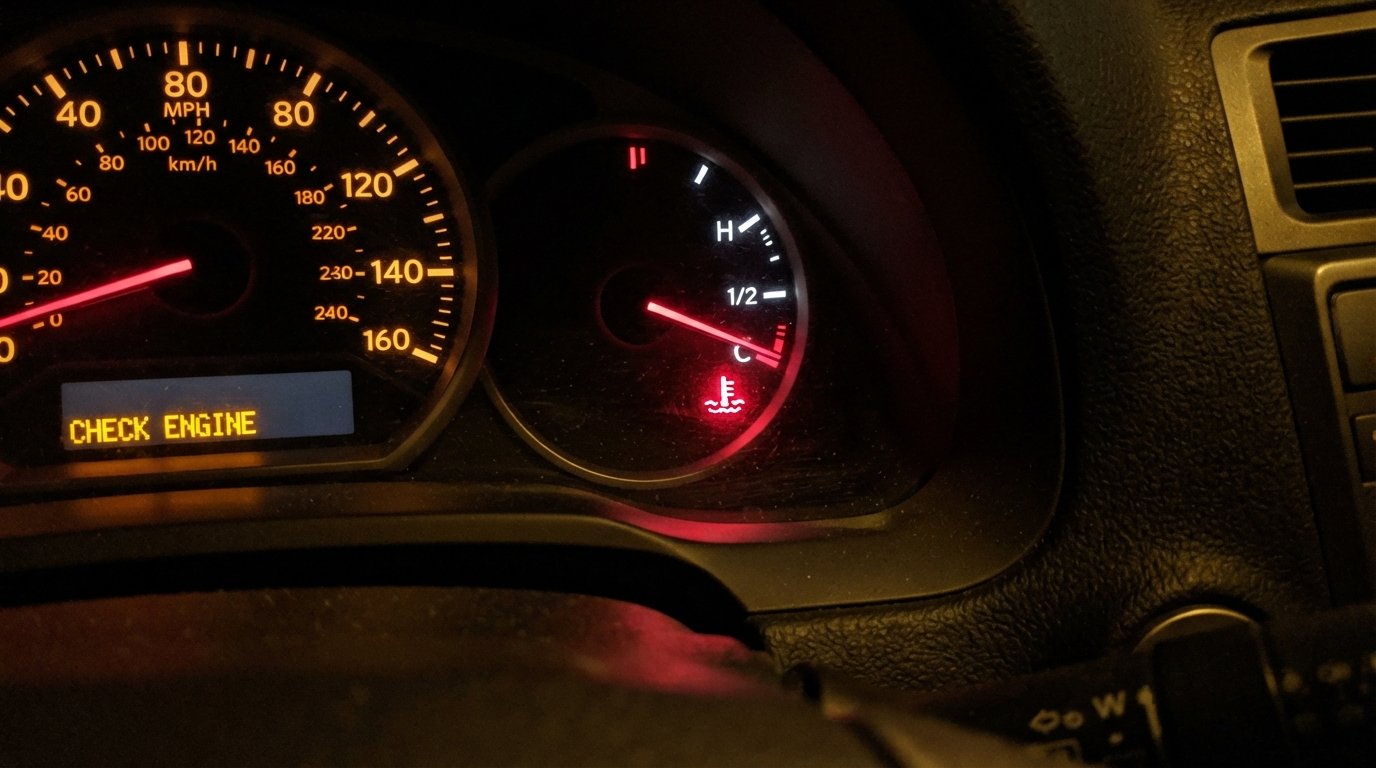
What to check: If the temperature enters the hot zone, pull over safely and shut off the engine. Wait until it cools completely before inspecting coolant levels.
3. Low Coolant or Engine Temperature Warning Appears
Some cars have a dedicated coolant-level sensor that activates a warning when the reservoir level drops.
Other vehicles only monitor engine temperature, so they may not warn you about low coolant until overheating develops.
It’s important to distinguish a “Low Coolant” message from an “Engine Overheating” warning.
A faulty level sensor, damaged connector, or wiring problem can sometimes trigger an incorrect warning.
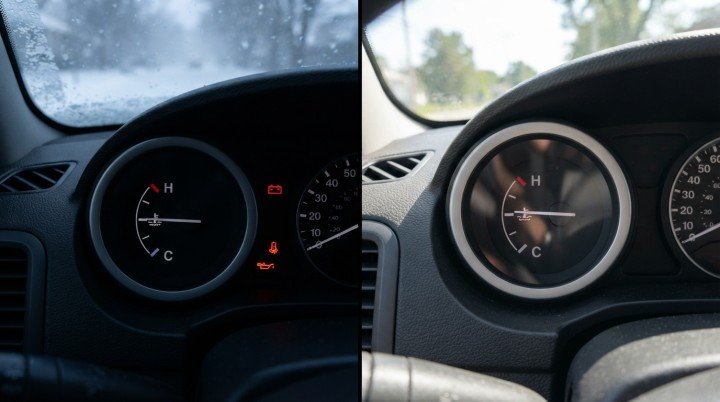
What to check: Identify the exact dashboard message and verify the actual coolant level after the engine cools. Never dismiss a high-temperature warning because the reservoir looks full.
4. Cabin Heater Blows Cold or Lukewarm Air
Low coolant can prevent enough hot fluid from circulating through the heater core.
You might notice warm air disappearing during acceleration, returning at idle, or remaining weak throughout the drive.
However, a thermostat stuck open, clogged heater core, or faulty HVAC blend door can produce similar symptoms.
One particularly concerning combination is poor cabin heating together with an engine temperature that is rising unusually high.

What to check: Compare heater performance with coolant level and actual engine temperature. If the engine is overheating, stop driving rather than continuing to test the heater.
5. Engine Temperature Fluctuates Unexpectedly
Does the temperature gauge rise, drop, and then climb again without an obvious reason?
Low coolant or trapped air can interfere with normal circulation and cause unstable temperature behavior.
But a sticking thermostat or inaccurate coolant temperature sensor may produce similar readings.
If your vehicle provides live Engine Coolant Temperature (ECT) data, comparing that reading with the dashboard gauge can help clarify what’s happening.
What to check: Check the cold coolant level first. If the temperature readings remain inconsistent, investigate the cooling system and ECT sensor rather than assuming the thermostat is defective.
6. Sweet Coolant Smell Around or Inside the Car
Many antifreeze formulations have a distinctive sweet odor.
If coolant leaks onto a hot engine surface, it may evaporate before reaching the ground. You may notice the smell after parking without finding a puddle.
A coolant smell inside the cabin can sometimes indicate a heater-core leak, especially when accompanied by damp carpeting or a persistent film on the windshield.
However, odors alone cannot identify the leaking component.
What to check: With the engine cold, look for visible coolant residue around hoses, connections, and accessible cooling components. Avoid breathing coolant vapor, and have persistent smells investigated.
7. Coolant Puddles or Dried Residue Under the Car
Visible coolant leakage can come from a radiator, water pump, hose, expansion tank, or thermostat housing.
Fresh coolant may appear green, orange, pink, blue, or another color depending on its formulation. Color alone doesn’t identify the correct coolant type.
White or colored crust around hose connections may also reveal dried coolant residue.
Don’t confuse ordinary A/C condensation with coolant leakage. A/C water is generally clear and watery, while coolant often leaves colored or sticky residue.
What to check: Note where the fluid appears and arrange a pressure test if the source isn’t visible. Don’t touch or taste unidentified automotive fluids.
8. Gurgling or Bubbling Sounds From the Cooling System
A gurgling sound behind the dashboard or near the coolant reservoir can indicate air moving through the cooling system.
This sometimes happens when coolant is low or after the cooling system has been refilled without properly removing trapped air.
However, bubbling doesn’t automatically mean a head gasket has failed.
Some vehicle-specific cooling-system behavior may also sound unusual during normal operation, so the timing and other symptoms matter.
What to check: Review recent coolant service history and check the cold fluid level. Persistent bubbling, overheating, or pressure-related coolant loss requires further testing.
9. Steam, Overheating, or Reduced Engine Power
These are among the most serious signs associated with severe coolant loss.
If the engine overheats, pressurized coolant may escape and produce visible steam. Some vehicles reduce engine power to protect internal components when temperature becomes excessive.
Continued overheating can damage cylinder heads, head gaskets, and other expensive engine parts.
Engine power loss alone doesn’t prove the coolant is low, but power loss combined with a high-temperature warning is an urgent concern.

What to check: Stop safely, switch off the engine, and allow it to cool. If steam, substantial coolant loss, or repeated overheating occurs, arrange professional assistance rather than driving further.
10. Coolant Level Keeps Dropping After Topping Off
If you refill the reservoir and find it low again a few days later, there’s likely an unresolved problem.
Possible causes include slow external leaks, a faulty pressure cap, improper bleeding after recent service, or an internal coolant leak.
Internal leaks may sometimes cause persistent white exhaust after the engine warms up, unexplained coolant loss, or contamination between coolant and oil.
However, normal condensation can create white vapor on a cold morning, so white exhaust alone doesn’t prove head-gasket damage.
What to check: Compare coolant levels when fully cold under similar conditions. Repeated loss warrants professional pressure testing and, when indicated, internal-leak testing.
How to Check Your Coolant Level Safely
Checking coolant is straightforward on many cars, but the engine must be completely cold.
- Park on a level surface. Turn off the engine and allow it to cool fully.
- Find the coolant reservoir. Consult the owner’s manual if you’re unsure which tank is for engine coolant.
- Read the level markings. Look for the appropriate COLD, MIN, or MAX indicators.
- Inspect visible connections. Check for wet hoses, residue, or damaged reservoir surfaces.
- Use the correct coolant. Add only coolant meeting the manufacturer’s specification, following the correct procedure.
- Monitor the cold level afterward. If it drops again, investigate the cause rather than repeatedly topping it off.
On some vehicles, checking the expansion tank is sufficient. On others, an empty overflow bottle may not reveal the actual coolant level inside the radiator or engine.
Never open a hot radiator or pressurized coolant reservoir. The sudden release of hot coolant and steam can cause severe burns. If the reservoir is empty or significant coolant loss is suspected, have the complete system checked before driving.
Why Is My Coolant Low but the Engine Isn’t Overheating?
Coolant can drop below its recommended level before the engine becomes hot enough to trigger a warning.
For example, a small hose leak may gradually lower the reservoir while enough coolant remains in circulation for normal driving.
Also, many dashboard temperature gauges aren’t precise measurements of coolant level or temperature. Some remain near the middle across a broad operating range.
In severe low-coolant conditions, a temperature sensor may even be exposed to air, making its reading less reliable.
So a normal-looking gauge doesn’t prove your cooling system contains enough coolant.
Why Is My Car Losing Coolant Without a Visible Leak?
Not every coolant leak leaves a puddle beneath your vehicle.
A small leak may evaporate on a hot engine. A water pump or hose connection may be hidden behind other components. A heater core may leak inside the cabin rather than onto the driveway.
Internal engine leaks are another possibility, although they shouldn’t be assumed without supporting evidence.
A repair shop may use cooling-system pressure testing, UV dye, or a combustion-gas test when an internal leak is suspected.
RepairPal’s coolant leak diagnosis guide describes how pressure testing can help locate leaks that aren’t obvious during a visual inspection.
Important: If coolant loss began immediately after a cooling-system repair, ask whether the system was filled and bled correctly. Trapped air or an incomplete fill can cause level changes, but ongoing loss should still be investigated.
Coolant Warning Light On but Reservoir Full: What Does It Mean?
A full reservoir doesn’t always mean everything is working correctly.
If the warning specifically indicates low coolant level, a sensor, connector, or wiring fault may be involved.
But if the warning indicates high engine temperature, you may have a circulation problem even with the reservoir full.
Thermostat, cooling fan, water pump, and temperature-sensor problems can all contribute.
Some vehicles also have separate cooling circuits, so the visible reservoir may not be the one associated with the warning.
Always identify the exact warning message and the vehicle’s cooling-system layout before deciding what to repair.
Low Coolant vs. Bad Thermostat vs. Bad Water Pump
Many cooling-system failures share similar symptoms. This comparison can help narrow the first checks.
| Possible Problem | Useful Diagnostic Clues |
|---|---|
| Low coolant | Falling fluid level, weak heater, leaks, overheating |
| Thermostat stuck open | Slow engine warm-up and low operating temperature |
| Thermostat stuck closed | Overheating associated with restricted radiator flow |
| Water pump fault | Pump-area leak, bearing noise, or reduced circulation |
| Cooling fan fault | Overheating more noticeable at idle or in traffic |
| ECT sensor problem | Implausible readings or temperature-sensor trouble codes |
These patterns are clues rather than guaranteed diagnoses. Several problems can occur together, particularly after an engine has overheated.
Can an OBD2 Scanner Detect Low Coolant?
An OBD2 scanner can help investigate low coolant symptoms, but a basic scanner usually cannot directly measure the coolant level in your reservoir.
What a Basic OBD2 Scanner Can Check
Most scanners with live-data capability can display Engine Coolant Temperature (ECT).
They may also retrieve temperature-sensor or engine-related codes, along with freeze-frame information.
For example, P0116, P0117, and P0118 relate to coolant-temperature sensor performance or circuits. These codes don’t confirm low coolant.
See our OBD2 trouble code guide for code definitions and diagnostic information.
When Advanced Diagnostic Tools May Help
Depending on vehicle support, advanced equipment may access coolant-level sensor faults, cooling fan information, and electric water pump diagnostic data.
Some tools support active tests, but these functions vary by model and should follow manufacturer procedures.
For a practical introduction, read what OBD2 is and how it works.
Our Innova 5610 scanner review also discusses live data and enhanced diagnostic capabilities.
Why a Normal ECT Reading Doesn’t Prove Coolant Is Full
An ECT sensor measures temperature, not fluid volume.
A vehicle may have a low reservoir without overheating yet. Conversely, air pockets can interfere with reliable temperature measurement under certain conditions.
That’s why scanner readings should support, not replace, a physical coolant-level check.
If a warning light remains on but your scanner doesn’t display a code, our check engine light with no codes guide explains several possible reasons.
What Should You Do When Your Coolant Is Low?
Your next action depends on how low the level is and whether the engine shows other symptoms.
| Situation | Recommended Action |
|---|---|
| Slightly below MIN when cold | Use manufacturer-specified coolant and investigate why the level dropped |
| Level repeatedly decreases | Arrange cooling-system leak diagnosis |
| Reservoir completely empty | Have the system level and condition checked before driving |
| High-temperature warning | Stop safely and shut the engine off |
| Steam or major coolant loss | Arrange roadside assistance or towing |
| Persistent white exhaust plus coolant loss | Seek professional internal-leak diagnosis |
If the engine is cold and the system is only slightly below its specified level, adding the correct coolant may restore the level temporarily. However, you still need to understand why it dropped.
Never choose coolant solely by color. Follow the manufacturer’s specification and dilution requirements.
Can You Drive With Low Coolant?
There’s no universal safe distance for driving with low coolant.
A slightly low reservoir and a severely depleted cooling system are very different situations.
If coolant circulation becomes inadequate, overheating can develop quickly and may damage the head gasket, cylinder head, or engine.
If the vehicle shows a high-temperature warning, steam, significant leakage, or unstable engine operation, stop safely and arrange assistance.
Don’t rely on the temperature gauge alone. If the reservoir is empty or you suspect major coolant loss, the safest option is to have the cooling system inspected before continuing to drive.
How Much Does It Cost to Fix Low Coolant?
Low coolant is a condition, not a specific repair. The cost depends on why the coolant is disappearing.
For reference, RepairPal’s September 2026 national estimate places coolant leak diagnosis at approximately $60–$88 before any necessary repairs.
| Service or Repair | Approximate U.S. Cost |
|---|---|
| Coolant top-up | $10–$40 for fluid, depending on specification and quantity |
| Leak diagnosis | $60–$150 depending on tests and shop |
| Hose or clamp repair | $80–$350+ |
| Coolant reservoir replacement | $100–$350+ |
| Radiator replacement | $350–$900+ |
| Water pump replacement | $400–$1,400+ depending on design |
| Internal engine or head-gasket repair | Often $1,500–$4,000+; complex repairs may cost more |
These are broad U.S. budgeting ranges rather than fixed quotes. Vehicle design, location, labor rates, and related damage can change the final price significantly.
Confirming the leak before replacing expensive parts is usually the best way to avoid unnecessary repair costs.
How to Prevent Coolant Loss and Overheating
Cooling-system maintenance doesn’t prevent every leak, but it can help catch problems early.
- Check the cold coolant level periodically.
- Follow the vehicle manufacturer’s coolant service intervals.
- Use coolant that meets the required specification.
- Inspect accessible hoses and connections for aging or leaks.
- Repair coolant loss promptly.
- Ensure proper filling and bleeding after cooling-system repairs.
- Never ignore an overheating warning.
After a cooling-system repair, a diagnostic code may require qualifying drive cycles before its status changes. Our OBD2 drive cycle guide explains this process.
Frequently Asked Questions
1. What is the first sign of low coolant in a car?
A reservoir below its specified cold minimum is the clearest early sign. Weak cabin heating, a sweet coolant smell, or a low-level warning may also appear before the engine overheats.
2. Can low coolant cause the heater to blow cold air?
Yes. Insufficient coolant or trapped air may reduce circulation through the heater core. However, thermostat, heater-core, or HVAC problems can cause similar symptoms.
3. Why is my coolant low but there is no visible leak?
A slow leak may evaporate on hot engine surfaces or remain hidden behind components. A heater-core leak, recent incomplete refill, or internal coolant loss is also possible. Pressure testing may be needed.
4. Can low coolant trigger the check engine light?
Sometimes, indirectly. Low coolant may contribute to abnormal engine temperature or related performance problems that trigger a fault. However, many vehicles use a separate coolant-level or temperature warning, and basic OBD2 scanners generally cannot measure coolant level.
5. Can I add coolant directly to the reservoir?
On many vehicles, yes, provided the engine is completely cold and the manufacturer’s instructions specify that filling location. Use the correct coolant and don’t overfill. An empty reservoir or major coolant loss requires further inspection.
6. Can coolant be low without the engine overheating?
Yes. Small coolant losses may not immediately affect operating temperature. The engine might continue running normally until the loss worsens. That’s why routine cold-level checks are important even when the gauge appears normal.
Final Thoughts
The earliest low coolant symptoms may be easy to miss: a dropping reservoir level, weak cabin heat, a sweet smell, or occasional temperature changes.
Steam and overheating are much more serious warnings that require immediate action.
Don’t simply keep adding coolant and hope the problem disappears. Find out whether the cause is an external leak, trapped air, or another cooling-system fault. Checking the fluid level and using diagnostic data together can help you avoid expensive repairs.