
A bad fuel injector can make a car feel rough, weak, thirsty, smoky, or hard to start. The problem is, those same issues can also come from spark plugs, ignition coils, vacuum leaks, low fuel pressure, dirty air sensors, or even low compression. That is why guessing from symptoms alone is risky.
Bad Fuel Injector Symptoms are useful as warning signs, but they are not the final diagnosis. A smart diagnosis starts with what the engine is doing, then checks what the OBD2 scanner says, then confirms whether the injector is clogged, leaking, stuck, or electrically dead.
If your car has a rough idle, misfire, poor fuel economy, fuel smell, hesitation, black smoke, or a check engine light, this guide will help you understand what those symptoms mean, what codes to look for, and when fuel injector cleaning actually helps.
Bad Fuel Injector Symptoms: Quick Signs Before You Scan Codes
The most common Bad Fuel Injector Symptoms include rough idle, engine misfire, poor acceleration, hard starting, poor gas mileage, fuel smell, check engine light, black smoke, unstable RPM, failed emissions, and one cylinder running lean or rich.
Here is the quick version:
| Symptom | What It May Mean |
|---|---|
| Rough idle | Dirty spray pattern, leaking injector, or weak cylinder |
| Misfire | Injector not delivering the right fuel amount |
| Hard start | Leaking injector, low pressure, or poor fuel atomization |
| Poor acceleration | Clogged injector or fuel delivery problem |
| Bad fuel economy | Injector leaking, spraying poorly, or causing rich/lean correction |
| Fuel smell | External leak, leaking seal, or rich running |
| Check engine light | Misfire, injector circuit, lean, or rich code |
| Black smoke | Too much fuel, leaking injector, or rich condition |
| Surging RPM | Uneven fuel delivery |
| Failed emissions | Rich/lean mixture or incomplete combustion |
| One cylinder issue | Possible injector, coil, spark plug, compression, or wiring problem |
The key point: do not replace an injector just because the car has one of these symptoms. Use the symptom as a clue, then use scanner data and basic checks to prove it.
First, Know What Kind Of Injector Problem You Are Dealing With
A “bad fuel injector” is not always the same failure. One injector may be clogged. Another may leak. Another may click normally but spray badly. Another may have a wiring or coil problem.
| Injector Problem | What Happens Inside The Engine | Common Clue |
|---|---|---|
| Clogged injector | Not enough fuel reaches the cylinder | Lean code, misfire, hesitation |
| Dirty spray pattern | Fuel does not atomize properly | Rough idle, poor throttle response |
| Leaking injector | Too much fuel enters the cylinder | Fuel smell, black smoke, hard start |
| Stuck closed injector | Cylinder gets little or no fuel | Dead misfire, lean cylinder |
| Stuck open injector | Cylinder gets too much fuel | Rich exhaust, fuel smell, possible flooding |
| Electrical failure | Injector does not pulse correctly | P0201-P0208, no click, wiring issue |
| Seal/O-ring leak | Fuel or air leaks around injector | Fuel smell, vacuum leak, rough idle |
This is where many people waste money. Fuel injector cleaner may help a dirty injector, but it will not fix a broken electrical circuit, cracked injector body, damaged seal, or completely stuck injector.
1. Rough Idle At Stoplights
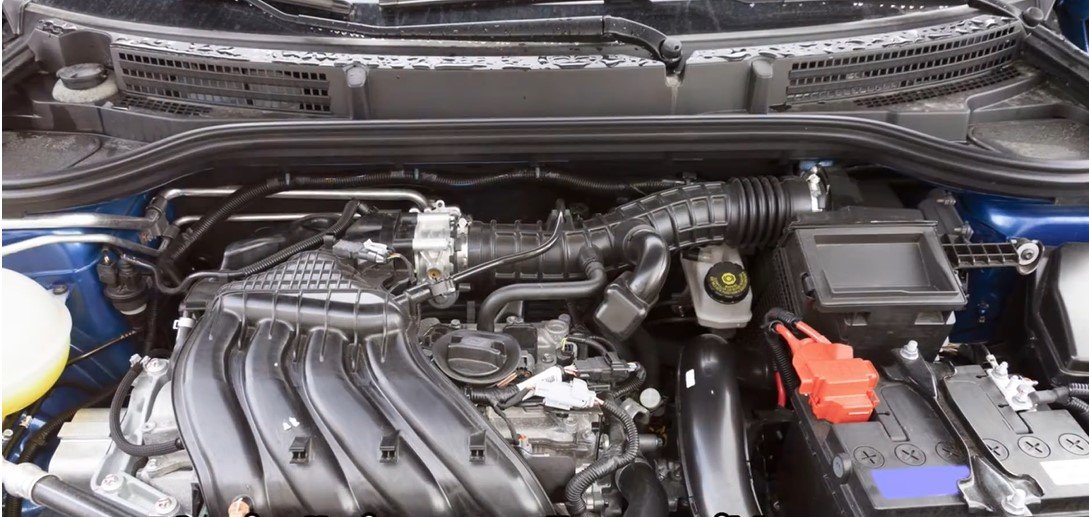
A rough idle is one of the most noticeable bad fuel injector symptoms. The engine may shake while sitting at a red light, feel uneven in park, or sound like it is slightly coughing through idle.
This happens when one cylinder is not getting the same air-fuel mixture as the others. A clogged injector may send too little fuel. A leaking injector may send too much. A dirty spray pattern may send fuel in droplets instead of a fine mist, so combustion becomes uneven.
What to check first:
- Scan for
P0301-P0308cylinder misfire codes. - Check misfire counters if your scanner supports live misfire data.
- Look at short-term and long-term fuel trims at idle.
- Inspect spark plugs before blaming the injector.
If the idle is rough but the car feels normal under acceleration, a partially clogged injector is possible. But a vacuum leak, dirty throttle body, weak coil, or worn plug can feel almost the same.
2. Engine Misfire Or Flashing Check Engine Light
A misfire means one or more cylinders are not burning the air-fuel mixture properly. A bad fuel injector can cause this by delivering too much fuel, too little fuel, no fuel, or poorly atomized fuel.
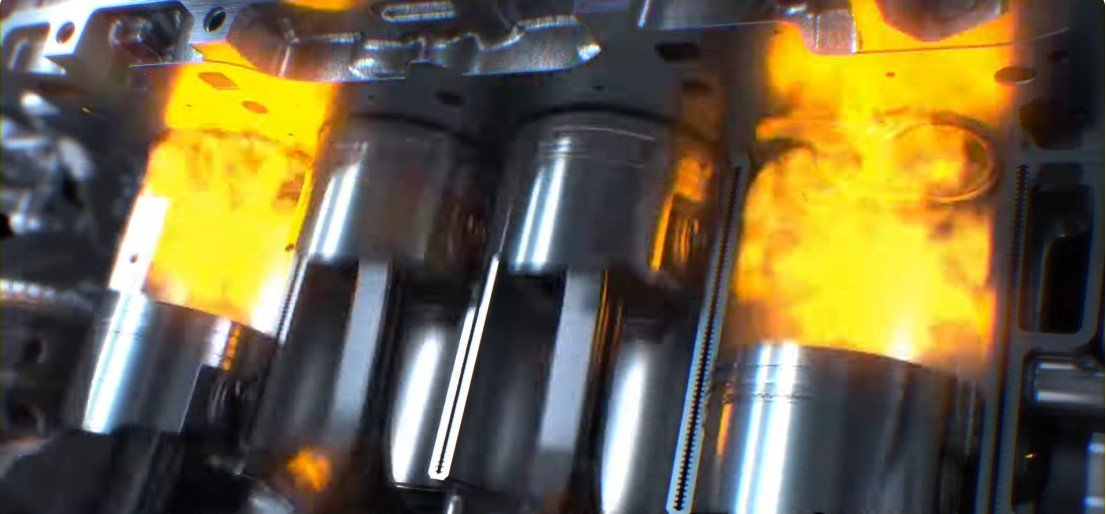
Common codes include:
P0300random/multiple cylinder misfireP0301cylinder 1 misfireP0302cylinder 2 misfireP0303-P0308cylinder-specific misfire codes
A flashing check engine light is more serious than a steady light. It often means an active misfire that can damage the catalytic converter if you keep driving.
Before replacing the injector, confirm these first:
- Is the spark plug worn, wet, white, black, or damaged?
- Does the ignition coil work if swapped to another cylinder?
- Is compression good on that cylinder?
- Is the injector connector tight and clean?
- Does the scanner show one cylinder misfiring more than the others?
If the misfire stays on the same cylinder after checking spark and compression, then the injector becomes a stronger suspect.
3. Hard Starting Or Long Crank
A leaking fuel injector can cause hard starting, especially after the car sits for a while. If fuel drips into one cylinder after shutdown, the engine may start rich, stumble, smell like fuel, or crank longer than usual.
A clogged injector can also cause hard starting because the engine does not get enough fuel when it needs it most.

Watch for these clues:
- Long crank after sitting overnight
- Strong fuel smell during startup
- Rough start that clears after a few seconds
- Black smoke on startup
- Fuel pressure drops quickly after shutdown
A fuel pressure leak-down test can help here. If pressure falls too fast, the problem could be a leaking injector, bad fuel pressure regulator, weak pump check valve, or fuel line issue.
4. Poor Acceleration Or Hesitation
If your car hesitates when you press the gas, a clogged fuel injector may be restricting fuel flow. The engine needs more fuel under load. If one injector cannot keep up, the car may feel weak, delayed, or jerky.

This can feel like:
- Delay after pressing the accelerator
- Stumble when merging
- Lack of power uphill
- Jerking under load
- Engine feels smoother at light throttle but weak when pushed
Do not confuse this with only an injector problem. A dirty mass airflow sensor, weak fuel pump, clogged fuel filter, bad oxygen sensor, restricted catalytic converter, or ignition issue can also cause poor acceleration.
Scanner checks that help:
- Fuel trims under load
- MAF reading
- MAP reading
- O2/A/F sensor behavior
- Fuel pressure data if supported
- Misfire counters during acceleration
If fuel trims go strongly positive under load, the engine may be running lean. That can point toward low fuel delivery, clogged injectors, weak pump, dirty MAF, or unmetered air.
5. Poor Fuel Economy
Bad Fuel Injector Symptoms often show up at the gas pump. If the injector leaks or sprays unevenly, the engine may burn more fuel than needed. If the injector is clogged, the ECU may compensate by adding fuel based on oxygen sensor feedback.

Poor fuel economy can happen from both rich and lean problems:
- Leaking injector: too much fuel enters the cylinder.
- Clogged injector: ECU may increase injector pulse width to correct a lean reading.
- Poor spray pattern: fuel does not burn efficiently.
- Misfire: unburned fuel wastes energy and can hurt the catalytic converter.
Look at fuel trims:
- Positive fuel trim means the ECU is adding fuel.
- Negative fuel trim means the ECU is removing fuel.
- Double-digit trims usually deserve attention.
A basic scanner that shows live data can be more useful than guessing. If the car smells rich and trims are heavily negative, think overfueling. If trims are heavily positive and misfire appears on one cylinder, think lean misfire, fuel delivery, air leak, or clogged injector.
6. Fuel Smell Around The Car
A fuel smell is not something to ignore. It may come from a leaking injector seal, cracked injector body, loose fuel rail connection, damaged fuel line, or a rich-running engine.

If you smell raw fuel:
- Do not keep driving casually.
- Check for visible wet spots around injectors and fuel rail.
- Avoid open flames or sparks near the engine bay.
- Fix the leak before focusing on performance symptoms.
A leaking injector can also send too much fuel into the cylinder without an obvious external leak. In that case, you may smell fuel from the exhaust, notice hard starts, see black smoke, or find a wet spark plug.
7. Check Engine Light With Injector Or Fuel Codes
A check engine light does not always say “bad injector” directly. Many injector problems appear as misfire, lean, rich, or fuel pressure codes.
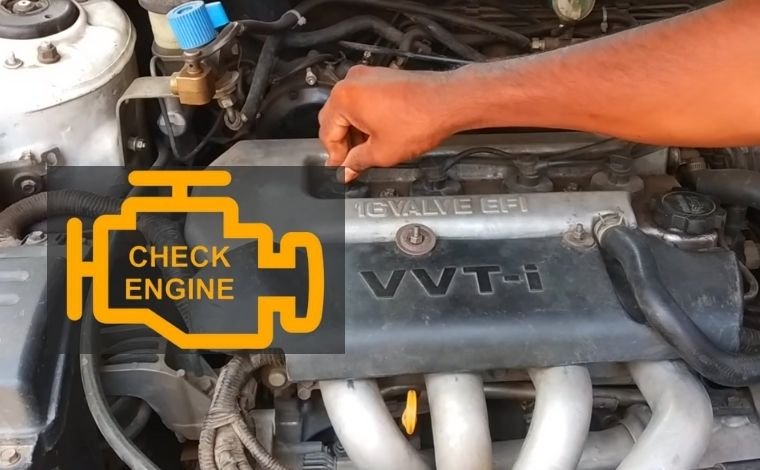
Important OBD2 codes include:
| Code | Meaning | Possible Link To Injector |
|---|---|---|
P0200 |
Injector circuit malfunction | Wiring, ECU driver, or injector electrical issue |
P0201-P0208 |
Injector circuit cylinder-specific | Injector circuit issue on one cylinder |
P0300 |
Random/multiple misfire | Fuel, spark, compression, vacuum, or sensor issue |
P0301-P0308 |
Cylinder-specific misfire | Possible injector if spark/compression pass |
P0171/P0174 |
System too lean | Clogged injector, vacuum leak, low fuel pressure, MAF issue |
P0172/P0175 |
System too rich | Leaking injector, fuel pressure issue, sensor problem |
P219A/P219B |
Air-fuel imbalance | One bank/cylinder fueling imbalance |
P0087/P0191 |
Fuel pressure issue | Pump, regulator, sensor, rail pressure, or injector issue |
Save freeze-frame data before clearing codes. Freeze-frame shows the conditions when the code was set: RPM, load, coolant temperature, speed, fuel trim, and sometimes fuel system status. That snapshot can tell you whether the problem happened at idle, during acceleration, cold start, or cruise.
8. Black Smoke Or Rich Exhaust Smell
Black smoke usually means too much fuel is entering the engine or not burning properly. A leaking injector or stuck-open injector can cause this, especially if one cylinder is being flooded.
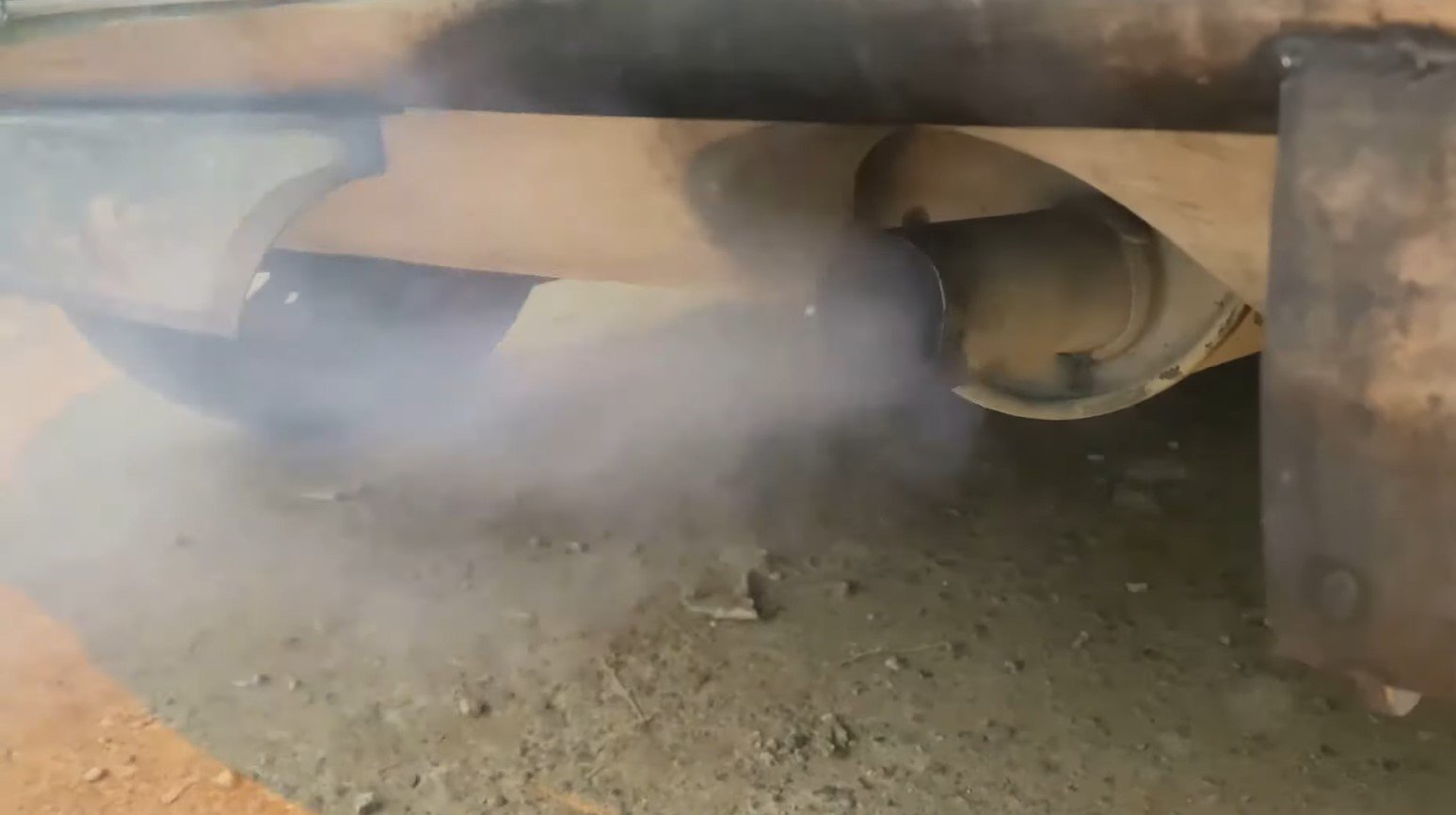
You may also notice:
- Strong exhaust smell
- Sooty tailpipe
- Rough idle
- Poor fuel economy
- Hard start after sitting
- Spark plug on one cylinder looks wet or black
A rich condition can damage the catalytic converter over time. If the engine is dumping fuel, do not keep driving it as if it is a small issue.
Check the scanner for:
- Negative fuel trims
P0172orP0175- Cylinder misfire codes
- O2/A/F sensor readings stuck rich
- Fuel pressure above spec
A leaking injector is only one possible cause. High fuel pressure, bad fuel pressure regulator, failed sensor, or ECU command issue can also make the engine run rich.
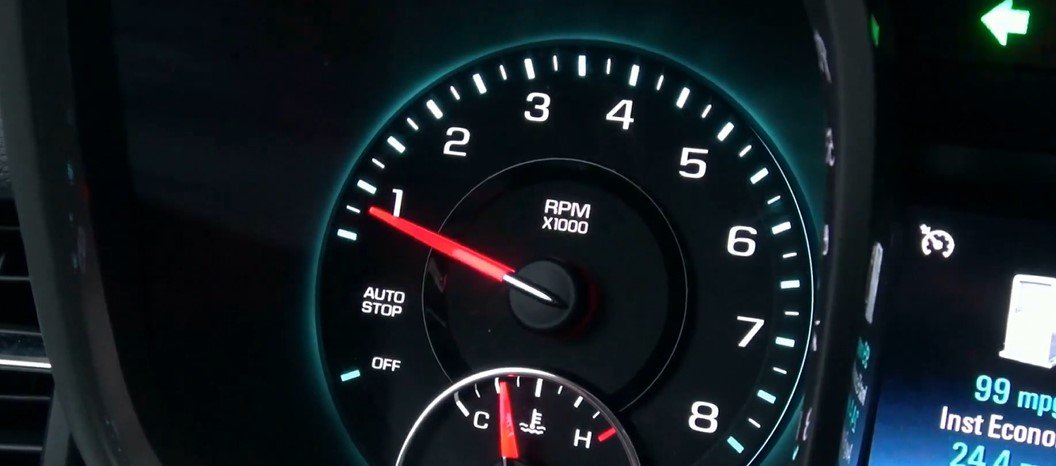
9. Hesitation, Surging, Or Uneven RPM
A fuel injector that delivers fuel inconsistently can cause surging RPM. The engine may feel like it is slightly speeding up and slowing down without your foot changing position.
This may happen at idle, during light throttle, or while cruising. Dirty spray pattern, partial clogging, and electrical intermittency can all create unstable fuel delivery.
But do not skip the basics:
- Check for vacuum leaks.
- Check throttle body condition.
- Check MAF/MAP data.
- Check ignition performance.
- Check fuel pressure.
- Look for pending codes, not just stored codes.
Pending codes matter because the ECU may detect the issue before turning on the check engine light.
10. Failed Emissions Test
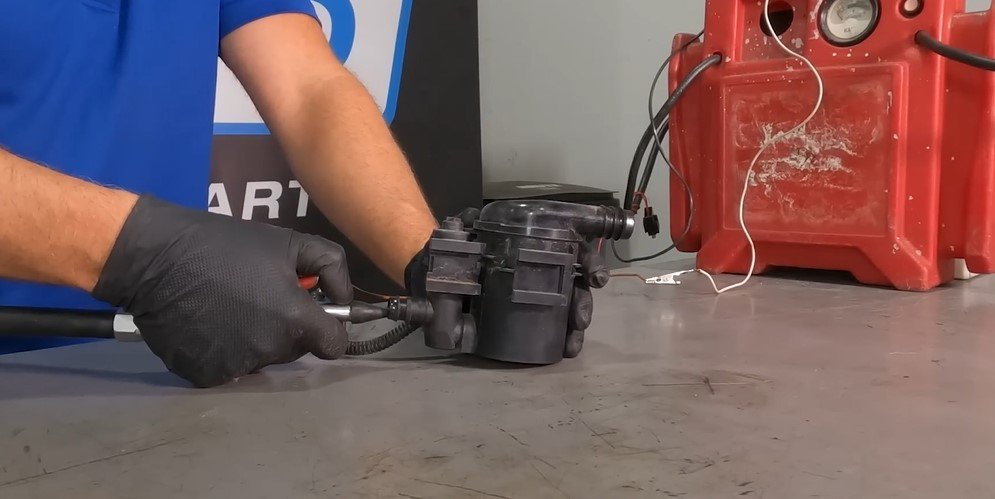
A bad injector can cause a failed emissions test because the engine is no longer burning fuel cleanly. Too much fuel can increase hydrocarbons and carbon monoxide. Too little fuel can cause misfires and excess oxygen in the exhaust.
Common related issues:
- Rich mixture
- Lean misfire
- Incomplete combustion
- High fuel consumption
- Catalytic converter stress
- Check engine light readiness failure
If your car failed emissions and has fuel trim or misfire codes, diagnose those first. Replacing the catalytic converter without fixing the injector, misfire, or fuel control problem can ruin the new converter too.
11. One Cylinder Runs Lean Or Rich
One of the strongest clues is when only one cylinder keeps showing trouble. For example, you may see P0303 repeatedly, and the misfire counter shows cylinder 3 climbing while the others stay low.
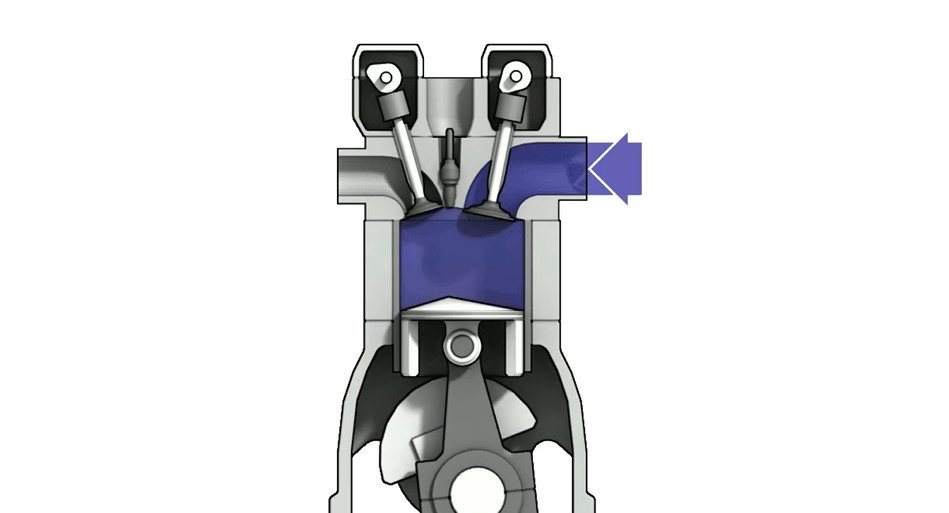
That does not automatically prove the injector is bad, but it narrows the path.
Use this order:
- Inspect the spark plug.
- Swap the ignition coil with another cylinder if possible.
- Check compression.
- Check injector connector and wiring.
- Listen for injector clicking.
- Run injector balance or leak-down testing if available.
- Swap injectors only if the design allows it and you can do it safely.
If the misfire follows the injector after swapping, that is strong evidence. If it follows the coil, it was ignition. If it stays on the same cylinder, think compression, wiring, ECU driver, or cylinder-specific mechanical issue.
How To Confirm Bad Fuel Injector Symptoms With An OBD2 Scanner
A scanner cannot always say “replace injector now,” but it can show the pattern. That pattern is what separates diagnosis from guessing.
Start with these scanner checks:
Stored, Pending, And Permanent Codes
Stored codes show confirmed problems. Pending codes show issues the ECU has detected but has not fully confirmed yet. Permanent codes may stay until the system passes its self-test after repair.
Do not clear codes too early. Read and record them first.
Freeze-Frame Data
Freeze-frame tells you when the fault happened. A misfire at cold idle points you in a different direction than a lean code at highway load.
Look at:
- RPM
- Engine load
- Coolant temperature
- Vehicle speed
- Short-term fuel trim
- Long-term fuel trim
- Fuel system status
Fuel Trims
Fuel trims are one of the best clues for injector diagnosis.
- Positive trims: ECU is adding fuel because the system looks lean.
- Negative trims: ECU is removing fuel because the system looks rich.
- One bank abnormal: bank-specific issue.
- Both banks abnormal: shared issue like MAF, fuel pressure, air leak, or sensor problem.
Misfire Counters
Some scanners show live misfire counters. This helps you see which cylinder is actually acting up and whether the misfire happens at idle, under load, or during warmup.
Fuel Pressure Data
Not every car exposes fuel pressure through a basic scanner. If yours does, compare the reading to the expected range for your vehicle. Low fuel pressure can mimic clogged injectors. High pressure can mimic leaking injectors or rich conditions.
Cleaning vs Replacement: Which One Makes Sense?
Fuel injector cleaning can help when the problem is deposit-related. It is not a magic repair for every injector fault.
| Situation | Cleaning Helps? | Replacement Needed? |
|---|---|---|
| Mild dirty injector | Often yes | Not first choice |
| Slight rough idle from deposits | Maybe | Not usually |
| Poor spray pattern | Maybe, if not damaged | Possible if cleaning fails |
| Injector circuit code | No | Maybe, after wiring test |
| Stuck-open injector | Rarely | Usually yes |
| Stuck-closed injector | Rarely | Usually yes |
| Cracked injector body | No | Yes |
| External fuel leak | No | Seal or injector repair needed |
| Severe internal clog | Sometimes professional cleaning | Possible |
| Repeated cylinder misfire after spark/compression pass | Test first | Possible |
If the injector is only dirty, cleaning may restore the spray pattern. If the injector is electrically dead, leaking fuel, physically cracked, or stuck, cleaner will not solve it.
What To Check Before Replacing A Fuel Injector
Before buying parts, check the things that commonly imitate bad injectors:
- Worn spark plugs
- Weak ignition coil
- Bad plug wire
- Low compression
- Vacuum leak
- Dirty MAF sensor
- Bad MAP sensor reading
- Low fuel pressure
- Restricted fuel filter
- Bad fuel pressure regulator
- Wiring or connector issue
- ECU injector driver problem
- Intake leak near one cylinder
This step matters because Bad Fuel Injector Symptoms overlap with many other engine problems. A misfire code tells you which cylinder is unhappy; it does not tell you why.
Can You Drive With A Bad Fuel Injector?
It depends on the symptom.
If the car only has a mild rough idle and no fuel smell, no flashing check engine light, and no severe misfire, you may be able to drive a short distance to diagnose or repair it.
Stop driving or avoid unnecessary driving if you notice:
- Flashing check engine light
- Strong fuel smell
- Visible fuel leak
- Black smoke
- Severe shaking
- Raw fuel smell from exhaust
- Hard start with flooding
- Loss of power under load
A leaking or misfiring injector can damage the catalytic converter, wash oil from the cylinder wall, dilute engine oil, or create a fire risk if fuel is leaking externally.
Common Mistakes People Make
The biggest mistake is replacing an injector only because a misfire code appears. A P0302 code means cylinder 2 is misfiring. It does not automatically mean cylinder 2 injector is bad.
Other common mistakes:
- Pouring fuel injector cleaner into every problem
- Clearing codes before checking freeze-frame
- Ignoring pending codes
- Not checking spark plugs
- Not swapping coils when possible
- Skipping compression test
- Ignoring fuel pressure
- Replacing all injectors without proof
- Assuming a lean code always means clogged injectors
- Assuming a rich code always means a leaking injector
A better rule: diagnose the system, not just the part name.
FAQ About Bad Fuel Injector Symptoms
What are the most common Bad Fuel Injector Symptoms?
The most common Bad Fuel Injector Symptoms are rough idle, misfire, poor acceleration, hard starting, poor fuel economy, fuel smell, check engine light, black smoke, unstable RPM, and failed emissions.
Can a bad fuel injector cause a misfire?
Yes. A bad fuel injector can cause a misfire if it delivers too much fuel, too little fuel, no fuel, or a poor spray pattern. But spark plugs, coils, compression problems, and vacuum leaks can also cause misfires.
What code shows a bad fuel injector?
Injector circuit codes such as P0200 and P0201-P0208 are more directly related to injectors. Misfire codes like P0300-P0308, lean codes like P0171/P0174, and rich codes like P0172/P0175 can also be related, but they need further diagnosis.
Will fuel injector cleaner fix a bad injector?
Fuel injector cleaner may help a dirty or mildly clogged injector. It will not fix a broken injector circuit, damaged wiring, cracked injector, leaking seal, stuck-open injector, or completely failed injector.
Final Thoughts
Bad Fuel Injector Symptoms can be easy to feel but tricky to prove. Rough idle, misfire, poor mileage, hard starting, fuel smell, black smoke, and check engine light all point toward a fuel delivery problem, but they do not confirm the injector by themselves.
Use your OBD2 scanner first. Read stored and pending codes, save freeze-frame data, check fuel trims, watch misfire counters, and compare the pattern with spark, compression, wiring, and fuel pressure checks. If the data points to a dirty injector, cleaning may help. If the injector is leaking, stuck, cracked, or electrically failed, replacement is usually the real fix.
The goal is simple: do not guess, do not replace random parts, and do not trust one symptom alone. Confirm the problem, then fix the right part.