
A weak fuel pump usually does not announce itself politely.
At first, the car may only take a little longer to start. Then it may hesitate when you press the gas. A few days later, it may sputter on the highway or feel weak going uphill. And if the pump gets bad enough, the engine may stall or crank without starting at all.
That is why bad fuel pump symptoms can be confusing. They do not always look like a fuel pump problem right away. They can feel like bad spark plugs, clogged fuel injectors, a dirty MAF sensor, a vacuum leak, a bad fuel pressure sensor, or even a transmission problem.
The fuel pump’s job is simple: it sends fuel from the tank to the engine at the right pressure and volume. When it gets weak, the engine may still run during light driving, but it may not get enough fuel during startup, acceleration, highway cruising, towing, or climbing hills.
Before replacing the pump, you want proof. A good diagnosis usually starts with an OBD2 scan, freeze-frame data, fuel trim readings, fuel pressure data if available, and a fuel pressure test when needed.
A fuel pump can be expensive and annoying to replace, especially if the tank has to come down. So the goal is not to guess faster. The goal is to prove the problem before buying parts.
Bad Fuel Pump Symptoms Usually Follow Fuel Demand
The most useful clue is not just what the car does. It is when the problem happens.
A weak fuel pump often shows up when the engine needs more fuel than usual. That might be during a cold start, hot restart, quick acceleration, uphill driving, highway speed, or when the fuel level is low.
The most common bad fuel pump symptoms include:
- Long crank or hard starting
- Engine sputtering while driving
- Power loss under load
- Stalling while driving
- Crank-no-start condition
- Loud whining from the fuel tank
- Check engine light with lean, misfire, or fuel pressure codes
The pattern matters. If the car idles fine but falls flat when you accelerate, that can point toward fuel delivery. If it starts better after cycling the key a few times, pressure bleed-down may be involved. If it stalls hot and restarts after cooling down, the pump or fuel pump circuit needs attention.
But symptoms alone do not confirm the pump. A clogged fuel filter, weak relay, poor ground, dirty MAF sensor, vacuum leak, leaking injector, or bad fuel pressure regulator can create similar problems.
1. Long Crank or Hard Start
One of the earliest bad fuel pump symptoms is a long crank before the engine starts.
Instead of starting quickly, the engine cranks for several seconds before it fires. It may be worse first thing in the morning, after the car sits for a few hours, or when the tank is low.
This can happen when the pump is slow to build pressure. It can also happen when fuel pressure bleeds down after shutdown. On some vehicles, the pump check valve, fuel pressure regulator, or a leaking injector can let pressure drop while the car sits.
A simple clue is the key-cycle test.

Turn the key to ON for a few seconds without starting the engine. Turn it off. Repeat this once or twice, then start the car. If it starts faster after key cycling, the fuel system may be taking too long to build pressure.
That does not prove the fuel pump is bad, but it gives you a reason to test fuel pressure.
Other causes of long crank include:
- Weak battery
- Bad starter
- Crankshaft position sensor issue
- Leaking fuel injector
- Low compression
- Immobilizer issue
- Dirty throttle body on some vehicles
So do not replace the fuel pump from this symptom alone. Use it as a clue.
2. Sputtering or Jerking While Driving
A failing pump can make the engine sputter, jerk, or stumble while driving.
Many drivers describe it as feeling like the car is running out of gas even though the tank has fuel. This may happen at highway speed, under steady throttle, or when the engine is working harder than usual.
The reason is simple. The pump may still run, but it may not keep fuel pressure stable. When fuel delivery drops for a moment, the air-fuel mixture goes lean, and the engine can stumble.

This is one of the bad fuel pump symptoms that gets confused with an ignition misfire.
Bad spark plugs, weak coils, dirty injectors, vacuum leaks, and MAF sensor problems can also cause sputtering. But if the sputtering gets worse at higher speed or under load, fuel delivery should be checked.
An OBD2 scanner helps here. Look for:
- Lean codes
- Misfire codes
- Fuel trim numbers
- Freeze-frame engine load
- RPM and speed when the code set
- Fuel rail pressure data if supported
If the problem happened at higher load or highway speed, and fuel trims were high positive, low fuel pressure becomes more suspicious.
3. Loss of Power Under Load
A weak fuel pump may keep up at idle but fail when the engine needs more fuel.
That is why power loss under load is one of the strongest bad fuel pump symptoms.

You may notice:
- Slow acceleration
- Hesitation when pressing the gas
- Weak power while merging
- Bogging going uphill
- Poor performance while towing
- Engine feels flat at higher RPM
- Car struggles more with passengers or cargo
At idle, the engine does not need much fuel. During acceleration, it needs more. If the pump cannot maintain pressure and volume, the engine may run lean and lose power.
This can feel like a transmission issue because the car does not respond normally when you press the accelerator.
But other problems can create the same feeling. A clogged catalytic converter can reduce power. A dirty MAF sensor can misreport airflow. A bad throttle body can delay response. Ignition misfires can get worse under load.
That is why fuel pressure and scanner data matter. If actual fuel pressure drops below commanded pressure on a vehicle that supports that data, or if fuel trim rises under load, the fuel system should be tested.
4. Stalling While Driving
Stalling is one of the more serious bad fuel pump symptoms.
A fuel pump that is failing internally may work when cool, then stop after heating up. After the car sits for a while, it may restart. Then the same thing can happen again later.

This can happen:
- In traffic
- At idle
- On hot days
- After driving for a while
- With a low fuel level
- During acceleration
- While climbing a hill
Do not ignore this symptom. A car that stalls in traffic or on the highway can become unsafe quickly.
If the engine stalls and restarts later, scan the vehicle before clearing anything. Look for pending codes, stored codes, fuel pressure codes, lean codes, misfire codes, or fuel pump circuit codes.
Also check the relay, fuse, pump power, and ground. Sometimes the pump gets blamed when the real issue is an intermittent relay or poor electrical connection.
If the engine stalls and will not restart, that is the best time to test. Check whether the pump is receiving power and whether fuel pressure is present.
5. Cranks But Won’t Start
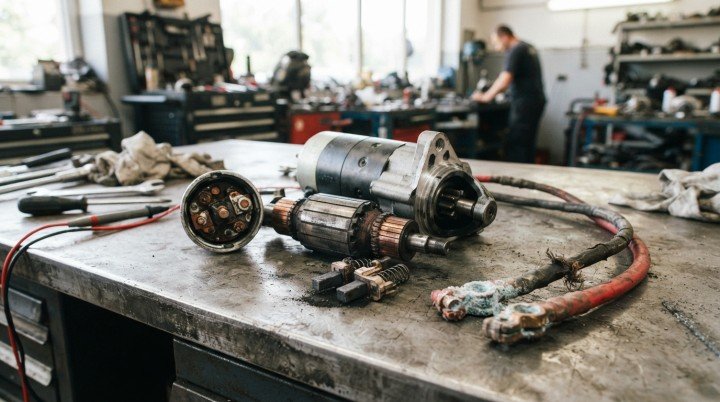
A completely failed fuel pump can cause a crank-no-start condition.
The starter turns the engine, but the engine does not fire because fuel is not reaching the injectors at the correct pressure.
But a no-start does not always mean the pump is bad.
A gasoline engine needs fuel, spark, compression, and correct timing. If any one of those is missing, the engine may crank without starting.
Before replacing the pump, check:
- Fuel pump fuse
- Fuel pump relay
- Pump prime sound
- Fuel pressure
- Spark
- Injector pulse
- Crankshaft position sensor signal
- Security or immobilizer warning
- Battery voltage while cranking
You may hear a short hum from the rear of the car when the key is turned to ON. That is often the pump priming. No sound can be a clue, but it is not final proof. Some pumps are quiet, and some vehicles control pump operation differently.
The stronger test is pressure plus power.
If there is no fuel pressure and the pump has proper voltage and ground, the pump is much more likely to be the problem.
6. Loud Whining From the Fuel Tank
A healthy electric fuel pump usually makes a soft hum.
A loud whining, buzzing, or high-pitched sound from the fuel tank area can be a warning sign. It may be more noticeable when the key is turned on, while idling, after a long drive, or when the tank is low.
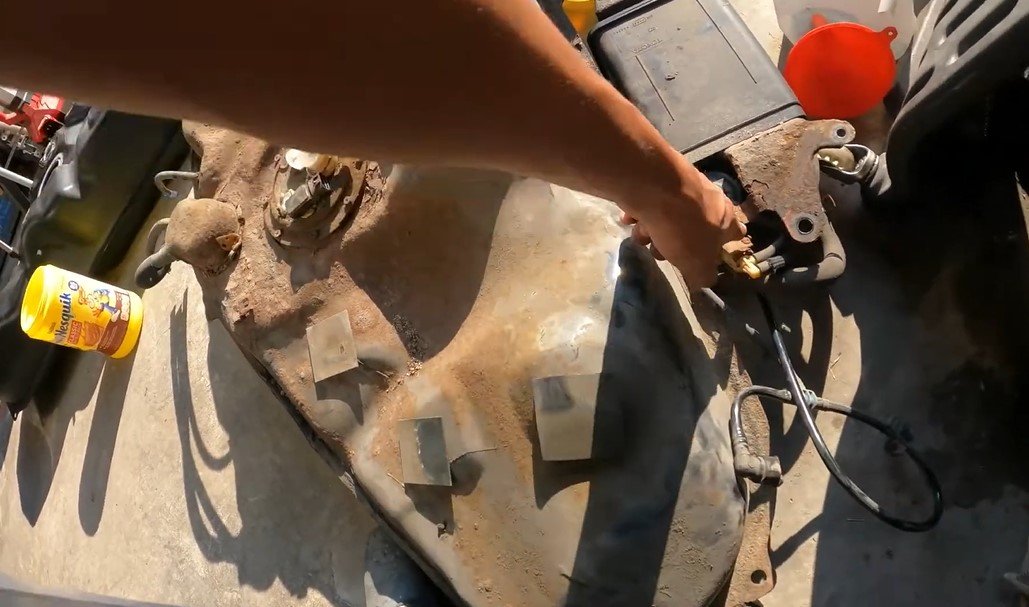
A pump may get loud because of:
- Internal wear
- Clogged pump strainer
- Contaminated fuel
- Low fuel level
- Overheating
- Restricted fuel flow
- Poor-quality replacement pump
This is one of those bad fuel pump symptoms that may show up before the car refuses to start.
Noise alone does not prove failure. Some vehicles naturally have louder pumps than others. But if the sound is new, louder than before, or appears with hard starting, stalling, or hesitation, the fuel system should be checked.
Repeatedly driving with very low fuel can make the pump run hotter because the fuel around the pump helps cool it. Low fuel can also make debris in the tank more likely to reach the strainer.
7. Check Engine Light With Lean or Fuel Pressure Codes
A bad fuel pump can turn on the check engine light, but the code may not say “bad fuel pump.”
The computer may detect the result of low fuel pressure, not the pump itself. That means you may see lean codes, misfire codes, or fuel pressure related codes.
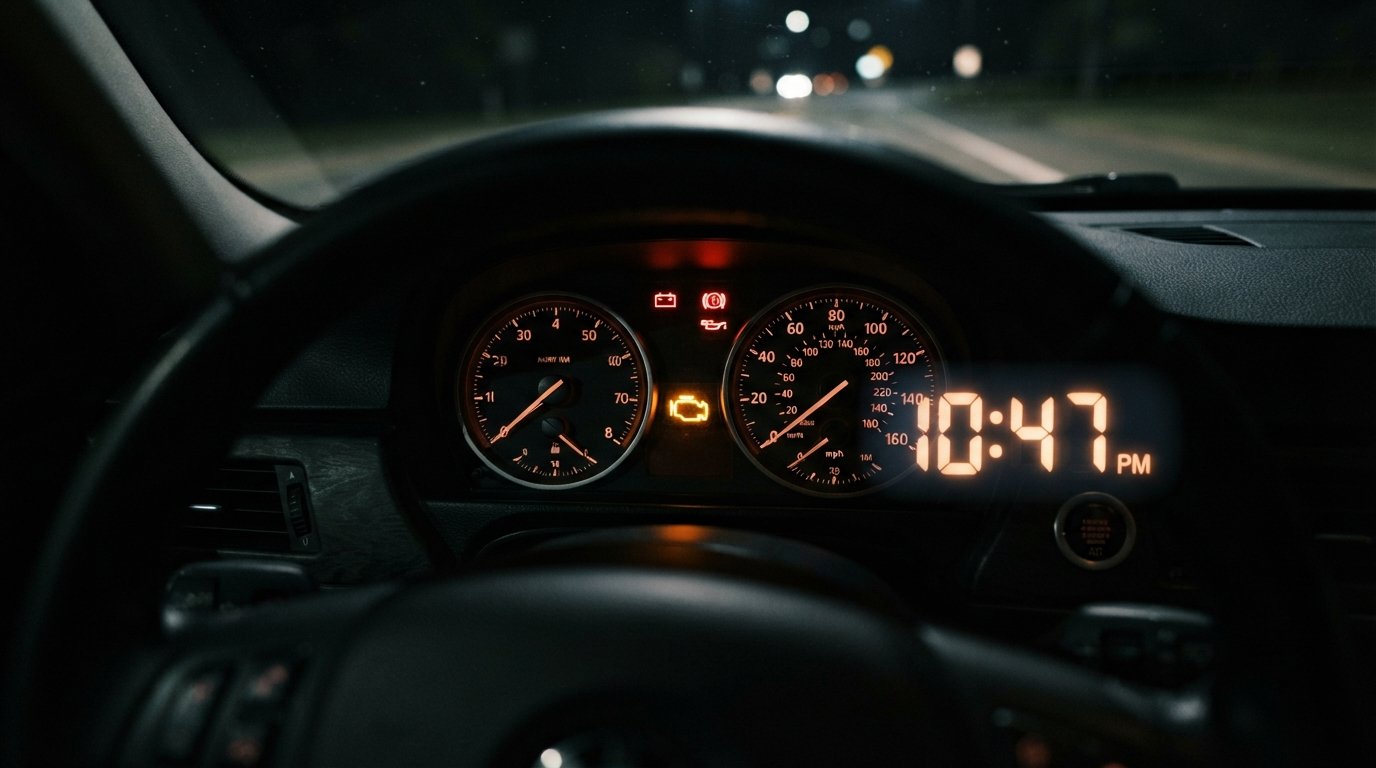
Possible related codes include:
| Code | Possible Direction |
|---|---|
P0087 |
Fuel rail/system pressure too low |
P0171 |
System too lean, bank 1 |
P0174 |
System too lean, bank 2 |
P0190 |
Fuel rail pressure sensor circuit |
P0191 |
Fuel rail pressure sensor range/performance |
P0230 |
Fuel pump primary circuit |
P0231 |
Fuel pump secondary circuit low |
P0232 |
Fuel pump secondary circuit high |
P0300 |
Random or multiple misfire |
These codes do not confirm the pump by themselves.
For example, P0171 and P0174 can come from a vacuum leak, dirty MAF sensor, exhaust leak, low fuel pressure, or injector issue. P0191 may involve a fuel rail pressure sensor, wiring, fuel pressure issue, or high-pressure pump issue on some direct-injection engines.
Use the code as a direction, not a final answer.
Bad Fuel Pump vs Similar Problems
Because bad fuel pump symptoms overlap with other faults, compare the pattern before replacing anything.
| Symptom | Fuel Pump Clue | Other Possible Cause |
|---|---|---|
| Long crank | Starts faster after key cycling | Weak battery, crank sensor, leaking injector |
| Sputtering | Worse at speed or load | Spark plugs, coils, injector issue |
| Lean codes | Both banks lean, trims high | Vacuum leak, dirty MAF, exhaust leak |
| No start | No fuel pressure at rail | No spark, immobilizer, blown fuse |
| Poor acceleration | Pressure drops under load | Clogged catalytic converter, MAF, transmission |
| Loud rear whine | Noise from tank area | Low fuel, debris, normal pump sound |
| Stalling | Restarts after cooling | Relay, crank sensor, wiring, ignition issue |
This is the part that saves money. The symptom tells you where to look. Testing tells you what failed.
What To Check With an OBD2 Scanner
An OBD2 scanner cannot always prove the fuel pump is bad, but it can point you in the right direction.
Start with codes. Check current, pending, and stored codes. Do not clear them immediately. Freeze-frame data may show what was happening when the code appeared.
Useful scanner data includes:
- Short-term fuel trim
- Long-term fuel trim
- Fuel rail pressure if supported
- Commanded vs actual fuel pressure if supported
- Misfire counts
- Engine load
- RPM
- Vehicle speed
- MAF sensor reading
- Throttle position
- Coolant temperature
- Battery voltage
Fuel trim is especially useful.
If the engine is running lean, the computer adds fuel. That shows up as positive fuel trim. If both banks show high positive trim, the engine may be getting too much air, not enough fuel, or incorrect airflow data.
Freeze-frame also matters. If a lean code set at idle, think about vacuum leaks first. If it set during acceleration or higher load, fuel delivery becomes more suspicious.
On some newer vehicles, the scanner may show actual fuel rail pressure. If actual pressure cannot follow commanded pressure, fuel pressure diagnosis should come next.
Low-Pressure Pump vs High-Pressure Pump
Some modern vehicles, especially direct-injection engines, may have more than one fuel pump.
There may be:
- A low-pressure pump inside the tank
- A high-pressure fuel pump on the engine
The in-tank pump sends fuel forward. The high-pressure pump raises pressure for direct injection.
This matters because a “fuel pressure” code may not always mean the in-tank pump is bad. A direct-injection vehicle may have a high-pressure pump issue, pressure sensor issue, control issue, or low-pressure supply issue.
That is why you should look at the vehicle’s fuel system design before buying parts. A scanner that can show commanded and actual fuel pressure can be very helpful on these systems.
Fuel Pressure Test: The Best Confirmation Step
A fuel pressure test is one of the best ways to confirm or rule out a weak fuel pump.
The correct pressure depends on the vehicle. Do not guess the number. Look up the exact specification for your year, make, model, and engine.
A proper fuel pressure check may include:
- Key ON pressure
- Idle pressure
- Pressure during acceleration
- Pressure under load
- Pressure bleed-down after shutoff
- Fuel volume test on some vehicles
Low fuel pressure can mean a weak pump, but it can also mean a clogged filter, restricted line, bad regulator, leaking injector, clogged strainer, poor voltage, bad ground, or contaminated tank.
That is why fuel pressure and electrical testing should work together.
If pressure is low, ask the next question:
Is the pump getting proper power and ground?
A good pump with low voltage can act like a weak pump. Corroded connectors, damaged wiring, worn relays, and poor grounds can reduce pump output.
Replacing the pump without checking power can lead to the same symptom after repair.
What To Check Before Replacing the Fuel Pump
Before dropping the tank or ordering a pump assembly, do the cheaper checks first.
Use this order:
- Scan the codes and save freeze-frame data.
- Listen for the fuel pump prime.
- Check the fuel pump fuse.
- Check or swap the relay if appropriate.
- Inspect visible wiring and connectors.
- Check battery voltage.
- Look at fuel trims and related live data.
- Test fuel pressure.
- Verify voltage and ground at the pump.
- Check the fuel filter if the vehicle has a serviceable one.
- Consider fuel quality or tank contamination.
- Replace the pump only after the failure is confirmed.
Many modern pumps are inside the fuel tank. Some vehicles have an access panel under the rear seat or cargo area. Others require lowering the fuel tank. That can turn a simple guess into an expensive repair.
Can You Drive With Bad Fuel Pump Symptoms?
It depends on the symptom.
If the only issue is a slightly longer crank, you may be able to drive short-term while planning diagnosis. But if the car sputters badly, loses power, stalls, or becomes hard to start, the risk goes up quickly.
A weak fuel pump can leave you without power during moments when you need it most:
- Merging onto a highway
- Passing another vehicle
- Crossing an intersection
- Driving uphill
- Sitting in heavy traffic
- Driving in hot weather
If the car has stalled while driving, avoid unnecessary driving until it is checked. A pump that restarts after cooling down may still fail again.
Fuel pump problems rarely fix themselves. Once the pump starts failing under load or heat, it usually gets worse.
What Causes a Fuel Pump To Fail Early?
Fuel pumps wear out with age and mileage, but some conditions can shorten their life.
Common causes include:
- Frequently driving with low fuel
- Contaminated gasoline
- Rust or debris inside the tank
- Clogged fuel filter or strainer
- Weak wiring connection
- Bad relay or voltage drop
- Poor ground
- Overheating
- High mileage
- Poor-quality replacement pump
- Water in the fuel
Keeping the tank above a quarter full can help reduce heat stress. Replacing a serviceable fuel filter on schedule can also reduce strain.
If the old pump failed because of debris or contaminated fuel, inspect the tank and strainer before installing a new pump. Otherwise, the replacement pump may not last.
Common Mistakes To Avoid
The biggest mistake is replacing the pump because the symptoms sound familiar.
Avoid these:
- Replacing the fuel pump without a pressure test
- Ignoring pump voltage and ground
- Clearing codes before saving freeze-frame data
- Assuming lean codes always mean a bad pump
- Ignoring vacuum leaks and MAF data
- Replacing spark plugs for sputtering without checking fuel delivery
- Forgetting the fuel pump relay
- Ignoring a serviceable fuel filter
- Installing a pump without checking tank contamination
- Assuming no check engine light means the fuel pump is fine
A weak pump can fail without setting a code. A code can also appear even when the pump is not the root cause. Both are possible.
That is why bad fuel pump symptoms should lead to testing, not guessing.
FAQ About Bad Fuel Pump Symptoms
Can a bad fuel pump cause a check engine light?
Yes. A bad fuel pump can trigger a check engine light if it causes low fuel pressure, lean operation, misfires, or pump circuit problems. But the code may show the result, such as a lean code, not the pump itself.
Can a fuel pump be bad without throwing a code?
Yes. A weak pump can cause long crank, hesitation, or stalling before the computer stores a code. Some older vehicles also provide very little scan data for fuel pressure.
Can a bad fuel pump cause rough idle?
Yes, but it is not the only cause. Rough idle can also come from vacuum leaks, dirty throttle body, bad spark plugs, ignition coils, injectors, or sensor issues. Check fuel trim and pressure before blaming the pump.
How do I know if it is the fuel pump or fuel filter?
A pressure and volume test can help. A clogged filter can restrict flow and make a good pump look weak. If your vehicle has a serviceable fuel filter and it is old, check it during diagnosis.
What does a bad fuel pump sound like?
A failing pump may make a loud whining or buzzing sound from the fuel tank area. A healthy pump usually makes a quieter hum. Noise plus hard starting, stalling, or power loss is a stronger clue than noise alone.
Final Takeaway
Bad Fuel Pump Symptoms usually appear when the engine needs stable fuel pressure and volume.
A weak pump may first cause long crank, sputtering, hesitation, or a whining sound from the tank. As it gets worse, the car may lose power, stall while driving, or crank without starting.
But do not replace the pump just because the symptoms match.
Scan the codes. Save the freeze-frame data. Check fuel trims, misfire counts, and fuel pressure data if your scanner supports it. Then confirm the fuel system with a pressure test and verify pump power and ground.
The best fuel pump diagnosis is simple: prove whether the engine is actually losing fuel pressure, fuel volume, or pump power when the problem happens.
That is how you avoid replacing an expensive fuel pump when the real problem was a relay, wiring issue, fuel filter, sensor, vacuum leak, or another fuel delivery fault.