
You’re driving uphill when you hear a faint metallic ping from the engine. It disappears when you ease off the accelerator. Later, you notice a deeper knocking sound while the car is idling. Are those two noises related?
Not necessarily. Engine knocking can describe very different problems, from abnormal fuel combustion to serious internal bearing damage.
Some noises appear only during acceleration. Others follow engine speed or become louder as the engine warms up.
Understanding engine knocking causes can help you decide what to check first, which repairs might be necessary, and when continuing to drive could destroy the engine.
Quick AnswerCommon engine knocking causes include insufficient fuel octane, ignition timing problems, carbon deposits, overheating, low oil pressure, worn connecting-rod bearings, and fuel-control or knock-sensor faults. Light metallic pinging under acceleration often suggests combustion knock. A deep, rhythmic knock from the lower engine may indicate mechanical damage and requires immediate attention.
What Is Engine Knocking? Spark Knock vs. Mechanical Knock
Before diagnosing anything, pay attention to the type of noise.
Spark knock, also called detonation, usually sounds like metallic pinging or rattling during acceleration. It occurs when part of the air-fuel mixture burns abnormally after normal spark-initiated combustion has begun.
Mechanical knocking comes from moving engine components, often involving excessive clearances or inadequate lubrication. Worn bearings can produce a deeper, repetitive sound.
Fast ticking from fuel injectors or valvetrain components may sound alarming but isn’t necessarily the same thing.
Detonation also differs from pre-ignition. Pre-ignition occurs when the mixture ignites before the spark event. Both can be damaging, but they have different causes and combustion mechanisms.
7 Engine Knocking Causes You Shouldn’t Ignore
1. Low-Octane or Poor-Quality Fuel
If your vehicle requires a particular gasoline octane rating, using fuel below that requirement can increase the chance of combustion knock.
The engine may produce a metallic ping when accelerating, climbing hills, or carrying a heavy load.
This happens because fuel with insufficient knock resistance can allow abnormal combustion under demanding conditions.
You might notice the problem shortly after filling up at a gas station.
However, premium gasoline isn’t automatically better for every vehicle. Engines designed for regular gasoline generally don’t need higher octane just to run properly.

First check: Confirm the required octane in your owner’s manual. If the noise began after refueling, record the fuel grade and station before assuming the engine has mechanical damage.
2. Incorrect Ignition Timing or Spark Plug Problems
Ignition timing determines when the spark plug ignites the air-fuel mixture.
If ignition timing is excessively advanced for the operating conditions, cylinder pressure can increase in a way that promotes detonation.
Modern engines usually control timing electronically, so faults involving engine sensors or ignition control may contribute.
Incorrect spark plug specifications, including an unsuitable heat range, can also affect combustion-chamber conditions.
However, worn spark plugs more commonly cause misfires, hesitation, or rough running than classic spark knock.
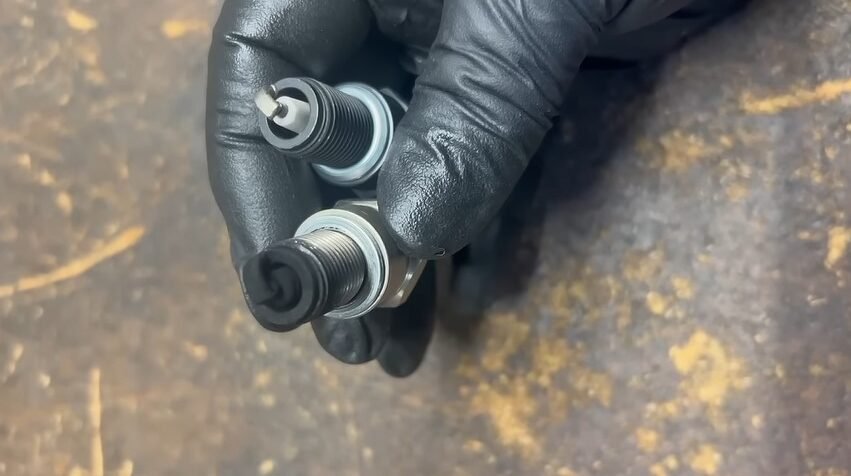
First check: Verify that the engine has the correct spark plugs and review available diagnostic codes. Don’t attempt manual timing adjustments on a modern engine without manufacturer procedures.
3. Excessive Carbon Deposits
Carbon deposits can gradually accumulate in the combustion chamber, especially as an engine ages.
Heavy deposits may alter chamber conditions, increase the tendency toward detonation, or contribute to localized hot spots.
Knocking may become more noticeable under acceleration or heavy engine load.
Still, not every engine with carbon buildup develops knocking. Intake-valve deposits in direct-injection engines can also create other drivability problems without necessarily causing combustion knock.
Fuel additives and cleaning products aren’t guaranteed to solve deposit-related knocking.

First check: Review fuel and maintenance history. Have excessive deposits confirmed through appropriate inspection before paying for specialized cleaning or replacing parts.
4. Engine Overheating or Excessively Hot Intake Air
Higher combustion temperatures increase an engine’s tendency to knock.
This can happen during prolonged heavy-load driving, especially when the cooling system isn’t operating correctly.
Low coolant, cooling fan problems, a sticking thermostat, or poor coolant circulation may contribute to excessive engine temperature.
Hot intake air can also make knock control more challenging, particularly in turbocharged engines.
Some vehicles respond by reducing ignition advance or engine output to protect internal components.
First check: Watch for engine temperature warnings and check coolant level only after the engine cools completely. Stop driving if the engine is overheating.
If overheating accompanies knocking, consult our common car problems and troubleshooting guide for additional engine-related warning signs.
5. Low Engine Oil Level or Low Oil Pressure
Engine oil creates a protective film between moving metal components.
When lubrication becomes insufficient, friction and wear can increase. Hydraulic lifters, timing components, and internal bearings may begin making abnormal noises.
It’s important to distinguish low oil level from low oil pressure.
An engine can have adequate oil quantity but insufficient pressure because of worn bearings, a failing oil pump, internal restrictions, or other faults.
Adding oil won’t automatically correct a pressure problem.

Urgent warning: If the oil-pressure warning light appears while the engine is running, pull over safely and shut it off immediately. Knocking together with low oil pressure can indicate serious engine damage. Do not continue driving to see whether the noise improves.
First check: After stopping safely, check the oil level according to the owner’s manual. Professional oil-pressure testing may be required before the engine is operated again.
6. Worn Connecting-Rod Bearings or Internal Engine Damage
A deep, rhythmic knocking noise coming from the lower engine can indicate connecting-rod bearing wear, commonly called rod knock.
Connecting-rod bearings support the crankshaft connection as the pistons move.
When bearing clearance becomes excessive, repeated mechanical impacts may create a metallic knocking sound that follows engine speed.
The noise can become more noticeable under load or as oil warms and becomes less viscous.
Continued operation may damage the crankshaft and eventually lead to catastrophic engine failure.
However, a cracked flexplate, loose pulley, or other external component can sometimes imitate internal knocking. Expensive engine repairs should follow proper diagnosis.

First check: Have a technician investigate oil pressure, noise location, oil condition, and possible internal wear. If severe rod knock is suspected, avoid restarting the engine and arrange towing.
7. Knock Sensor, Lean Mixture, or Fuel-Control Problems
Modern engines use knock sensors to detect vibration patterns associated with abnormal combustion.
When knock is detected, the engine computer may reduce ignition advance to protect the engine.
A faulty sensor, wiring problem, or engine-control issue may prevent the system from responding correctly.
Fuel delivery problems or certain lean operating conditions can also increase knocking risk under particular loads.
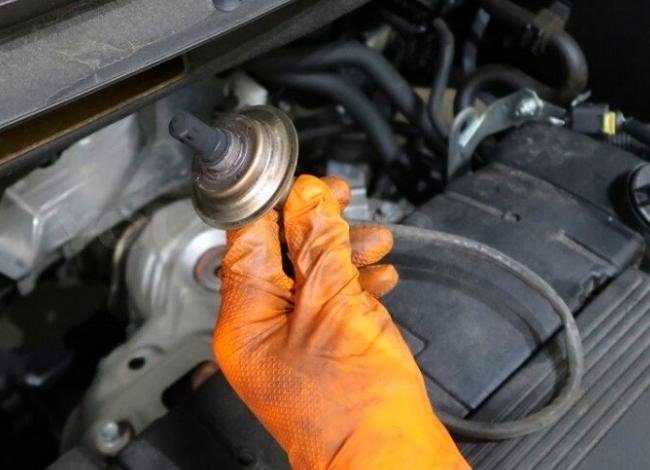
Relevant trouble codes may include:
- P0325: Knock sensor circuit malfunction.
- P0326: Knock sensor range/performance fault.
- P0328: Knock sensor circuit high input.
- P0171/P0174: Fuel system too lean on the corresponding bank.
These codes don’t prove that the knock sensor caused the noise. A lean code also doesn’t automatically identify a defective fuel pump or oxygen sensor.
First check: Save stored codes, freeze-frame data, and available fuel-trim readings. Check sensor wiring and fuel-control operation before replacing components.
For code interpretation, read our OBD2 trouble codes and diagnostic procedure guide.
Engine Knocking vs. Ticking vs. Rattling
The location and timing of a sound can be more useful than how loudly it occurs.
| Sound | Typical Pattern | Possible Source |
|---|---|---|
| Metallic pinging | Acceleration or climbing hills | Combustion knock |
| Deep rhythmic knock | Follows RPM; may worsen under load | Rod or main bearing wear |
| Sharp ticking | Near top of engine | Injectors, lifters, valvetrain |
| Hollow knock | More noticeable during cold operation | Possible piston slap |
| Brief startup rattle | Disappears shortly after starting | Timing-chain tensioner or related components |
| Metallic buzz or rattle | At certain RPM or conditions | Heat shield, exhaust, accessory component |
These patterns are diagnostic clues, not definitive diagnoses. Even a loud noise can come from an external component, while serious internal wear may initially sound subtle.
Why Does My Engine Knock When Accelerating?
Acceleration increases engine load and cylinder pressure, making combustion-related knocking more noticeable.
If you hear light metallic pinging while climbing a hill, towing, or accelerating from low RPM, possible causes include insufficient fuel octane, high intake temperatures, abnormal timing control, or fuel-delivery problems.
Turbocharged engines can be particularly sensitive to conditions that promote abnormal combustion under boost.
However, deep mechanical knocking may also become louder during acceleration.
Until the cause is identified, avoid heavy throttle and high engine load. A persistent or worsening knock deserves prompt inspection.
Why Does My Engine Knock at Idle or on a Cold Start?
Knocking at idle often suggests a different problem from light pinging under acceleration.
A deep noise from the lower engine may involve bearing wear or inadequate lubrication.
A hollow knocking sound that becomes quieter as the engine warms may be associated with piston slap on some engines.
Hydraulic lifters, fuel injectors, and valvetrain components may create sharper ticking sounds.
A brief startup rattle can also occur with certain timing-chain tensioner problems.
A noise that disappears when warm isn’t automatically harmless. Its source should be identified, especially if it is new or becoming louder.
How to Diagnose Engine Knocking Without Replacing Parts
Diagnosis should begin with the sound and its operating conditions, not a shopping list of replacement parts.
- Identify the sound. Is it a high-pitched ping, deep knock, sharp tick, or loose metallic rattle?
- Note when it happens. Cold start, warm idle, acceleration, or steady cruising can point toward different faults.
- Check urgent warnings. Low oil pressure, overheating, or severe power loss requires immediate attention.
- Stop the engine when necessary. Don’t continue testing a loud mechanical knock or an engine displaying critical warnings.
- Check basic service information. If safe, verify the oil level, specified fuel octane, and recent maintenance history.
- Save diagnostic codes. Record stored and pending codes before clearing the computer.
- Arrange targeted testing. A technician can inspect external noise sources, actual oil pressure, combustion control, and internal engine condition.
| Noise Pattern | First Investigation | Urgency |
|---|---|---|
| Light ping under acceleration | Fuel octane, temperature, ignition control | Diagnose promptly |
| Deep knock at idle | Oil pressure, bearings, external noise sources | High; stop if severe |
| Knock with oil-pressure warning | Lubrication system | Stop immediately |
| Rattle near exhaust | Heat shields and exhaust hardware | Inspect soon |
A short recording of the noise can help a technician, provided you can capture it without deliberately stressing the engine.
Can an OBD2 Scanner Diagnose Engine Knocking?
An OBD2 scanner is useful for investigating combustion-related faults, but it cannot directly identify every mechanical noise.
What a Basic Scanner Can Show
Depending on the vehicle, a scanner may retrieve knock-sensor codes, lean-mixture codes, misfire information, engine coolant temperature, and short- or long-term fuel trims.
Freeze-frame data can help explain the conditions under which a fault occurred.
Understanding how to interpret this information is more useful than simply clearing the warning. Our OBD2 basics guide explains the role of onboard diagnostics.
What an Advanced Scanner May Show
Some advanced tools can display ignition timing, knock-retard values, enhanced fuel-system data, and manufacturer-specific diagnostic information.
Available parameters depend on the vehicle and scanner.
For example, our Innova 5610 review discusses enhanced diagnostic features, while the Innova 5510 vs. 5610 comparison covers differences in diagnostic capabilities.
What a Scanner Cannot Confirm
A scanner cannot directly measure rod-bearing clearance, piston-to-cylinder clearance, crankshaft wear, or the physical source of a metallic knock.
Mechanical inspection and oil-pressure testing may still be necessary.
Remember: A mechanically damaged engine may knock without setting any trouble code. Our check engine light on but no codes guide explains why the information shown by basic readers can be incomplete.
Engine Knocking After Refueling or an Oil Change
If the knock began shortly after refueling, verify the gasoline grade and consider whether fuel quality could be involved.
A change in fuel doesn’t automatically prove a combustion problem, but the timing is worth mentioning during diagnosis.
If knocking began after an oil change, check for an incorrect oil level, unsuitable viscosity, filter problems, or insufficient oil pressure.
Never assume the service caused the noise without evidence.
If the oil-pressure warning appears, shut off the engine rather than driving back to the shop.
Can Engine Knocking Be a Loose Heat Shield or External Noise?
Yes. Not every knock originates inside the engine.
A loose exhaust heat shield may rattle at certain RPM. A cracked flexplate can create rhythmic metallic noises that resemble internal damage.
Worn accessory pulley bearings, loose brackets, engine mounts, and exhaust leaks can also produce misleading sounds.
That’s why a mechanic should identify the noise source before recommending expensive bearing repairs or engine replacement.
External noises still deserve attention, but their repair costs and risks can be very different.
Is Engine Knocking Dangerous?
Some engine knocking causes can lead to serious damage, especially when the noise involves mechanical bearing failure or uncontrolled abnormal combustion.
| Situation | Recommended Action |
|---|---|
| Light, new pinging under load | Avoid heavy acceleration and arrange diagnosis |
| Persistent or worsening pinging | Stop stressing the engine and seek inspection |
| Deep rhythmic mechanical knock | Shut down safely; consider towing |
| Knock with low oil-pressure warning | Stop and switch off engine immediately |
| Knock with overheating | Stop safely and shut off engine |
| Heavy knock with severe power loss | Do not continue driving |
Ignoring serious detonation can damage pistons and combustion components. Continuing to run an engine with bearing damage can destroy the crankshaft or cause complete engine failure.
How Much Does It Cost to Fix Engine Knocking?
There is no single engine knocking repair cost because the causes range from unsuitable fuel to major internal damage.
For a verified 2026 benchmark, RepairPal estimates knock sensor replacement at approximately $417–$589 nationally, including parts and labor.
| Possible Repair | Cost Consideration |
|---|---|
| Correct fuel grade | Usually minor compared with mechanical repairs |
| Spark plugs or ignition components | Varies by engine layout and required parts |
| Knock sensor replacement | National estimate: $417–$589 |
| Cooling-system repair | Depends on the failed component |
| Lean-mixture or fuel-delivery repair | Depends on the underlying cause |
| Rod-bearing or internal engine repair | Potentially several thousand dollars |
| Engine replacement | Major expense; highly vehicle-dependent |
The correct repair must be confirmed before estimating the final cost. Replacing a knock sensor won’t repair damaged bearings, and replacing an engine won’t solve a loose heat shield.
Can You Drive With an Engine Knocking Noise?
There is no universal safe driving distance with a knocking engine.
A brief, light ping under load may not have the same urgency as a deep mechanical knock, but it still needs investigation.
If the sound is loud, persistent, or accompanied by oil-pressure warnings, overheating, or significant power loss, stop driving.
Don’t repeatedly accelerate to reproduce the sound.
When bearing damage is suspected, towing is safer than attempting to drive to a repair shop.
How to Prevent Engine Knocking
- Use gasoline that meets the manufacturer’s octane requirements.
- Maintain the correct engine oil level and specification.
- Follow recommended oil and filter service intervals.
- Keep the cooling system in good condition.
- Repair lean-mixture and ignition faults promptly.
- Install manufacturer-specified spark plugs.
- Investigate unusual engine noises early.
Good maintenance cannot prevent every bearing or mechanical failure, but it can reduce avoidable lubrication and combustion problems.
Frequently Asked Questions
1. What is the most common cause of engine knocking?
It depends on the type of noise. Light pinging during acceleration may involve fuel octane or combustion conditions. Deep rhythmic knocking may involve internal bearings. No single cause explains every knocking sound.
2. Why does my engine knock when accelerating?
Acceleration increases engine load and cylinder pressure. Insufficient fuel octane, high temperatures, timing-control issues, or certain fuel-delivery faults can contribute to pinging. Mechanical bearing noises may also become louder under load.
3. Can low engine oil cause knocking?
Yes. Insufficient lubrication can increase wear and cause abnormal mechanical noise. However, adequate oil quantity doesn’t guarantee proper oil pressure. A knock accompanied by an oil-pressure warning requires immediate shutdown.
4. Can bad spark plugs cause engine knocking?
Incorrect spark plugs, particularly the wrong heat range, may contribute to abnormal combustion. Worn plugs more commonly cause misfires and rough running. The correct specification and ignition condition should be verified.
5. Can a faulty knock sensor cause engine knocking?
It can contribute indirectly if the engine computer cannot respond correctly to abnormal combustion. However, a knock-sensor trouble code may indicate wiring or circuit problems and doesn’t prove the sensor caused an audible knock.
6. Can an engine knock without a check engine light?
Yes. Mechanical bearing damage, piston slap, exhaust rattles, and some combustion problems may occur without a stored trouble code. A normal scanner report doesn’t guarantee the engine is mechanically healthy.
Final Thoughts
Understanding engine knocking causes starts with recognizing the difference between light combustion pinging and deep mechanical knocking.
Never ignore a knock accompanied by low oil pressure, overheating, or major power loss.
Before replacing sensors, spark plugs, or internal engine components, identify the actual noise source. Accurate diagnosis can prevent unnecessary repairs and, more importantly, protect your engine from further damage.