
Last Updated on September 30, 2026
When your car is using too much fuel, the worst thing you can do is start replacing random parts.
A lot of people blame the oxygen sensor first. Then the spark plugs. Then the fuel injectors. After spending money, the MPG is still bad because the real problem was something simpler: low tire pressure, a dragging brake, short trips, or an engine that never warms up properly.
Fuel economy problems can be tricky because the car may still feel normal. It may start fine, idle normally, and drive without any obvious warning. Sometimes there is no check engine light at all.
That is why the best approach is to separate three things:
- Is the car working harder than usual?
- Is the engine burning fuel poorly?
- Is the computer getting wrong data from a sensor?
An OBD2 scanner can help with the last two. But before you scan anything, there are a few basic checks worth doing first.
Quick Answer: Why Your Car Is Using Too Much Fuel
Your car is using too much fuel because something is increasing load, wasting combustion, or making the engine run richer than it should. Common causes include low tire pressure, dragging brakes, aggressive driving, short trips, a dirty MAF sensor, bad oxygen sensor, misfire, stuck-open thermostat, leaking injector, or rich fuel mixture.
If the check engine light is on, scan the car first. If there is no light, check tire pressure, brake drag, fuel smell, coolant temperature, fuel trims, MAF data, and misfire counters.
Do This Before You Blame The Engine
Do not trust one bad MPG reading from the dashboard.
Fill the tank completely. Reset the trip meter. Drive normally. Then refill and calculate MPG manually:
Miles driven ÷ gallons used = real MPG
If the number is still much lower than usual, the fuel problem is real.
Also ask what changed recently:
| Recent Change | Why It Can Affect MPG |
|---|---|
| More city driving | More stopping, idling, and acceleration |
| Cold weather | Longer warm-up time |
| New tires | Different rolling resistance or wrong pressure |
| Roof rack or cargo box | More aerodynamic drag |
| Recent repair | Loose intake hose, unplugged sensor, wrong part |
| New fuel station | Fuel quality or ethanol blend difference |
| Heavier load | Engine works harder |
A car is using too much fuel only when the fuel use is worse under the same kind of driving. Comparing highway driving last month with city traffic this week can make the problem look bigger than it really is.
Quick Diagnostic Map
Use this table before buying parts.
| What You Notice | Most Likely Area To Check First |
|---|---|
| No warning light, car feels normal | Tire pressure, route, driving habit, brake drag |
| Fuel smell or black smoke | Rich running, injector, fuel pressure, purge valve |
| Rough idle or shaking | Misfire, spark plugs, coils, injector |
| Temperature gauge stays low | Thermostat or coolant temperature sensor |
| MPG dropped after repair | Intake leak, unplugged sensor, wrong installation |
| MPG bad after refueling | EVAP purge valve or fuel vapor issue |
| One wheel smells hot | Dragging brake |
| Check engine light on | Scan codes and freeze-frame data first |
Why Your Car Is Using Too Much Fuel: 9 Common Causes
1. Short Trips, Idling, And Driving Pattern Changes
Sometimes nothing is broken.
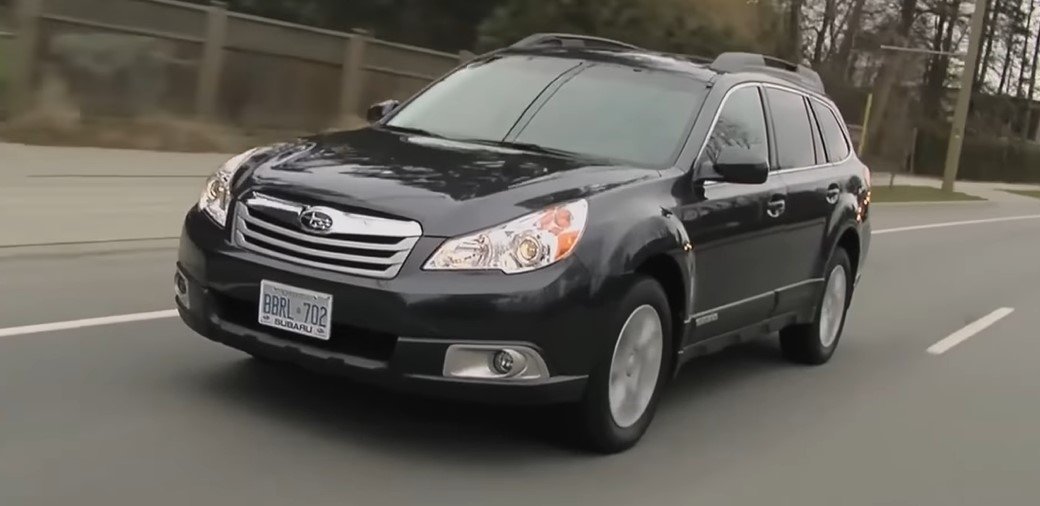
Short trips use more fuel because the engine spends more time warming up. Long idling burns fuel without adding miles. Stop-and-go traffic uses more fuel because the car keeps accelerating from low speed again and again.
Fast highway driving can also hurt MPG. Once speed gets high, aerodynamic drag increases quickly. That means the engine needs more power just to push the car through the air.
Common clues:
- MPG is worse mostly in city driving
- No check engine light
- Engine feels smooth
- No fuel smell
- Tire pressure is normal
- Scanner data looks normal
What to do:
Compare MPG over a full tank under normal driving. Reduce long idling. Accelerate smoothly. Remove unnecessary cargo. If your OBD2 data looks normal, replacing engine parts will not fix a driving-pattern problem.
2. Low Tire Pressure Or Poor Wheel Alignment
Low tire pressure is one of the easiest things to miss.
Underinflated tires create more rolling resistance. The engine has to work harder to move the car. Poor alignment can do the same thing because the tires are not rolling straight.
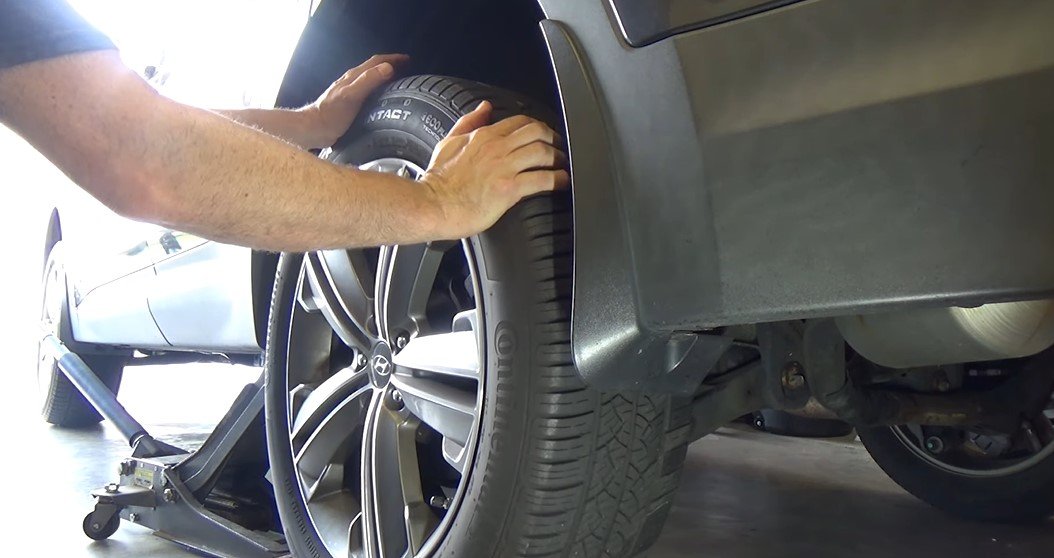
This usually will not trigger an OBD2 code.
Common clues:
- Steering wheel is off-center
- Car pulls slightly left or right
- Tires wear unevenly
- MPG dropped after new tires
- TPMS light may or may not be on
- No check engine light
What to do:
Check tire pressure when the tires are cold. Use the pressure listed on the driver-side door sticker, not the maximum number printed on the tire. If the car pulls or the tires are wearing unevenly, get the alignment checked.
When a car is using too much fuel but the engine feels fine, tires and alignment should be checked early.
3. Dragging Brakes
A dragging brake can destroy fuel economy quickly.
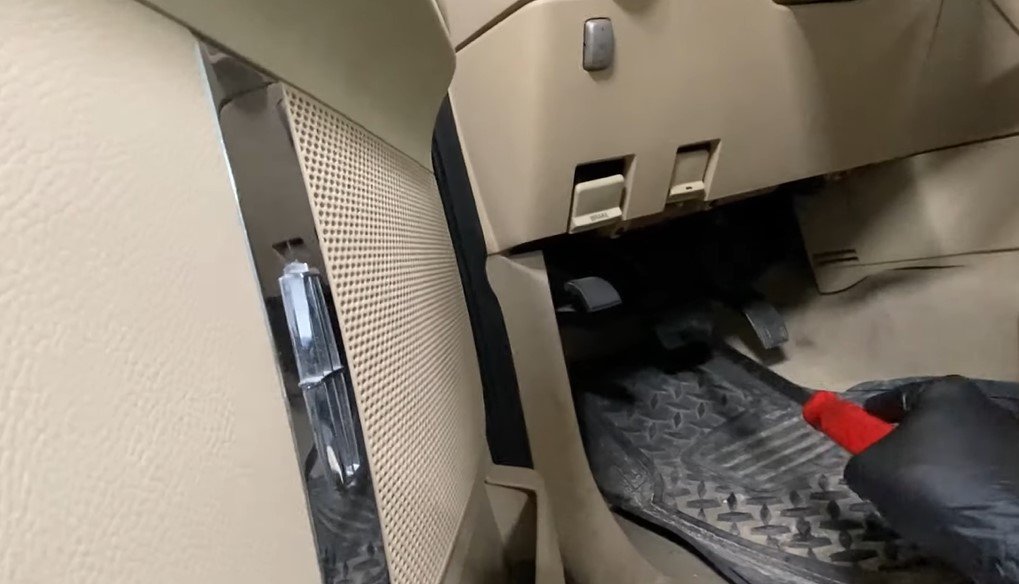
This happens when a caliper sticks, a slide pin seizes, a brake hose fails internally, or the parking brake does not fully release. The engine keeps fighting the brake every time the car moves.
Common clues:
- One wheel feels much hotter than the others
- Burning smell after driving
- Car feels slightly held back
- MPG suddenly gets worse
- More brake dust on one wheel
- Car may pull while driving or braking
OBD2 clue:
Usually none. This is a mechanical problem, not an engine computer problem.
What to do:
After a normal drive, check whether one wheel is noticeably hotter than the others. Do not touch hot brake parts directly. If one corner is much hotter, inspect the caliper, pads, rotor, slide pins, brake hose, and parking brake system.
This is not just about gas mileage. Dragging brakes can become a safety issue.
4. Engine Staying Too Cold
Engines need extra fuel when cold. That is normal.
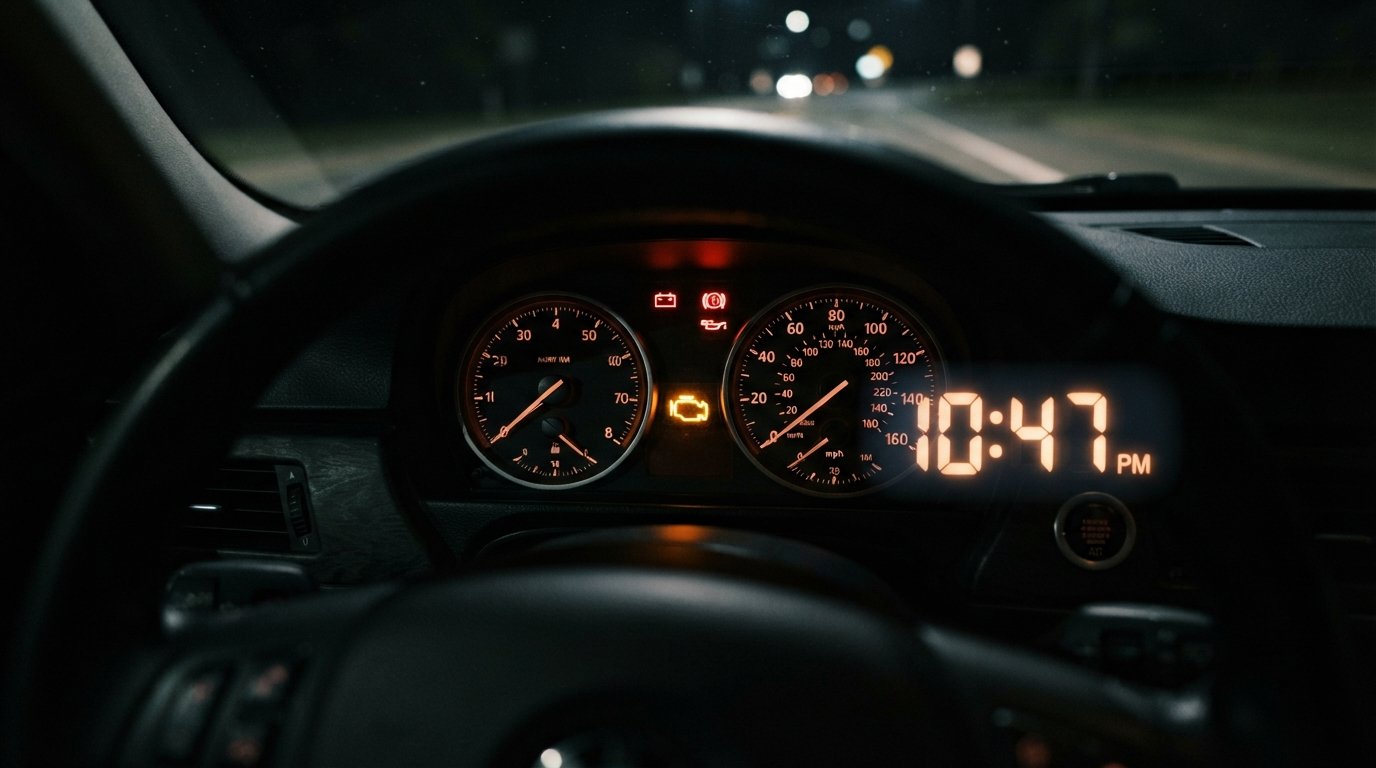
But if the thermostat is stuck open, the engine may stay too cool for too long. The computer may keep using a richer fuel strategy. A faulty coolant temperature sensor can also send the wrong temperature reading to the computer.
Common clues:
- Temperature gauge stays lower than normal
- Heater feels weak
- MPG gets worse in cold weather
- Engine takes too long to warm up
- Possible code:
P0128
OBD2 scanner check:
Look at live coolant temperature after 10 to 20 minutes of driving. If the engine never reaches normal operating temperature, the thermostat or coolant temperature sensor may be involved.
What to do:
Do not replace the thermostat only because MPG is bad. Confirm the live temperature first. Then inspect the thermostat, coolant level, coolant temperature sensor, and wiring.
5. Dirty Or Faulty MAF Sensor
The MAF sensor measures how much air enters the engine. The computer uses that reading to decide how much fuel to inject.
If the MAF sensor is dirty, biased, or reading incorrectly, the fuel mixture can be wrong. That can cause poor fuel economy, hesitation, rough idle, or rich/lean codes.

Possible codes:
P0101P0102P0103P0171P0172
Common clues:
- Poor MPG
- Hesitation
- Rough idle
- Stalling
- Lack of power
- Check engine light
- Problem started after air intake work
OBD2 scanner check:
Check MAF reading, engine load, short-term fuel trim, and long-term fuel trim. If fuel trims are far from normal and MAF readings do not match engine load, the MAF sensor or intake system needs attention.
What to do:
Inspect the intake tube first. A cracked hose or loose clamp can create misleading MAF-related symptoms. If cleaning is needed, use only proper MAF sensor cleaner. Do not use brake cleaner or carb cleaner.
Replace the MAF sensor only when the codes, symptoms, and live data support it.
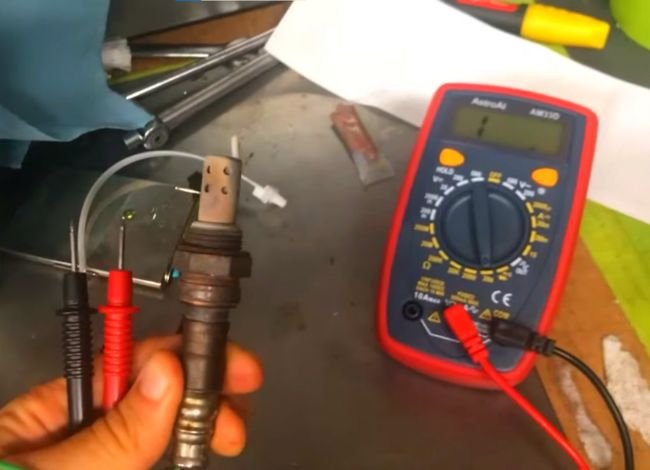
6. Bad Oxygen Sensor Or Air-Fuel Ratio Sensor
The upstream oxygen sensor or air-fuel ratio sensor helps the computer adjust the fuel mixture.
If the sensor becomes slow or inaccurate, the computer may add too much fuel or make the wrong correction. This can hurt fuel economy and sometimes trigger a check engine light.
Possible codes:
P0130P0131P0132P0133P0135P0172P0175
Common clues:
- Poor fuel economy
- Fuel smell
- Failed emissions test
- Rough idle
- Check engine light
- Slow sensor response in live data
OBD2 scanner check:
Look at upstream O2 or air-fuel ratio sensor activity. Also check fuel trims. A sensor code does not always mean the sensor itself is bad. Exhaust leaks, wiring problems, rich running, lean running, or misfires can affect sensor readings.
What to do:
Check wiring, connectors, exhaust leaks, and fuel trim data before replacing the sensor. If your car is using too much fuel and the only evidence is an O2 code, confirm the sensor is the cause, not just reporting another problem.
7. Engine Running Rich
Running rich means the engine is getting more fuel than it needs.
This is one of the most direct reasons for poor gas mileage. Extra fuel can also cause black smoke, fuel smell, fouled spark plugs, rough idle, and catalytic converter damage over time.

Possible codes:
P0172P0175P0170P2196P2198
Common causes:
- Bad MAF reading
- Faulty upstream O2 or air-fuel ratio sensor
- Leaking fuel injector
- High fuel pressure
- Stuck-open purge valve
- Severe air intake restriction
- Sensor wiring issue
OBD2 scanner check:
Fuel trims matter here. If long-term fuel trim is strongly negative, the computer is trying to remove fuel. That usually means the engine is rich, or the computer believes it is rich because of bad data.
What to do:
Do not fix a rich code by guessing. Check MAF data, O2/A/F sensor behavior, fuel pressure, injector leakage, purge valve operation, and intake restriction.
One note: on many modern fuel-injected cars, a dirty air filter usually hurts power more than MPG unless the restriction is severe. So do not treat the air filter as the only answer unless inspection supports it.
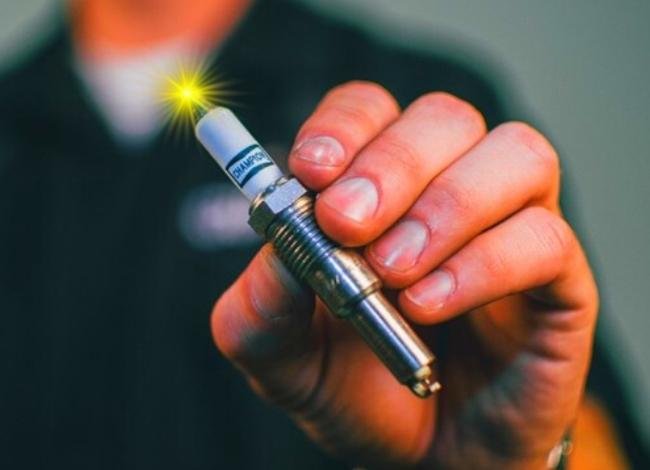
8. Misfire From Spark Plugs, Coils, Or Ignition Parts
A misfire means fuel is not burning properly in one or more cylinders.
That wastes fuel. It can also send unburned fuel into the exhaust, which may damage the catalytic converter. If the check engine light is flashing, the misfire is serious.
Possible codes:
P0300P0301P0302P0303P0304P0305-P0308
Common clues:
- Rough idle
- Shaking
- Hesitation
- Loss of power
- Flashing check engine light
- Fuel smell
- Poor MPG
OBD2 scanner check:
Read stored codes, pending codes, and misfire counters if your scanner supports them. A cylinder-specific code can save time because it tells you where to start.
What to do:
Inspect spark plugs, ignition coils, plug wires, and injector operation. If the same cylinder keeps misfiring after moving parts around, check compression or mechanical issues.
When your car is using too much fuel and also shaking, diagnose the misfire before replacing fuel-system parts.
9. Leaking Injector, Fuel Pressure Problem, Or EVAP Purge Issue
Fuel delivery problems can be harder to spot.
A leaking injector can drip fuel when it should be closed. High fuel pressure can push too much fuel through the injectors. A stuck-open EVAP purge valve can pull fuel vapor into the intake at the wrong time, especially after refueling.

Possible related codes:
P0172P0175P0300P0441P0455P0456
Common clues:
- Hard start after refueling
- Rough idle after filling the tank
- Fuel smell
- Rich codes
- Misfire codes
- Long crank after sitting
- MPG suddenly gets worse
OBD2 scanner check:
Look for rich fuel trims, EVAP-related codes, freeze-frame data, and misfire data. If the problem appears mostly after refueling, pay extra attention to purge valve behavior.
What to do:
A proper diagnosis may need a fuel pressure test, injector balance test, purge valve test, or smoke test. A better scan tool can help if it supports EVAP data or active tests for your vehicle.
What OBD2 Data Helps When A Car Is Using Too Much Fuel?
A basic code reader can show stored codes. A better OBD2 scanner can show live data, which is often more useful for fuel economy problems.
| Scanner Data | What It Helps You Find |
|---|---|
| Stored codes | Current detected faults |
| Pending codes | Early faults before the light turns on |
| Freeze-frame data | Conditions when the fault happened |
| STFT | Short-term fuel correction |
| LTFT | Long-term fuel correction |
| Coolant temperature | Cold-running engine or sensor issue |
| MAF data | Airflow measurement problem |
| O2/A/F sensor data | Rich/lean feedback issue |
| Misfire counters | Cylinder fuel waste |
| EVAP data | Purge or vapor-related clues |
The key is not just reading the code. It is reading the pattern.
For example, P0172 tells you the engine is running rich. It does not tell you whether the cause is a leaking injector, bad MAF reading, high fuel pressure, stuck purge valve, or incorrect sensor data.
That is where live data makes a difference.
Can A Car Use Too Much Fuel Without A Check Engine Light?
Yes. A car can use too much fuel with no check engine light.
Low tire pressure, brake drag, alignment problems, extra weight, roof cargo, short trips, long idling, and early sensor drift may not turn the warning light on immediately.
A cheap scanner may say “no codes found,” but a better scanner may still show clues:
- Coolant temperature is too low
- Fuel trims are abnormal
- One bank is different from the other
- Misfire counts are starting
- MAF readings look unusual
- Pending codes are stored
No check engine light does not always mean no problem. It only means the computer has not detected a fault serious enough to turn the light on.
What Should You Fix First?
Use this order.
First, stop driving normally if there is a safety issue:
- Fuel leak
- Strong fuel smell
- Flashing check engine light
- Hot or smoking brake
- Heavy black smoke
- Severe shaking
Second, check simple things:
- Tire pressure
- Extra cargo
- Roof rack
- Brake drag
- Intake hose
- Visible leaks
- Recent repair area
Third, scan the vehicle:
- Stored codes
- Pending codes
- Freeze-frame data
Fourth, check live data:
- Fuel trims
- Coolant temperature
- MAF reading
- O2/A/F sensor data
- Misfire counters
Fifth, replace parts only when the evidence matches.
If the data points to a cold-running engine, diagnose the thermostat. If the data points to one misfiring cylinder, diagnose that cylinder. If fuel trims show rich running, find out why the computer is removing fuel.
This takes more thought than guessing, but it usually saves money.
FAQ
Why is my car using too much fuel all of a sudden?
Your car may suddenly use more fuel because of low tire pressure, dragging brakes, a misfire, bad sensor data, a stuck-open thermostat, rich running, leaking injector, or a change in driving conditions. Start with simple checks, then scan for codes and live data.
Can a bad oxygen sensor cause high fuel consumption?
Yes. A bad upstream oxygen sensor or air-fuel ratio sensor can cause wrong fuel correction and poor MPG. But an oxygen sensor code does not always mean the sensor is bad. Exhaust leaks, wiring, misfires, and rich/lean conditions can also affect the reading.
Can bad spark plugs make a car use more gas?
Yes. Worn spark plugs can cause weak combustion or misfires. When fuel does not burn properly, the engine wastes fuel and may lose power. Misfire codes such as P0300 or P0301-P0308 can help identify the issue.
Why is my car using more gas but has no check engine light?
Your car can use more gas without a check engine light if the cause is tire pressure, brake drag, alignment, short trips, idling, roof cargo, or early sensor drift. Pending codes and live data can still show useful clues.
What OBD2 data should I check for poor fuel economy?
Check stored codes, pending codes, freeze-frame data, short-term fuel trim, long-term fuel trim, coolant temperature, MAF readings, upstream O2 or air-fuel ratio sensor data, and misfire counters.
Should I replace the MAF sensor or oxygen sensor first?
Do not replace either one first without data. Check codes, fuel trims, MAF readings, O2/A/F sensor behavior, intake leaks, exhaust leaks, and wiring. A sensor code can point you in the right direction, but it does not always prove the sensor is the problem.
Final Thoughts
When a car is using too much fuel, the real cause is not always inside the fuel system.
Sometimes the engine is fine, but the car is working harder because of tires, brakes, traffic, weather, speed, or extra weight. Other times, the engine is running rich, misfiring, staying too cold, or reacting to bad sensor data.
The best fix starts with a simple question:
Is the engine wasting fuel, or is the car working harder than usual?
Once you answer that, diagnosis becomes much easier. Check the basics, scan for codes, read live data, and replace parts only when the evidence points to a clear cause.
If your car is using too much fuel, the best first move is not a random new part. It is a clear scan report, a few live-data readings, and a smart check order.