
Your engine does not guess how much fuel to use.
It watches how much air enters the engine, then adds the right amount of fuel to match it. The MAF sensor, or mass air flow sensor, is one of the main parts used for that calculation.
When the MAF sensor reading is wrong, the fuel mixture can go wrong too. The engine may run too lean, too rich, rough, weak, or unstable.
That is why bad MAF sensor symptoms can feel confusing. The car may idle rough, hesitate, stall, lose power, use more fuel, or turn on the check engine light. But the same symptoms can also come from a cracked intake hose, dirty air filter, vacuum leak, weak fuel pump, bad spark plugs, dirty throttle body, or wiring issue.
So do not replace the MAF sensor just because a code mentions it.
A better approach is to scan the codes, save freeze-frame data, inspect the intake system, check fuel trims, look at MAF live data, and clean or replace the sensor only when the evidence points there.
Bad MAF Sensor Symptoms: The Airflow Clue Most Drivers Miss
The MAF sensor usually sits in the intake tube after the air filter box and before the throttle body. Its job is to measure the amount of air entering the engine.
The engine computer uses that airflow reading to calculate fuel delivery.
If the MAF sensor under-reports airflow, the computer may inject too little fuel. The engine can run lean, hesitate, or feel weak.
If the MAF sensor over-reports airflow, the computer may inject too much fuel. The engine can run rich, burn extra fuel, smell like gas, or produce black smoke.
The most common bad MAF sensor symptoms include:
- Check engine light
- Rough idle
- Hesitation during acceleration
- Poor acceleration or power loss
- Stalling or almost stalling
- Poor fuel economy
- Hard start, fuel smell, or black smoke
But symptoms alone are not enough. A MAF sensor can be dirty, failed, unplugged, misreading because of an intake leak, or falsely blamed because another system is causing the same problem.
1. Check Engine Light With MAF Codes
A check engine light is often the first clear warning.
Common MAF-related codes include:
| Code | Meaning |
|---|---|
P0100 |
Mass Air Flow circuit malfunction |
P0101 |
Mass Air Flow sensor range/performance problem |
P0102 |
MAF circuit low input |
P0103 |
MAF circuit high input |
P0104 |
MAF circuit intermittent |
P0171 |
System too lean, bank 1 |
P0174 |
System too lean, bank 2 |
P0172 |
System too rich, bank 1 |
P0175 |
System too rich, bank 2 |
The important one is P0101, because many people replace the sensor immediately after seeing it.
That is not always right.
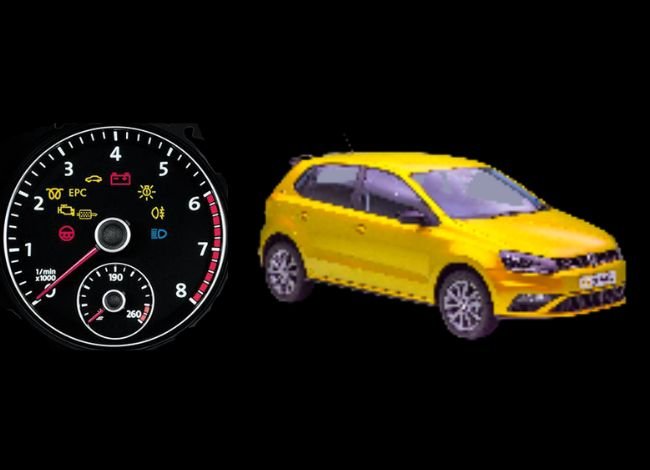
A P0101 code usually means the airflow reading does not make sense compared with throttle position, RPM, engine load, and other sensor inputs. It can be caused by a bad MAF sensor, but also by an intake leak, dirty air filter, wiring issue, loose connector, or unmetered air entering after the sensor.
Before clearing the code, save the freeze-frame data. It can show what was happening when the fault appeared: idle, acceleration, highway speed, cold start, or heavy load.
That context can save you from replacing the wrong part.
2. Rough Idle or Shaking at a Stop
Rough idle is one of the most common bad MAF sensor symptoms.
At idle, the engine is sensitive to small air and fuel changes. If the MAF sensor reports the wrong airflow, the computer may add too much fuel or not enough fuel. The idle can become unstable.
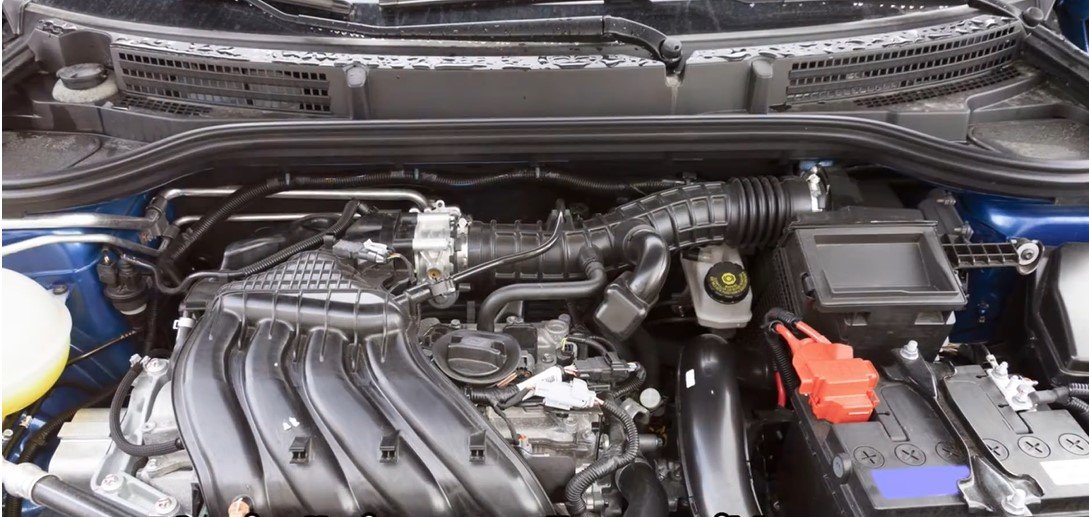
You may notice:
- RPM moving up and down
- Engine shaking at stoplights
- Car almost stalling
- Rough idle after startup
- Idle worse after air filter/intake work
- Engine runs differently if the MAF is unplugged
That last clue can be useful, but do not treat it as proof. When the MAF sensor is unplugged, many cars use a backup strategy. If the engine runs better unplugged, the MAF signal may be suspicious, but the cause could still be wiring, a connector issue, or an intake leak.
A vacuum leak after the MAF sensor can create the same rough idle. The sensor measures one amount of air, but extra air enters through a cracked hose or loose intake boot. The engine computer does not know about that extra air, so the mixture goes lean.
That is why fuel trim data and intake inspection matter.
3. Hesitation When Accelerating
A bad or dirty MAF sensor can make the engine hesitate when you press the gas.
You may feel a pause, stumble, jerk, or delayed response before the car starts accelerating. Sometimes it feels like the engine is unsure what to do for a second.
This happens because airflow changes quickly during acceleration. The computer needs the MAF sensor to report that change accurately. If the signal is slow, dirty, too low, too high, or jumpy, fuel delivery may not match the air entering the engine.

If the sensor under-reports air, the engine may run lean and stumble.
If it over-reports air, the engine may run rich and bog down.
This is why bad MAF sensor symptoms often get confused with fuel pump problems, spark plug issues, ignition coil failure, dirty injectors, or a throttle body problem.
Use the scanner. Watch fuel trims and MAF live data during throttle changes. The MAF reading should rise smoothly as RPM and throttle increase. A flat, delayed, jumpy, or unrealistic reading is suspicious.
4. Poor Acceleration or Loss of Power
A wrong airflow reading can make the engine feel weak.
The car may still drive, but it feels dull. It may struggle to merge, climb hills, pass another vehicle, or accelerate from a stop.
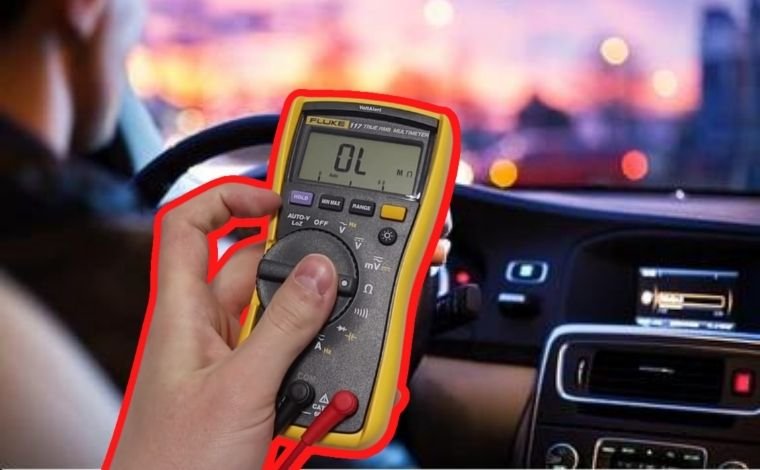
You may notice:
- Sluggish throttle response
- Weak pull at higher RPM
- Power loss under load
- Engine bogging
- Poor uphill performance
- Car feels restricted
This can feel like a bad fuel pump or clogged catalytic converter. That is why guessing from symptoms alone is risky.
Look at the pattern.
If the car has MAF codes, strange MAF live data, and fuel trims that show the computer constantly correcting the mixture, the MAF sensor or intake system deserves attention.
If fuel pressure is low, the fuel system may be the real issue.
If fuel trims look normal but the car has no power at higher RPM, exhaust restriction may need checking.
The MAF sensor is important, but it is not the only cause of poor acceleration.
5. Engine Stalls or Almost Dies
A bad MAF sensor can cause stalling, especially at idle or when coming to a stop.
When the computer cannot trust the airflow signal, it may struggle to control the air-fuel mixture at low speed. The RPM may dip, the engine may stumble, and then it may shut off.

Possible signs include:
- Engine dies at stoplights
- RPM drops when shifting into Drive
- Engine almost stalls after startup
- Stalling after pressing and releasing the gas
- Rough idle followed by shutdown
- Car restarts but runs poorly again
But stalling can also come from a dirty throttle body, idle air control issue on older vehicles, vacuum leak, crank sensor problem, weak battery, or charging system issue.
Check the basics first. Inspect the MAF connector, intake tube, air filter box, and wiring. Then check scanner data. If the MAF signal drops out or becomes erratic before the stall, the sensor or circuit becomes more likely.
6. Poor Fuel Economy
Poor fuel economy can be one of the quieter bad MAF sensor symptoms.
If the MAF sensor over-reports airflow, the computer may add too much fuel. The car may still run, but it uses more gas than normal.

A rich condition may also cause:
- Fuel smell from the exhaust
- Black smoke
- Soot around the tailpipe
- Negative fuel trims
- Fouled spark plugs
- Failed emissions test
- Catalytic converter stress over time
But bad MPG has many possible causes. Low tire pressure, short trips, dragging brakes, bad thermostat, oxygen sensor problems, leaking injectors, and ignition issues can also waste fuel.
Fuel trim data helps.
Negative long-term fuel trim means the computer is reducing fuel because the mixture appears rich. A MAF sensor that reports too much air can be one cause.
Positive fuel trim means the computer is adding fuel because the mixture appears lean. A MAF sensor that under-reports air, an intake leak, or low fuel pressure can all cause that.
7. Hard Start, Fuel Smell, or Black Smoke
A bad MAF sensor can also affect starting.
During startup, the computer needs a good air reading to calculate fuel. If the reading is wrong, the mixture may become too lean or too rich.
A lean start may cause long cranking or stumbling.
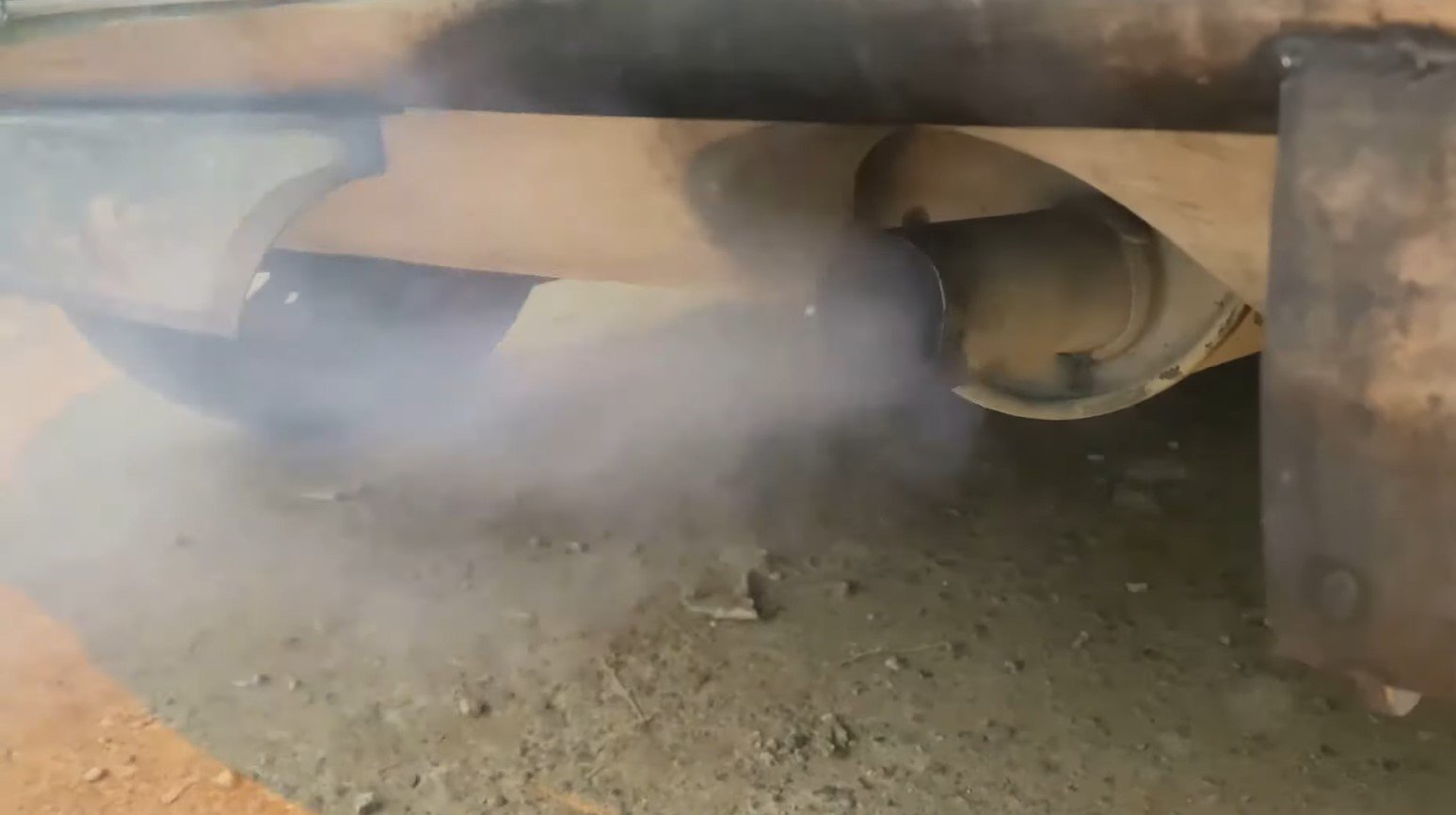
A rich start may cause fuel smell, black smoke, or a rough start that clears after a few seconds.
You may notice:
- Hard start when cold
- Hard start when warm
- Strong fuel smell
- Black smoke from the tailpipe
- Rough start, then smoother idle
- Check engine light after repeated starts
Not every MAF problem creates smoke. In fact, many do not. Black smoke usually means the engine is running rich, and that can also happen from leaking injectors, fuel pressure regulator issues, bad coolant temperature readings, or other fuel control problems.
Still, if hard starting appears with MAF codes, rough idle, poor MPG, and abnormal fuel trims, the MAF sensor and intake system should be checked.
Dirty MAF Sensor vs Bad MAF Sensor
A dirty MAF sensor and a failed MAF sensor are not the same.
A dirty MAF sensor may still work, but the reading can be slow or inaccurate. Dust, oil film, and debris can affect the sensing element. This is common when the air filter is dirty, the air box is not sealed, or an oiled aftermarket filter was over-oiled.
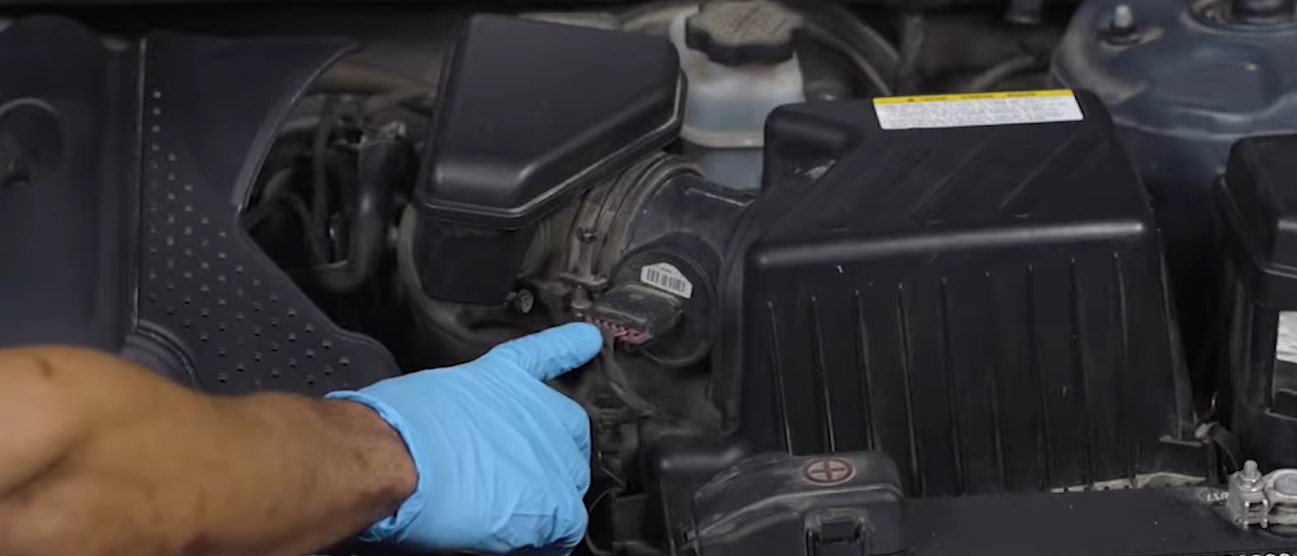
A failed MAF sensor has an internal electrical or signal problem. Cleaning may not help.
| Problem | What Happens | Possible Fix |
|---|---|---|
| Dirty MAF sensor | Wrong or slow airflow reading | Clean with MAF sensor cleaner |
| Failed MAF sensor | Signal missing, wrong, or unstable | Replace after testing |
| Wiring issue | Low, high, or intermittent signal | Repair wiring/connector |
| Intake leak after MAF | Unmetered air enters engine | Fix hose, boot, clamp, or gasket |
| Dirty air filter | Restricted/contaminated airflow | Replace air filter |
| Wrong intake setup | Turbulent airflow over sensor | Restore proper intake setup |
Cleaning is worth trying when contamination is likely. But if the sensor is electrically failed, cleaning will not bring it back.
What To Check With an OBD2 Scanner
A scanner can help you avoid guessing.
Start with stored, pending, and current codes. Then look at freeze-frame data before clearing anything.
Useful data includes:
- MAF reading in grams per second
- Short-term fuel trim
- Long-term fuel trim
- RPM
- Throttle position
- Engine load
- MAP reading if available
- Oxygen sensor or air-fuel ratio sensor feedback
- Coolant temperature
- Misfire counts
- Battery voltage
The MAF reading should respond smoothly when engine speed and throttle increase. Do not rely on one universal number because normal MAF readings vary by engine size, design, altitude, and operating condition.
Fuel trims are often more useful.
High positive fuel trim means the computer is adding fuel. That usually points toward a lean condition.
Negative fuel trim means the computer is reducing fuel. That usually points toward a rich condition.
A quick pattern:
| Scanner Clue | Possible Direction |
|---|---|
| High positive trims mostly at idle | Vacuum leak or unmetered air |
| High positive trims worse under load | Fuel delivery issue or airflow reporting problem |
| Strong negative trims | Rich condition or over-reporting airflow |
| MAF reading stuck or jumpy | Sensor/circuit issue |
P0101 with cracked intake boot |
Fix intake leak first |
P0102 or P0103 |
Check wiring, connector, power, ground, and sensor |
Bad MAF Sensor Symptoms become much easier to diagnose when you compare codes, fuel trims, freeze-frame data, and physical inspection together.
Physical Checks Before Replacing the MAF Sensor
Before buying a new sensor, inspect the air path.
Check:
- Air filter condition
- Air filter box seal
- Intake tube cracks
- Loose clamps
- Disconnected vacuum hoses
- PCV hose leaks
- MAF connector fitment
- Corrosion inside connector
- Damaged wires near sensor
- Aftermarket intake installation
- Oiled air filter contamination
- Dirt or oil on the sensor element
A cracked intake boot after the MAF sensor is a classic cause. The sensor measures air before the leak, then extra air enters after the sensor. The computer does not know about that extra air, so the engine runs lean.
That can cause rough idle, hesitation, lean codes, and even a MAF range/performance code.
Replacing the sensor will not fix that.
Can You Clean a Bad MAF Sensor?
You can clean a dirty MAF sensor, but you cannot clean a failed electrical sensor back to life.
Use only MAF sensor cleaner. Do not use brake cleaner, carb cleaner, throttle body cleaner, gasoline, or compressed air directly on the sensing element.
Basic cleaning steps:
- Turn the engine off.
- Let the sensor cool.
- Disconnect the electrical connector.
- Remove the sensor carefully if needed.
- Spray the sensing element with MAF sensor cleaner.
- Do not touch the wire or film.
- Let it dry completely.
- Reinstall it.
- Clear codes only after saving data.
- Road test and recheck live data.
If the sensor was dirty, cleaning may improve idle, acceleration, fuel trims, or MPG.
If the code returns quickly, continue diagnosis instead of cleaning it again and again.
When To Replace the MAF Sensor
Replacement makes sense when the evidence points to the sensor itself.
Replace it when:
- MAF-related codes return after cleaning
- MAF live data is clearly wrong
- Sensor signal drops out
- Power, ground, and wiring are good
- Intake leaks have been ruled out
- Air filter and air box are correct
- Fuel pressure and ignition problems are not the cause
- A known-good sensor confirms the diagnosis
Avoid very cheap unknown sensors when possible. Many engines are sensitive to airflow measurement. A poor-quality MAF sensor may fit, plug in, and still report inaccurate airflow.
Use a quality replacement that matches the vehicle.
Can You Drive With Bad MAF Sensor Symptoms?
You may be able to drive short-term if the symptoms are mild and the car runs normally.
But if the car stalls, hesitates badly, loses power, smells like fuel, or runs extremely rough, avoid unnecessary driving.
A wrong airflow reading can make the engine run lean or rich. Running lean under load can create heat and drivability problems. Running rich can waste fuel, foul spark plugs, and stress the catalytic converter over time.
If the car feels unsafe, stalls in traffic, or loses power during acceleration, get it checked before driving more.
Common Mistakes To Avoid
Bad MAF Sensor Symptoms are easy to misdiagnose because they overlap with many other problems.
Avoid these mistakes:
- Replacing the MAF sensor just because of
P0101 - Ignoring intake leaks after the MAF
- Not checking the air filter
- Cleaning the sensor with the wrong chemical
- Touching the sensor wire or film
- Forgetting to inspect the connector
- Ignoring fuel trim data
- Assuming lean codes always mean MAF sensor
- Installing a cheap sensor that reads incorrectly
- Clearing freeze-frame data too early
- Ignoring aftermarket intake or oiled filter issues
The best order is simple: scan, save data, inspect air path, check fuel trims, compare MAF live data, clean if dirty, replace only if confirmed.
FAQ About Bad MAF Sensor Symptoms
Can a bad MAF sensor cause a check engine light?
Yes. A bad or dirty MAF sensor can trigger P0100, P0101, P0102, P0103, or P0104. It may also contribute to lean or rich codes like P0171, P0174, P0172, or P0175.
Can a bad MAF sensor cause rough idle?
Yes. Wrong airflow data can make the fuel mixture unstable at idle. But rough idle can also come from vacuum leaks, dirty throttle body, ignition problems, injectors, or PCV issues.
Can cleaning a MAF sensor fix it?
Cleaning can help if the sensor is dirty or oil-contaminated. It will not fix broken wiring, a failed sensor, or an intake leak after the MAF sensor.
How do I know if it is the MAF sensor or a vacuum leak?
Fuel trim pattern helps. A vacuum leak often causes high positive fuel trims at idle that improve at higher RPM. A MAF issue may show airflow readings that are too low, too high, stuck, delayed, or jumpy compared with engine load.
Can a bad MAF sensor cause poor gas mileage?
Yes. If the MAF sensor over-reports airflow or causes rich operation, the engine may use too much fuel. But poor MPG can come from many causes, so check fuel trims and live data.
Should I replace the MAF sensor or clean it first?
If the sensor is dirty and the wiring/intake checks look good, cleaning with proper MAF sensor cleaner is worth trying first. Replace it if codes and symptoms return and live data confirms the reading is wrong.
Can a bad MAF sensor cause stalling?
Yes. A bad MAF sensor can cause stalling, especially at idle or when coming to a stop. But throttle body, idle control, vacuum leaks, crank sensor issues, and fuel problems can also stall an engine.
Final Takeaway
Bad MAF Sensor Symptoms come from one main problem: the engine computer is getting the wrong airflow information.
That wrong reading can make the engine run lean, rich, rough, weak, or inefficient. You may notice check engine light, rough idle, hesitation, poor acceleration, stalling, bad fuel economy, hard starting, fuel smell, or black smoke.
But the MAF sensor is not always the guilty part.
A dirty air filter, cracked intake boot, loose clamp, vacuum leak, bad connector, wiring issue, weak fuel pressure, ignition problem, or poor aftermarket intake can create the same type of trouble.
So do not replace the sensor just because the code mentions MAF.
Scan the codes. Save the freeze-frame data. Check fuel trims. Inspect the intake system. Look at MAF live data. Clean the sensor properly if it is dirty. Replace it only when the airflow reading, wiring checks, and symptom pattern all point in the same direction.
That is how you fix the real problem instead of throwing another sensor at the engine.