
Your car starts perfectly every morning. But after stopping at a gas station and filling the tank, the engine suddenly takes several attempts to start. Once it finally runs, everything seems normal again.
That unusual pattern is one of the strongest clues that your EVAP purge valve may be stuck open.
The purge valve is a small part of the fuel-vapor control system, but a failure can cause difficult starting, rough idle, stalling, and check engine light problems.
Recognizing bad purge valve symptoms can help you narrow down the problem before replacing a fuel pump, ignition components, or unrelated EVAP parts.
Quick AnswerThe most common bad purge valve symptoms include hard starting after refueling, rough idle, check engine light, low-speed stalling, hesitation, fuel odors, emissions-test failure, and EVAP purge-flow faults. A stuck-open purge valve is more likely to affect starting and idle. A stuck-closed valve may cause EVAP codes without noticeable driving problems.
What Does an EVAP Purge Valve Do?
Your vehicle’s Evaporative Emission Control (EVAP) system captures gasoline vapors that would otherwise escape from the fuel tank into the atmosphere.
Those vapors are stored in a charcoal canister until the engine computer allows them to enter the intake and burn with the normal air-fuel mixture.
The purge valve, also called the canister purge solenoid, controls that flow.
On many vehicles, the valve normally seals when it isn’t commanded open. The computer then regulates purge flow under suitable driving conditions.
The purge valve isn’t the same as the EVAP vent valve. The vent valve manages the canister’s fresh-air path and helps seal the system during leak testing.
A purge valve can fail mechanically by sticking or leaking, or electrically through a solenoid, connector, or control-circuit problem.
8 Bad Purge Valve Symptoms You Shouldn’t Ignore
Not every purge valve fault causes all eight symptoms. The strongest clues depend on whether the valve is stuck open, stuck closed, or failing to respond to commands.
01 Hard Starting Immediately After Refueling
This is one of the most recognizable symptoms of a stuck-open EVAP purge valve.
After filling the tank, the engine may crank longer than usual, start and stumble, or require a second attempt.
A valve that fails to seal can allow additional stored fuel vapor into the intake when the engine isn’t expecting it.
That vapor may make the startup mixture excessively rich or otherwise unstable.
The unusual part is that the car might start normally the next morning and throughout the rest of the day.

First check: Does the starting problem happen specifically after buying gas? Record that pattern before investigating the fuel pump or starter.
02 Rough Idle or Unstable Engine RPM
If the purge valve allows unwanted airflow or fuel vapor into the intake, the engine may struggle to maintain a smooth idle.
You might feel shaking while stopped at a traffic light or notice RPM changing slightly without touching the accelerator.
Depending on vapor concentration, the mixture may become richer or leaner than intended.
However, dirty throttle bodies, ignition misfires, vacuum leaks, and fuel-delivery problems can produce similar behavior.
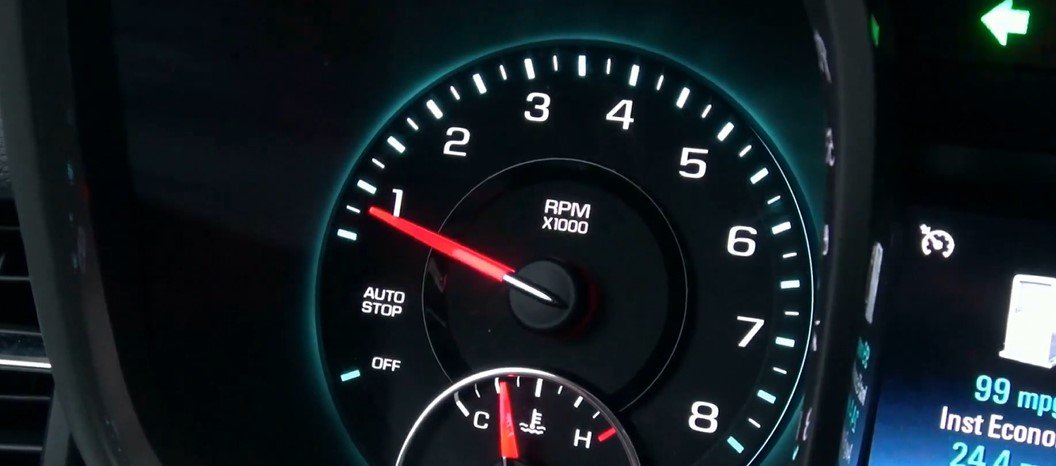
First check: Compare fuel-trim readings and idle behavior with the purge command. A change in mixture control can provide a useful diagnostic clue.
03 Check Engine Light With EVAP Trouble Codes
The engine computer monitors EVAP operation and may illuminate the check engine light when purge flow or electrical control isn’t working correctly.
Common related codes include P0441, P0443, and P0496.
P0441 indicates incorrect purge flow, P0443 points toward an electrical circuit problem, and P0496 relates to EVAP flow when purge shouldn’t be occurring.
Codes such as P0455 and P0456 indicate EVAP leak conditions but don’t specifically identify a defective purge valve.
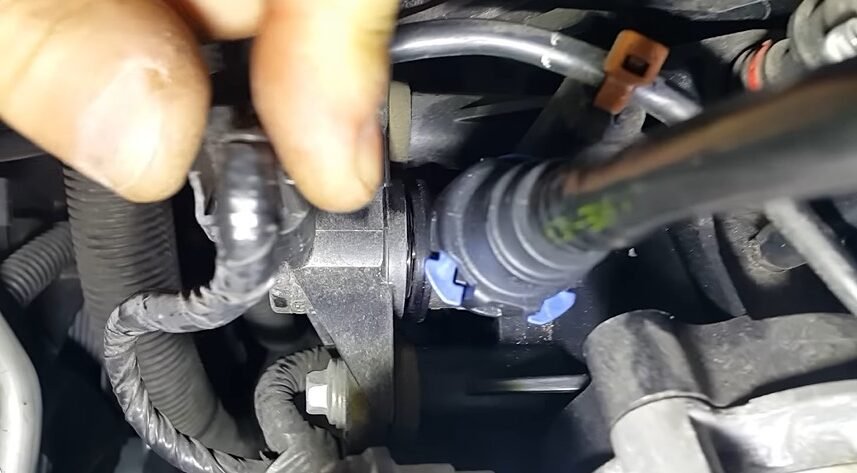
First check: Save all stored and pending codes before replacing anything. Our OBD2 trouble code guide covers EVAP code meanings and possible causes.
04 Stalling After Getting Gas or When Stopping
A stuck-open purge valve can disturb the mixture enough to make the engine stumble or stall at low RPM.
This may happen immediately after refueling, while slowing down, or while idling at a stoplight.
Some drivers notice that the engine runs better once they accelerate away from the gas station.
However, stalling can also result from ignition, throttle-control, sensor, or fuel-pressure problems.

First check: Note whether the stalling repeatedly follows refueling or occurs independently of gas-station visits.
05 Hesitation, Misfires, or Uneven Acceleration
Incorrect purge flow can alter the mixture enough to cause hesitation or occasional misfires.
You may feel a brief stumble during acceleration or notice uneven engine response at low speed.
These symptoms are less specific than hard starting after refueling.
Worn spark plugs, ignition coils, fuel injectors, and other airflow problems should remain on the diagnostic list.
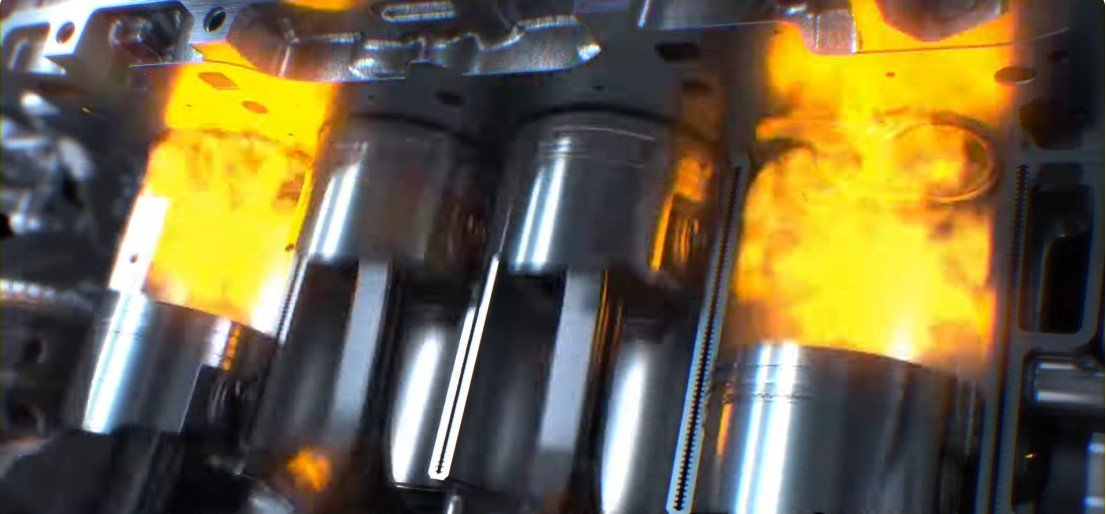
First check: Review misfire information, fuel trims, and EVAP activity together rather than treating hesitation as proof of a purge-valve failure.
06 Gasoline Smell Around the Vehicle
A fuel-vapor odor can indicate that the EVAP system isn’t containing or routing vapors correctly.
However, a bad purge valve does not always create an external gasoline smell.
A loose fuel cap, cracked EVAP hose, damaged charcoal canister, or actual fuel leak may be responsible.
Never assume a strong fuel smell is harmless simply because an EVAP code is present.

First check: Have the fuel and EVAP systems inspected. Visible gasoline leakage or a strong persistent raw-fuel odor requires immediate attention.
07 Failed Emissions Test or Reduced Fuel Economy
A defective purge valve may cause the check engine light to remain on or prevent the EVAP readiness monitor from completing successfully.
Either issue may interfere with an emissions inspection where OBD-based testing is required.
Some purge faults also affect mixture correction and fuel economy.
But a noticeable MPG drop alone isn’t strong evidence of a bad purge valve. Driving conditions, tire pressure, and other engine problems have a much larger influence in many cases.
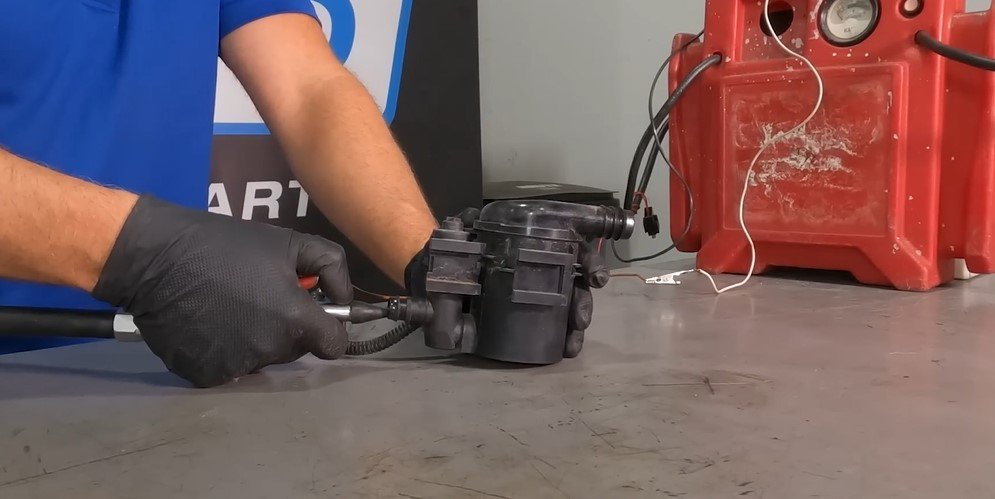
First check: Inspect EVAP readiness status and stored codes instead of relying on gas-mileage changes alone.
08 EVAP Purge-Flow Problems Without Obvious Driving Symptoms
A purge valve stuck closed may prevent stored fuel vapors from reaching the engine when commanded.
The vehicle might still start, idle, and accelerate normally.
Instead, the only noticeable clue may be an EVAP diagnostic code or a monitor that cannot complete its test.
A damaged electrical connector or control circuit can create a similar failure to respond.
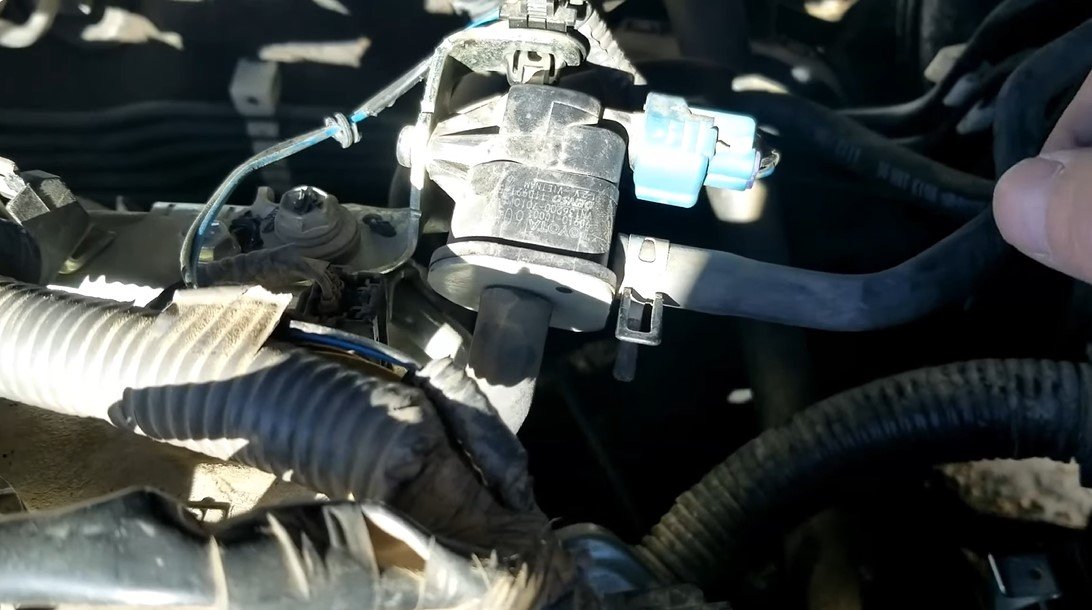
First check: Test commanded purge operation, actual flow response, and electrical condition before condemning the valve.
Purge Valve Stuck Open vs. Stuck Closed
The failure mode matters more than the symptom count.
| Diagnostic Clue | Stuck Open | Stuck Closed |
|---|---|---|
| Hard starting after gas | More characteristic | Less typical |
| Rough idle | Possible | Less typical |
| Low-speed stalling | Possible | Uncommon |
| P0496 unexpected flow | Strong clue on applicable vehicles | Not typical |
| P0441 incorrect purge flow | Possible | Possible |
| Emissions failure | Possible | Possible |
| Normal driving behavior | Possible | Common |
A mechanically stuck valve and an electrical control failure are different problems. The valve may be functional but never receive the correct command, or it may respond electrically while failing to seal mechanically.
Why Does a Bad Purge Valve Cause Hard Starting After Getting Gas?
Refueling changes the amount and movement of gasoline vapor inside the fuel tank and EVAP system.
The charcoal canister stores these vapors until the engine is ready to purge them.
When the purge valve is stuck open, excess vapor can reach the intake during startup.
The engine computer may not immediately compensate for that vapor, causing extended cranking, stumbling, or stalling.
If the car starts normally at other times, this repeated post-refueling pattern is especially useful.
Still, fuel-pressure problems and other starting faults should be excluded if testing doesn’t confirm unwanted purge flow.
Also, stop refueling when the gas pump automatically shuts off. Repeatedly topping off the tank can damage or contaminate EVAP components.
Bad Purge Valve vs. Bad Vent Valve vs. Loose Gas Cap
Several EVAP components can trigger similar trouble codes, but their functions are different.
| Component | Main Function | Helpful Clue |
|---|---|---|
| Purge valve | Controls vapor flow into engine intake | Hard start after refueling, incorrect purge flow |
| Vent valve | Manages canister fresh-air path | Vent-control codes, possible fuel-filling difficulties |
| Gas cap or filler seal | Seals fuel-filling opening | EVAP leak codes |
| Charcoal canister | Stores fuel vapor | Flow restriction or vapor containment problems |
| EVAP hoses | Connects system components | Leak, disconnection, or restricted flow |
If the gas-pump nozzle repeatedly clicks off before the tank is full, a restriction in the vent line or charcoal canister is often more relevant than a purge valve alone.
Don’t replace the purge valve simply because the vehicle has an EVAP-related code.
How to Test a Purge Valve Before Replacing It
Diagnosis should confirm whether the valve seals, responds to commands, and receives the correct electrical signals.
- Inspect hoses and connectors. With the vehicle off, look for cracked vapor hoses, disconnected fittings, damaged wiring, and corrosion at accessible connectors.
- Read trouble codes. Record stored, pending, and manufacturer-specific EVAP codes. Capture freeze-frame information before clearing anything.
- Check whether the valve seals when closed. A technician may use an approved vacuum or pressure procedure. On designs that should seal when unpowered, leakage indicates a possible mechanical defect.
- Test electrical operation. Check the solenoid, power supply, wiring, and computer control using the manufacturer’s specifications. Never apply battery voltage directly unless the procedure specifically allows it.
- Compare purge command with actual response. A compatible bidirectional scanner may command valve operation. Fuel-tank pressure, fuel trims, or other supported data can help determine whether flow changes as expected.
- Verify the repair. After correcting the confirmed fault, complete the manufacturer-recommended verification and check EVAP readiness status.
A clicking purge valve isn’t necessarily a good purge valve. A solenoid may click when energized but still leak through its internal seat. Likewise, no response to a scan-tool command can indicate a wiring or control issue rather than a mechanically defective valve.
Can a Bad Purge Valve Cause a Vacuum Leak?
Yes. If a purge valve remains open when it should be closed, it can create an unintended airflow path into the intake.
Depending on vapor concentration and engine operating conditions, the result may resemble a lean vacuum leak or an excessively rich mixture.
Positive fuel trims can suggest the engine is compensating for extra air. Negative trims may appear when excessive fuel vapor is entering.
However, fuel trims alone don’t prove a purge problem. Unrelated intake leaks and fuel-delivery issues can produce similar patterns.
Can a Bad Purge Valve Cause a Car to Stall While Driving?
Yes, particularly when the engine is idling, slowing down, or recovering immediately after refueling.
Uncontrolled purge flow may disturb combustion enough to make the engine stall at low RPM.
However, an abrupt shutdown at highway speed is not a particularly specific purge-valve symptom.
Unexpected road-speed stalls require a broader check of the fuel, ignition, charging, sensor, and engine-control systems.
Repeated stalling is a safety concern regardless of the eventual cause.
Can a Bad Purge Valve Affect Gas Mileage?
It can, but the effect varies.
A purge fault may change how the engine corrects fuel delivery or interfere with smooth combustion.
However, substantial fuel-economy loss often has other explanations, such as ignition problems, inaccurate airflow readings, or changes in driving conditions.
Track actual fuel consumption over several fill-ups rather than using poor mileage as the sole reason to replace a purge valve.
Can an OBD2 Scanner Diagnose a Bad Purge Valve?
An OBD2 scanner can help investigate bad purge valve symptoms, especially those involving EVAP fault codes and unusual fuel-trim behavior.
EVAP Trouble Codes Worth Understanding
| Code | Typical Meaning |
|---|---|
| P0441 | Incorrect EVAP purge flow |
| P0443 | Purge control valve circuit problem |
| P0455 | Large EVAP system leak detected |
| P0456 | Small EVAP system leak detected |
| P0496 | EVAP flow during non-purge conditions |
| P0171 / P0174 | Lean fuel mixture on the applicable engine bank |
P0496 is particularly relevant when unwanted purge flow is suspected, but it isn’t permission to replace the valve without testing.
P0455 and P0456 may originate from a damaged seal, hose, vent valve, purge valve, or another EVAP component.
If you want to understand the conditions stored with a fault, see our guide to reading OBD2 freeze-frame data.
Useful Live Data
- Commanded purge duty cycle or percentage, where supported.
- Fuel-tank pressure sensor data on equipped vehicles.
- Short-term and long-term fuel trims.
- Engine RPM and idle behavior.
- EVAP readiness and monitor information.
Our OBD2 live-data guide explains how to interpret fuel trims, RPM, and other diagnostic readings.
Advanced Scanner Functions and Limitations
Some bidirectional scanners can command EVAP purge operation or run manufacturer-specific service tests.
However, vehicle compatibility matters. A tool that reads generic codes won’t necessarily support purge-valve actuation.
A basic scanner also cannot directly prove whether a valve seals mechanically or identify the exact location of a vapor leak.
For an example of a diagnostic tool with enhanced live-data capabilities, see our Innova 5510 scanner review. Confirm vehicle-specific functions before relying on a scanner for active EVAP testing.
Can a Purge Valve Be Bad Without a Check Engine Light?
Yes. A purge valve may leak intermittently or stick before the vehicle’s diagnostic system has detected enough evidence to set a confirmed fault.
Some monitors require specific temperatures, fuel levels, and driving conditions.
The engine computer may store a pending code before illuminating the check engine light.
A scan showing no confirmed code doesn’t prove the valve seals and operates correctly.
How Much Does Purge Valve Replacement Cost in 2026?
RepairPal’s September 2026 U.S. national estimate puts purge valve replacement at approximately $210–$251 for parts and labor, excluding taxes, fees, and additional repairs.
The final cost depends on your vehicle and which component actually failed.
| Repair | Cost Consideration |
|---|---|
| Accessible standalone purge valve | Usually less complicated to replace |
| Purge valve with integrated hoses | Assembly may cost more than a simple solenoid |
| Wiring or connector repair | Depends on electrical diagnosis and damage |
| EVAP vent valve | Separate repair; location varies |
| Charcoal canister | Can cost more than a purge valve |
Before approving replacement, ask whether the technician confirmed valve leakage, failed electrical operation, or an EVAP hose problem.
Replacing the wrong part can leave the check engine light and original starting problem unchanged.
Can You Drive With a Bad Purge Valve?
A minor EVAP fault with normal engine operation may not create an immediate breakdown risk, but it should still be diagnosed and repaired.
Persistent hard starting, severe rough idle, or repeated stalling changes the situation.
A flashing check engine light may indicate a serious misfire that can damage the catalytic converter.
Stop driving safely and seek assistance if:
- You smell strong raw gasoline or notice visible fuel leakage.
- The engine repeatedly stalls in traffic.
- The engine misfires severely or the check engine light flashes.
- Starting and engine performance become unreliable.
Do not assume every fuel smell or stall is caused by the EVAP purge valve.
How to Prevent EVAP Purge Valve Problems
- Stop refueling when the pump automatically shuts off.
- Avoid repeatedly topping off the gas tank.
- Use the correct gas cap where the vehicle requires one.
- Inspect damaged EVAP hoses and fittings during maintenance.
- Repair corroded electrical connectors and wiring.
- Investigate recurring EVAP codes rather than repeatedly clearing them.
After a repair, remember that clearing trouble codes resets certain readiness monitors. Our guide to OBD2 drive cycles explains why the warning light and EVAP readiness status may take different amounts of time to update.
Frequently Asked Questions
1. What is the most common symptom of a bad purge valve?
A check engine light with an EVAP code is common. Hard starting immediately after refueling is a particularly useful clue when a purge valve is stuck open.
2. Can a bad purge valve cause hard starting after refueling?
Yes. A valve that doesn’t seal can allow excessive fuel vapor into the intake during startup, creating an unstable mixture and extended cranking.
3. What happens when an EVAP purge valve is stuck open?
Unwanted vapor or airflow can enter the intake. Possible effects include difficult starting after refueling, rough idle, low-speed stalling, and EVAP flow codes such as P0496.
4. Can a purge valve stuck closed cause rough idle?
It’s less typical. A stuck-closed valve often causes incorrect purge flow or an emissions-monitor fault while the engine otherwise runs normally.
5. Does a bad purge valve always turn on the check engine light?
No. An intermittent failure may not meet the conditions required to store a confirmed fault. Pending codes or physical testing may reveal the issue first.
6. Can you drive with a bad purge valve?
Minor EVAP faults may allow normal driving temporarily, but repeated stalling, severe misfires, strong fuel odors, or visible gasoline leakage require immediate attention.
Final Thoughts
The most useful bad purge valve symptoms are hard starting after refueling, unusual idle behavior, stalling, and EVAP purge-flow codes.
However, a valve stuck closed may produce almost no driving symptoms.
Before replacing the purge solenoid, confirm whether it seals correctly, receives the proper electrical commands, and allows the expected vapor flow. That approach helps avoid confusing purge-valve problems with vent-valve, gas-cap, charcoal-canister, or fuel-system faults.