
The engine starts shaking, the Check Engine Light begins flashing, and your scanner shows P0302. Cylinder 2 is misfiring, so replacing ignition coil #2 seems like the obvious fix.
Sometimes it is. But P0302 does not mean “bad coil on cylinder 2.” It only tells you that cylinder 2 is not contributing normally.
A worn spark plug, injector problem, vacuum leak, damaged coil connector, low compression, or even oil inside the spark plug well can create the same code.
Before Ignition Coil Replacement, figure out whether the problem actually follows the coil. That one distinction can save you from replacing a perfectly good part.
What an Ignition Coil Does During Combustion
The battery supplies relatively low electrical voltage, but the spark plug needs much higher voltage to jump the gap and ignite the compressed air-fuel mixture.
The ignition coil makes that possible.
Many modern engines use a coil-on-plug design, where each spark plug has its own coil. Older or different designs may use coil packs that serve more than one cylinder.
A coil can also behave differently under different operating conditions.
A marginal coil may fire normally at idle but struggle when you accelerate because cylinder pressure rises and the spark requires more voltage to jump the plug gap.
That is why a misfire under load can point toward ignition trouble even when the engine idles reasonably well.
But ignition is only one part of combustion. A cylinder also needs the correct fuel mixture, compression, valve timing, and injector operation.
Before Ignition Coil Replacement, Check These 8 Misfire Causes First
1. Worn, Fouled, or Incorrect Spark Plug
The spark plug should usually be inspected before the coil is condemned.
Look for excessive gap, worn electrodes, cracked porcelain, carbon deposits, oil fouling, or signs that the wrong plug type has been installed.
A worn plug can force the coil to generate more voltage than normal to fire across an enlarged gap.
Over time, that extra demand can stress the coil itself.
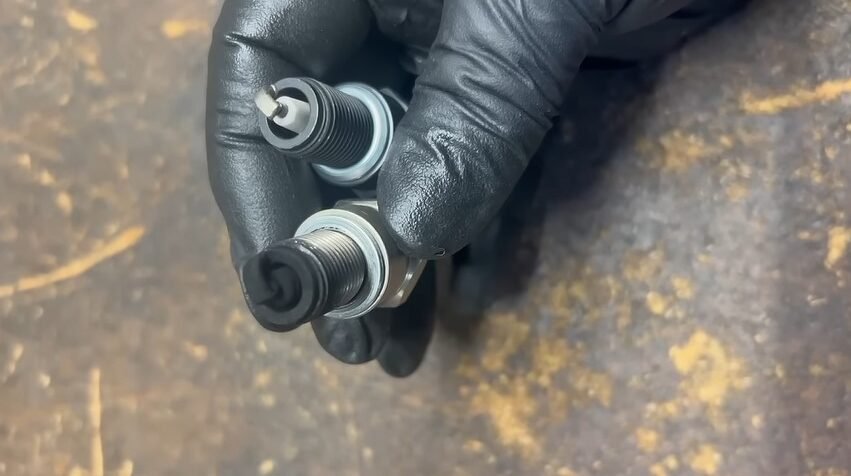
A plug may also fail independently and create the same P030x misfire you would expect from a weak coil.
Pay attention to the appearance of the plug from the misfiring cylinder. Compare it with plugs from healthy cylinders.
A plug that is soaked with fuel may indicate that fuel is entering the cylinder but combustion is not occurring correctly. A completely dry plug can point the diagnosis in another direction.
Also look for thin dark lines along the plug insulator or coil boot. These can indicate carbon tracking, where spark energy has been leaking down an unintended path instead of jumping the plug gap.
Before approving Ignition Coil Replacement, make sure the plug is not the original reason the cylinder stopped firing properly.
2. Coil Connector, Power Supply, Ground, or Trigger Circuit
A new ignition coil will not fix a damaged electrical circuit.
Modern coil connectors live in a hot, vibrating environment. Plastic locks become brittle, terminals loosen, wiring can rub through, and corrosion may develop inside the connector.
Common problems include a broken locking tab, loose terminal tension, melted plastic, corroded pins, damaged wiring, or missing power supply.
AutoZone currently notes that damaged ignition-coil connectors can cause rough idle, hesitation, poor acceleration, and cylinder-specific misfire codes that closely resemble a failed coil.
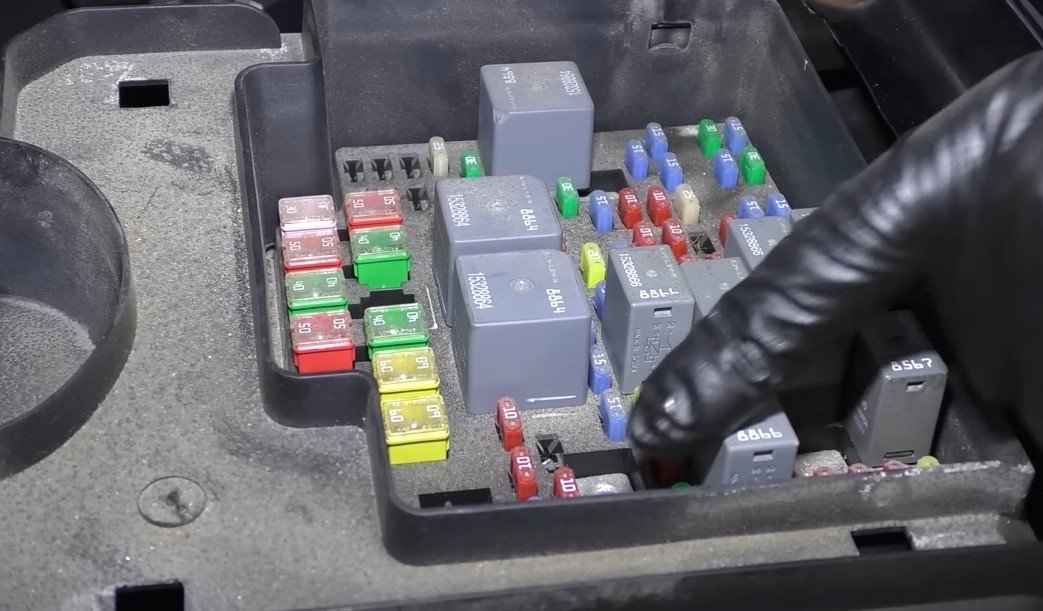
Check the connector carefully before swapping or replacing the coil.
If the vehicle uses individually controlled coils, the ECU must also provide the proper trigger signal.
Delphi recommends verifying the coil’s power supply before condemning the coil itself, because different coil designs use different circuit layouts and test methods.
This is also why a coil-specific circuit code can be more useful than a basic P030x code.
Our OBD2 codes reference can help distinguish P0300-series misfire codes from ignition-circuit and other powertrain faults.
3. Fuel Injector Problem
A cylinder needs spark and fuel.
If the injector does not deliver the correct amount of fuel, that cylinder can misfire even with a perfect coil and spark plug.
Possible injector problems include clogging, an electrical open, poor connector contact, missing injector pulse, restricted flow, or an injector stuck partly open.
A leaking injector can also make the cylinder too rich to burn cleanly.
One useful clue is what happens after a coil swap.

Suppose you have P0302. You move coil #2 to cylinder #4 and the misfire remains on cylinder 2.
The coil becomes less suspicious.
Now the spark plug, injector, wiring, intake leak, and compression deserve more attention.
Depending on the vehicle and tools available, injector diagnosis may include listening for operation, checking injector pulse, performing a balance test, or using cylinder-contribution data.
Our bad fuel injector symptoms guide covers the differences between clogged, leaking, and electrically failed injectors.
4. Vacuum Leak or Intake Manifold Gasket Leak
A localized intake leak can lean out one cylinder enough to produce a P030x code.
This is especially common when the leak is near one intake runner or one side of the manifold.
Possible symptoms include a rough idle, positive fuel trims, hissing, and a misfire that becomes less noticeable as engine speed rises.
Fuel trims are helpful here.
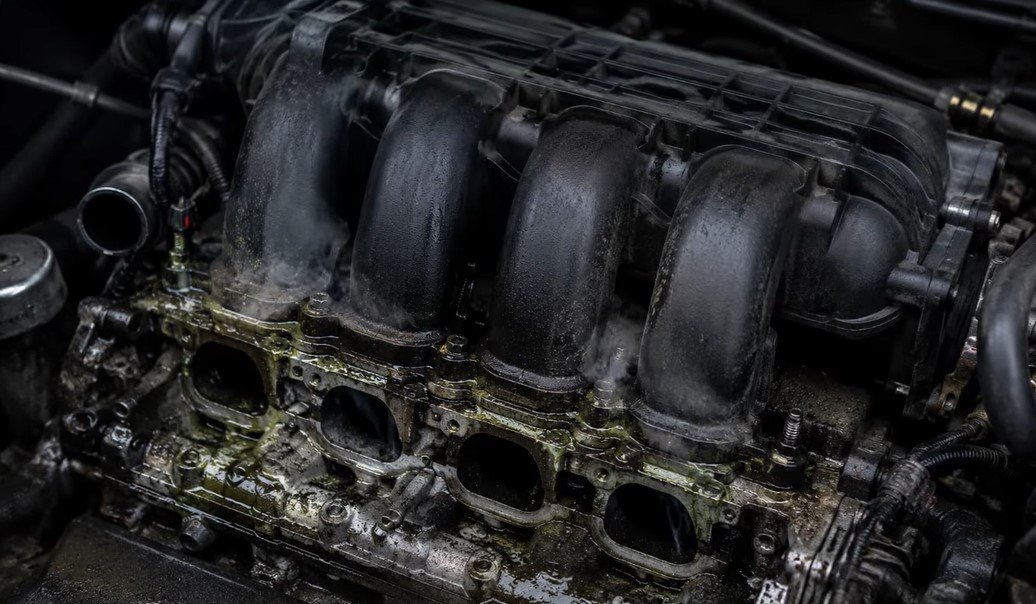
If trims are strongly positive at idle but improve noticeably around 2,000 to 2,500 RPM, an intake or vacuum leak becomes more likely.
That pattern is different from a weak ignition coil that primarily misfires when cylinder pressure rises under acceleration.
Our bad intake manifold gasket symptoms guide explains how intake leaks can create lean codes, rough idle, and cylinder-specific misfires.
5. Low Fuel Pressure or a Broader Fuel-Delivery Problem
If several cylinders misfire—especially during acceleration—do not assume several ignition coils suddenly failed together.
The engine may simply not be receiving enough fuel.
Possible causes include a weak fuel pump, restricted filter or strainer, pressure-control problem, or another issue reducing rail pressure.
You may see P0300 along with lean codes such as P0171 or P0174.
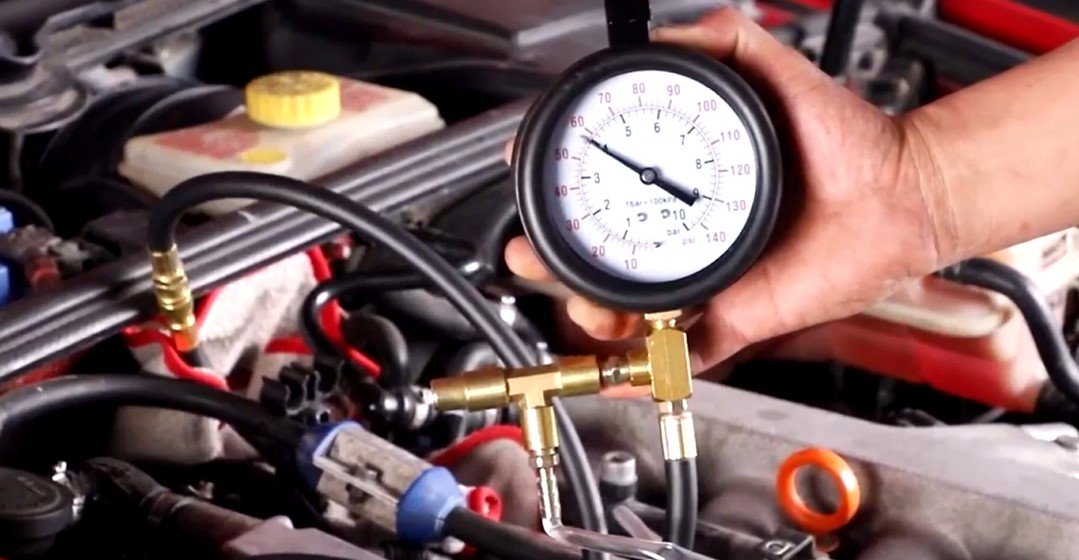
Fuel trims may become increasingly positive as load rises because the ECU is trying to compensate for inadequate fuel delivery.
Our Fuel Pump Replacement guide explains why pressure should be checked under load and why low fuel pressure does not automatically identify the pump itself as the failed part.
A broad fuel-delivery problem is particularly important when several cylinders begin misfiring at roughly the same time.
6. Low Compression or a Mechanical Cylinder Problem
If the coil is good, plug is good, injector appears to work, and the misfire remains on the same cylinder, mechanical condition becomes much more important.
Possible causes include a burned valve, leaking valve, worn piston rings, damaged piston, head-gasket failure, worn cam lobe, or other valvetrain problem.
A compression test can compare the affected cylinder with the others.
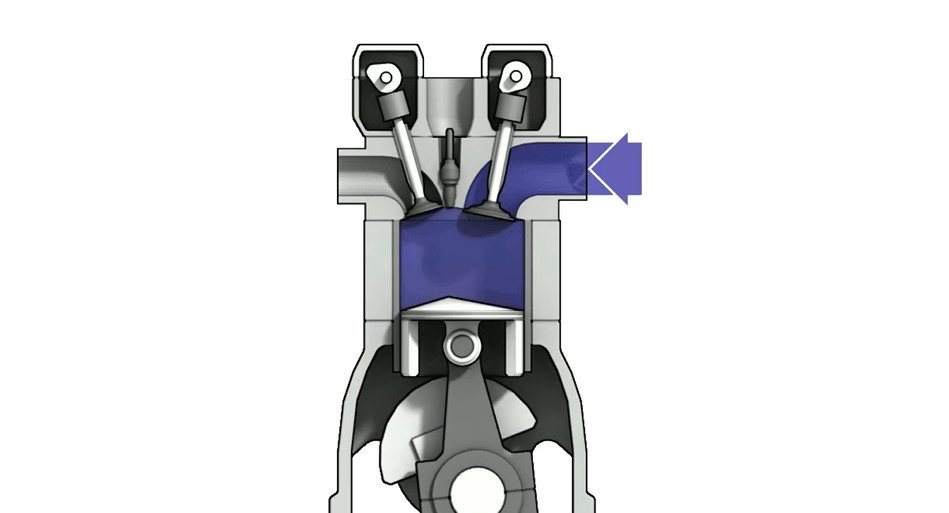
If compression is low, a leak-down test can help determine where pressure is escaping.
The key principle is simple:
A coil cannot fix a cylinder that cannot compress the mixture correctly.
Repeatedly replacing coils on the same cylinder while ignoring compression can turn a simple diagnosis into a very expensive guessing game.
7. Oil, Coolant, or Moisture in the Spark Plug Well
Remove the coil and look down into the spark plug well.
If you find oil, water, or coolant where the coil boot should be dry, investigate the source before installing another coil.
Oil commonly enters through a leaking valve-cover or spark-plug-tube seal.
Water may enter after engine washing or through damaged seals.

Contamination can encourage spark leakage, carbon tracking, boot deterioration, and repeated misfires.
Delphi includes valve-cover gasket condition and wiring/connector condition among the visual checks to make when diagnosing ignition-coil faults.
If a coil has already been damaged by oil or moisture, Ignition Coil Replacement may still be necessary—but the leak needs to be repaired too.
Otherwise, the replacement may suffer the same problem.
8. Timing, VVT, or Cam/Crank Correlation Problems
Not every misfire belongs to one cylinder.
If several cylinders misfire, one entire bank is affected, or the engine runs poorly over a wide RPM range, look beyond individual coils.
Possible causes include incorrect valve timing, timing-chain stretch, a slipped timing event, VVT solenoid problems, cam phaser faults, or incorrect cam/crank position information.
These faults can change when valves open and close or make the ECU lose accurate timing reference.

The result may include P0300, bank-specific misfires, rough running, low power, and timing-related codes.
Our MAF Sensor Replacement guide is also useful when several cylinders appear lean or airflow data does not match engine load, since airflow and fuel-trim problems can create misfire patterns that resemble ignition failure.
P0300–P0308 Tell You Where the Misfire Happened, Not Why
This distinction is worth remembering.
| Code | What It Means |
|---|---|
| P0300 | Random/multiple-cylinder misfire |
| P0301 | Cylinder 1 misfire |
| P0302 | Cylinder 2 misfire |
| P0303 | Cylinder 3 misfire |
| P0304 | Cylinder 4 misfire |
| P0305+ | Corresponding-cylinder misfire |
The ECU detects a cylinder that failed to contribute normally.
It does not inspect the coil, injector, compression, or plug and announce which component physically failed.
So:
P0302 = Cylinder 2 misfire
It does not automatically mean:
Replace ignition coil #2.
That is why component testing matters.
The Coil Swap Test Is One of the Best Checks Before Replacement
On a coil-on-plug engine, the coil swap test is simple and useful.
Suppose the scanner shows P0302.
Move the ignition coil from cylinder 2 to another cylinder—say cylinder 4—while leaving the other variables as unchanged as practical.
Then retest the vehicle.
If the code changes from P0302 to P0304, the misfire followed the coil.
That is strong evidence that the coil itself is faulty.
AutoZone specifically recommends moving the suspected coil to another cylinder and checking whether the fault follows it.
If P0302 remains on cylinder 2, stop blaming the coil automatically.
Now investigate the plug, injector, intake leak, compression, wiring, or mechanical condition on cylinder 2.
One caution: the swap test cannot completely rule out an intermittent connector or ECU-control problem, so inspect the harness while you are there.
Coil, Spark Plug, or Injector? Use What Moves
This is a practical way to narrow down a single-cylinder misfire.
| What Happens | Stronger Suspect |
|---|---|
| Misfire follows swapped coil | Ignition coil |
| Misfire follows swapped spark plug | Spark plug |
| Injector balance/contribution is abnormal | Injector |
| Misfire remains on same cylinder | Compression, injector, wiring, intake leak |
| Misfire appears mainly under heavy load | Coil, plug, or fuel delivery |
| Misfire is strongest at idle | Vacuum leak, injector, compression |
The goal is to move or test one variable at a time.
That gives you evidence instead of guesses.
Misfire at Idle and Misfire Under Load Mean Different Things
When the misfire happens can be as useful as which cylinder is affected.
A misfire that is strongest at idle often pushes diagnosis toward an intake leak, injector imbalance, or weak compression.
A misfire that appears mainly during acceleration or heavy load raises suspicion of a weak coil, worn spark plug, excessive plug gap, or low fuel pressure.
Why can a weak coil hide at idle?
Because spark demand increases as cylinder pressure rises. A marginal coil may be capable of firing the plug during light-load operation but fail when the driver accelerates.
Cold-start-only misfires deserve another path. They can be caused by injector leakage, coolant entering a cylinder, intake leaks, or compression issues.
This is why freeze-frame information is valuable.
Our freeze-frame data guide explains how RPM, load, coolant temperature, vehicle speed, and fuel trims can show the conditions present when the misfire code was stored.
How to Diagnose a Misfire Before Ignition Coil Replacement
Start with the scanner, but do not stop there.
Read all stored and pending codes first. A P0302 by itself tells a different story from P0302 combined with P0171, an injector code, or a cam-timing fault.
Save freeze-frame information before clearing anything.
Next, inspect the plug and coil boot. Look for wear, excessive gap, fouling, cracking, oil, moisture, or carbon tracking.
Then perform the coil swap test if the engine design allows it.
If the misfire does not follow the coil, check injector operation and review fuel trims.
Our live-data guide explains how STFT, LTFT, load, RPM, and other values can help separate ignition from mixture problems.
If spark and fuel checks look normal but the misfire remains on the same cylinder, move to compression or leak-down testing.
Multiple-cylinder or bank-specific misfires may also justify checking cam/crank correlation and valve timing.
This sequence is much more reliable than replacing coils until the code disappears.
Can an OBD2 Scanner Diagnose a Bad Ignition Coil?
A scanner can tell you a lot about the misfire, but usually not enough to prove the coil itself has failed.
Depending on the vehicle and scanner, you may see P0300–P030x codes, coil-circuit codes, freeze-frame data, fuel trims, misfire counters, or Mode $06 monitor results.
Some enhanced tools also provide cylinder-contribution information.
That can help identify which cylinder is actively misfiring and under what conditions.
But the scanner cannot physically see a cracked coil boot, excessive spark-plug gap, oil in the plug well, or a burned valve.
For that reason, scan data should be combined with physical inspection and component testing.
Don’t Trust One Generic Ignition-Coil Resistance Number
Older diagnostic advice often gives one resistance range and suggests every coil can be tested the same way.
Modern ignition systems are not that simple.
Delphi notes that ignition coils can use designs ranging from two to seven pins, and different coil architectures require different testing methods.
Some modern coils contain internal electronics or drivers that make simple primary/secondary resistance testing less useful.
Use manufacturer specifications and wiring information for the exact vehicle.
On many coil-on-plug engines, comparing cylinders, checking supply and control signals, inspecting the plug, and performing a coil swap can be more useful than relying on one generic ohmmeter value.
When Ignition Coil Replacement Actually Makes Sense
Ignition Coil Replacement becomes well supported when the evidence points back to the coil itself.
For example, the misfire follows the coil during a swap test, the spark plug is serviceable, the connector and power supply are good, and the injector and compression are not responsible.
Visible cracking, arcing, burned areas, or a damaged coil boot can provide additional evidence.
A coil-specific circuit fault can also justify replacement once external wiring and control circuits have been verified.
In short:
Replace the coil because the fault moves with it or testing proves it cannot fire correctly—not simply because a P030x code identifies its cylinder.
Should You Replace One Ignition Coil or All of Them?
There is no universal requirement to replace every coil when one fails.
If one coil is proven bad and the others are functioning correctly, replacing only the failed unit is often reasonable.
RepairPal likewise recommends testing the components on the affected cylinder rather than assuming every coil needs replacement.
Broader replacement may make more sense when several coils have already failed, the vehicle has very high mileage, access is unusually difficult, or vehicle-specific service guidance supports replacing the set.
Spark plugs deserve attention either way.
Worn plugs can increase coil workload, so installing a new coil over a badly worn plug may shorten the life of the replacement.
Can You Drive With a Misfiring Ignition Coil?
A small intermittent misfire may still allow the car to move, but an active misfire should not be ignored.
A flashing Check Engine Light is especially important.
It generally indicates a misfire severe enough to risk catalytic-converter damage.
Unburned fuel can reach the exhaust, where it may overheat the catalyst.
Avoid continued driving if the engine is shaking badly, power drops significantly, the Check Engine Light flashes, you smell raw fuel, or the engine repeatedly stalls.
Our Catalytic Converter Replacement guide explains why untreated misfires can damage an expensive converter.
How Much Does Ignition Coil Replacement Cost?
RepairPal’s current U.S. estimate, last updated September 3, 2026, puts average Ignition Coil Replacement at about $238 to $320.
Labor is estimated at approximately $74–$109, while parts are around $164–$211. Taxes, location, and related repairs are not included.
Vehicle-specific estimates vary considerably. Current RepairPal examples range from about $131–$203 for a Honda Civic to roughly $415–$711 for a Nissan Altima.
The final cost depends on whether the vehicle uses individual coils or a coil pack, how many coils are being replaced, part quality, and how difficult the coils are to reach.
Some rear-bank coils require substantially more labor than coils sitting directly on top of the engine.
That makes proper diagnosis before Ignition Coil Replacement even more worthwhile.
Frequently Asked Questions
Does P0301 mean ignition coil #1 is bad?
No. P0301 means cylinder 1 is misfiring. The cause may be its coil, plug, injector, wiring, intake leak, or a compression problem.
What is the easiest way to confirm a bad ignition coil?
On many coil-on-plug engines, move the suspected coil to another cylinder and see whether the misfire follows it. If it does, the coil becomes a strong suspect.
Can a bad spark plug damage an ignition coil?
Yes. A worn plug or excessive gap can increase the voltage demand placed on the coil and contribute to premature coil failure.
Can a bad injector look like a bad ignition coil?
Yes. Either one can create a cylinder-specific misfire code, which is why the coil should not be blamed based on P030x alone.
Can oil in a spark plug well cause a misfire?
Yes. Oil can damage the coil boot and encourage spark leakage or carbon tracking. Repair the leak as well as any damaged ignition component.
Can an OBD2 scanner tell which ignition coil is bad?
It can identify the misfiring cylinder and may show misfire counters or coil-circuit codes, but additional testing is usually required to prove the coil itself has failed.
Should I replace all ignition coils at once?
Not automatically. Replacing only the confirmed failed coil is reasonable in many cases. Age, repeated failures, access cost, and vehicle-specific guidance can influence the decision.
Can an ignition coil fail only during acceleration?
Yes. Higher cylinder pressure increases spark demand, so a weak coil may misfire under load while appearing normal at idle.
Final Thoughts
A misfire code is a starting point, not a parts list.
Before Ignition Coil Replacement, inspect the spark plug, coil connector, wiring, injector, fuel trims, intake system, and plug well. If the misfire remains on the same cylinder, check compression. If several cylinders are involved, consider fuel delivery and valve timing.
Most importantly, use the coil swap test when the engine design allows it.
If the misfire follows the coil, replacement makes sense. If it stays behind, keep diagnosing the cylinder instead of replacing a coil that was doing its job.