
You press the gas pedal, but the car does not respond right away.
For a second, it feels lazy. Then it may jerk, stumble, bog down, or suddenly pick up speed again. Sometimes it happens only from a stop. Sometimes it shows up when you merge onto the highway, climb a hill, or try to pass another vehicle.
This is usually called hesitation. And when your car hesitates when accelerating, it means the engine, transmission, or one of the control systems is not delivering power smoothly.
The tricky part is that the cause is not always obvious. A weak spark plug can feel like a fuel problem. A dirty mass airflow sensor can feel like a bad transmission. A slipping transmission can feel like engine hesitation. That is why guessing and replacing parts often gets expensive fast.
Here are the most common causes, what each one usually feels like, and what you should check before replacing parts.
What Does It Mean When a Car Hesitates When Accelerating?
When a car hesitates when accelerating, there is a delay between what your foot asks for and what the vehicle actually does.
A normal engine should respond smoothly when you press the gas pedal. It should increase RPM, build power, and move the car forward without stumbling. Hesitation means something interrupts that process.
It may feel like the car is holding back. It may feel like the engine loses power for a moment. In some cases, the car may jerk, shake, bog down, or surge.
This can happen because the engine is not getting the right amount of fuel, air, spark, or exhaust flow. It can also happen when the transmission slips or delays power transfer to the wheels.
A small hesitation may only feel annoying at first. But if the problem gets worse, it can become dangerous during highway merging, left turns across traffic, or passing another vehicle.
Is It Safe to Drive If Your Car Hesitates?
It depends on how bad the hesitation is.
If the hesitation is mild, the check engine light is not flashing, and the car still drives normally most of the time, you may be able to drive it carefully for a short distance. But you should still diagnose it soon, because small problems often show up first under acceleration.
You should avoid driving or get the car checked quickly if the hesitation comes with a flashing check engine light, strong fuel smell, stalling, heavy shaking, severe loss of power, or RPM rising without the car gaining speed.
A flashing check engine light is especially important. It often points to an active misfire, which can damage the catalytic converter if you keep driving. If the light is on but the scan tool does not show anything obvious, this guide on check engine light on but no codes can help explain why that sometimes happens.
1. Worn Spark Plugs or Weak Ignition Coils
One of the most common reasons a car hesitates when accelerating is weak ignition.
The spark plugs ignite the air-fuel mixture inside the engine. Ignition coils give the plugs the voltage they need to create that spark. When either part gets weak, the engine may run fine at idle but struggle when you ask for power.
Acceleration puts the engine under load. That is when weak spark usually shows up.
You may feel a stumble when pressing the gas. The engine may shake. The car may jerk during acceleration, especially at lower speeds or while climbing a hill. In some cases, the check engine light may turn on with misfire codes like P0300, P0301, P0302, and so on. If you are not sure what a trouble code means, you can compare it with this OBD2 codes list and meaning guide.
If the plugs are old, fouled, oil-covered, or the gap is too wide, they can cause hesitation. A failing coil can cause similar symptoms, especially on modern engines where each cylinder has its own coil.
This does not always mean you should replace every coil right away. A scan tool can show which cylinder is misfiring. Sometimes swapping coils between cylinders can confirm whether the coil is actually the problem.
2. Weak Fuel Pump, Clogged Fuel Filter, or Low Fuel Pressure
An engine needs more fuel when you accelerate. If the fuel system cannot keep up, the car may feel like it runs out of breath.
A weak fuel pump may still provide enough fuel for idle and light driving. But when you climb a hill, merge onto a highway, or press the gas harder, fuel pressure may drop. That can make the engine bog down, stumble, or hesitate.
A clogged fuel filter can cause the same issue. Some newer cars have the filter built into the fuel pump assembly, while older vehicles may have a serviceable inline filter.

Low fuel pressure hesitation often feels worse under load. The car may drive okay around town but struggle at higher speeds. You may also notice long cranking, random stalling, or weak acceleration after the engine warms up.
If your car hesitates when accelerating mostly during highway driving, uphill driving, or hard acceleration, fuel pressure should be on the checklist. A proper fuel pressure test under load is much better than guessing. If fuel pressure sensor data or fuel-related codes appear, a code like P018B can also point you toward the fuel pressure circuit instead of the pump itself.
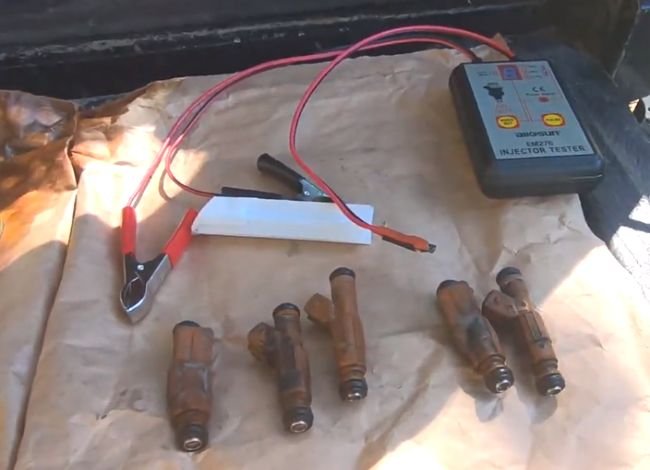
3. Dirty or Clogged Fuel Injectors
Fuel injectors spray fuel into the engine in a controlled pattern. When they get dirty, clogged, or uneven, one or more cylinders may not receive the right amount of fuel.
That can cause rough idle, uneven acceleration, poor fuel economy, or a light stumble when pressing the gas pedal.
A dirty injector does not always fail completely. It may still spray fuel, but not evenly. That is why the problem can feel inconsistent. Some days the car may feel almost normal. Other days it may hesitate more, especially during cold starts or quick acceleration.

Low-quality fuel, carbon buildup, long service intervals, or fuel contamination can all make injector problems worse. If the car also starts using noticeably more gas, this related guide on a car using too much fuel can help separate fuel waste from normal driving-condition changes.
Fuel injector cleaner can help in mild cases, but it is not a magic fix. If an injector is electrically failing, badly clogged, or leaking, cleaning may not solve the problem. A mechanic may need to check injector balance, fuel trims, or misfire data to confirm it.
4. Dirty MAF Sensor, Faulty MAP Sensor, or Bad Air-Fuel Data
Modern engines depend heavily on sensor data. If the engine computer receives the wrong air measurement, it may send the wrong amount of fuel.
The mass airflow sensor, or MAF sensor, measures how much air enters the engine. Some vehicles use a MAP sensor, which reads manifold pressure instead. Either way, the computer uses that information to calculate fuel delivery.
If the sensor is dirty, contaminated, or failing, the engine may run too lean or too rich. That can create hesitation, surging, rough idle, poor mileage, or weak throttle response. Lean codes such as P0171 and rich codes such as P0172 can help show which direction the fuel mixture is going.
A dirty MAF sensor is common on vehicles with old air filters, intake leaks, or over-oiled aftermarket air filters. The problem can feel like the engine is confused when you press the gas.

Common MAF-related codes include P0101, P0102, and P0103. MAP sensor or airflow correlation problems can also trigger codes related to intake pressure and calculated airflow, such as P2074.
Oxygen sensors can also affect fuel correction once the engine is warm. If you suspect the oxygen sensor is causing poor fuel control, this guide on how to test an O2 sensor with OBD2 is useful before replacing the sensor.
Cleaning a MAF sensor should only be done with proper MAF sensor cleaner. Do not use brake cleaner or harsh chemicals, because the sensor wire is delicate.
5. Dirty Throttle Body or Bad Throttle Position Sensor
The throttle body controls how much air enters the engine when you press the gas pedal. If it gets dirty, the throttle plate may not move or respond as smoothly as it should.
This can create hesitation from a stop, unstable idle, stalling when coming to a stop, or a delay when you first touch the gas.
On many newer vehicles, the throttle is electronic. The gas pedal sends a signal to the computer, and the computer commands the throttle body. If the throttle position sensor or electronic throttle system gives incorrect readings, the car may hesitate, surge, or enter limp mode.
A bad throttle position sensor can make acceleration feel uneven because the computer does not clearly understand how much power you are asking for.

This is one reason a car hesitates when accelerating from a stop but feels better once it is already moving.
Sometimes cleaning the throttle body helps, especially if there is visible carbon around the throttle plate. But some vehicles require a throttle relearn procedure afterward, so it is worth checking the service procedure for that model.
6. Vacuum Leak or Cracked Intake Hose
A vacuum leak allows extra air to enter the engine without being measured properly.
That extra air throws off the air-fuel mixture. The engine may run lean, especially at idle or when transitioning from idle to acceleration. That can cause hesitation, rough idle, high idle, stalling, or lean codes like P0171 and P0174.
Vacuum leaks can come from cracked hoses, loose clamps, a damaged intake boot, a leaking intake manifold gasket, or a disconnected vacuum line.
A cracked intake hose is easy to miss because it may only open when the engine moves under load. The car may idle strangely, then hesitate when you start accelerating.
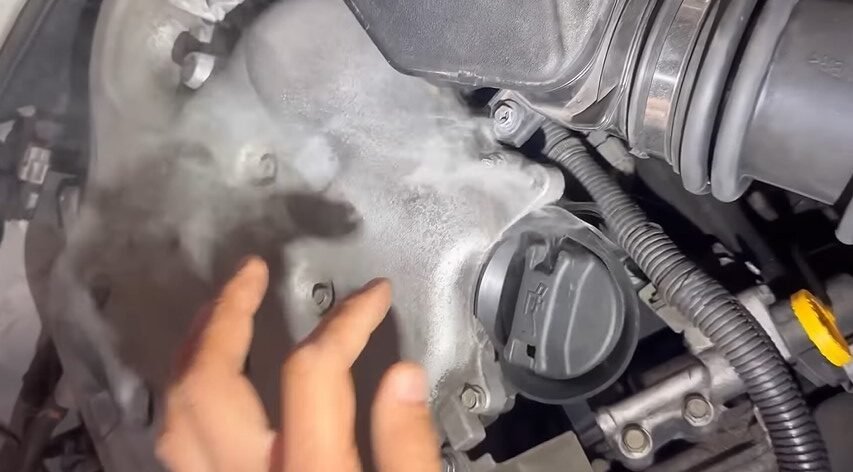
You may hear a hissing sound under the hood, but not always. Some leaks are too small to hear clearly. A smoke test is often the best way to find them.
If your car has hesitation along with rough idle, lean codes, or a whistling sound, check for air leaks before replacing expensive sensors.
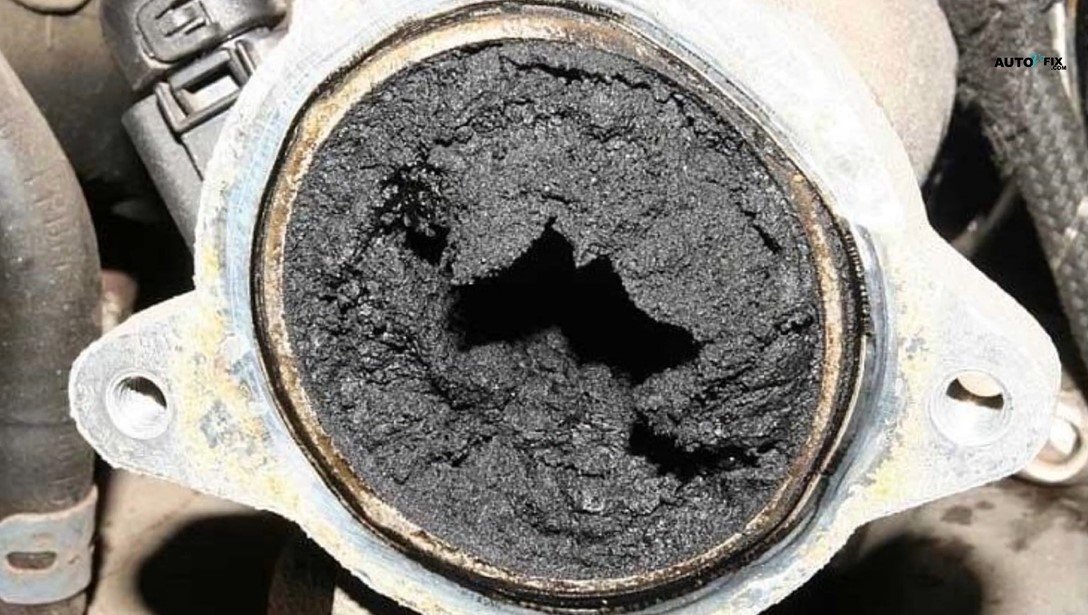
7. Clogged Catalytic Converter, EGR, or VVT Problem
Not every hesitation problem comes from fuel or spark. Sometimes the engine cannot breathe properly.
A clogged catalytic converter can restrict exhaust flow. When exhaust cannot leave the engine freely, power drops. The car may feel okay at low speed but lose strength as RPM increases. It can feel like the engine is being held back.
This type of hesitation may be worse at highway speed, during hard acceleration, or after the exhaust heats up. In some cases, you may notice poor fuel economy, a sulfur-like smell, excessive heat under the vehicle, or a P0420 code.
EGR problems can also cause hesitation. If the EGR valve sticks open at the wrong time, exhaust gas enters the intake when the engine does not want it. That can create stumbling, rough idle, or poor acceleration.
Variable valve timing, or VVT, problems can also affect throttle response. If oil flow, cam timing, or a VVT solenoid issue throws timing off, the engine may feel weak or delayed. Camshaft and crankshaft correlation problems can also appear as timing-related trouble codes, including P0019.
These problems are often overlooked because drivers first think about fuel pump, spark plugs, or sensors. But if the basic checks look fine and the car still feels choked under load, exhaust and valve timing should not be ignored.
8. Transmission or Clutch Problem That Feels Like Hesitation
Sometimes the engine is not actually hesitating. The transmission is.
This is where many drivers get confused. If the engine revs normally but the car does not move forward with matching speed, the issue may be in the transmission or clutch, not the engine.
In an automatic transmission, low fluid, dirty fluid, slipping clutches, shift solenoid problems, or internal wear can cause delayed acceleration. You may feel a pause before the car moves, a flare between gears, or a delay when shifting from park to drive.
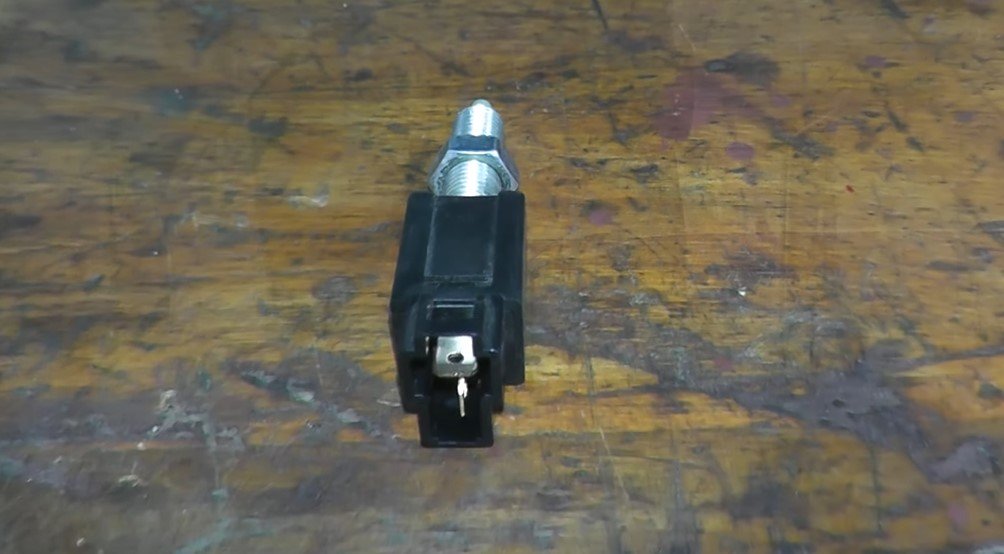
Some transmission problems may set gear ratio or transmission-related codes. For example, P0733 points toward an incorrect third gear ratio, which is different from a basic engine hesitation problem. Not every basic code reader can access transmission modules, so this guide on whether an OBD2 scanner can read transmission codes is worth checking if the symptoms feel transmission-related.
In a manual car, a worn clutch can slip under load. The RPM may rise, but the car does not accelerate properly. You may also notice a burning smell after hard acceleration.
This is different from engine hesitation. With engine hesitation, the engine may stumble, misfire, shake, or bog down. With transmission slipping, the engine often revs but power does not reach the wheels properly.
If your car hesitates when accelerating and the RPM jumps higher than normal without a matching increase in road speed, check the transmission or clutch side before blaming the engine.
How to Narrow Down the Cause
The timing of the hesitation gives important clues.
If it happens mostly from a stop, think about throttle body buildup, TPS problems, vacuum leaks, dirty injectors, or low-speed transmission engagement.
If it happens uphill or during highway merging, think about fuel pressure, ignition coils, catalytic converter restriction, or transmission slip.
If it happens only when the engine is cold, look at vacuum leaks, carbon buildup, sensor readings, dirty throttle body, or fuel mixture problems.
If it happens after refueling, bad fuel or an EVAP purge valve issue may be involved, especially if the car also has hard starting after filling the tank.
If the car hesitates when accelerating but there is no check engine light, do not assume everything is fine. Early fuel pressure problems, small vacuum leaks, dirty throttle body buildup, weak coils, and slight transmission delay may happen before a clear code appears.
If it happens with a flashing check engine light, treat it seriously. That usually points toward a misfire, and continued driving can make the repair more expensive.
What to Check First Before Replacing Parts
The smartest first step is a code scan, even if the check engine light is not currently on. If you are new to scan tools, this step-by-step guide on how to use an OBD2 scanner can help you start without guessing.
After that, inspect the basics. Check the air filter, intake hose, vacuum lines, battery connections, and visible wiring. Look for cracked hoses, loose clamps, oil contamination, or unplugged sensors.
Some codes may be stored as pending, stored, or permanent codes, and each one means something slightly different. This guide on pending vs stored vs permanent codes is useful before clearing anything.
If there are misfire codes, inspect spark plugs and coils before moving to fuel system parts. If there are lean codes, check for vacuum leaks and fuel pressure. If the car feels choked at higher RPM, consider exhaust restriction. If RPM rises but speed does not, check transmission fluid or clutch condition.
Live data can also help. Fuel trims, MAF readings, O2 sensor readings, throttle position, and engine load can show what the computer is seeing while the hesitation happens. If you are comparing scan data, this guide on freeze frame vs live data explains the difference clearly.
Do not clean or replace sensors just because they are mentioned online. A sensor code can be caused by wiring, air leaks, dirty connections, or another system affecting the reading.
The goal is not to replace the most popular part. The goal is to find why your car hesitates when accelerating in your exact situation.
Can a Car Hesitate Without a Check Engine Light?
Yes. A car can hesitate even with no check engine light.
Some problems are not bad enough to trigger a code yet. A weak fuel pump, slightly dirty injectors, early ignition coil failure, small vacuum leak, dirty throttle body, bad fuel, or transmission delay may happen before the computer stores a clear fault.
That is why symptoms matter. When it happens, how often it happens, engine temperature, speed, RPM behavior, and whether the car shakes can all help narrow the cause.
If your car hesitates when accelerating only once in a while, write down the driving condition. Was the engine cold? Were you going uphill? Did it happen after refueling? Did the RPM rise normally? Small details like these can save a lot of diagnostic time. Freeze frame data can also capture the condition at the moment a code was set, and this guide on how to read freeze frame data explains what to look for.
When Should You See a Mechanic?
You should get professional diagnosis quickly if the hesitation is getting worse, the car stalls, the check engine light flashes, the car shakes badly, or you smell fuel.
You should also avoid guessing if the repair could involve fuel pressure, catalytic converter restriction, transmission slipping, or electrical testing. Those areas can get expensive if parts are replaced without confirmation.
A good diagnosis may include a scan tool, live data, fuel pressure test, smoke test, ignition test, exhaust backpressure test, or transmission inspection. If you are deciding whether a basic code reader is enough or whether you need deeper diagnostic functions, this comparison of code reader vs scan tool can help.
Final Thoughts
When a car hesitates when accelerating, the cause is usually somewhere in fuel delivery, ignition, airflow, sensors, exhaust flow, or the transmission. The hard part is that many of these problems feel similar from the driver’s seat.
Start with when the hesitation happens. Then scan for codes, inspect the simple things, and follow the clues before replacing parts.
A dirty air filter or worn spark plug may be a simple fix. A weak fuel pump, clogged catalytic converter, or slipping transmission can become more serious. The earlier you find the real cause, the easier it is to avoid a bigger repair later.