
Last Updated on October 8, 2026
Your OBD2 scanner shows P0420, so you assume the catalytic converter needs replacing. It shows P0301, so you buy a new spark plug for cylinder one. Or maybe the scanner finds no codes, and you assume your entire car is healthy.
All three assumptions can be wrong.
An OBD2 scanner is useful, but it doesn’t tell you everything about your vehicle. A trouble code points toward a problem the car’s computer detected. It doesn’t always identify the part responsible.
Understanding what an OBD2 scanner cannot do can save you from replacing good parts, overlooking mechanical problems, or repeatedly clearing codes without fixing anything.
Let’s look at 12 important limitations and what you should do instead.
What an OBD2 Scanner Cannot Do: Quick Answer
An OBD2 scanner cannot detect every mechanical problem, identify every failed part with certainty, or physically repair your vehicle.
It also cannot access systems or perform functions that the scanner and vehicle don’t support.
The important distinction is that not every scanner has the same capabilities. A basic code reader and a professional bidirectional scanner may use the same diagnostic port, but they can do very different things.
First, Understand What Type of Scanner You Have
Standard OBD2 diagnostics mainly provide emissions-related information. More advanced scanners may communicate with additional vehicle systems using manufacturer-specific software.
| Scanner Type | Typical Capabilities | Main Limitations |
|---|---|---|
| Basic Code Reader | Engine codes, readiness status, and supported data | Limited access to other modules |
| Enhanced Scanner | Supported ABS, airbag, transmission, and body diagnostics | Coverage varies by vehicle |
| Bidirectional Scanner | Supported active tests and service functions | Not every function works on every car |
| Professional/OEM Equipment | Selected coding, programming, and advanced diagnostics | May require subscriptions or security authorization |
For example, saying an OBD2 scanner cannot read ABS codes would be misleading. Some advanced scanners can. A basic engine-code reader usually cannot unless it specifically supports that system.
1. It Cannot Identify the Exact Failed Part From a Code Alone
A trouble code is a starting point, not a repair instruction.
For example, P0420 means the computer detected catalytic converter efficiency below its expected threshold.
A worn catalytic converter is one possible cause. But exhaust leaks, engine misfires, fuel-control problems, and sensor issues may also affect the monitor.
Similarly, P0301 means a misfire was detected in cylinder one. It doesn’t prove the spark plug is bad.
The problem could involve an ignition coil, injector, wiring, compression, or an air leak.
If you’re unsure what a particular code means, our OBD2 trouble codes list and meanings explains common definitions and possible causes.
What to do: Use the code to identify which system needs testing. Don’t buy a replacement part until you’ve confirmed the cause.
2. It Cannot Detect Every Mechanical Problem
Many mechanical components don’t have sensors that directly report their condition.
A scanner generally cannot directly measure:
- Tire tread depth or wheel alignment.
- Brake rotor thickness or physical wear.
- Actual cylinder compression.
- Internal bearing damage.
- Worn suspension bushings or ball joints.
Sometimes a mechanical problem affects an electronic reading.
For example, low cylinder compression may cause a misfire code. But the scanner cannot tell you whether worn piston rings, damaged valves, or another mechanical problem caused the compression loss.
What to do: Combine scan results with physical inspections and appropriate mechanical tests.
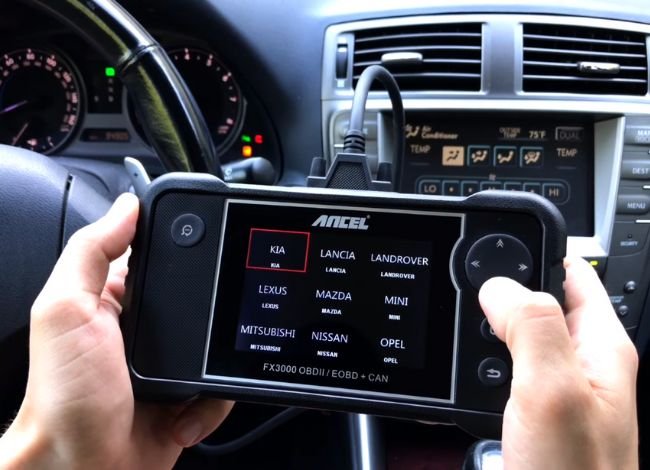
3. It Cannot Prove Your Entire Car Is Healthy
Seeing “No Codes Found” is reassuring, but it isn’t proof that everything works properly.
A fault may not have occurred long enough to trigger a code. The scanner may also lack access to the affected module.
Some problems never generate codes at all.
There’s another possibility: someone recently cleared the codes before you connected the scanner.
What to do: Check pending and permanent codes where supported, emissions readiness status, dashboard warnings, and vehicle symptoms. A used car still needs a proper inspection even if the scan is clean.
If the warning light is on but your scanner reports nothing, see our guide on why the Check Engine Light may be on with no codes.
4. It Cannot Reliably Predict Future Breakdowns
Some scanner readings may show that a monitored test is approaching its programmed limit.
That can help you investigate a developing problem, but it doesn’t tell you exactly when a component will fail.
A starter, belt, bearing, or battery can deteriorate without producing a useful diagnostic code.
Even Mode 6 test results can vary with operating conditions.
Our explanation of Mode 6 on a scan tool covers how onboard test results work and why a reading near its limit isn’t a reliable failure prediction.
That’s another important part of what an OBD2 scanner cannot do: it cannot predict every breakdown or replace routine maintenance.
5. A Basic Scanner Cannot Read Every Vehicle Module
A basic OBD2 reader mainly retrieves standardized emissions-related diagnostic information.
It may read an engine trouble code while missing faults stored in the ABS, airbag, transmission, body control, or climate control modules.
That doesn’t necessarily mean those systems are working correctly.
Transmission diagnostics are a good example. Our guide explaining whether an OBD2 scanner can read transmission codes shows why some tools retrieve only generic codes while others can access the transmission control module directly.
What to do: If you’re investigating a specific warning light, choose a scanner that supports the relevant module on your vehicle’s exact year, make, and model.
6. It Cannot Retrieve Every Manufacturer-Specific Code
OBD2 includes standardized trouble codes, but manufacturers can also provide additional diagnostic information.
A basic reader may display a generic code while missing more detailed subcodes, manufacturer-specific measurements, or test results.
Even advanced scanners can differ in how accurately they translate that information.
What to do: When a code description seems vague or incomplete, consult accurate vehicle-specific service information.
7. It Cannot Communicate With Every Vehicle Automatically
Just because a scanner fits the diagnostic connector doesn’t mean every function will work.
Communication problems may occur because of:
- Unsupported vehicle or module communication.
- Outdated scanner software.
- A blown diagnostic-port fuse.
- Low vehicle battery voltage.
- Damaged wiring or connector pins.
- Security restrictions on certain newer vehicles.
A “No Communication” message doesn’t automatically mean the engine computer has failed.
What to do: Check power, connections, compatibility, and scanner software before suspecting an expensive control module.
If the tool won’t power on or connect, our guide on why an OBD2 port may not be working explains how to investigate common fuse, wiring, and connector problems.
8. It Cannot Physically Repair Your Vehicle
This may sound obvious, but it’s worth remembering.
A scanner cannot seal a vacuum leak, repair damaged wiring, replace a worn bearing, or restore low engine compression.
It also cannot repair a faulty oxygen sensor simply by clearing the related trouble code.
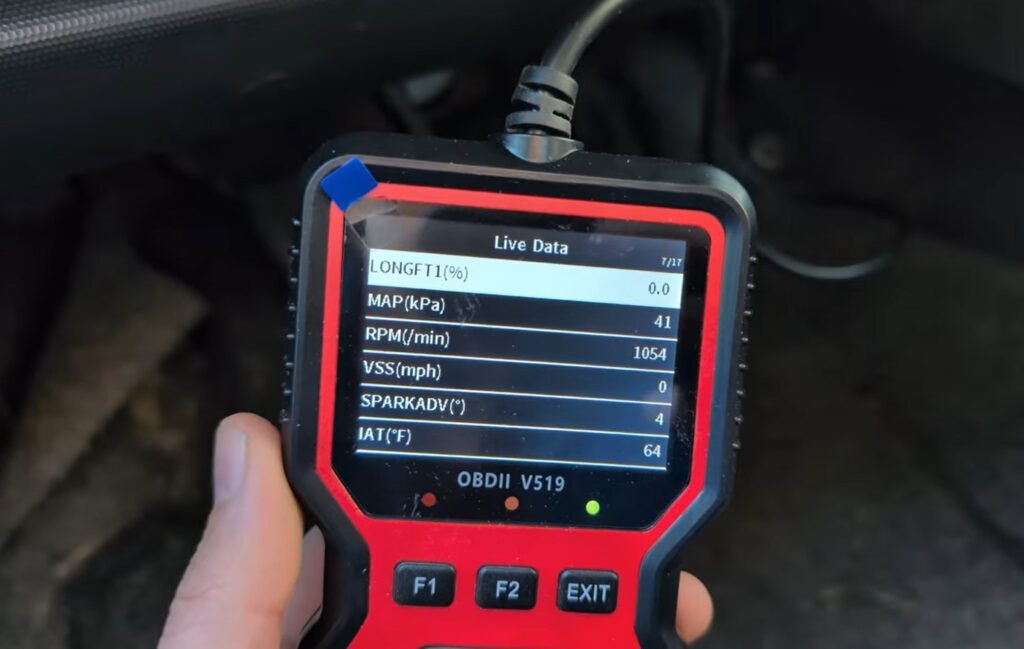
Clearing a code may turn off the Check Engine Light temporarily, but the underlying problem remains.
Once the computer detects the same fault again, the warning may return.
What to do: Diagnose and repair the actual cause before clearing codes and checking whether the repair worked.
9. It Cannot Manually Erase Permanent Trouble Codes
Permanent Diagnostic Trouble Codes, or PDTCs, work differently from ordinary stored codes.
You generally cannot erase a permanent code using a scan tool or by disconnecting the battery.
The vehicle’s OBD system must confirm that the original fault is no longer present.
After the repair, the vehicle must complete the appropriate monitoring requirements before the permanent code can clear.
The California Bureau of Automotive Repair explains this distinction in its official OBD test reference.
10. It Cannot Instantly Make Readiness Monitors Ready
Readiness monitors show whether the vehicle has completed certain emissions-related self-tests.
After you clear trouble codes, several monitors may return to “Not Ready.”
A scanner can display their status, but it cannot simply change an incomplete monitor to Ready.
The vehicle must meet the required driving and operating conditions so the onboard computer can perform the tests.
That’s why clearing codes immediately before an emissions inspection can create another problem.
If you’re preparing for an inspection, our guide on how to pass an OBDII emissions test explains readiness monitors and other common inspection issues.
What to do: Repair the fault and allow the relevant monitors to complete according to the vehicle manufacturer’s instructions.
11. A Basic Scanner Cannot Perform Every Active Test or Relearn
Some advanced scanners have bidirectional controls that allow them to command supported vehicle components.
Depending on the tool and vehicle, these functions may include:
- Cooling fan activation.
- ABS service procedures.
- EVAP valve testing.
- Throttle relearning.
- Battery registration.
- Electronic parking brake service.
However, these functions aren’t guaranteed just because a tool is called an OBD2 scanner.
Even professional scanners may offer different capabilities depending on the vehicle.
If you’re comparing advanced diagnostic equipment, our bidirectional scan tool comparison covers different tools and the active testing features they offer.
Always follow the manufacturer’s instructions when performing active tests, especially on braking or steering systems.
12. It Cannot Perform Every Coding or Programming Task
Some repairs require more than reading codes or activating a component.
Programming a replacement control module, updating software, or registering certain security components may require specialized equipment.
Some procedures also require paid manufacturer access, security authorization, or specific vehicle interfaces.
Professional scanners may support selected programming functions, but no universal scanner can perform every procedure on every vehicle.
Incorrect or interrupted programming can also create additional problems.
These limitations are another reason why understanding what an OBD2 scanner cannot do matters before purchasing a diagnostic tool.
What an OBD2 Scanner Can Do Well
Knowing its limitations doesn’t mean an OBD2 scanner isn’t worth having.
A compatible scanner can help you:
- Read supported diagnostic trouble codes.
- Check pending and permanent codes where available.
- View emissions readiness status.
- Read available live sensor information.
- Review freeze-frame data.
- Access Mode 6 test results on supported tools.
- Retrieve additional module information with enhanced coverage.
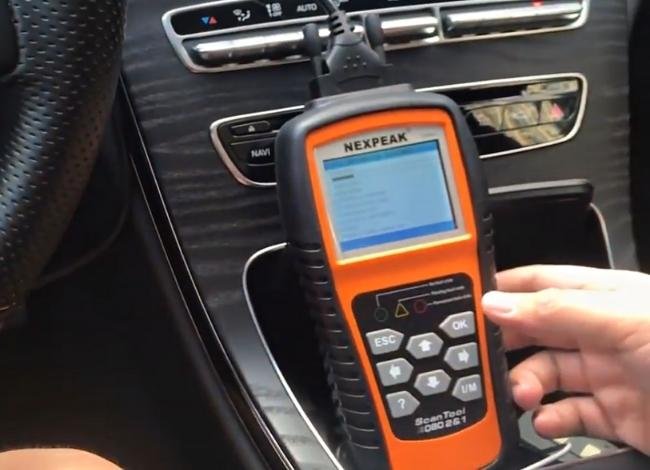
These features can help narrow your investigation and provide useful information before you approve a repair.
For example, understanding how to read OBD2 live data can help you compare actual engine readings with the symptoms you’re investigating.
The key is treating the scanner as a diagnostic tool, not an automatic mechanic.
Three Examples of Why a Trouble Code Isn’t a Final Diagnosis
P0301: Cylinder 1 Misfire
The code identifies a misfire in cylinder one. Possible causes include ignition problems, fuel delivery, wiring, air leaks, or low compression.
You still need testing to confirm which one is responsible.
P0420: Catalyst Efficiency Below Threshold
The computer detected a catalyst efficiency problem.
Before replacing the catalytic converter, check for misfires, exhaust leaks, fuel-control issues, and related sensor problems.
P0171: System Too Lean
This code means the engine computer detected an excessively lean condition on Bank 1.
The cause might be unmetered air, insufficient fuel delivery, an inaccurate airflow reading, or another issue affecting fuel control.
Again, the code describes the condition, not the exact failed part.
The Right Way to Use an OBD2 Scanner
Instead of reading a code and immediately ordering a part, follow this process:
- Scan: Read available stored and pending trouble codes.
- Save: Record codes, freeze-frame information, and readiness status.
- Check Coverage: Make sure your scanner accessed the relevant module.
- Review Data: Compare readings with symptoms and vehicle-specific specifications.
- Test: Check the most likely causes using appropriate equipment.
- Repair: Fix the fault you’ve confirmed.
- Verify: Rescan and confirm the relevant system operates properly.
Don’t clear codes before recording the information. You could erase evidence that helps identify an intermittent problem.
Common OBD2 Scanner Myths
“The scanner tells me exactly what to replace.” Not necessarily. A code usually identifies a detected condition rather than proving which part failed.
“No codes means nothing is wrong.” Mechanical problems, intermittent faults, and unsupported systems may not appear on a basic scan.
“Clearing codes fixes the problem.” No. It removes certain diagnostic information but doesn’t repair the cause.
“An expensive scanner diagnoses everything.” Better tools provide more information and functions, but diagnosis still requires knowledge, inspection, and testing.
When You Should Get Professional Help
Professional diagnosis makes sense when your scanner cannot access the required system, the same fault keeps returning, or a repair requires advanced programming or calibration.
Some symptoms also need immediate attention, regardless of what the scanner reports.
If the vehicle is overheating, severely misfiring, losing braking ability, or developing serious steering problems, stop driving as soon as it’s safe and seek assistance.
Don’t depend on a basic engine-code reader to determine whether the vehicle is safe to continue driving.
Frequently Asked Questions
Can an OBD2 scanner detect every car problem?
No. It can only retrieve information monitored by the vehicle and supported by the scanner.
Can an OBD2 scanner tell me exactly which sensor is bad?
Not always. Sensor-related codes can result from wiring, air leaks, abnormal operating conditions, or problems elsewhere in the system.
Why does a mechanic find more codes than my scanner?
A professional scanner may support additional modules and manufacturer-specific information that a basic code reader cannot access.
Can an OBD2 scanner detect low compression?
Not directly. It may display related misfire information, but a compression or leak-down test is needed to evaluate cylinder sealing.
Why did my Check Engine Light return after clearing codes?
The vehicle likely detected the problem again because the underlying cause was not repaired or has returned.
Does no codes found mean a used car is safe to buy?
No. Codes may have been cleared, readiness monitors may be incomplete, and many mechanical problems do not produce trouble codes.
Can a professional scanner replace a mechanic?
No. Advanced scanners can provide more data and testing functions, but repairs still require proper diagnosis, tools, and technical knowledge.
Conclusion: Know What Your Scanner Can and Cannot Do
The biggest limitations of what an OBD2 scanner cannot do come down to three things: it cannot see every problem, access every system, or physically repair the vehicle.
That doesn’t make it less useful.
A scanner is excellent for collecting diagnostic evidence, identifying which system needs attention, and checking whether a problem returns after repair.
Just remember that a trouble code is the beginning of diagnosis, not the end.
Use the information carefully, confirm the actual cause, and you’ll be less likely to waste money replacing parts that were never faulty.