
You turn the key and hear one click. Nothing happens. You try again, and this time the engine starts normally. A few days later, the same problem returns, only now it takes several attempts.
That could be the beginning of starter motor failure. However, a weak battery, corroded cable, or faulty starter relay can produce almost identical problems.
Recognizing bad starter symptoms early can help you avoid getting stranded. More importantly, knowing what to test first can prevent you from replacing a perfectly good starter.
Here are seven warning signs, what different starting noises mean, and how to narrow down the fault before paying for repairs.
Quick Answer: Common signs of a bad starter include a single click with no cranking, intermittent starting, grinding or whirring noises, and a starter that continues operating after the engine starts. Smoke or a burning smell is a more serious warning. Because weak batteries and electrical connection problems can cause the same symptoms, the battery and starting circuit should be tested before replacing the starter motor.
What Does a Starter Motor Do, and Why Does It Fail?
The starter is an electric motor that turns the engine fast enough for combustion to begin.
When you turn the key or press the Start button, the vehicle’s starting circuit activates the starter solenoid. The solenoid helps engage the starter’s pinion gear with the engine’s flywheel or flexplate and supplies power to the motor.
Once the engine starts, the starter disengages.
Over time, starter brushes, solenoid contacts, bearings, and drive components can wear out. Heat, oil contamination, and electrical problems may also contribute.
Some hybrids and vehicles with advanced start-stop systems use different starting arrangements. The exact testing procedure depends on the vehicle.
7 Bad Starter Symptoms You Shouldn’t Ignore
Some bad starter symptoms appear gradually. Others happen without warning. Pay attention to the sound and whether the engine actually turns over when you attempt to start it.
1. A Single Click When You Turn the Key or Press Start
A single, noticeable click followed by silence is one of the classic signs associated with a faulty starter or starter solenoid.
The solenoid may be moving, but the starter motor doesn’t receive enough current or cannot operate properly.
Worn solenoid contacts or internal motor damage are possible causes.
But a weak battery, corroded battery terminals, poor engine ground, or high resistance in the starter cable can create the same result.
Also, the clicking sound may come from a relay rather than the starter itself.

What to check: Start with battery condition and cable connections. A technician can then test voltage at the starter during a start request to determine whether the motor or electrical supply is responsible.
2. The Engine Starts Only After Several Attempts
Does your car sometimes start immediately but other times refuse to crank until the third or fourth attempt?
Worn starter brushes or solenoid contacts can make electrical contact intermittently. The motor may work normally during one attempt and fail during another.
Some drivers notice the problem more often after the engine has been running and the starter becomes heat-soaked.
However, a failing relay, ignition switch, loose connection, or transmission range switch may behave similarly.
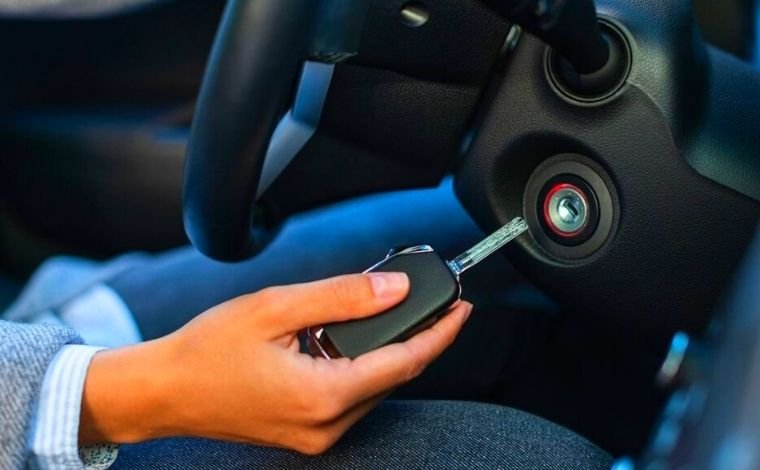
What to check: Have the starting circuit tested while the failure is occurring. A starter that works during inspection may still have an intermittent internal fault, but the power supply and control signal must be verified first.
3. Grinding Noise During Engine Startup
A harsh grinding noise during starting may indicate that the starter pinion gear isn’t engaging the flywheel or flexplate ring gear correctly.
The gear teeth may be worn, damaged, or misaligned. Incorrect starter mounting can also create engagement problems.
In some cases, the starter drive mechanism is responsible. In others, the ring gear itself is damaged.
Continuing to attempt starts while grinding occurs can damage the gears further and increase repair costs.
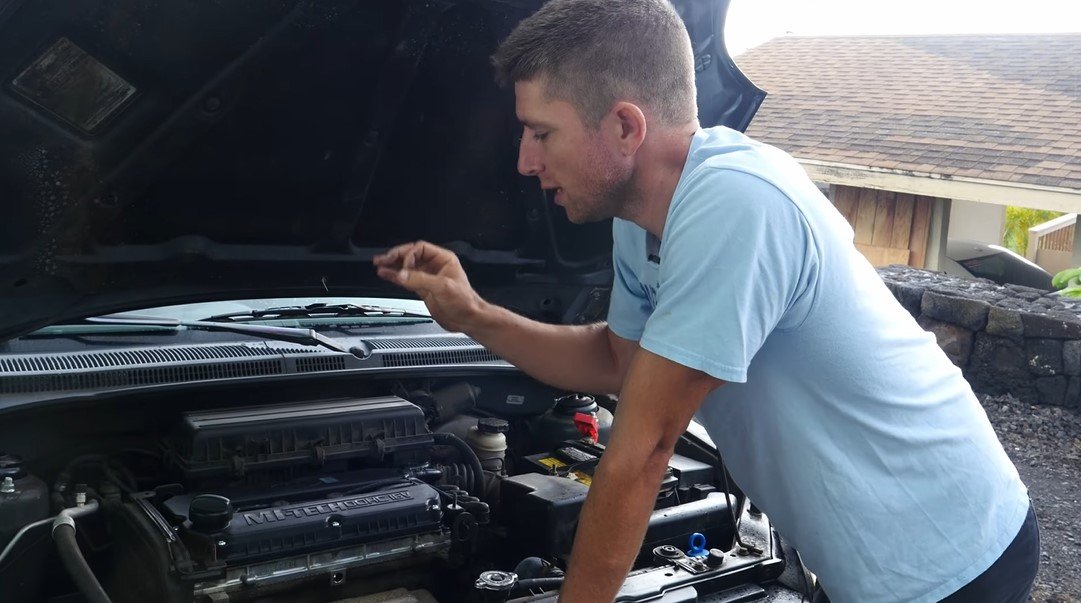
What to check: Stop repeated starting attempts and have the starter engagement, mounting, pinion gear, and ring gear inspected.
4. The Starter Whirs but the Engine Doesn’t Turn
Sometimes you hear a high-pitched spinning or whirring sound, but the engine doesn’t rotate.
This can happen when the starter motor spins without properly engaging the engine’s ring gear.
A failed starter drive, overrunning clutch, engagement mechanism, or damaged ring gear may be responsible.
This is different from an engine that cranks normally but won’t start. During normal cranking, you can hear the engine repeatedly turning over.
What to check: Have the starter drive and flywheel or flexplate ring gear examined. Replacing the electrical motor alone may not solve an engagement problem caused by damaged ring-gear teeth.
5. Dashboard Lights Work, but the Engine Won’t Crank
Your dashboard lights come on, the radio works, and the headlights appear normal. Yet the engine won’t crank.
It’s tempting to conclude that the battery is good and the starter is bad.
But dashboard electronics require far less current than a starter motor. A weak battery may power accessories normally and still fail under cranking load.
Other possibilities include a bad starter relay, loose cable, faulty Park/Neutral switch, clutch interlock, or immobilizer problem.

What to check: Have the battery load-tested and inspect the starting-system connections. If battery performance is satisfactory, investigate the start command, starter relay, and motor.
6. Burning Smell or Smoke During Starting Attempts
A burning odor during repeated starting attempts is a warning you shouldn’t ignore.
The starter may be overheating from prolonged operation, internal damage, or abnormal electrical current.
High-resistance connections can also generate excessive heat. In more serious cases, damaged wiring or an electrical short may produce smoke.
Trying to crank the engine repeatedly can make the damage worse.
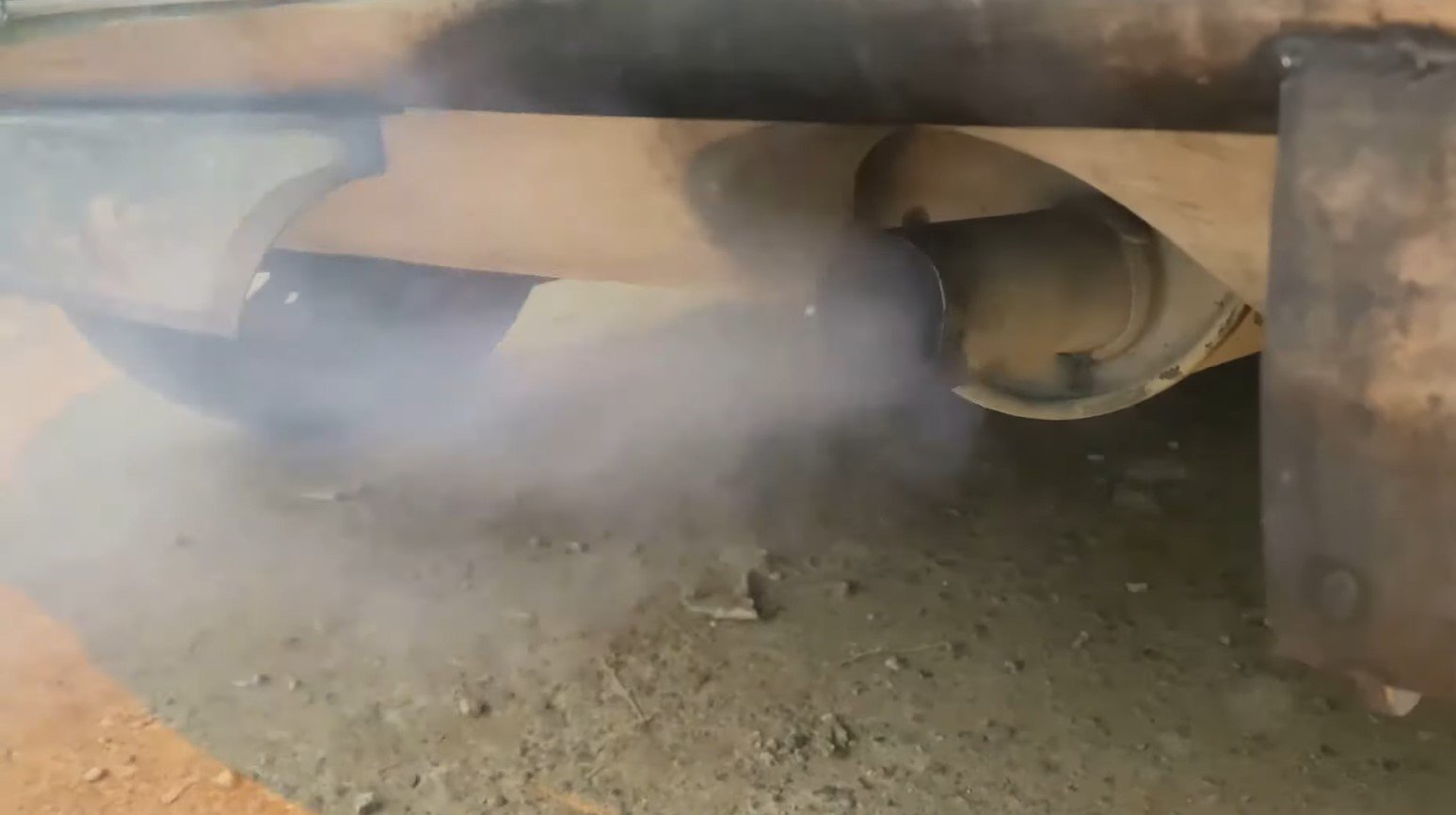
What to check: Stop attempting to start the vehicle. If smoke or electrical burning is present, arrange professional assistance and avoid further electrical operation until the cause is identified.
7. Starter Continues Running After the Engine Starts
The starter is supposed to disengage immediately after the engine begins running.
If you hear a continuous whining or grinding sound after startup, the starter drive may remain engaged or the motor may continue receiving power.
Possible causes include a sticking solenoid, faulty starter drive, stuck relay, or starter control-circuit problem.
This is more urgent than an occasional click because continued starter operation can damage the motor, pinion gear, and engine ring gear.
What to check: Shut the engine off as soon as it is safe. Do not repeatedly restart it until the starter engagement and electrical control circuit have been inspected.
No-Crank vs. Crank-No-Start: What’s the Difference?
This distinction can save you from replacing the wrong part.
A no-crank condition means the engine isn’t rotating when you try to start it. A crank-no-start condition means the engine turns normally but fails to begin running.
| Starting Problem | What Happens | First Area to Investigate |
|---|---|---|
| No crank | Engine doesn’t rotate | Battery, starter, starting circuit |
| Slow crank | Engine turns sluggishly | Battery, cables, starter, engine resistance |
| Cranks but won’t start | Engine rotates normally but doesn’t run | Fuel, ignition, sensors, compression |
| Starter free-spins | Whirring without engine rotation | Starter drive and ring gear |
If the engine cranks at normal speed, the starter is usually performing its basic function. A different no-start diagnostic process is then necessary.
What Does a Bad Starter Sound Like?
Starting noises can point you in the right direction, but none of them guarantees a specific diagnosis.
| Sound | Possible Explanation |
|---|---|
| One solid click | Solenoid or relay operation without successful cranking |
| Rapid clicking | Often low battery voltage or high resistance |
| Grinding | Starter engagement or ring-gear damage |
| High-pitched whirring | Starter spins without turning the engine |
| Complete silence | Start-command, battery, relay, security, or starter fault |
Rapid clicking is particularly worth distinguishing from a single click. Repeated clicks often occur when voltage drops as the starter circuit tries to operate.
Bad Starter vs. Bad Battery vs. Bad Alternator
The battery provides the electrical power needed to start the engine. The alternator replenishes the battery while the engine runs. The starter uses that power to crank the engine.
Because these systems depend on each other, their symptoms can overlap.
| Symptom | Starter | Battery | Alternator |
|---|---|---|---|
| Single click, no crank | Possible | Possible | Indirectly possible |
| Rapid clicking | Less typical | Common | If battery becomes discharged |
| Slow engine cranking | Possible | Common | Possible after battery discharge |
| Jump-start helps | Sometimes | Often | Sometimes |
| Battery warning while driving | Not typical | Possible | Common with charging faults |
| Grinding during startup | Possible | Unlikely | Unlikely |
These patterns are clues rather than proof. A car that starts with a jump may have a weak battery, poor connection, or another electrical problem.
And a car that refuses to start with a jump doesn’t automatically have a defective starter.
Worth knowing: A battery may show around 12.6 volts at rest and still be unable to supply sufficient cranking current. Battery load testing and voltage-drop measurements provide more useful information than resting voltage alone.
How to Check a Bad Starter Before Replacing It
When a car won’t crank, the goal is to find out whether the starter is receiving the power and start command it needs.
- Confirm what the engine does. Determine whether it remains completely still, cranks slowly, or rotates normally without starting.
- Inspect visible battery connections. Look for corrosion, loose terminals, or damaged cables without touching exposed electrical conductors.
- Have the battery tested under load. A resting voltage check is useful, but it cannot establish whether the battery can deliver the required cranking current.
- Check the charging system. If the battery repeatedly discharges, an alternator or charging fault may be involved.
- Verify the start conditions. Confirm the transmission is in Park or Neutral as specified, or the clutch pedal is fully depressed on a manual-transmission vehicle. Watch for key-recognition or security warnings.
- Have the starter circuit tested. A technician should verify power, ground, voltage drop, and the starter control signal during an attempted start.
- Confirm internal starter failure. Replace the motor or solenoid only when the test results point to those components.
High resistance in a positive cable or ground connection can prevent adequate current from reaching the starter even when the battery itself is healthy.
Professional voltage-drop testing checks how much voltage is lost through the circuit under load. DENSO’s starter diagnostic guidance recommends this approach before condemning the motor.
For more on reading vehicle diagnostic information, see our guide to OBD2 systems.
Safety: Starter circuits carry very high current. Don’t short starter terminals, bypass safety interlocks, or perform live high-current tests without proper training. Secure the vehicle against movement and let a qualified technician handle starter-terminal measurements.
Why Does My Car Start Sometimes but Not Others?
Intermittent starting is frustrating because the car may work perfectly when you finally reach the repair shop.
Worn starter brushes, solenoid contacts, and heat-related internal problems can produce intermittent no-crank conditions.
However, a faulty starter relay, poor ground connection, ignition switch, or Park/Neutral switch can behave similarly.
If the problem happens mainly after a hot engine is shut off, heat soak may be a factor. The starter and surrounding electrical components are exposed to higher temperatures, which can aggravate existing weaknesses.
A hot-start problem doesn’t automatically confirm starter failure. Ask the technician to reproduce the condition and measure the starting circuit during the failure.
Why Won’t My Car Start Even Though the Battery Is Good?
A battery that passes a proper load test is only one part of the starting system.
If the engine still won’t crank, possible causes include:
- High resistance in the positive starter cable.
- A damaged engine ground strap.
- A faulty starter relay.
- A defective ignition or push-button start circuit.
- A Park/Neutral or clutch interlock fault.
- An immobilizer or key-recognition problem.
- A failed starter motor or solenoid.
Less commonly, the engine itself may be mechanically unable to turn.
If the starter isn’t receiving a proper start command, replacing it won’t solve the problem. The entire control circuit needs diagnosis.
Can an OBD2 Scanner Diagnose a Bad Starter?
An OBD2 scanner can help identify certain electronic starting problems, but it cannot directly detect worn brushes, damaged pinion gears, or excessive resistance inside battery cables.
What a Basic OBD2 Scanner Can Tell You
Generic scanners primarily read engine and emissions-related trouble codes.
They generally cannot confirm a mechanically failed starter motor. A car can have a completely defective starter without storing a check engine light code.
Our check engine light on but no codes guide explains why basic readers don’t always provide every piece of diagnostic information.
When an Advanced Scanner May Help
On supported vehicles, enhanced diagnostic tools may show:
- Start-request status.
- Immobilizer or key authorization information.
- Transmission range or clutch-switch data.
- Starter relay control status.
- Manufacturer-specific starting-system faults.
- Available battery-management information.
Some systems also support bidirectional control, but that doesn’t mean every advanced scanner can activate or test every starter circuit.
For diagnostic tool features, our Innova 5610 review discusses enhanced functions, while the Innova 5510 vs. 5610 comparison explains differences between these tools.
If the scanner cannot connect because the vehicle’s electrical system is unstable, see our OBD2 scanner communication troubleshooting guide.
For broader tool choices, consult our OBD2 scanner comparison guide, checking vehicle-specific coverage before choosing a scanner.
Even with advanced scan data, battery testing and physical voltage-drop measurements may still be necessary.
Can a Starter Pass a Bench Test and Still Be Bad?
Yes, depending on the type of test and the failure.
A simple no-load bench test may show that the motor spins, but it doesn’t necessarily prove the starter can produce sufficient torque under engine load.
Intermittent internal faults may also fail to appear during a brief test.
And removing the starter from the vehicle removes the original battery cables, grounds, relay, and wiring from the test conditions.
A professional performance bench test is more useful than simply confirming that the motor turns, but on-vehicle circuit checks remain important before replacement.
How Much Does It Cost to Replace a Car Starter?
Starter replacement costs depend on the vehicle, starter design, part quality, and accessibility.
RepairPal’s September 3, 2026 U.S. national estimate places average starter replacement at approximately $565–$796, including parts and labor.
| Repair or Service | Cost Consideration |
|---|---|
| Starter motor replacement | National average estimate: $565–$796 |
| Starter relay replacement | Usually less expensive than full starter replacement, depending on access and diagnosis |
| Battery cable or ground repair | Varies by cable design and labor |
| Starting-system diagnosis | May be billed separately from repair |
| Difficult-access starter | May cost significantly more due to additional labor |
The national estimate includes approximately $375–$516 for parts and $191–$280 for labor, excluding taxes, fees, and related repairs.
Some starters are easy to reach, while others require the removal of additional engine components.
Before approving the job, ask whether the diagnosis confirmed motor or solenoid failure and whether the quote includes the correct new or remanufactured unit.
Can You Drive With a Bad Starter?
In most conventional vehicles, the starter operates primarily during engine startup. Once the engine runs normally, the starter is no longer needed to keep it running.
That means a failing starter may not affect normal driving after the vehicle has started.
However, you could be stranded the next time you shut off the engine.
If the starter produces grinding, smoke, or continues running after startup, treat the problem as urgent. Continuing to operate the vehicle may cause additional damage.
Don’t keep making repeated starting attempts when the system shows abnormal mechanical or electrical behavior.
How to Prevent Starter Problems
Starters eventually wear out, but proper electrical-system maintenance can help reduce avoidable failures.
- Maintain a healthy, correctly specified battery.
- Keep battery terminals and ground connections secure and corrosion-free.
- Repair charging-system problems promptly.
- Avoid repeated prolonged cranking attempts.
- Investigate intermittent no-crank problems early.
- Repair engine oil or fluid leaks that contaminate starter components.
- Use correctly specified replacement parts.
There is no universal starter replacement mileage. Replacement should normally follow confirmed failure rather than a fixed age alone.
Frequently Asked Questions
1. What is the first sign of a bad starter?
A single click with no cranking or an engine that starts only after several attempts can be an early clue. Worn solenoid contacts and brushes may cause intermittent failure, but battery and connection problems should be ruled out first.
2. Can a bad starter cause a single click but no crank?
Yes. The starter solenoid may operate without the motor successfully turning the engine. However, a weak battery, poor ground, or damaged starter cable can create the same symptom.
3. How can I tell if my battery or starter is bad?
Have the battery load-tested and inspect its connections. If battery performance is satisfactory but the engine won’t crank, a technician can test the starter power supply and control circuit. Clicking noises alone aren’t enough to separate the two problems reliably.
4. Can a starter fail intermittently before dying completely?
Yes. Worn internal contacts, brushes, and heat-related faults may cause the starter to work sometimes and fail at others. Loose cables, relays, and safety switches can also create intermittent starting problems.
5. Will a bad starter show an OBD2 trouble code?
Not necessarily. A conventional starter motor can fail mechanically or electrically without setting a generic OBD2 code. Advanced vehicle systems may store related starter-control or start-authorization faults.
6. Can I jump-start a car with a bad starter?
A jump-start may help if the battery or electrical supply is the real problem. It generally won’t repair a failed starter motor, damaged drive mechanism, or defective solenoid contacts. A failed jump-start attempt doesn’t conclusively diagnose the starter.
Final Thoughts
Common bad starter symptoms include clicking without cranking, intermittent starting, grinding, and a starter motor that spins without turning the engine.
But don’t replace the starter based on sound alone. A weak battery, poor cable connection, relay, or safety switch can cause the same complaint.
Checking the battery and starting circuit first can save money and prevent unnecessary repairs. If you notice smoke, severe grinding, or a starter that remains engaged, stop starting attempts and arrange professional inspection.