
Your engine squeals for a few seconds when you start it. The noise disappears, so you forget about it. Then, one morning, the battery warning light appears and the steering suddenly feels heavier than usual.
Those problems might seem unrelated, but a slipping or broken serpentine belt can cause them together.
The serpentine belt drives several important engine accessories. As it wears, you may notice strange noises, visible rubber damage, charging problems, or unusual belt movement. But a faulty tensioner or pulley can create the same symptoms.
Understanding serpentine belt symptoms helps you recognize trouble before the belt breaks and avoid replacing parts that aren’t actually defective.
Quick AnswerCommon signs of a bad serpentine belt include squealing, repetitive chirping, cracked or frayed ribs, a glazed or worn surface, and slipping. Depending on the vehicle, charging problems, heavy steering, poor A/C performance, or overheating may also occur. If the belt breaks, any accessories it drives will stop operating. Always inspect the belt, tensioner, and pulleys together.
What Does a Serpentine Belt Do?
A serpentine belt is a long, ribbed rubber belt that transfers power from the engine’s crankshaft pulley to various accessories.
Depending on the vehicle, it may operate the alternator, air-conditioning compressor, hydraulic power-steering pump, and water pump.
A tensioner maintains belt tension, while idler pulleys help guide the belt along its routing path.
Not every vehicle uses the same arrangement. Some have electric power steering or an electric water pump. Others use additional accessory belts.
The serpentine belt is also different from the timing belt, which synchronizes engine valve timing.
8 Serpentine Belt Symptoms You Shouldn’t Ignore
The following serpentine belt symptoms can develop gradually or appear suddenly. The important part is identifying whether the belt itself is worn or another accessory-drive component is causing the trouble.
Squealing Noise When Starting the Engine
A high-pitched squeal during a cold start is one of the most familiar complaints associated with serpentine belts.
The noise can develop when the belt slips across a pulley instead of maintaining proper grip.
You may hear it during acceleration, when the A/C compressor engages, or when a belt-driven accessory suddenly requires more power.
However, a squealing sound doesn’t necessarily mean the belt is worn out. A weak tensioner, fluid contamination, pulley drag, or improper belt tension may be responsible.
Sometimes a brief squeal after driving through heavy rain is related to temporary water exposure. Repeated squealing deserves investigation.

Chirping or Repetitive Squeaking From the Engine
Not every accessory belt noise is a continuous squeal.
A short, repeated chirp that follows engine speed often points toward belt tracking or pulley alignment problems.
Misaligned pulleys can force the belt sideways as it moves through the accessory drive. Worn bearings or damaged pulley surfaces may contribute as well.
The noise can remain even after a new belt is installed because the replacement follows the same incorrect path.
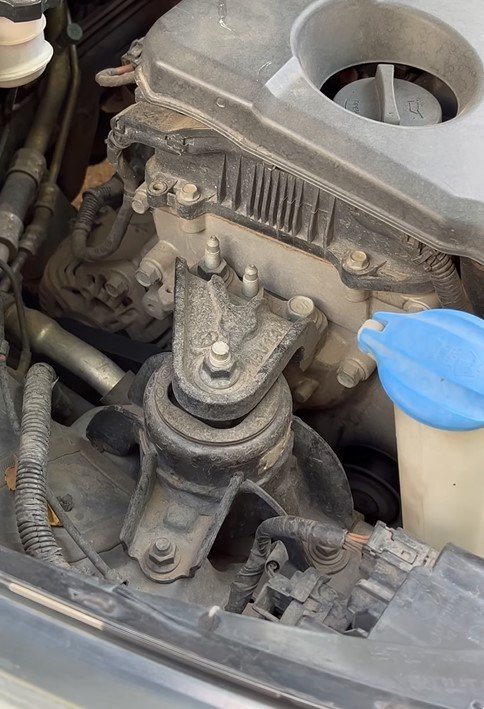
Cracked, Frayed, or Missing Belt Ribs
Visible belt damage is an important warning sign.
Look for missing pieces of rubber, damaged edges, exposed reinforcing cords, or ribs separating from the belt body.
Severe edge fraying may mean the belt is rubbing against a pulley flange or tracking incorrectly.
However, not every small surface crack has the same meaning. Older neoprene belts commonly developed cracks with age, while modern EPDM belts wear differently.
A modern belt may be badly worn even when it shows few visible cracks.

A Glazed Surface or Excessively Worn Ribs
A belt that repeatedly slips may develop an unusually shiny or polished contact surface.
Heat, friction, and rubber deposits can also alter its appearance.
Modern EPDM belts gradually lose material from their ribs, much like tires lose tread. As the rib profile changes, grip may decrease even though the belt looks intact.
Oil and coolant contamination can accelerate problems. Leaking fluid may also damage the rubber or reduce traction.
For this reason, simply looking for cracks isn’t an adequate inspection method.
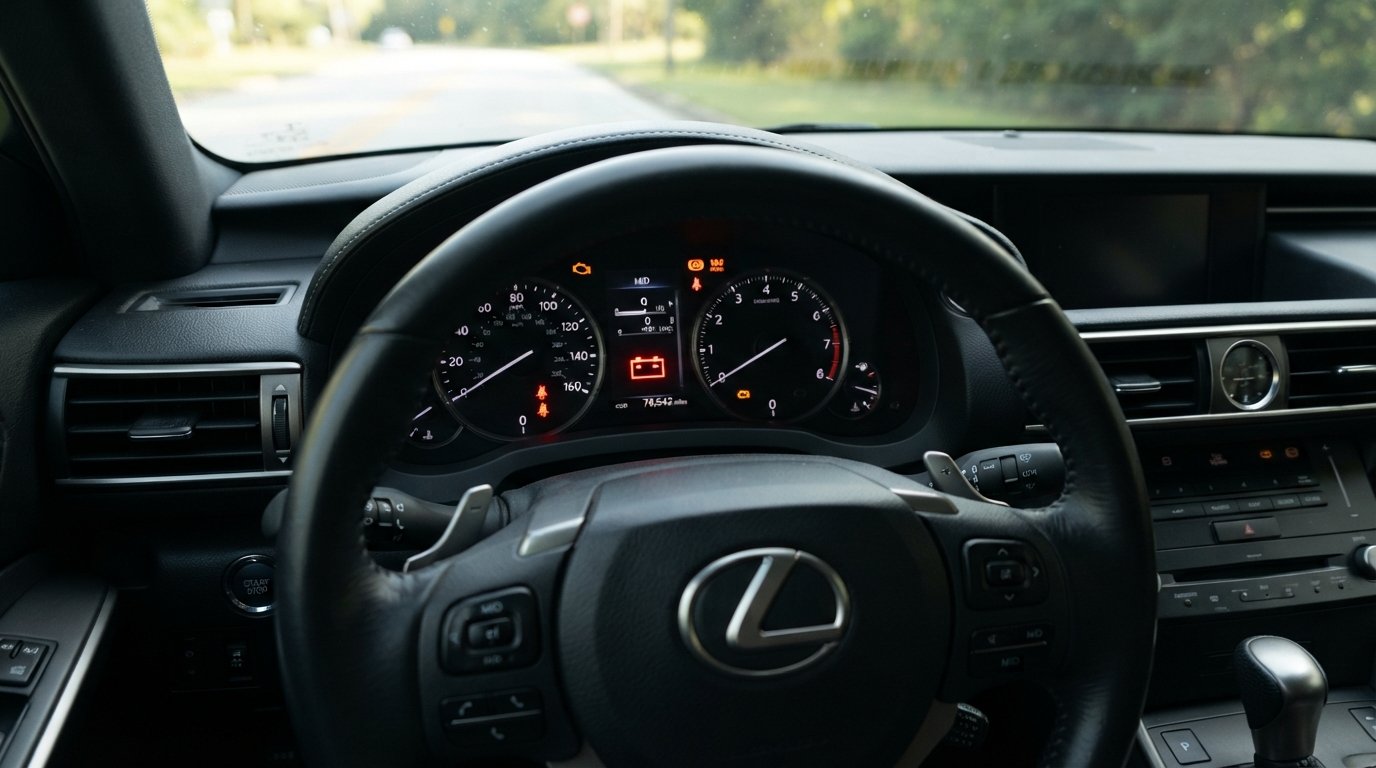
Battery Warning Light or Electrical Problems
On vehicles with a belt-driven alternator, a slipping serpentine belt may prevent the alternator from generating enough electrical power.
The battery warning light may illuminate, headlights may dim, or electrical accessories may behave unusually.
If the belt breaks completely, the alternator stops charging. The vehicle may continue operating briefly using stored battery power, but eventually electrical systems can fail.
However, a battery warning light can also indicate an alternator, wiring, or battery-management problem.
Our guide to common car problems explains charging and battery-related warning signs that owners often confuse.
Steering Suddenly Feels Heavy
Some vehicles use a hydraulic power-steering pump driven by the serpentine belt.
If the belt slips severely or breaks, that pump may stop producing normal hydraulic assistance.
The steering wheel can suddenly become much harder to turn, particularly at low speeds or while parking.
But many newer cars use electric power steering, which isn’t driven by the serpentine belt. Those vehicles may experience different symptoms if the charging system fails.

Engine Overheating or A/C Stops Cooling
On engines where the serpentine belt drives the water pump, belt failure can interrupt coolant circulation.
The engine may overheat quickly, especially under heavy load or in hot weather.
The air conditioner can also stop cooling if the same belt drives its compressor.
However, overheating can result from low coolant, a sticking thermostat, a failed cooling fan, or a defective water pump.
And some engines drive the water pump using the timing belt or an electric motor instead.
If overheating appears together with a missing belt, the belt-drive failure becomes a particularly important clue.
Belt Fluttering, Slipping, or Running Off-Center
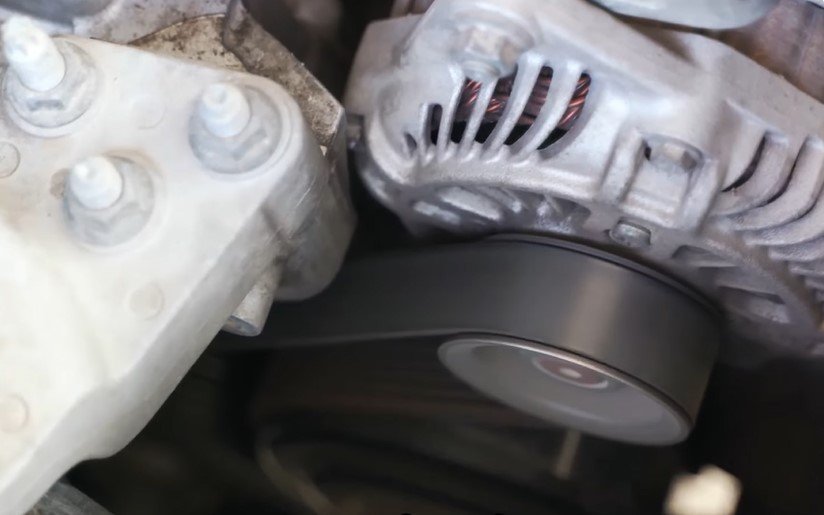
An accessory belt should follow its intended pulley path with stable tension.
If the belt repeatedly moves sideways, flutters excessively, or rides toward the edge of a pulley, something may be wrong with the drive system.
Possible causes include a weak tensioner, incorrect belt length, pulley misalignment, accessory bearing drag, or improper routing.
A belt that keeps jumping off is particularly concerning because it can become damaged or interfere with nearby components.
What Happens If Your Serpentine Belt Breaks While Driving?
The consequences depend on which accessories your particular belt operates.
On some vehicles, several functions can be lost almost simultaneously.
| Belt-Driven Component | What May Happen If the Belt Breaks |
|---|---|
| Alternator | Battery stops charging; vehicle may eventually stall as electrical power is depleted. |
| Hydraulic power-steering pump | Steering effort increases sharply. |
| Water pump | Coolant circulation may stop, creating a serious overheating risk. |
| A/C compressor | Air conditioning stops producing normal cooling. |
| Other belt-driven accessories | Those accessories stop functioning until the drive is restored. |
A broken belt can also leave loose rubber or reinforcing cords inside the engine compartment. Depending on engine design, debris may damage nearby components.
If the serpentine belt breaks while driving: Signal, steer carefully to a safe location, and shut off the engine. Steering assistance may be reduced on some vehicles. Arrange roadside assistance or towing instead of driving until the battery dies or the engine overheats.
Bad Serpentine Belt vs. Bad Tensioner vs. Bad Pulley
A worn belt and a failing tensioner often produce similar noises. That’s why the entire accessory-drive system needs attention.
| Possible Fault | Common Clues |
|---|---|
| Worn serpentine belt | Rib material loss, severe cracking, fraying, slipping |
| Weak or damaged tensioner | Excessive tensioner movement, low tension, recurring squeal |
| Misaligned pulley | Repetitive chirping, belt edge wear, incorrect tracking |
| Worn idler bearing | Rumbling, grinding, rough rotation |
| Seized or dragging accessory | Sudden squealing, heat, belt damage |
| Oil or coolant contamination | Fluid deposits, slippage, premature belt deterioration |
A new belt may briefly eliminate noise without correcting the underlying problem. If the tensioner or a driven pulley is defective, the replacement belt can wear out quickly.
How to Inspect a Serpentine Belt Safely
You can perform a basic visual inspection without removing any engine components.
- Park securely and switch the engine off. Remove the key where applicable, and allow the engine to cool.
- Locate the belt. Use your owner’s manual or the under-hood belt-routing diagram to identify the accessory drive.
- Inspect the ribbed surface. Look for missing rubber, severe cracking, damaged grooves, or exposed cords.
- Check the edges. Fraying or uneven wear can suggest improper belt tracking.
- Look for contamination. Oil or coolant around the belt may indicate a leak that also needs repair.
- Check visible alignment. A belt sitting partly outside a pulley groove is not normal.
- Arrange a complete belt-drive inspection. A technician can check pulley bearings, alignment, tensioner performance, and rib wear with the appropriate tools.
Safety reminder: Keep hands, clothing, tools, and hair away from belts and pulleys. Never inspect or adjust the belt while the engine is running. Electric cooling fans can also start unexpectedly, even when the engine is off.
Can a Serpentine Belt Be Bad Without Cracks?
Yes. One of the most overlooked serpentine belt symptoms is reduced grip despite an apparently intact belt.
Modern EPDM belts are highly resistant to cracking. Instead, they gradually lose rubber material along the rib surfaces.
As the rib profile wears, the belt may sit deeper in pulley grooves, reducing effective contact and traction.
Gates and Dayco both identify rib material loss as an important inspection criterion for modern belts.
That is why a belt with no obvious cracks may still need replacement. A compatible wear gauge and inspection of the whole drive system give a better indication than appearance alone.
Why Does My New Serpentine Belt Keep Squealing or Coming Off?
If a new belt starts squealing almost immediately, the replacement belt may not be the actual problem.
Common explanations include:
- Incorrect belt length or specification.
- Improper belt routing.
- Weak or damaged automatic tensioner.
- Misaligned idler or accessory pulley.
- Worn pulley bearings.
- Oil or coolant contamination.
- Incorrect engagement between belt ribs and pulley grooves.
A pulley that drags or begins seizing may cause severe slipping and heat even when the belt is new.
Instead of repeatedly replacing belts, have the underlying cause identified and repaired.
Serpentine Belt vs. Timing Belt: What’s the Difference?
These belts perform different jobs, and their failure consequences are not the same.
| Serpentine Belt | Timing Belt |
|---|---|
| Usually drives engine accessories | Synchronizes the crankshaft and camshaft |
| Often visible outside engine covers | Usually protected behind timing covers |
| Failure can disable charging, steering assistance, or cooling accessories | Failure disrupts valve timing and can damage certain engines |
| Replacement depends on wear and manufacturer service guidance | Usually has a specified maintenance interval when fitted |
Some vehicles use timing chains instead of timing belts. Always identify the correct component before planning maintenance.
How Many Miles Does a Serpentine Belt Last?
Many modern serpentine belts can last approximately 60,000–100,000 miles or longer, but there is no universal replacement interval.
The actual service life depends on belt material, heat exposure, driving conditions, pulley condition, and the manufacturer’s recommendations.
EPDM belts often last longer than older designs, but they can wear without showing obvious cracks.
Fluid leaks, incorrect tension, or misaligned pulleys can shorten belt life considerably.
Follow your owner’s manual and inspect belt condition during scheduled maintenance rather than relying on mileage alone.
Our car maintenance guide covers other regular inspections that help reduce unexpected vehicle problems.
Can an OBD2 Scanner Diagnose a Bad Serpentine Belt?
An OBD2 scanner can sometimes reveal the consequences of belt problems, but it cannot directly measure belt wear, tension, or pulley alignment.
What a Basic Scanner Can Show
Depending on the vehicle and tool, a scanner may display engine coolant temperature, certain system-voltage information, and related trouble codes.
For example, a slipping alternator belt may contribute to charging problems and abnormal electrical-system behavior.
But a charging-related code doesn’t automatically prove that the belt is slipping.
Our OBD2 codes and diagnostic procedure guide explains how fault codes should be interpreted rather than treated as automatic instructions to replace parts.
When Advanced Diagnostics May Help
Enhanced scanners may provide charging-system control data, module voltage readings, power-steering information, or cooling-system data on compatible vehicles.
Some tools also record live measurements so a technician can examine when a problem occurred.
For an overview of these features, see our Innova 5610 diagnostic scanner review.
If a code was stored during a charging or temperature problem, understanding freeze-frame data may help identify the operating conditions at the time.
For readers new to vehicle diagnostics, our OBD2 basics guide explains what the scanner can and cannot communicate with.
Don’t confuse evidence with confirmation. Abnormal charging voltage or coolant temperature can tell you that a related system is not operating correctly. It cannot determine whether the cause is the serpentine belt, alternator, pulley, thermostat, or another component. Physical inspection remains essential.
How Much Does Serpentine Belt Replacement Cost in 2026?
Serpentine belt replacement is often relatively affordable when the belt is accessible and no other components need repair.
RepairPal’s September 2026 U.S. national estimate places typical serpentine belt replacement at approximately $154–$212, including parts and labor.
| Cost Component | Estimated U.S. Amount |
|---|---|
| Replacement belt | $65–$82 |
| Labor | $89–$130 |
| Typical total | $154–$212 |
| Tensioner, idler pulley, or accessory repair | Additional cost if required |
These figures are general national estimates, not guaranteed prices for every vehicle. Taxes, shop fees, difficult access, and additional repairs can change the final bill.
If a damaged tensioner, seized pulley, or leaking component caused the belt problem, fixing that issue will increase the initial cost but may prevent another belt failure.
Can You Drive With a Bad Serpentine Belt?
It depends on how severely the belt is damaged and which accessories it drives.
A belt showing early wear should be inspected and replaced according to the vehicle’s service requirements.
But a belt that is severely frayed, slipping badly, coming off its pulleys, or already broken creates a much greater risk.
On some vehicles, belt failure can disable battery charging, hydraulic steering assistance, and coolant circulation.
That combination can make continued driving unsafe.
Stop driving safely if you notice:
- A missing or broken serpentine belt.
- A high engine temperature warning.
- Suddenly heavy steering with an apparent belt problem.
- A battery warning accompanied by belt squealing or accessory failure.
- A belt hanging loose or visibly coming off a pulley.
Arrange roadside assistance or towing. There is no reliable safe driving distance with a broken serpentine belt.
How to Prevent Serpentine Belt Failure
Proper maintenance reduces the chance of unexpected accessory-drive problems.
- Inspect the belt during regular vehicle maintenance.
- Repair oil and coolant leaks promptly.
- Check the tensioner and idler pulleys when belt wear is found.
- Use the correct belt specification and routing.
- Address unusual squealing or chirping early.
- Avoid belt dressing as a substitute for proper repair.
- Follow manufacturer-specific inspection and replacement guidance.
If a charging-related diagnostic code appears during a belt problem, avoid repeatedly clearing it without fixing the cause. Our guide to OBD2 drive cycles explains why warning and readiness statuses can take time to update after proper repair.
Frequently Asked Questions
1. What is the first sign of a bad serpentine belt?
A squealing noise during startup or acceleration may be an early clue. However, the noise can also come from a weak tensioner, pulley misalignment, or contamination. Visual inspection and belt-drive testing are needed to identify the cause.
2. Can a bad serpentine belt cause the battery light to come on?
Yes. If the belt drives the alternator and slips badly or breaks, the alternator may stop charging properly. However, alternator, battery, and wiring faults can also trigger a charging warning.
3. Can a serpentine belt fail without cracking first?
Yes. Modern EPDM belts can lose significant rib material without obvious cracks. The belt may lose grip or develop other performance problems even when it appears relatively intact.
4. Will the engine overheat if the serpentine belt breaks?
It may, depending on the engine design. If the belt drives the water pump, breaking it can interrupt coolant circulation. Engines with electric or separately driven water pumps may behave differently.
5. Is a squealing serpentine belt always bad?
No. Squealing can result from a worn belt, weak tensioner, misaligned pulley, fluid contamination, or accessory drag. Replacing the belt without diagnosing those components may not solve the problem.
6. How far can you drive with a broken serpentine belt?
There is no dependable safe distance. Important accessories may stop functioning immediately, and the engine may overheat or eventually lose electrical power. Pull over safely and arrange towing rather than continuing to drive.
Final Thoughts
The most useful serpentine belt symptoms include squealing, repetitive chirping, worn ribs, fraying, slipping, and unexpected accessory problems.
But the belt isn’t always the cause. A weak tensioner, worn pulley bearing, or fluid leak can damage an otherwise good belt.
Inspect the entire accessory-drive system before replacing parts. Catching a problem early is much easier than dealing with a broken belt, a discharged battery, or an overheating engine on the roadside.