
Blue smoke from the exhaust is usually a warning that your engine is burning oil. Not fuel. Not normal steam. Oil.
That oil may be slipping past valve seals, piston rings, a bad PCV system, or a turbocharger seal. Sometimes the cause is simple, like overfilled oil after an oil change. Other times, it points to internal engine wear.
The important thing is not only the color of the smoke, but when it happens. A puff of blue smoke in the morning can mean something different from blue smoke during acceleration. That is why understanding the main blue smoke from exhaust causes can help you avoid guessing and replacing the wrong parts.
Blue Smoke From Exhaust Causes: Read the Smoke Before Replacing Parts
Blue smoke means oil is getting into the combustion chamber or exhaust path and burning. It may look blue, blue-gray, or grayish depending on sunlight, engine temperature, and how heavy the smoke is.
The smell is also a clue. Burning oil usually has a sharp, oily smell. White coolant smoke often smells sweet. Black smoke usually smells like raw fuel or soot.
Here is the fastest way to narrow it down:
| Smoke Pattern | Most Likely Area |
|---|---|
| Blue smoke only at startup | Valve stem seals, PCV/AOS |
| Blue smoke after long idle | Valve seals, turbo seals |
| Blue smoke when accelerating | Piston rings, turbo, PCV |
| Blue smoke on deceleration | Valve guides or valve seals |
| Blue smoke all the time | Heavy oil burning or engine wear |
| Blue smoke after oil change | Overfilled oil or wrong oil grade |
This pattern does not prove the failure, but it points you in the right direction. An OBD2 scanner can help with related codes, but it cannot directly “see” worn valve seals or piston rings. That is why it helps to understand what an OBD2 scanner cannot do before trusting scan data alone.
1. Worn Valve Stem Seals
Valve stem seals control oil around the valves. When these seals get old, hard, or cracked, oil can leak down into the combustion chamber.
This often causes a blue puff when you first start the engine. The car sits overnight, oil slowly drips past the seals, and then that oil burns when the engine fires up.
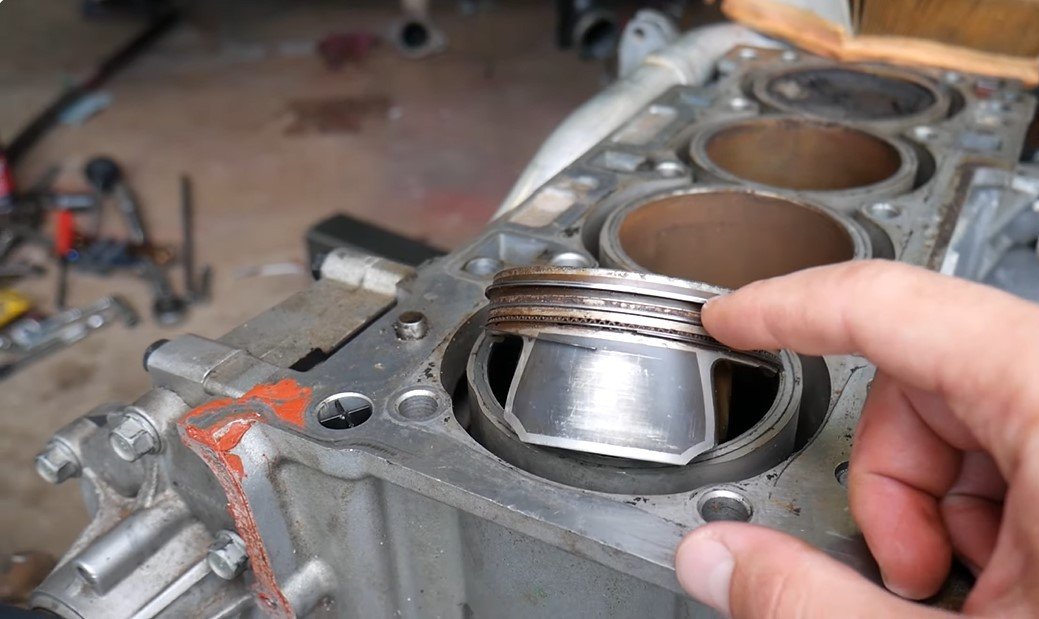
You may also see smoke after the car idles for a few minutes, then you press the gas. That is a classic valve seal clue.
Common signs include:
- Blue smoke on startup
- Blue smoke after idling
- Oil consumption between oil changes
- Oily or fouled spark plugs
- Rough start for a few seconds
Worn valve seals are one of the common blue smoke from exhaust causes on older engines, especially when the smoke is brief instead of constant.
2. Worn Piston Rings
Piston rings seal the gap between each piston and the cylinder wall. They help keep compression inside the cylinder and keep oil out of the combustion chamber.
When piston rings wear out, oil can slip past the rings and burn with the air-fuel mixture. This often creates blue smoke during acceleration because engine load and cylinder pressure increase.

This problem is usually more serious than bad valve seals. You may notice weak power, low compression, rough running, and oil disappearing with no visible leak.
A compression test or leak-down test is usually needed before blaming the rings. Guessing here can get expensive fast.
3. Cylinder Wall Wear or Engine Wear
Sometimes the rings are not the only worn part. The cylinder walls may also be worn, scratched, or damaged.
When that happens, the rings cannot seal properly even if they are not completely broken. Oil control becomes poor, and the engine may burn oil more often.
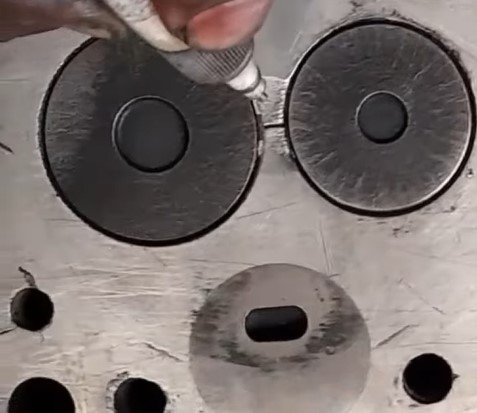
This is more likely on high-mileage engines, engines that overheated, engines driven low on oil, or engines that went too long between oil changes.
Signs may include constant blue smoke, oil loss, rough idle, poor acceleration, and oily spark plugs. This is one of the more serious blue smoke from exhaust causes because it may require major engine work.
4. Bad PCV Valve or AOS/CCV Problem
The PCV system controls crankcase pressure and routes vapors back into the intake. Some vehicles use a CCV or air-oil separator system instead.
If this system fails, oil mist can be pulled into the intake. Once that oil reaches the cylinders, it burns and creates blue smoke.
This can look like a worn engine even when the engine itself is not the main problem. That is why PCV, CCV, or AOS issues should be checked before assuming piston rings are bad.

Possible signs include:
- Blue smoke during acceleration
- Oil inside intake hoses
- Rough idle
- Whistling noise
- Oil leaks from pressure buildup
- Strong suction at the oil cap
This is often one of the cheaper blue smoke from exhaust causes to check first.
5. Turbocharger Oil Seal or Oil Return Problem
If your car has a turbocharger, the turbo can be the source of blue smoke. A turbo uses engine oil for lubrication. If the turbo seal wears or the oil return line becomes restricted, oil can leak into the intake or exhaust side.
Blue smoke from a turbo problem may show up after idling, during acceleration, or when boost comes in.
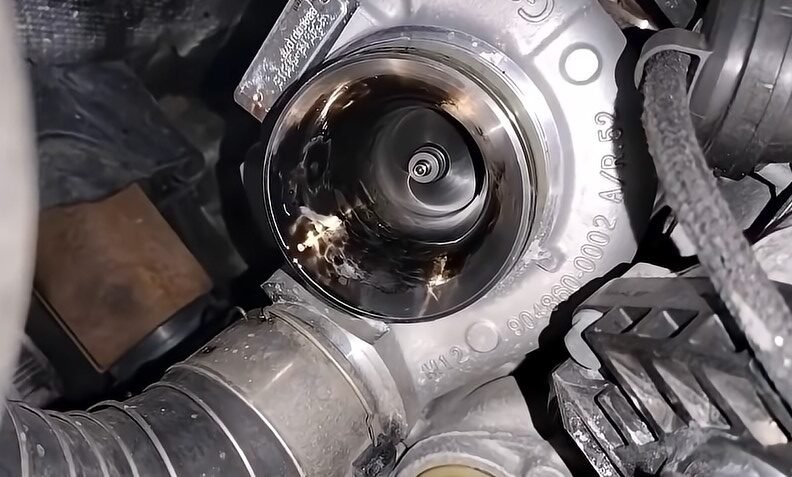
You may also notice oil in the intercooler pipe, reduced boost, whining noise, or a P0299 code if the turbo system is not building enough boost. A small amount of oil film in turbo piping can be normal, but wet oil pooling is not.
Turbo-related blue smoke should be checked quickly. If oil keeps entering the exhaust, it can damage the catalytic converter and oxygen sensors.
6. Overfilled Engine Oil
This is one of the simplest things to check. If the oil level is too high, the engine can pull oil through the PCV system or whip the oil into foam.
That oil may then enter the intake and burn, creating blue smoke.
If the smoke started right after an oil change, check the dipstick before thinking about major repairs. Park on level ground, wait a few minutes after shutting the engine off, and read the oil level correctly.

Too much oil can cause smoke, leaks, rough running, and catalytic converter damage. Among all blue smoke from exhaust causes, this is one of the easiest to confirm.
7. Wrong Oil Viscosity or Oil Contamination
Using the wrong oil grade can make oil burning worse, especially on an older engine.
If the oil is too thin for the engine, it may pass worn seals or rings more easily. But that does not mean you should randomly switch to thicker oil. Always start with the manufacturer’s recommended oil grade.
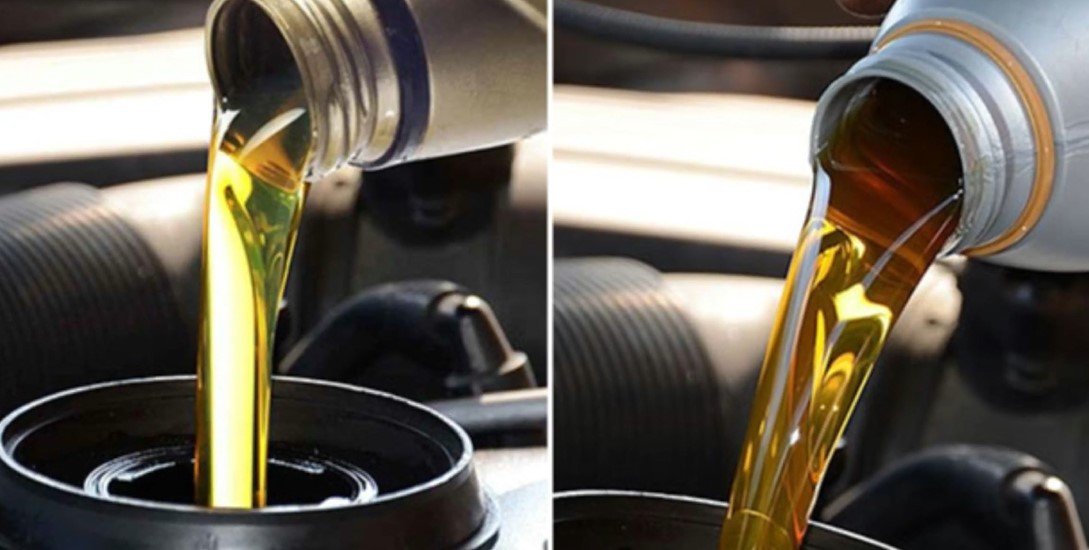
Oil can also become too thin from fuel contamination. A leaking injector, repeated short trips, or rich running can dilute engine oil. Thin, fuel-smelling oil does not protect the engine properly and may increase smoke.
Warning signs include fuel smell on the dipstick, rising oil level, dirty oil soon after an oil change, or rough running.
8. Internal Oil Leak or Less Common Head Gasket Issue
A head gasket problem is usually connected with white smoke, coolant loss, overheating, or coolant mixing with oil. So it should not be the first suspect for blue smoke.
But in some cases, an internal leak path can allow oil to enter where it should not. This is less common than valve seals, piston rings, PCV issues, or turbo seals.
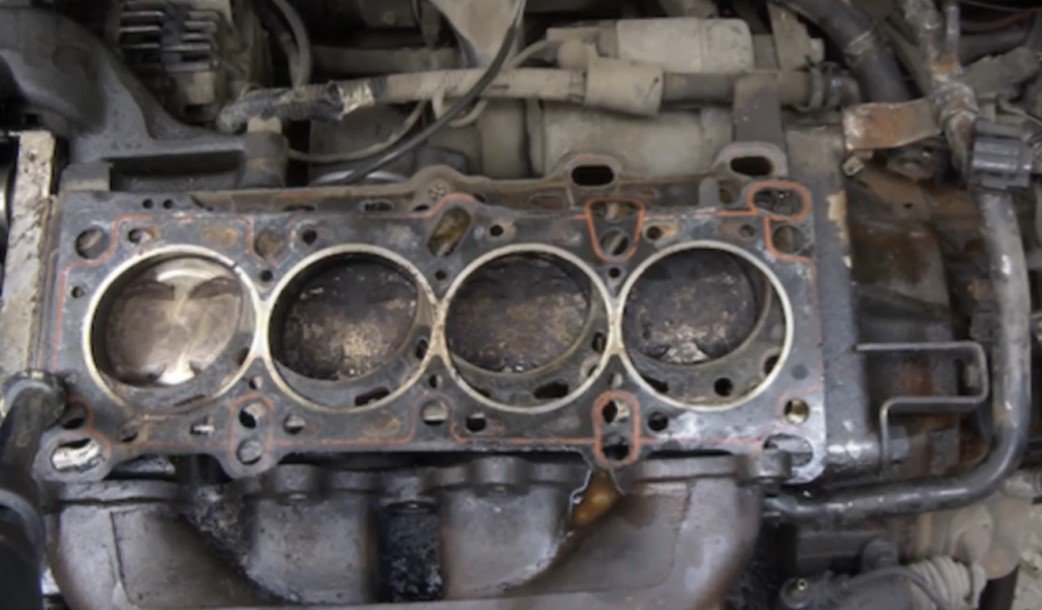
Look for extra symptoms before blaming the head gasket:
- Coolant loss
- Overheating
- Milky oil
- Bubbles in coolant
- Misfire after startup
- White smoke mixed with blue-gray smoke
If these signs are missing, start with the more common blue smoke from exhaust causes first.
Can You Keep Driving With Blue Smoke?
A small puff at startup is not the same as thick smoke every time you accelerate.
If the smoke is light, oil level is stable, and there is no oil pressure warning, you may be able to drive short-term while arranging diagnosis. But keep checking the oil level.
Do not keep driving if:
- Oil level drops quickly
- Oil pressure light comes on
- Engine knocks
- Smoke becomes heavy
- Car misfires badly
- Turbo makes loud noise
- Power drops suddenly
Running low on oil can destroy an engine. Burning oil can also foul spark plugs, oxygen sensors, and the catalytic converter. If the check engine light comes on with the smoke, here is how to check engine light with scanner before clearing or ignoring anything.
What to Check First
Start with the cheap checks before the expensive ones.
Check the oil level. Make sure it is not overfilled or very low. Look at the oil condition and smell. Inspect the PCV valve, PCV hoses, and intake tube. If the car is turbocharged, check the intercooler piping for heavy oil.
Then scan for codes. If you are not sure where to start, this guide on how to use OBD2 scanner can help with the basic process. Blue smoke does not always turn on the check engine light, but related codes may appear.
Live data can also help you see if the engine is running rich, misfiring, or showing strange sensor behavior. For that part, learning how to read live data from OBD-II scanners is more useful than only reading stored codes.
Possible codes include:
- P0300-P0308 misfire codes
- P0420 or P0430 catalyst efficiency codes
- Oxygen sensor-related codes
- P0299 on some turbocharged vehicles
These codes do not prove the cause by themselves. They only show what the engine computer is seeing. If a code appears, compare it with an OBD2 codes list and then diagnose the system instead of replacing the first part mentioned.
When There Is Smoke but No Code
Blue smoke can happen even when there is no check engine light. That is because oil burning can be mechanical, and the computer may not detect it right away.
For example, worn valve seals, early piston ring wear, or a mild turbo seal leak may create smoke before the ECU stores a code. If your scanner shows nothing but the symptom is still there, this guide about check engine light on but no codes explains why scan results can be limited.
If a code does appear, freeze frame data can show when the fault happened. That may help if the smoke appears under load, at idle, or during warm-up. You can use this guide on how to read freeze frame data to understand those snapshots.
Oil burning can also affect oxygen sensor readings over time. If you suspect the exhaust sensors are reacting strangely after long-term oil burning, this article on bad O2 sensor live data readings can help you understand what abnormal readings may look like.
Final Takeaway
Blue smoke usually means oil is burning inside the engine or exhaust path. The most common blue smoke from exhaust causes include worn valve stem seals, piston rings, cylinder wear, bad PCV or AOS systems, turbocharger seal problems, overfilled oil, wrong oil viscosity, and less common internal oil leaks.
The best clue is timing. Startup smoke points one way. Acceleration smoke points another. Constant smoke usually means the problem is more serious.
Do the simple checks first, then use scan data, live data, freeze frame data, and mechanical testing together. That approach saves money and keeps you from replacing parts based on smoke color alone.